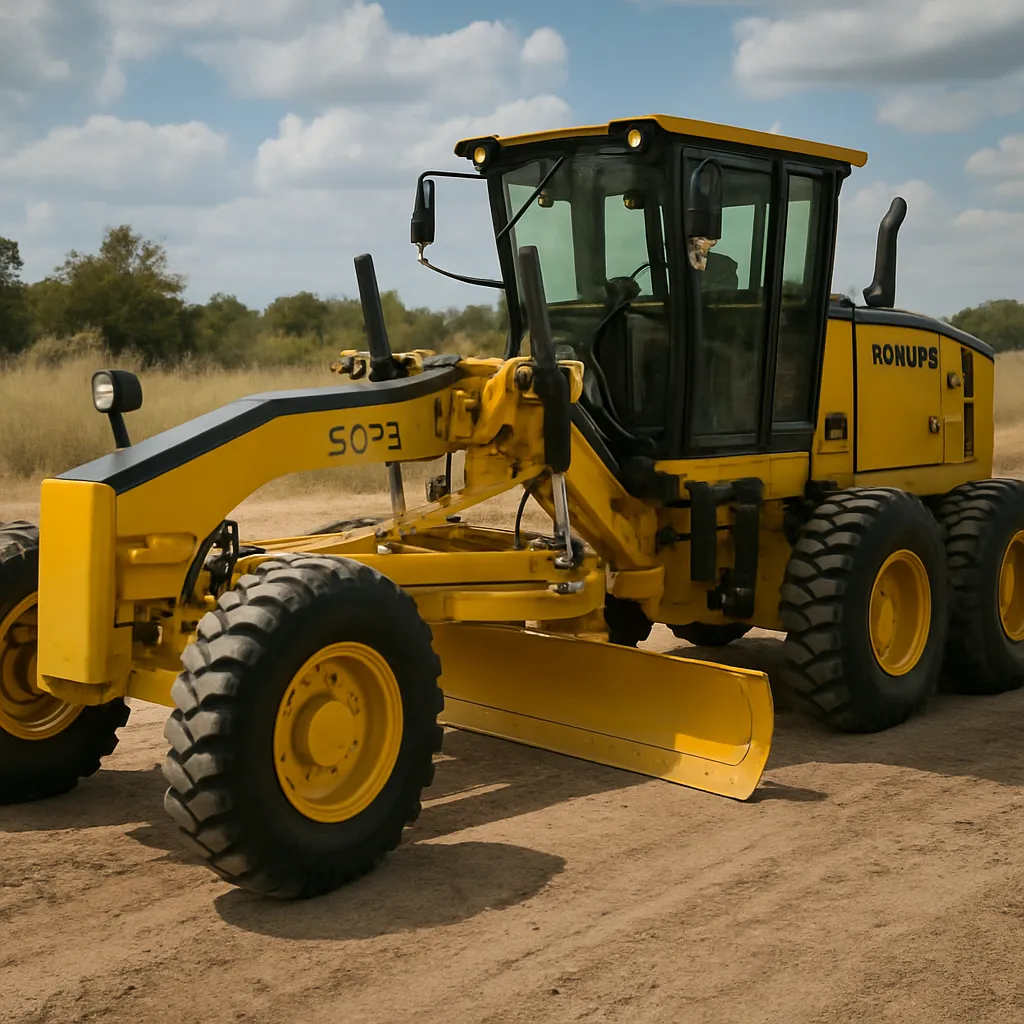
The Shantui SG25 motor grader is a versatile piece of heavy equipment designed for grading, leveling, and fine earthmoving tasks. Combining robust mechanical systems with user-friendly controls, the SG25 is aimed at contractors, municipalities, and industrial operations that require dependable performance across a wide range of ground conditions. This article explores the machine’s design, typical applications, operational characteristics, maintenance considerations, and market position, providing both technical context and practical insights for potential owners and operators.
Design and Key Features
The Shantui SG25 reflects modern grader design principles: a balance of power, stability, and controllability. At its core are a diesel engine, an articulated frame or front-wheel steering arrangement (depending on market configuration), and a hydraulically controlled circle and moldboard (blade). The manufacturer typically configures the SG25 for mid-sized grading tasks, placing it between smaller compact graders and the largest highway-class machines.
Powertrain and Drivetrain
- The SG25 is usually equipped with a turbocharged diesel engine sized for the medium grader segment. Typical factory configurations result in approximate nominal power in the range of 200–250 horsepower (150–185 kW), though exact output can vary by emission specification and regional configuration.
- Transmission options commonly include manual power-shift or fully automatic planetary gearboxes with multiple forward and reverse gears to optimize torque delivery at both low-speed grading and higher-speed travel between sites.
- Final drives, axles, and differentials are built for heavy traction loads, often with optional limited-slip features for better performance in soft or uneven surfaces.
Blade System and Hydraulics
- The hallmark of the grader is its hydraulic circle and moldboard, allowing blade rotation, side shift, tilt, and pitch adjustments. Moldboard lengths for machines in this class typically range from 5.5 to 6.0 meters, supporting efficient spreading and contouring of materials.
- Hydraulic systems are sized for responsive blade control, with pilot-operated joysticks or multi-function levers in the cab. OEM hydraulic pumps and valves emphasize smooth, predictable movements to improve finish quality and reduce operator fatigue.
- Auxiliary hydraulic circuits are usually available for attachments such as rippers, front dozer blades, winches, or snowplow accessories.
Operator Station and Visibility
- Modern SG25 cabs emphasize ergonomics and visibility. Large windows, elevated seating, and sloped hood designs help operators see the blade, front wheels, and adjacent work areas.
- Comfort features frequently include adjustable seats, climate control, sound insulation, and clear instrumentation. Some configurations offer air-suspension seats and advanced joystick controls for improved operator comfort on long shifts.
- Safety packages often include ROPS/FOPS-certified cabs, backup alarms, work lights, and mirrors or camera systems to reduce blind spots.
Applications and Typical Use Cases
The Shantui SG25 is engineered for a broad range of jobs where accurate grading or long-distance leveling is required. Its design makes it particularly well-suited for the following applications:
- Road construction and maintenance — finish grading prior to paving, shaping shoulders, creating drainage slopes, and maintaining unpaved roads.
- Airport runways and taxiways — precise leveling and profile control for base and sub-base layers (subject to airport certification rules and operator qualifications).
- Site preparation — leveling building pads, trimming embankments, and achieving uniform subgrade for foundations or landscaping.
- Mining and quarrying — access road construction, haul-road maintenance, and shaping stockpile surfaces.
- Agricultural and forestry roads — maintaining farm lanes, logging access roads, and drainage ditches.
- Snow removal — with appropriate front blades and flotation tires, graders like the SG25 can clear and redistribute snow on roads, runways, and large parking areas.
Because of its mid-size footprint, the SG25 is often the machine of choice where larger highway graders are too cumbersome and smaller machines lack the power or blade length needed for efficient material handling. This makes it popular with municipal fleets, rental companies, and contractors who operate in mixed-application environments.
Performance, Fuel Economy, and Productivity
Performance of the SG25 depends on configuration, ground conditions, and operator skill. In general, mid-size graders are optimized for productivity in tasks requiring consistent surface accuracy over long runs. Below are performance aspects to consider:
Cutting and Grading Efficiency
- The combination of a long moldboard and responsive hydraulics provides high-quality surface finishes in fewer passes compared to smaller graders. Proper use of blade pitch and articulation reduces material bunching and improves spread consistency.
- Operators who employ correct cutting angles and use the machine’s full range of blade movements can often reduce fuel use and cycle times while achieving target tolerances.
Fuel Consumption
- Fuel consumption varies with engine tuning, duty cycle, ground resistance, and ambient conditions. Typical mid-size graders like the SG25 consume in the range of 15–30 liters per hour under normal grading loads—lighter duties or travel modes will be at the lower end, heavy ripping or deep cuts toward the upper end.
- Fuel economy can be improved with proper gear selection, use of auxiliary hydraulics only when needed, and adherence to recommended maintenance schedules to keep the engine and hydraulic systems operating efficiently.
Travel Speed and Maneuverability
- Top travel speeds for graders in this class usually fall between 30 and 50 km/h, enabling quick repositioning between sites on paved roads. Maneuverability around confined sites is aided by articulation and, in some models, front-wheel steering options.
- Turning radius and blade reach are design-dependent but typically suitable for both linear highway grading and tighter construction environments.
Maintenance, Serviceability, and Lifecycle Costs
A grader’s lifecycle cost is heavily influenced by maintenance intervals, parts availability, and ease of service. The SG25 is designed with serviceability in mind, but operators should plan proactive routines to reduce downtime and extend component life.
Routine Maintenance Practices
- Daily checks: engine oil level, coolant level, hydraulic oil level, fuel, tire condition, and visual inspection for leaks or damaged hoses.
- Weekly tasks: grease pivot points (articulation joints, circle bearings, blade trunnions), inspect cutting edges and end bits, check air filters and cooling package cleanliness.
- Periodic services: oil and filter changes, hydraulic filter changes, coolant service, final drive inspections, and valve adjustments as recommended by the OEM.
Wear Items and Replacement Parts
- Common wear items include the moldboard cutting edge and end bits, circle bearings, ripper shanks, and tires. These are predictable replacement items and should be budgeted for in ownership cost models.
- Shantui’s growing dealer network and aftermarket suppliers provide replacement parts, though lead times and availability will vary by region. Owners of SG25 units in remote areas should maintain an inventory of critical wear parts to reduce downtime.
Serviceability Features
- Accessible service points, grouped filters, and wide-opening service panels reduce the time technicians spend on routine maintenance.
- Some SG25 models are equipped with onboard diagnostics or service reminders to help operators and technicians identify issues early, protecting major components and preserving machine value.
Safety, Operator Comfort, and Ergonomics
Reducing operator fatigue and ensuring safety are critical for productivity and accident prevention. The SG25 incorporates several design elements to support these goals.
- Cab design focuses on visibility and control layout. A comfortable, climate-controlled environment with clear sightlines to the blade and front wheels enables precise work and reduces operator errors.
- ROPS/FOPS-certified cabins, safety interlocks, and visibility aids (mirrors, cameras) are standard or available options to enhance personnel safety around the machine.
- Controls and instrument clusters are arranged for intuitive operation. Operator-friendly joysticks and multi-function switches allow experienced crews to complete complex blade maneuvers with minimal hand movement.
Attachments, Options, and Customization
One of the grader’s strengths is its adaptability through attachments and configuration options. The SG25 supports several common accessories that extend its usefulness:
- Ripper assemblies for breaking compacted layers or old pavement before grading.
- Front-mounted dozer blades for pushing and spreading material where a single-tool solution is desired.
- Snowplow and wing plow combinations for winter maintenance operations.
- Winches for recovery operations or assisting other machines on steep grades.
- GPS and machine-control systems for automated or semi-automated grading operations, improving precision and reducing rework.
Availability of these options depends on regional dealer inventory and factory options; many contractors purchase SG25 units pre-equipped for their primary tasks to minimize retrofit costs.
Market Position, Comparisons, and Buyer Considerations
Shantui is a major Chinese heavy-equipment manufacturer known for competitive pricing and expanding global distribution. The SG25 targets users who need a cost-effective medium grader with the flexibility to operate in multiple roles. Buyers typically compare the SG25 against models from manufacturers such as Caterpillar, XCMG, SANY, and Komatsu.
- Price-to-value: The SG25 often attracts purchasers because of a lower purchase price relative to established Western brands. Total cost of ownership should also consider fuel economy, resale value, financing terms, and parts availability.
- Performance parity: In many regions, Shantui machines provide similar functional performance to global competitors for routine grading tasks, though buyers should evaluate component quality, warranty coverage, and dealer support in their locale.
- Resale and lifecycle: Depreciation and secondary-market demand vary by region. Proper maintenance records and dealer support can improve resale prospects.
Operational Tips and Best Practices
To get the most from an SG25 and extend its service life, operators and fleet managers should adopt best practices focused on machine health and productivity.
- Train operators on blade geometry—pitch, angle, and articulation—to reduce fuel burn and achieve better surface profiles in fewer passes.
- Use the correct tires and pressures for the job. Flotation tires improve performance on soft ground; traction tires are better for steeper, rougher terrain.
- Implement a preventive maintenance schedule with documented service intervals and parts replacement history to protect warranty coverage and reduce unexpected downtime.
- Monitor fuel and hydraulic oil consumption trends; sudden changes often precede mechanical issues and can signal the need for inspection.
- For precision work, consider calibration and integration of GPS grading systems to reduce manual rework and speed up project completion.
Environmental and Regulatory Considerations
Modern graders must comply with emissions regulations that vary by country and region. Shantui offers different engine configurations to meet Tier/Stage or local emissions standards, but potential buyers should confirm that the SG25 model available in their market complies with local requirements.
- Emission-compliant engines may include exhaust aftertreatment systems such as DOC, DPF, or SCR. These systems require periodic maintenance and the use of compatible fuels and additives.
- Noise and dust control measures—such as enclosed cabs with filtration and well-maintained cooling packages—help meet workplace regulations and improve operator comfort.
Statistics, Availability, and Real-World Data
Exact production numbers and global sales statistics for the SG25 are not always publicized, and market penetration varies by region. However, general observations from industry reports and dealer communications indicate:
- Shantui has grown its market share in several emerging and developing markets by offering competitive pricing and expanding service networks
- Units like the SG25 are commonly found in municipal fleets, rental companies, and construction contractors who prioritize upfront cost and flexible application capability
- Operational metrics observed in field reports often cite uptime rates that depend heavily on dealer support: with strong local service networks, uptime can match that of more established brands
For buyers seeking specific figures—such as machine weight, engine rated power, blade length, hydraulic flow rates, and turning radius—it is best to consult the local Shantui dealer or the official specification sheet for the exact SG25 configuration offered in that market. Configurations and options can significantly alter these numbers.
Conclusion and Practical Recommendations
The Shantui SG25 motor grader is a practical choice for organizations needing a mid-sized grader that balances performance, versatility, and cost. Its blade control, powertrain, and optional attachments make it suitable for a wide array of duties including road construction, maintenance, site preparation, and snow removal. Key considerations for prospective buyers include the availability of local support and parts, configuration options for intended applications, and a well-structured maintenance program to optimize lifecycle costs.
Key takeaway
- Assess the specific SG25 configuration against project requirements—engine power, moldboard length, and attachments are decisive factors.
- Prioritize dealer support and parts availability in your region to preserve uptime and resale value.
- Invest in operator training and routine preventive maintenance to maximize productivity and reduce total cost of ownership.
By aligning procurement choices with operational needs and service resources, owners can leverage the SG25’s capabilities for efficient grading operations while controlling ownership costs and ensuring long-term reliability.


)
)