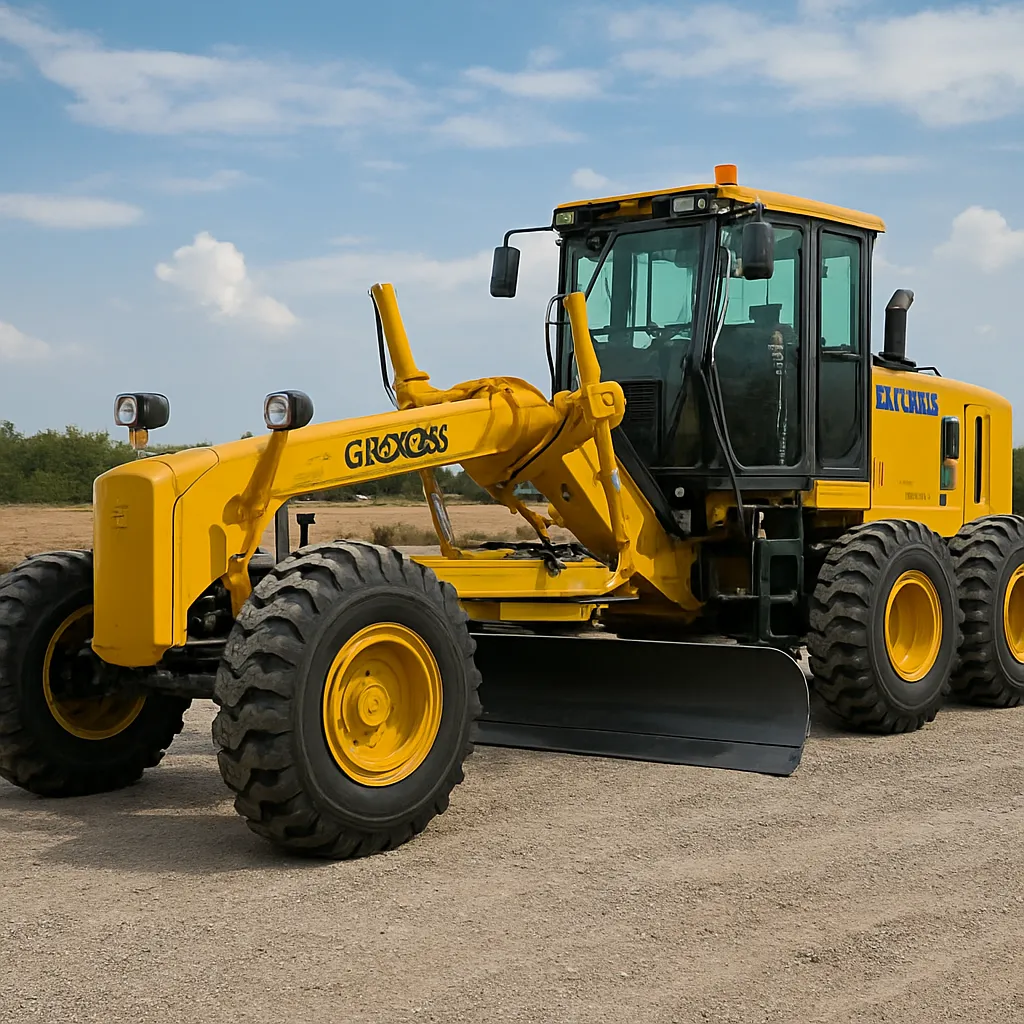
The XCMG GR2605 is a heavy-duty motor grader designed for large-scale earthmoving, road construction and maintenance tasks. Combining robust mechanical systems with modern operator comforts and flexible configurations, this model aims to compete in global markets where reliability, productivity and cost-efficiency matter. Below you will find a detailed overview of the machine’s design, typical applications, approximate technical data, operational considerations and market context.
Overview and design philosophy
The XCMG GR2605 is engineered as a mid-to-large-size *class* motor grader, balancing power and maneuverability. At its core the machine is built around a strong frame, an adjustable moldboard and an integrated drivetrain that allows precise grading in a wide variety of working conditions. Key design priorities include durability, ease of service, and operator productivity. XCMG positions the GR2605 to serve contractors who require continuous performance on highways, airfields, mines and large civil works.
Chassis, moldboard and articulation
The chassis of the GR2605 is reinforced for sustained heavy use, with a long wheelbase and articulation center permitting tight turning radii while maintaining stability at speed. The moldboard (blade) is a central component: it is designed for high cutting forces, quick lateral shifts and multiple tilt/angle adjustments to perform tasks such as fine grading, ditching, and snow removal. Typical moldboard features include hydraulic side shift, circle rotation and pitch adjustment, which together enable precise control of material cutting, spreading and contouring.
Powertrain and hydraulics
The machine’s powertrain is tuned to deliver steady torque at low engine speeds for consistent grading power. The grader combines a high-torque engine with a robust transmission — often a power-shift gearbox with torque converter — and a durable final drive. The hydraulic system provides responsive control for blade positioning and steering; using closed-center load-sensing or similar architectures helps optimize fuel consumption by delivering hydraulic flow only when required.
Operator station and controls
Operator ergonomics are a significant focus: the cab is designed for visibility over the blade and both front and rear wheels, with controls placed for intuitive use during long shifts. Features commonly emphasized include climate control, adjustable seating with suspension, tilting and telescoping steering wheel, and electronic or joystick blade controls. These accommodations reduce operator fatigue and improve grading accuracy.
Applications and industries
The GR2605 is versatile and finds application across many sectors where surface profiling and material distribution are needed. Its principal uses include:
- Road construction and maintenance — creating base layers, shaping shoulders, trimming surfaces before asphalt or concrete paving, and maintaining unpaved roads.
- Airport runway and apron grading — fine grading and profile work before paving, as well as snow removal and friction restoration in colder climates.
- Land reclamation and site preparation — leveling building pads, sports fields, and large earthworks where precise contours are required.
- Mining and quarry operations — maintaining haul roads and ramp gradients to ensure safe, efficient truck travel.
- Agricultural and forestry track maintenance — restoring access roads and firebreaks.
Its adaptability is further enhanced by available attachments such as front plows, scarifiers, ripper assemblies, and specialized blades for snow or frozen ground. Because of this flexibility, the GR2605 is used by municipal fleets, roadwork contractors, large construction firms and resource extraction businesses.
Technical specifications and performance (typical/approximate)
Below are typical specifications and performance metrics often associated with machines in the GR2605 class. Exact values can vary with market configuration, optional equipment and regulatory emission packages; the numbers presented are approximate and intended to give a concrete sense of capability.
- Engine power: approximately 190–200 kW (around 260 horsepower) at rated RPM. The engine emphasizes high torque output for steady cutting in heavy material.
- Operating weight: typically in the range of 20,000–26,000 kg, depending on configuration, attachments and additional counterweights.
- Blade (moldboard) length: commonly around 5.8–6.0 meters, providing wide coverage per pass and efficient material distribution.
- Maximum travel speed: nominally up to 40–45 km/h in high-speed configuration, enabling transit between job sites.
- Hydraulic system pressure and flow: designed to deliver sufficient flow for fast blade response and steering — exact values vary, but systems are commonly in the 200–300 bar range for heavy graders.
- Fuel consumption: average working consumption typically ranges from 15–30 L/h depending on work intensity, terrain and operator technique. Lower consumption is achieved with economy modes or load-sensing hydraulics.
- Ripper/Scarifier: optional rear-mounted rippers with multiple teeth for breaking compacted ground; penetration force and depth vary by option.
- Turning radius and articulation: articulation combined with front-wheel steering provides enhanced maneuverability for complex grading patterns.
Performance indicators that contractors track include pass-per-meter efficiency (how many passes required to achieve target profile), fuel used per square meter graded, and hourly material moved. For machines in this class, a properly configured and operated GR2605 can achieve high productivity on long, straight grading runs and maintain accuracy on more complex profiles.
Operation, maintenance and safety
Operational efficiency and low downtime are crucial for contractors. The GR2605’s design balances accessible maintenance points with robust component selection to reduce service frequency and simplify repairs.
Routine maintenance
- Daily checks: engine oil, coolant, hydraulic fluid levels, tire or wheel condition, blade wear edges and general lubrication points.
- Periodic service intervals: engine oil and filter changes, hydraulic filter replacement, drive-line inspections and transmission servicing according to hour-based schedules (commonly at 250h, 500h, 1000h, etc.).
- Wear items: replaceable steel cutting edges on the moldboard, circle bearings, and articulation bushings are typical sources of scheduled maintenance.
Safety features
Standard and optional safety packages include ROPS/FOPS-certified cabs, effective lighting arrangements for night work, rear-vision cameras, and alarms for travel and blade movement. Modern graders may also offer telematics for remote monitoring of operating hours, location, fuel use and diagnostic codes, enabling fleet managers to optimize maintenance planning and reduce unscheduled downtime.
Ease of service and parts availability
XCMG emphasizes worldwide dealer support and parts networks in many regions; however, availability can vary by country. Common strategies to minimize downtime include stocking high-wear components on-site, using local certified technicians for routine tasks and implementing telematics-based maintenance alerts.
Economic, environmental and regulatory considerations
Purchasing and operating a grader like the GR2605 requires analysis across purchase price, life-cycle operating cost, resale value and compliance with local environmental regulations.
Life-cycle costs
- Initial acquisition cost: typically lower than comparable Western-branded rivals for machines from large Chinese manufacturers, which can result in competitive capital outlay for fleets.
- Operating costs: fuel, filters, tires, and wear parts drive operating expenses. Efficient hydraulics and properly tuned engines reduce fuel use and maintenance intervals.
- Depreciation and resale: market demand, machine hours and maintenance history heavily influence resale values.
Emissions and compliance
Engines for the GR2605 are offered in configurations to comply with varying emissions standards (for example, Tier/Stage levels or regional equivalents). Many machines sold in export markets use engines equipped with after-treatment systems such as selective catalytic reduction (SCR) or diesel particulate filters (DPF) to meet stricter regulations. Buyers should confirm the emissions certification appropriate for their country or project.
Environmental advantages
Beyond meeting emissions standards, factors that reduce environmental impact include improved fuel efficiency through load-sensing hydraulics, routine maintenance that maintains engine efficiency, and the option to use lower-emission fuels or retrofit technologies where allowed.
Comparisons, market position and purchasing advice
The XCMG GR2605 competes with other manufacturers of graders in the mid-to-large segment. Compared to established global brands, the GR2605 often offers a strong value proposition in terms of initial price and equipment package, while emphasizing modern features such as comfortable cabs and improved hydraulics.
How it compares to peers
- Value vs. price: XCMG machines are frequently positioned to deliver similar capability at a lower initial cost, which can be appealing for budget-conscious fleets.
- Support and parts: dealers and service networks for established Western brands may be more extensive in some regions; buyers should evaluate local after-sales support before purchase.
- Feature parity: recent XCMG models often include comparable operator comfort and basic telematics; premium options such as advanced active controls or integrated GPS guidance may be optional or vary by region.
Purchasing considerations
- Confirm the engine emissions package required for your jurisdiction and whether the machine is fitted accordingly.
- Request complete specifications for hydraulics, transmission type and available options (rippers, alternate blades, snow packages).
- Assess the local dealer’s parts inventory, warranty terms and service capacity to support uptime targets.
- Compare operational cost estimates (fuel consumption, routine maintenance hours, expected wear part replacement intervals) rather than focusing solely on purchase price.
Innovations and future outlook
Grader technology continues to evolve, and manufacturers including XCMG are integrating features that enhance precision and reduce operator workload. Notable trends relevant to the GR2605 class include:
- Machine control and automation: adoption of GPS-guided grade control and semi-autonomous functions reduces rework and increases productivity. Integration of factory-fit or retrofit solutions allows graders to perform finish grading to tight tolerances.
- Telematics and fleet management: remote monitoring boosts uptime and enables proactive maintenance scheduling, which is increasingly standard among modern construction fleets.
- Improved powertrain efficiency: engine and hydraulic optimizations, along with electronic control strategies, lower fuel consumption and emissions.
- Hybrid and alternative-fuel research: while hybrid motor graders are not yet mainstream, research into electrification and hybrid assistance is ongoing and may influence future iterations of models like the GR2605.
Practical examples and case use scenarios
To illustrate real-world utility, consider several scenarios where a machine of this class excels:
- Highway base preparation: The grader performs longitudinal grading for multi-kilometer sections of subgrade and base material, using its broad moldboard and steady engine torque to achieve even profiles with fewer passes.
- Mine road maintenance: A fleet equipped with heavy graders maintains haul roads daily to manage rutting and drainage. The GR2605’s robust frame and optional ripper let it tear through compacted surfaces efficiently.
- Winter operations: With a front plow and rear apron, the grader clears heavy snow and re-profiles icy surfaces, improving friction and safety on critical transport corridors.
- Airport apron shaping: Precision is essential; when equipped with GPS machine control, the grader finishes pavement sub-bases to exact tolerances prior to surfacing.
Key strengths in these scenarios are the machine’s blend of power, blade control and operator visibility — all contributing to faster cycle times and consistent results.
Conclusion
The XCMG GR2605 motor grader offers a compelling package for contractors and municipal operators who need a dependable, powerful and relatively cost-effective grader platform. Its core advantages lie in a balance of durability, operator comfort, and adaptable configurations for diverse tasks from road construction to mining and winter maintenance. Prospective buyers should verify specific technical details and emissions configurations for their region, evaluate local dealer support and consider options such as machine control and telematics to maximize the machine’s productivity and life-cycle value.
XCMG GR2605 occupies a place in the market as a capable grader for medium-to-heavy applications, and when properly specified and supported can deliver strong performance and return on investment across a wide range of civil and infrastructure projects.


)
)