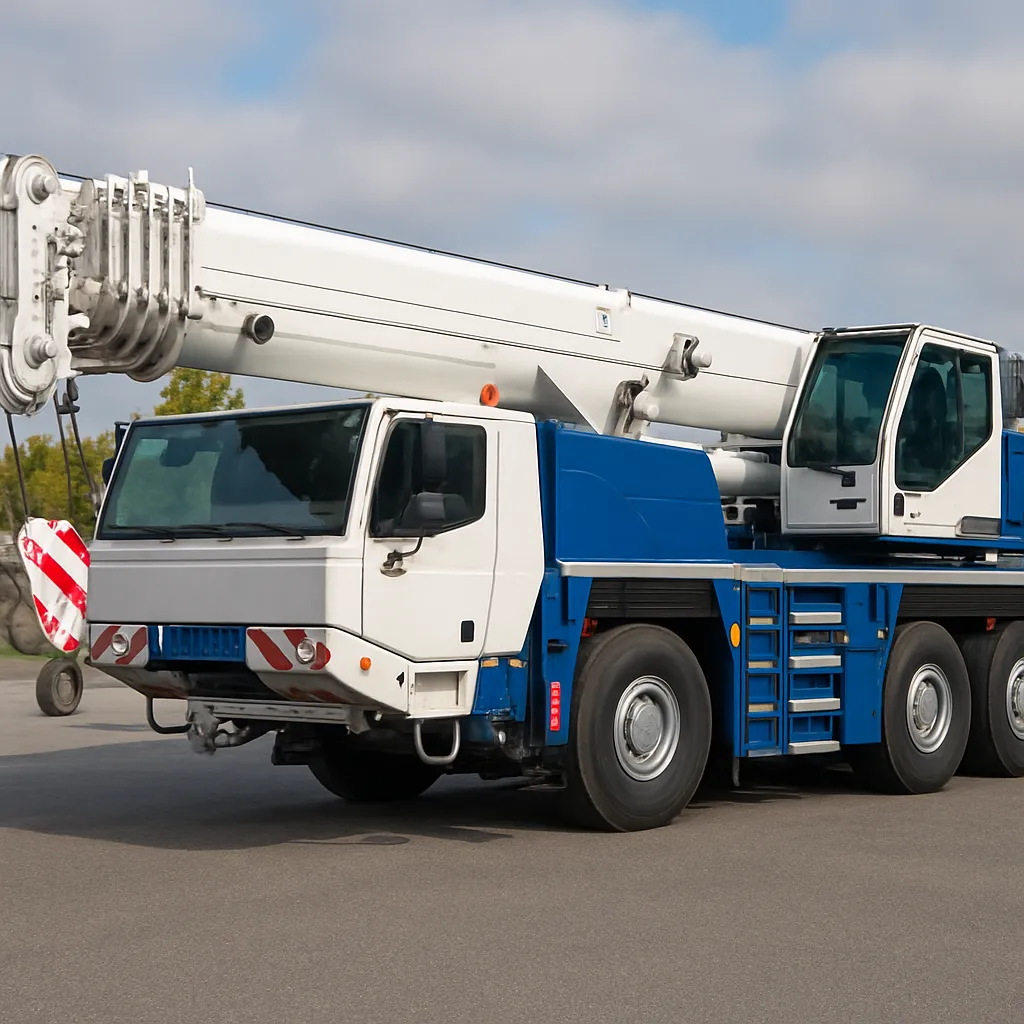
The Tadano ATF 110G-5 represents a compact but powerful solution in the world of heavy lifting. As a purpose-built mobile crane in the 110 metric ton class (commonly called 110 t), this model combines the maneuverability of an all-terrain chassis with a robust hydraulic system and a long, versatile telescopic boom. The ATF 110G-5 is designed to deliver dependable lifting capacity in urban, industrial, and specialized environments while prioritizing modern safety systems and operator comfort inside a well-appointed operator cabin.
Overview and design philosophy
The ATF 110G-5 is positioned for customers who need a mid-range all-terrain crane that can travel on public roads and negotiate site conditions with relative ease. Tadano’s development focus for this line emphasizes compact dimensions for transport and travel, fast setup times, and a lifting performance that fits the needs of municipal construction, industrial maintenance, and infrastructure projects.
Key design goals for the machine include:
- High jobsite flexibility with a short setup footprint and wide wheelbase stability.
- Efficient hydraulics and powertrain optimized for travel speed and economical operation.
- Intuitive controls and modern electronic assistance to minimize operator error and enhance safety.
Technical specifications and performance
Below are core technical themes and general specification ranges associated with the ATF 110G-5. Exact figures vary with market configuration, optional equipment and regional regulatory packages; where precise numbers are not universal, ranges or typical values are provided.
Chassis, mobility and drive
The ATF 110G-5 is built on a multi-axle chassis (commonly a five-axle layout in this class) designed to balance load distribution and road legality. The chassis affords a combination of:
- Competitive travel speeds for an all-terrain crane of this class, enabling efficient movement between sites.
- Independent steering axles for tighter turning radii and improved maneuverability in constrained environments.
- Robust suspension and driveline components engineered for mixed road and off-road conditions.
Crane superstructure, boom and lifting equipment
The strength of the ATF 110G-5 lies in its telescopic boom design and lifting accessories. Typical features include:
- A multi-section hydraulic telescopic boom, offering a balance between compact stowed length and long outreach for lifts.
- Optional luffing or fixed jibs to increase hook height and outreach for tall structures or confined load paths.
- High-performance hoist winches with precise line control and multiple reeving options to optimize rope speed or lifting power.
Representative (typical) specifications:
- Rated capacity class: 110 t (metric)
- Axles: typically five (vehicle configuration varies by market)
- Boom length (telescopic): commonly in the range of 40–55 meters (model-dependent)
- Jib options: modular swing-away or fixed jibs extending available height and outreach
- Outrigger spread: designed for safe, stable operation on varied ground conditions
Note: The above numbers reflect common configurations for a 110-ton all-terrain crane; exact figures should be verified with Tadano’s current data sheets for the specific production batch or optional equipment package.
Powertrain, hydraulics and control systems
The ATF 110G-5 incorporates an efficient diesel engine matched to hydraulic pumps sized to provide consistent lifting performance. Electronic control systems manage hoist speed, boom extension and telescoping sequences, and integrate with the crane’s load monitoring instruments. Standard contemporary features include:
- Proportional hydraulic controls for smooth, predictable operation.
- Load moment indicators and limiters to prevent overload conditions.
- Integrated diagnostics for troubleshooting and maintenance planning.
Applications and typical use cases
The versatility of the ATF 110G-5 makes it suitable across many industry sectors. Its combination of roadability and capable lifting makes it especially valuable where transport limitations, tight site access or intermittent use preclude larger crawler or heavy-duty cranes.
Construction and civil engineering
In urban building projects, the ATF 110G-5 is often used for:
- Lifting precast concrete elements and structural steel components into place.
- Installing facade systems, HVAC units, and rooftop equipment where street access is available but space is constrained.
- Bridge repair and small-span bridge erection where precise handling and mobility are required.
Energy sector (including renewables)
For wind farm maintenance and erection of smaller turbines, the ATF 110G-5 can be fitted with specialized jibs and rigging packages to:
- Install nacelles or hub components on smaller to mid-size turbines.
- Perform maintenance lifts for nacelles, generators, or blades in locations where larger cranes cannot reach or would be uneconomical to mobilize.
Industrial and plant maintenance
Plant turnarounds, refineries and heavy industrial sites benefit from the crane’s ability to:
- Perform controlled lifts of pumps, heat exchangers, and other process equipment within tight corridors.
- Support modularization efforts by lifting prefabricated skids and frames into place.
Marine, ports and logistics
The crane can be used in ports and yards to handle medium-weight cargo, install deck equipment on ships, and manage logistical lifts where space and road travelability are important considerations.
Operational advantages and practical features
Operators and fleet managers value the ATF 110G-5 for several practical strengths which translate into lower lifecycle costs and improved project performance.
Mobility and transport efficiency
A compact stowed profile and road-legal dimensions in many jurisdictions reduce the need for special transport permits and escort vehicles that larger cranes require. This lowers mobilization times and associated costs.
Setup speed and footprint
Well-designed outriggers and clear leveling systems enable fast deployment. The machine’s footprint is engineered so that many lifts can be completed with minimal ground preparation, a significant advantage on urban or paved sites.
Operator ergonomics and productivity
Modern operator cabins provide enhanced visibility, climate control, and joystick-based controls that reduce fatigue and increase productivity. Intuitive on-board displays presenting load charts and real-time diagnostics speed decision-making and reduce risk of error.
Safety systems and regulatory compliance
Safety is central to the ATF 110G-5’s design. The crane is equipped with electronic safeguards to help operators avoid overload and instability. Typical protective features include:
- Load moment indication and automatic cut-off for lifting beyond safe working limits.
- Anti-two-block protection to prevent hook block collisions.
- Wind speed monitoring and operational advisories for high-wind scenarios.
- Redundant braking and emergency lowering systems to protect personnel and materials.
In many markets, the ATF 110G-5 meets or is configurable to meet applicable safety standards for heavy lifting equipment, including regional regulations for emissions, noise and on-road vehicle compliance. Fleet managers should verify certification and options at the time of purchase to ensure regulatory alignment for their operating region.
Maintenance, lifecycle and total cost of ownership
While purchase price is an important consideration, the ATF 110G-5’s value proposition often centers on operating costs, uptime and resale potential. Maintenance-friendly features include modular components for rapid replacement, on-board diagnostics for proactive servicing, and widely available parts from a global support network.
Best practices for lifecycle management:
- Adhere to manufacturer-recommended service intervals for engine, hydraulic systems and wire rope inspections.
- Keep a log of load cycles and operating hours to forecast service needs and major overhauls.
- Train operators and maintenance staff on model-specific procedures to reduce accidental damage and unnecessary downtime.
Market position, availability and cost considerations
The ATF 110G-5 competes in the mid-range all-terrain crane segment where buyers weigh mobility, versatility and cost against higher-capacity machines. Pricing depends heavily on the country, optional equipment (such as specialized jibs, winch configurations or emission packages), and local market demand. Typical considerations include:
- New purchase prices vary widely by specification and local taxes; fleet operators frequently compare new purchase vs. long-term rental based on utilization rates.
- Used ATF 110G-5 cranes can command strong resale values when well-maintained due to demand from municipal, industrial and rental markets.
- Financing, warranty and service agreements can substantially affect total cost of ownership and are worth detailed comparison when acquiring equipment.
Statistical insights and performance indicators
Specific production numbers, market share or global fleet statistics for an individual model such as the ATF 110G-5 are subject to change and may vary by year and region. However, some consistent performance indicators for cranes in this class include:
- High utilization in rental fleets because of their versatility—mid-capacity all-terrain cranes often see a balanced distribution of short-term rentals and longer-term project deployments.
- Resale retention rates tend to be stronger for machines with comprehensive service histories and factory-updated electronics or emission compliance packages.
- Operational availability is heavily influenced by preventive maintenance practices: cranes in adherence to scheduled servicing typically experience fewer unscheduled outages and maintain higher utilization rates.
Where precise, up-to-date model-specific statistics are required (for example, current production figures, exact boom lengths for a particular serial number, or certified load charts), consult Tadano’s local dealer or official technical documentation. These sources provide the authoritative load charts, compliance data and option lists needed for lift planning and procurement.
Case examples and typical lifting scenarios
Practical examples illustrate why the ATF 110G-5 is chosen for many jobs:
- Urban renovation: Lifting and installing rooftop HVAC units in a downtown retrofit where street-side setup space is limited and quick mobilization is essential.
- Industrial outage: Rapid replacement of a heat exchanger in a refinery during scheduled maintenance, with precise placement required within a constrained cell area.
- Municipal infrastructure: Erecting light poles and small bridge components where road-legal travel between sites increases operational efficiency.
Concluding assessment
The Tadano ATF 110G-5 delivers a compelling mixture of mobility, lifting capability and modern safety technology for customers operating in diverse environments. As a mid-capacity all-terrain crane it fills a critical niche: powerful enough for many industrial and construction tasks while being compact enough for efficient on-road travel and restricted-site work. Operators and fleet managers considering this model should review current manufacturer data sheets to confirm exact specifications and available options, and weigh new purchase against rental or used-market alternatives based on anticipated utilization.


)
)