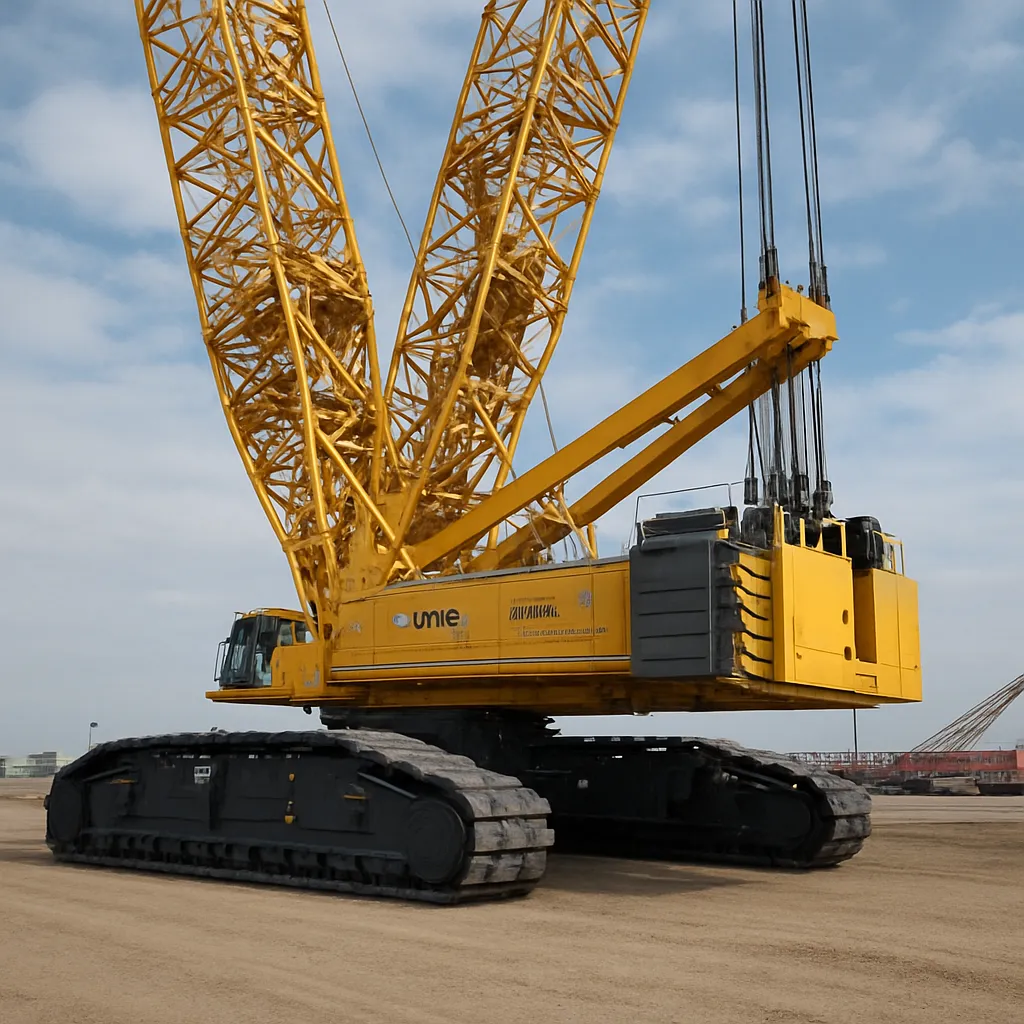
The XCMG XGC88000W is a heavy-duty crawler crane designed to meet the demands of large-scale lifting projects. Combining modular design, advanced hydraulics, and modern operator systems, this model is used in demanding industries where lifting capacity, stability, and site adaptability are essential. The following article examines the machine’s origins, technical characteristics, typical applications, operational considerations, and market role, and offers practical information for companies evaluating the XGC88000W for complex lifting tasks.
Overview and background
The XCMG XGC88000W belongs to XCMG’s line of large crawler cranes aimed at heavy civil engineering, energy and petrochemical, and infrastructure markets. XCMG (Xuzhou Construction Machinery Group) expanded its global footprint by developing high-capacity crawler cranes that can compete with established Western and Japanese brands. The XGC88000W was introduced as part of XCMG’s strategy to deliver machines with high mobility on rough ground, efficient load handling, and a modular design that simplifies transport and assembly.
While the XGC88000W is a derivative of the XGC88000 series, the W variant places emphasis on enhanced configurability for long-reach applications and improved operator ergonomics. The model is intended to bridge the gap between ultra-large lattice-boom crawlers and smaller, more mobile units—allowing contractors to undertake heavy lifts without the logistical cost and complexity of the very largest cranes.
Key technical characteristics
The XGC88000W’s most notable attribute is its high rated capacity. Reported figures for this series indicate a rated lifting capability in the order of approximately 880 tonnes (the exact rating depends on configuration and specific model year). The machine is characterized by:
- Modular lattice boom sections that can be assembled to achieve significant reach. Depending on configuration, the combination of main boom and jibs can provide a long working height suitable for tall nucleus projects.
- Counterweight system that is designed to be configurable and relatively quick to rig, enabling the crane to be optimized for a broad range of load and radius conditions.
- Hydraulic and winch systems engineered for smooth, controllable hoisting and load placement. These systems incorporate multiple winches with high line speeds for faster cycle times during repetitive lifts.
- Heavy-duty undercarriage and track system providing traction and distribution of ground pressure, allowing the crane to operate on prepared sites and to negotiate short shifts on rough terrain within job sites.
- Operator cab with modern controls, instrumentation, and optional integrated monitoring and diagnostic systems that enhance machine uptime and safety compliance.
Specific dimension and performance numbers vary by configuration (main boom length, jib length, counterweight configuration, etc.). Typical performance parameters contractors consider when choosing or planning work with an XGC88000W include:
- Rated lifting capacity: approximately 880 tonnes (dependent on radius and boom configuration)
- Main boom reach: configurable, often in long-boom setups reaching well beyond standard medium-class cranes (configurations for heavy lifts may include extended lattice sections)
- Maximum working radius: varies by counterweight and boom/jib configuration; planning must use manufacturer load charts for exact values
- Transportable modular parts: boom sections, carbody, crawlers, and counterweights are shipped separately to reduce logistics obstacles
Applications and industry use
The XGC88000W is especially suited to projects that require high-capacity lifts combined with a degree of mobility that larger, crawler-based heavy lifters may not offer without huge transport and setup costs. Typical applications include:
- Power generation projects — installation of heavy turbines, generators, transformer modules, and major auxiliary components at thermal, hydro, and gas power plants.
- Wind energy — erection of onshore wind turbine components at sites with limited crane positioning options; the machine supports heavy nacelles and tower sections where sizable radii and controlled lifts are needed.
- Petrochemical and refinery construction — lifting modules, columns, and vessels that require both capacity and precise placement.
- Bridge and civil works — placing large precast elements, bridge girders, and heavy formwork sections in constrained or uneven terrain.
- Heavy industrial installations — handling and setting of large presses, steel mill components, and other oversized equipment during plant turnarounds or new installations.
The machine’s modularity allows owners to tailor the boom and counterweight packages to the lift profile of the job. That flexibility reduces the need to hire multiple crane types or the very largest class cranes for lifts that fall within the XGC88000W’s envelope.
Design features and innovations
XCMG introduced several design features intended to give the XGC88000W competitive advantages in lift efficiency, operator comfort, and maintenance simplicity:
- Modular counterweight blocks — blocks can be added or removed to quickly change the crane’s tail moment and achieve the required load chart for a job. This modularity also simplifies transportation because counterweights can be shipped in smaller pieces.
- High-strength lattice boom materials — the use of optimized steel sections reduces boom weight while preserving bending strength, enabling longer booms without excessive self-weight penalties.
- Advanced control and monitoring — integrated load moment indicators, anti-two-block systems, and optional remote diagnostics improve safety and reduce the risk of misloading. These systems are engineered to comply with international safety standards.
- Efficient powertrain options — depending on configuration year and market, the unit may offer engines and hydraulic systems calibrated for fuel efficiency during typical jobsite cycles, reducing operational costs on long projects.
- Rigging and assembly aids — dedicated lifting points, simplified pin-and-socket connections, and alignment aids for boom sections and carbody pieces that speed up on-site assembly.
These design decisions reflect XCMG’s emphasis on a balance between performance, transportability, and life-cycle cost — appealing to contractors who need a predictable and adaptable lifting asset.
Transport, assembly, and site logistics
One of the most important practical considerations for heavy crawler cranes is transport and assembly. The XGC88000W is designed so its major components—crawler carriers, carbody, boom sections, counterweights, and superstructure—can be transported on standard heavy-haul trucks or trailers in modular pieces. Typical logistic considerations include:
- Advance planning for route surveys to accommodate large or heavy components and to identify obstacles such as weight-limited bridges, tight turns, or low overhead clearances.
- Site preparation to provide stable, level support for crawlers and to manage ground-bearing pressures, especially when deploying heavier counterweights or during heavy lifts.
- Use of auxiliary cranes or mobile cranes during erection phases to assemble boom sections and place counterweights, depending on site access and the chosen assembly sequence.
- Time budgeting for assembly and disassembly; modular designs reduce the number of oversized transports and can cut setup time compared with older-generation ultra-large cranes.
Contractors typically perform detailed lift plans and method statements before bringing the crane to site. The manufacturer’s load charts and the crane’s on-board monitoring systems are used to verify safe working configurations for each lift. Good site logistics planning yields significant savings in mobilization cost and reduces project delays.
Safety, maintenance, and operator considerations
Safety is a primary focus when operating heavy crawler cranes. The XGC88000W offers several systems and practices to mitigate risk:
- Electronic safety systems such as rated capacity indicators (RCI), overload protection, anti-two-block, and wind-speed monitoring help prevent accidents caused by human error or adverse conditions.
- Operator ergonomics — modern cabs with ergonomic controls, clear instrumentation, and improved visibility reduce operator fatigue and improve precision during lifts.
- Planned maintenance — manufacturers supply maintenance manuals and recommended service intervals for hydraulic systems, winches, slewing bearings, and undercarriage components. Proactive maintenance programs extend component life and reduce unplanned downtime.
- Training and certification — because of the complexity and potential hazards of heavy lifts, operators and rigging crews should be certified and trained on the XGC88000W’s specific controls, load charts, and safety protocols.
Owners often adopt condition-monitoring systems (oil analysis, vibration analysis, and electronic fault logging) to detect component wear early. These practices can reduce long-term operational costs and help maintain resale value.
Operational economics and lifecycle considerations
Investing in a machine like the XGC88000W involves weighing acquisition or rental costs against potential project revenues. Relevant economic factors include:
- Acquisition cost vs. rental options — for contractors with frequent heavy-lift demand, owning a high-capacity crawler can be economical. For occasional use, renting or leasing can avoid high capital expenditure and storage/maintenance overheads.
- Fuel and operating costs — efficient powertrain tuning and smart load planning can lower fuel use. Hydraulic winch systems designed for fast cycle times reduce work hours on repetitive lifts.
- Resale and utilization rates — machines maintained to manufacturer standards retain higher resale values. High utilization across diverse sectors (energy, infrastructure, petrochemical) improves total return on investment.
- Insurance and compliance costs — larger cranes typically carry higher insurance premiums and require strict compliance with local lifting regulations and inspection standards.
Proper job selection and thorough lift planning are critical to achieving favorable lifecycle economics. Owners often maintain relationships with mobile rigging specialists and transport companies to minimize the secondary costs associated with heavy lift operations.
Market position and comparisons
The XGC88000W competes in the heavy crawler crane segment against machines from global manufacturers. Buyers compare such cranes on a combination of rated capacity, boom reach, transportability, maintenance support, spare parts availability, and total cost of ownership. XCMG’s competitive advantages include:
- Cost-competitive pricing relative to some Western-manufactured heavy cranes.
- Rapid development cycles and local manufacturing strengths in China that can shorten lead times.
- Growing global dealer and service networks that support international deployments.
Potential drawbacks cited by some operators can include parts lead times in certain regions, or the necessity to ensure local service providers are versed in the model’s specifics. However, as XCMG’s global aftermarket support has expanded, these issues have lessened in many markets.
Case studies and notable uses
While specific client projects vary, typical case studies for an XGC88000W involve:
- Installation of heavy turbine and generator sets at a combined cycle power plant, where the crane’s combination of capacity and reach facilitated precise placement without requiring a larger double-crane lift.
- Onshore wind turbine erection on challenging terrain, where the crawler undercarriage provided the site mobility needed to position the crane correctly and the boom/jib configuration handled the heavy nacelle lifts.
- Module lifts in refinery construction, where pre-assembled process modules weighing several hundred tonnes were placed inside structures with narrow access, demanding both control and high lifting performance.
In these projects, the XGC88000W’s ability to be configured for particular radius and counterweight conditions minimized the need to bring in specialized ultra-heavy lift units, saving mobilization time and cost.
Procurement and specification advice
If you are considering the XCMG XGC88000W for purchase or rental, follow these steps to evaluate fit-for-purpose:
- Gather detailed lift plans for the most demanding lifts your fleet will encounter (weights, radii, height requirements, and site constraints).
- Request official manufacturer load charts for the exact crane configuration you would use, and verify that the charts cover the full envelope required.
- Assess logistics for transport and assembly at representative project sites, including any special permits or route surveys needed.
- Confirm spare parts availability and regional service support from XCMG or authorized dealers.
- Factor in lifecycle costs, including operator training, routine maintenance, insurance, and downtime risk mitigation.
Using formal tender or rental comparisons that include true mobilization, demobilization, and operating day rates will reveal the most realistic cost picture for project budgeting.
Conclusion
The XCMG XGC88000W is a capable heavy crawler crane that offers a strong balance of capacity, modularity, and adaptability for major lifting tasks across energy, infrastructure, and industrial markets. Its design emphasizes configurable boom and counterweight systems, modern safety and control features, and transport-friendly modularity. For contractors and owners, the model can reduce reliance on multiple cranes, lower mobilization overhead for mid- to high-capacity lifts, and deliver dependable performance when paired with disciplined maintenance and certified operation.
When selecting this crane, ensure that manufacturer load charts and the selected configuration meet your specific lift requirements, and plan logistics carefully to optimize the machine’s advantages while controlling total project cost.


)
)