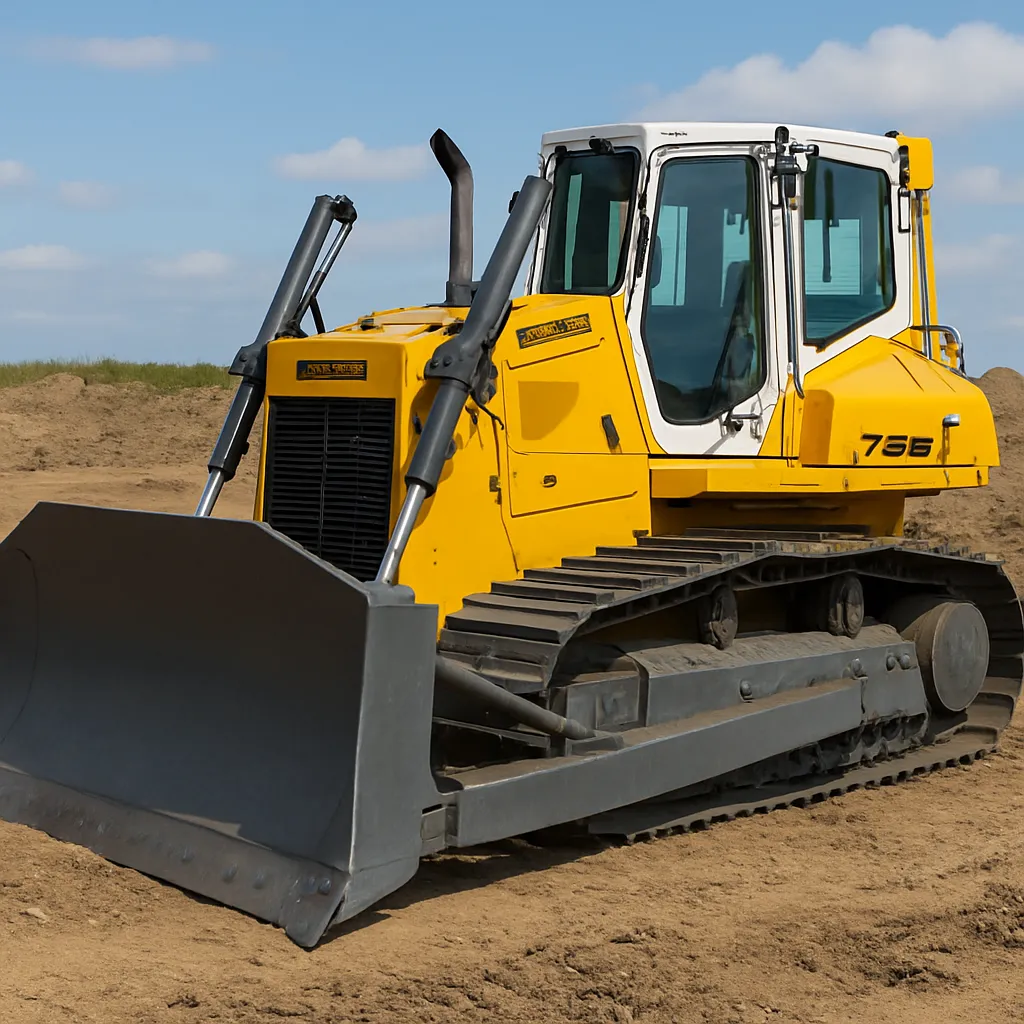
The Liebherr PR 734 is a versatile medium-sized crawler dozer designed to meet the demands of heavy civil engineering, earthmoving and quarry applications. Combining robust mechanical design with practical operator-focused features, it occupies a niche where power, precision and reliability are required without the footprint of the largest dozers. In the following sections we explore the machine’s design, typical specifications, use cases, operational strengths, maintenance considerations and market context, highlighting the characteristics that make the PR 734 valued by contractors and rental fleets worldwide.
Design and construction: robust basics and user-focused details
The PR 734 reflects Liebherr’s long-standing approach to heavy equipment design: emphasize structural integrity, simplify serviceability and provide comfort and control for the operator. The undercarriage and final drive are engineered to withstand high lateral and torsional loads encountered in dozing and pushing operations, while the chassis provides a stable platform for accurate blade work.
Structural components
- Frame and chassis: The mainframe is designed for torsional stiffness to preserve blade geometry and ensure even wear on tracks and rollers during heavy use.
- Blade systems: The PR 734 can be fitted with different blade types — straight (S- blade), universal (U-blade) and semi-U or multi-purpose — to match site requirements such as finish grading, bulk earthmoving or material pushing.
- Undercarriage: Heavy-duty track frames with robust rollers, idlers and sprockets reduce downtime and support higher traction forces. Track shoe width can often be selected to optimize ground pressure.
Powertrain and hydraulic layout
Liebherr machines typically integrate drivetrain and hydraulics for both efficiency and serviceability. The PR 734 is engineered to balance tractive effort and controllability: its powertrain delivers steady propulsion and blade control through carefully matched engine output and final drive gearing. Hydraulics are sized to provide smooth blade movements and responsive controls that allow skilled operators to perform fine grading operations as well as heavy dozing.
Cab and operator ergonomics
Operator comfort and visibility are important for productivity and safety. The PR 734’s cab features an elevated seating position with broad sightlines to the blade and tracks. Controls are arranged to minimize fatigue during long shifts, with easy access to diagnostic information and routine service points. Climate control and sound insulation are typically provided to improve working conditions in extreme environments.
Typical specifications and performance characteristics
Exact specifications for the PR 734 vary with year of manufacture, optional packages and regional configurations. The values below represent typical ranges and features found on machines of this class and should be confirmed with the manufacturer or dealer for specific units.
- Operating weight: Generally ranges in the mid-20 tonne class, depending on blade configuration and optional counterweights.
- Engine power: Diesel engine output commonly sits in the mid- to high-hundred kilowatt range, optimized for torque delivery at low engine speeds to improve tractive force and fuel economy.
- Blade capacity: Blade volumes vary by type; capacities and widths are selectable to suit either precision grading or heavy material displacement.
- Travel speed: Designed for on-site maneuverability with low and high travel ranges suitable for repositioning and working feeds.
- Ground pressure: Track shoe width options allow adaptation to soft ground or firm surfaces, trading flotation for traction as required.
- Fuel consumption: Fuel usage depends heavily on task profile; dozing and pushing heavy material demands more fuel than light grading. Typical mid-duty machines are optimized to balance power and consumption.
Beyond raw numbers, performance is characterized by the PR 734’s ability to combine steady pushing power and controllable hydraulics. This makes it efficient in bulk excavation and stable when performing the more delicate tasks required on finishing operations.
Applications and practical use cases
The PR 734 is well-suited to a broad spectrum of projects. Its combination of size, power and mobility enables it to operate effectively in environments that require a balance between force and precision.
Construction and civil engineering
- Site preparation: stripping topsoil, rough grading and establishing level platforms for foundations or road subgrades.
- Trench backfilling: pushing and contouring fill material with fine control over blade angle and height.
- Road building: spreading and compaction assistance for base and subbase layers, particularly on medium-width road corridors where large dozers would be impractical.
Quarries and mining
- Stockpile management: spreading and reclaiming material while maintaining predictable cycles and reducing material segregation.
- Haul road maintenance: keeping access roads graded and safe for heavy-haul vehicles.
- Bench trimming and cast blasting cleanup: the PR 734’s robustness helps in post-blast cleanup and reshape operations.
Forestry, agriculture and land reclamation
- Site clearing and debris management: removing roots, stumps and woody material when fitted with appropriate attachments.
- Land reclamation: reshaping spoil heaps, contouring slopes and re-establishing drainage lines.
Specialized tasks
With optional equipment such as rippers, winches or angle-blades, the PR 734 can take on niche tasks including rock ripping, pulling and specialized grading where machine stability and push force are essential.
Operational advantages and notable innovations
Several operational strengths make the PR 734 attractive to owners and operators:
- Durability: Built to withstand heavy cyclic loads typical of dozing and ground-engagement tasks, reducing structural fatigue and extending service life.
- Traction: Track geometry and undercarriage design provide high tractive effort, improving performance on slopes and in soft underfoot conditions.
- Efficiency: Engine and hydraulic tuning aim to reduce unnecessary fuel use while maintaining high productivity—important in long-shift environments.
- Serviceability: Grouped service points, accessible filters and modular components help decrease downtime and lower maintenance labor costs.
- Operator comfort: Good visibility and ergonomic controls shorten learning curves for new operators and contribute to consistent productivity.
Liebherr also invests in electronic monitoring and telematics on many of its models. When fitted, these systems enable fleet managers to track fuel consumption, hours of operation, maintenance intervals and location — improving uptime and controlling operating costs.
Maintenance, lifecycle and operator guidance
Proper maintenance is key to achieving the expected lifecycle of a PR 734. Best practices include scheduled inspections of undercarriage wear items, regular replacement of hydraulic and engine filters, timely oil changes and attention to track tension.
Undercarriage care
- Regularly inspect track shoes, pins and bushings for uneven wear.
- Keep track tension within manufacturer recommendations to prevent premature wear of rollers and sprockets.
- Clean out accumulated debris and material that can accelerate wear on moving components.
Hydraulics and engine
- Maintain clean hydraulic fluid and replace filters at recommended intervals to protect pumps and valves.
- Monitor engine air intake and cooling systems, especially in dusty or hot environments where overheating or restricted airflow can reduce performance.
- Use genuine or OEM-equivalent parts for wear components to maintain reliability.
Operator training
Skilled operators extract more productivity and produce higher quality work while reducing wear. Training should focus on:
- Efficient dozing techniques to reduce fuel consumption and cycle times.
- Correct blade settings for different materials and tasks.
- Safe maneuvering on slopes and around obstructions.
Safety and environmental considerations
Safety features on machines like the PR 734 typically include rollover protection, emergency egress, rear-view cameras or mirrors and operator restraints. Regular safety audits and adherence to site-specific protocols help mitigate risk during operations.
Environmental considerations are increasingly important. Modern diesel engines meet emissions standards and may be fitted with exhaust after-treatment systems to reduce NOx and particulate matter. Further measures to reduce environmental impact include:
- Optimizing machine use to lower overall fuel consumption per cubic meter moved.
- Using biodegradable hydraulic fluids where application and environment demand.
- Implementing idle-management strategies and telematics to limit unnecessary idling time.
Market context, ownership models and economics
The PR 734 is most commonly acquired by medium-to-large civil contractors, rental companies and enterprises operating in quarries or large estates. The purchasing decision often balances acquisition cost, resale value, expected utilization and maintenance costs.
Ownership options
- Purchase: Preferred by high-utilization owners who plan long-term use and can amortize acquisition costs.
- Lease or rental: Attractive for short-term projects, seasonal demand or when firms want to avoid capital expenditure and maintenance overhead.
- Certified used market: Many contractors opt for late-model used machines that provide reliable service at reduced capital outlay.
Costs of operation
Operating costs depend on fuel prices, maintenance schedules and the intensity of use. Deploying a dozer efficiently — planning passes, minimizing unnecessary repositioning, and using the correct blade configuration — directly reduces cost per cubic meter moved. Telematics can help fleet managers pinpoint inefficiencies and schedule preventive maintenance to avoid costly downtime.
Comparisons and complementary equipment
In practice, the PR 734 will often operate alongside complementary machines such as excavators, wheel loaders and compactors. When compared with larger heavy-duty dozers, the PR 734 offers better maneuverability and lower ground pressure, making it preferable in tighter sites or on softer soils. Compared with smaller dozers, it provides greater push force and wider blade options for more efficient bulk work.
Conclusion
The Liebherr PR 734 is a practical and resilient choice for contractors who require a dependable medium-class crawler dozer. Its balance of structural strength, operator comfort and adaptable configurations allows it to serve a broad range of tasks — from precision grading to heavy material handling in quarries. Properly maintained and operated, it provides efficient performance and predictable lifecycle costs, particularly when supported by telematics, attentive servicing and skilled operators. For buyers, the decision to select a PR 734 should consider project profiles, ground conditions, and long-term utilization to ensure alignment with the machine’s capabilities and strengths.


)
)