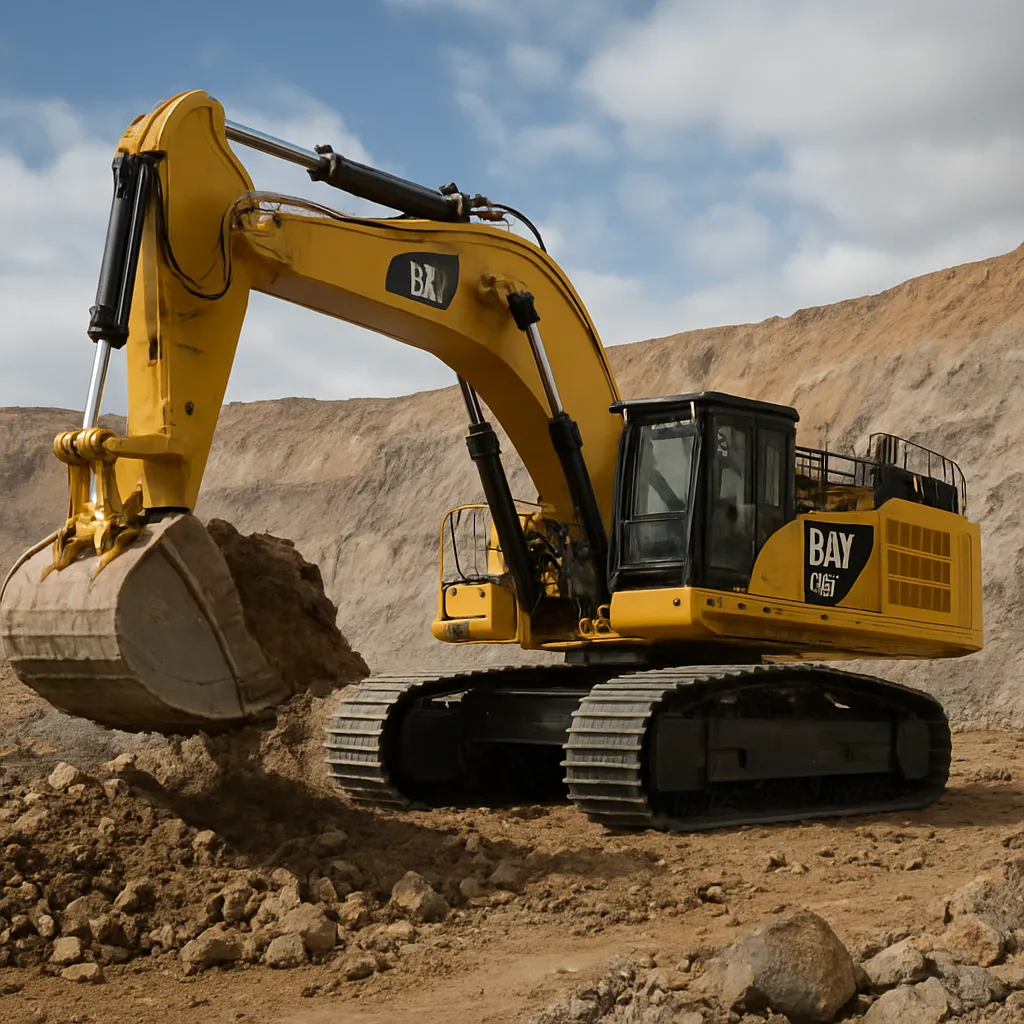
The Caterpillar 6030B is a purpose-built heavy-duty mining excavator engineered to meet the rigorous demands of large-scale open-pit operations. Designed to move massive volumes of overburden and ore, it combines advanced hydraulic systems, robust structural components and operator-centered controls to deliver reliable performance in the most challenging environments. This article explores the machine’s design, typical applications, operational characteristics, maintenance needs, environmental and economic considerations, and real-world uses. Where exact figures are available or commonly reported, approximate values and ranges are given — configurations and site conditions can alter numbers significantly.
Design and technical overview
The Caterpillar 6030B is part of Caterpillar’s line of large hydraulic mining excavators that bridge the gap between medium-sized hydraulic shovels and the ultra-large mining rope shovels. The machine is engineered to maximize cycle times, minimize downtime and provide a balance between bucket size, swing speed and hydraulic efficiency.
Structural and mechanical components
- Frame and boom: The structural frame and boom are built from high-strength steel with reinforcement at high-stress points to withstand repetitive heavy impacts and high bending moments. The boom and stick geometry is optimized for digging depth, reach and bucket fill.
- Hydraulic system: The excavator uses a high-capacity **hydraulic** system with pumps, valves and cylinders sized for continuous heavy-duty cycles. Advanced control valves and electronic regulation allow smooth, precise power delivery for digging and swinging motions.
- Undercarriage and slewing: Heavy-duty track link assemblies and large-diameter slewing bearings provide stability during loading and swinging. The undercarriage is designed for long service life in abrasive mine environments.
- Powertrain and engine: The 6030B is equipped with large diesel engines tuned for continuous high-load operation. Engines are selected for reliability, serviceability and compatibility with emissions regulations at the time of configuration. Power output and fuel consumption vary by engine model and site altitude/conditions.
- Operator cabin and controls: Ergonomic cabs with climate control, soundproofing and adjustable seating reduce operator fatigue. Electronic monitors, joysticks and optional integrated fleet-management systems provide more efficient operation and easier diagnostics.
Typical physical and performance parameters (approximate)
Exact values depend on specification, attachments and regional configuration. Below are typical ranges reported for machines in the same class as the 6030B:
- Operating weight: approximately 250–400 tonnes (configuration dependent).
- Bucket capacity: commonly from about 12 m3 to over 30 m3 (varies with material density and application).
- Digging reach and depth: designed for deep cuts in open-pit benches and for loading large haul trucks; reach and depth depend on boom and stick options.
- Rated cycle productivity: highly dependent on material characteristics, bucket fill factor, operator skill and truck matching. Typical measured output can range from several thousand to over ten thousand tonnes per day on well-optimized operations.
- Fuel consumption: highly variable; often in the tens to low hundreds of liters per hour under heavy load, influenced by duty cycle and machine tuning.
These figures are approximate and meant to illustrate scale and expected ranges. When planning, operators should obtain exact manufacturer specifications for a given machine serial number and configuration.
Applications and operational roles
The strengths of the Caterpillar 6030B make it well-suited to a number of critical roles within mining and heavy earthmoving operations.
Open-pit mining
The 6030B excels at moving large volumes of waste rock and ore in open-pit settings. Its combination of bucket size and hydraulic power allows it to load large rigid-frame haul trucks or articulated dump trucks efficiently. Typical tasks include:
- Overburden removal (bench stripping)
- Ore loading into haul trucks
- Cutback benching and high-bench maintenance
- Rehandle and stockpile feed
Quarries and aggregates
In high-capacity quarries that supply aggregates for construction and industrial uses, the 6030B is used to excavate and load large volumes of rock and material. Its robust design helps manage abrasive materials and cyclic impact loading.
Bulk material handling and ports
When configured for bulk handling, large hydraulic excavators like the 6030B are useful at ports, terminals and stockyards to move bulk commodities such as coal, phosphate, iron ore fines and other granular materials. Bucket options and wear packages can be selected to optimize for bulk density and abrasion.
Specialized roles
With appropriate attachments, the machine can take on specialized roles such as ripping, selective trenching, or demolition of large constructed features. Quick couplers, different bucket types and hydraulic thumb attachments broaden the machine’s versatility.
Buckets, attachments and customization
One of the key ways to optimize the 6030B for a specific site is through selection of buckets and attachments. Correct matching of bucket geometry and wear protection to the material significantly impacts fuel efficiency, cycle time and component life.
- General-purpose buckets are used for a wide range of materials where a balance of fill factor and wear protection is required.
- Heavy-duty rock buckets feature thicker steel, reinforced lips and high-wear liners for abrasive and chunky rock.
- High-capacity buckets enlarge the payload per cycle for light-density materials, while smaller high-density buckets ensure safe and efficient carriage of heavy ores.
- Grapples and clamshells can be fitted for special handling tasks in bulk material operations.
- Ripper and hydraulic hammer attachments facilitate preconditioning hard materials or demolition tasks.
Modular wear packages — such as bolt-on wear strips, side protectors and reinforced bucket lips — extend service intervals in abrasive conditions. Cat and aftermarket suppliers offer a range of attachment options tailored to specific industries.
Performance, productivity and fleet integration
Maximizing the productivity of a 6030B requires planning across equipment matching, operator training and site logistics. Key areas that influence performance include cycle time, bucket fill factor, truck loading efficiency and equipment availability.
Cycle optimization
- Efficient digging techniques and proper bench design improve bucket fill and reduce wasted motion.
- Matching truck body sizes and bed heights to the excavator’s dump profile reduces truck waiting times and increases overall throughput.
- Operator coaching, using real-time metrics and feedback, often yields significant productivity gains.
Fleet monitoring and automation
Caterpillar’s integrated technologies (for example, fleet management and telematics platforms like Product Link and MineStar) allow real-time monitoring of machine health, fuel usage and production metrics. These systems support:
- Remote diagnostics and predictive maintenance
- Utilization tracking and performance benchmarking
- Load-matching and cycle optimization through automatic payload weighing systems
When deployed at scale, such digital tools reduce unplanned downtime and help managers allocate assets for peak efficiency.
Operation, maintenance and lifecycle management
Long, productive life of a 6030B depends on proactive maintenance, component care and operator discipline. Mining machines usually operate in harsh conditions that accelerate wear and fatigue, so structured programs are critical.
Planned maintenance
- Daily inspections for wear, fluid levels, filtration and track tension.
- Scheduled lubrication and hydraulic fluid changes following OEM intervals adjusted for site conditions.
- Wear component monitoring (bucket lip, bushings, pins, track shoes) with preemptive replacement schedules to avoid catastrophic failures.
- Engine and transmission service intervals per hours of operation, with special attention to air filtration and cooling systems in dusty environments.
Component overhaul and rebuild
Major components such as final drives, swing motors and hydraulic pumps may be rebuilt or remanufactured to reduce replacement costs and extend machine life. A well-maintained 6030B in mining service can remain productive for many years; lifecycle cost analysis often favors remanufacturing critical components when feasible.
Operator training and safety culture
Skilled operators reduce wear and improve productivity. Training should include:
- Efficient bucket-filling techniques and swing management.
- Daily and weekly inspection routines.
- Safe interaction with haul trucks, traffic management and mobile equipment rules in the pit.
Safety systems such as warning lights, cameras, ROPS/FOPS cabs, anti-slip access and emergency shutdown procedures are essential in modern installations.
Economic and environmental considerations
Purchasing and operating a large mining excavator represents a significant capital and operating expense. Decisions should consider total cost of ownership (TCO), including acquisition, fuel, maintenance, parts, operator labor and resale value.
Economic drivers
- Output per hour and machine availability are the main drivers of revenue generation when tied directly to ore movement.
- Matching equipment capacity across the fleet (excavators, trucks, conveyors) reduces bottlenecks and idle costs.
- Preventive maintenance and remote monitoring reduce unplanned downtime and expensive repairs.
Environmental impact and mitigation
Large diesel excavators contribute to greenhouse gas emissions and local air pollution. Operators can reduce environmental impact through:
- Optimized duty cycles to lower fuel burn per tonne moved
- Regular engine tuning and exhaust after-treatment systems for emissions control
- Exploring lower-carbon fuel options where available (e.g., biodiesel blends, synthetics)
- Site planning that reduces haul distances and material re-handling
Caterpillar and other OEMs continue to develop improved engine controls, hybrid concepts and electrification strategies to lower fuel consumption and emissions in large mining equipment over time.
Real-world deployment and industry examples
The 6030B and machines of similar class are widely used across commodity sectors. Examples of typical deployments include:
- Coal open-pit mines — high-volume overburden stripping and coal loading into trucks or conveyors.
- Copper, iron ore and gold operations — bench-scale ore extraction and waste removal, where precise loading of large trucks is critical for downstream processing efficiency.
- Quarries and construction aggregate producers — continuous material extraction and sizing operations with high uptime requirements.
- Bulk terminals — loading ships and stockpile rehandling at ports and terminals coping with high throughput.
Case scenarios from multiple sites commonly report that matching bucket design to local geology, finely-tuned operator training and close coordination with maintenance teams produce the best lifecycle outcomes. When these elements are aligned, operators often see substantial productivity improvements and lower operating cost per tonne.
Safety, regulations and best practices
Operational safety for a 6030B centers on machine integrity, personnel control around equipment, and adherence to regulatory frameworks. Best practices include:
- Establishing exclusion zones during operation and maintenance activities.
- Regular verification of safety systems — alarms, cameras, detection systems and emergency stops.
- Operator certification programs and ongoing refresher training.
- Strict lock-out/tag-out protocols for maintenance on hydraulic and electrical systems.
Compliance with local and national environmental and safety regulations should be part of procurement and operational planning. Mining operators often conduct risk assessments and update procedures as new features and technologies are incorporated.
Concluding observations
The Caterpillar 6030B represents a class of heavy hydraulic excavators designed for continuous, demanding mining and bulk material handling environments. Its value lies not only in raw digging power and bucket capacity but also in the integration of maintenance strategies, operator skill, fleet management systems and application-appropriate attachments. While exact numbers — such as engine output, operating weight and bucket size — vary by configuration and region, common themes hold: matching machine capability to the task, optimizing cycle times, and investing in maintenance and digital monitoring pay dividends in availability and lifecycle cost savings.
Caterpillar machines like the 6030B are engineered to deliver high productivity, durable performance and long operational life when correctly specified and maintained. Key considerations when planning for deployment include precise bucket selection, efficient truck-matching, robust planned maintenance and attention to safety and fuel management. These elements together determine how effectively a large mining excavator will contribute to a site’s production goals and total cost of ownership.


)
)