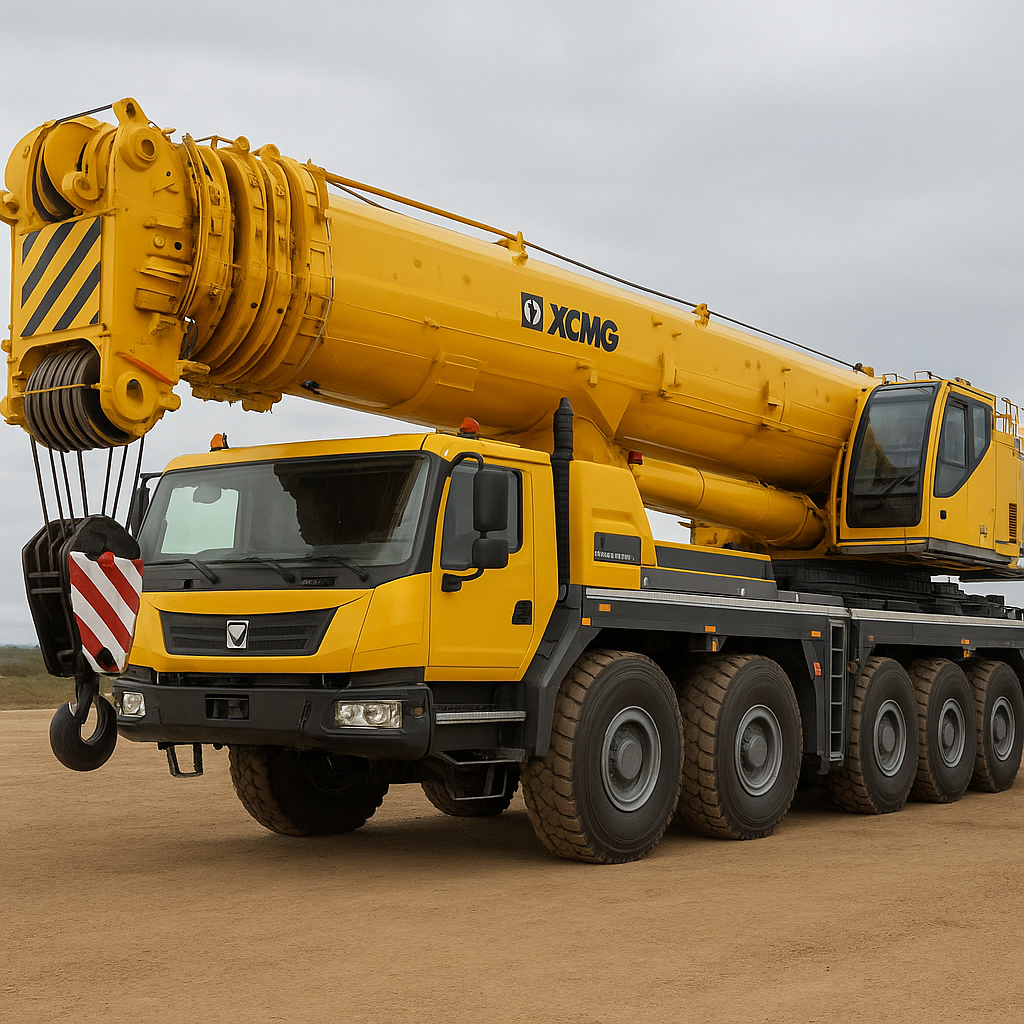
The XCMG XCA1600 is a modern example of an all-terrain crane that combines road-going mobility with powerful lifting performance and versatile configurations. Designed to perform in a wide range of environments, from congested urban construction sites to remote industrial projects, the machine has attracted attention for offering a balance of capacity, adaptability, and cost-effectiveness. In this article we explore the technical characteristics, typical applications, operational considerations, and other practical information about the XCA1600, highlighting what makes this model relevant for contractors, rental fleets, and heavy-lifting operations worldwide.
Design and technical features
The XCMG XCA1600 presents itself as a purpose-built solution in the category of all-terrain cranes, combining a road-licensed multi-axle carrier with a potent superstructure. Core elements that define its performance include the chassis and suspension design, the telescopic boom system, the hydraulic circuits and winches, and the operator control systems.
Chassis, mobility and steering
- The carrier is engineered for on-road travel and off-road maneuverability. Multiple axles with robust suspension and tire options allow the crane to be driven between sites without requiring excessive disassembly or transport by trailer in many regions.
- The unit typically features axle steering modes (e.g., front-wheel, crab, coordinated multi-axle steering) to reduce turning radius and facilitate positioning in tight spaces. This enhances site mobility and reduces the need for additional maneuvering equipment.
- Road-legal configuration, gross vehicle weight, and maximum permitted speed will vary by market and local regulations. Manufacturers commonly optimize axle load distribution and chassis width to meet international transport rules while retaining lifting capability.
Superstructure, boom and lifting system
The signature element of the XCA1600 is its telescopic boom, designed to combine compact transport length with substantial reach. Typical design characteristics include:
- Multi-section telescopic boom with hydraulic extension. Depending on configuration, main boom length on similar cranes ranges from medium reach (around 30–40 meters) to extended reach (50–60 meters or more) when optional sections are fitted.
- Removable or foldable jib options to increase maximum hook height and outreach for specific lifts such as erecting towers, installing modules, or placing components at height.
- High-capacity winches and robust rope arrangements enabling both heavy lifts and precise load placement. Dual-speed winches and intelligent line pull control are common features to balance speed and power.
Powertrain and hydraulics
A reliable engine and hydraulic system are central to lifting performance and mobility. The XCA1600 is typically equipped with an efficient diesel engine matched to a heavy-duty transmission and an advanced hydraulic system that manages boom extension, slewing, hoisting and outrigger operations. Electronic control systems often manage load-sensing hydraulics for smooth, energy-efficient operation.
Controls and safety systems
- Operator cabs on modern all-terrain cranes are ergonomic and fitted with climate control, adjustable seating, and high-visibility glazing to improve operator comfort and visibility.
- Electronic load moment indicators (LMI), anti-two-block protection, overload cutoff systems, and moment-limiting software are typically integrated to ensure safe lifting. These features reduce operator error and provide real-time feedback on the crane’s working envelope.
- CAN-bus or similar digital communication architectures are used for diagnostics, inter-system coordination and remote troubleshooting—improving uptime and making maintenance more efficient.
Applications and typical use cases
The flexibility of an all-terrain crane like the XCA1600 makes it suitable for many industries. Its combination of on-road mobility, all-terrain capability, and lifting power enables rapid deployment across multiple project types.
Construction and civil engineering
- High-rise building construction: delivering structural elements, placing concrete pumps, and installing façade panels where reach and compact travel configuration are needed.
- Bridge and overpass assembly: lifting large precast segments, girders, and modular components that require both capacity and reach in confined or linear project sites.
- Infrastructure projects: roadworks, rail construction, and municipal projects where cranes must be driven between multiple work zones and operate on uneven or restricted terrain.
Energy sector
- Wind power: erection and maintenance of wind turbine towers and nacelles demand cranes with high hook height, precision, and the ability to handle complex lifts often in exposed sites with restricted space for assembly.
- Power plants and substations: handling heavy transformers, heat exchangers, and pipe modules during installation or maintenance.
Industrial maintenance and heavy manufacturing
Maintenance shutdowns, plant relocations, and heavy machinery installations frequently require cranes that can access tight indoor/outdoor interfaces and manage precise placements. The XCA1600 can be used to lift heavy press sections, large molds, and assembly modules while providing controlled maneuverability.
Ports, logistics and modular construction
Although larger lattice boom or mobile harbor cranes may handle the heaviest lifts at ports, an all-terrain crane is useful for loading/unloading oversized cargo, positioning prefabricated modular units into place, and assisting with project logistics where flexibility is an advantage.
Performance characteristics and operational data
Exact performance figures for specific crane configurations depend on chosen options such as boom configuration, counterweights, jibs, and winch arrangements. Below are representative values and operational considerations frequently reported for cranes in the 100–200 tonne class, which provide a useful context for the XCA1600.
- Lifting capacity: The name XCA1600 commonly designates a nominal maximum capacity of around 160 metric tonnes (at or near the crane’s shortest radius). This capacity will reduce as outreach increases according to the load chart.
- Boom reach: Typical telescopic boom lengths for similar cranes vary from approximately 30 m in base configuration up to 50–60 m or more with additional sections or extension packages.
- Maximum working radius: When combined with jibs or extensions, working radii may extend substantially, but the safe load at long radius is much lower than the rated maximum.
- Travel capability: Road travel speeds depend on local regulations and configuration, but all-terrain cranes are usually optimized to be driven on public roads between sites without heavy escort in many cases.
It is important for operators and planners to consult the crane’s official load charts provided by the manufacturer for precise numbers, as lifting capability is strictly a function of configuration, ground conditions, and regulatory constraints.
Safety, operator training and regulatory considerations
Safe operation of an all-terrain crane like the XCA1600 depends on qualified operators, thorough pre-lift planning, and adherence to regulatory standards.
- Operator certification: Operators should hold relevant licenses or certifications required by local authorities (e.g., NCCCO in the United States, CPCS in the UK, or equivalent national qualifications) and receive specific training on the model’s controls and safety features.
- Lift planning: Every lift should be planned with a lifted-weight assessment, ground bearing capacity analysis, outrigger positioning, and an assessment of nearby obstructions and power lines.
- Inspection and testing: Daily pre-operation inspections, periodic statutory inspections (e.g., monthly, quarterly, annual depending on jurisdiction), and thorough maintenance records are essential for safety and regulatory compliance.
- Technology aids: Modern safety systems such as automatic load limiting, stability indicators, remote cameras, and telematics can reduce risk and provide actionable data for fleet managers.
Maintenance, parts and lifecycle considerations
Owning and operating a heavy crane involves planned maintenance, component replacement, and a lifecycle management strategy to ensure availability and reduce total cost of ownership.
Routine maintenance items
- Hydraulic fluid and filter changes on schedule, inspection of hoses and fittings for wear or damage.
- Wire rope inspection and replacement when wear or damage thresholds are reached. Wire ropes are critical safety components and should be handled according to manufacturer recommendations.
- Winch brake and clutch maintenance, slewing gear lubrication, and inspection of telescoping boom sections for wear, corrosion, or deformation.
- Electrical and electronic system diagnostics for sensors, LMIs, cameras and telemetry modules.
Spare parts and dealer network
XCMG has developed an expanding global support network. Availability of genuine replacement parts, trained technicians, and service agreements differs by region, so prospective buyers often evaluate local after-sales support and the availability of consumables when selecting equipment.
Logistics, transport and site setup
Although all-terrain cranes are designed to move under their own power between sites, certain lifts or regulatory limits may require partial disassembly or special transport arrangements.
- Transport permits: Dimension and weight may trigger permits for oversize/overweight transport when road travel exceeds standard limits. Planning for permits, escorts, and route surveys is necessary for longer moves.
- Outrigger setup: Proper deployment of outriggers on firm, level ground with the use of cribbing or pads is essential to distribute loads and prevent ground failure.
- Time to mobilize: Depending on configuration and site constraints, machine setup and calibration can take from under an hour for simple lifts to several hours for complex, high-capacity or high-reach operations.
Environmental and economic factors
Equipment choice increasingly must consider environmental footprint, fuel consumption, lifecycle costs, and resale or rental market dynamics.
- Fuel efficiency: Modern engines and hydraulic systems are designed to optimize fuel consumption while providing necessary power. Telematics can monitor fuel usage and idling time to reduce operating costs.
- Emissions compliance: Engines must meet local emissions standards (e.g., Stage V in Europe, Tier 4 Final in the United States) in some markets—this can influence purchasing and operating decisions.
- Cost of ownership: Acquisition cost, maintenance expenses, utilization rates, and resale value drive total cost of ownership. XCMG’s value proposition historically centers on competitive purchase price combined with improving support infrastructure.
- Rental market: The flexibility of an all-terrain crane makes it a popular rental asset. Rental rates, utilization levels and residual values will vary by region and demand cycles in construction and energy sectors.
Comparative positioning and market context
XCMG has positioned itself as a major global equipment manufacturer, offering alternatives to established brands from Europe, Japan, and the United States. The XCA1600 competes on several fronts:
- Price-performance: Buyers often compare purchase price and included features versus total cost of ownership. For budget-conscious fleets, XCMG machines can offer attractive initial investments.
- Feature set: Competitive models typically include features such as variable outrigger control, advanced LMIs, and ergonomic cabs. Buyers compare these items when selecting between brands.
- After-sales support: Local dealer networks, parts availability, and service capabilities are critical considerations—particularly in remote or specialized markets.
Case examples and practical usage scenarios
To illustrate the real-world value of a crane like the XCA1600, consider a few simplified scenarios where its capabilities are leveraged effectively:
- Urban building project: A contractor uses the crane to lift precast floor slabs and MEP modules into position on a constrained downtown site. The crane’s road mobility allows quick relocation between downtown sites without heavy transport logistics.
- Wind farm installation: With extension jib and lifting accessories, the crane handles mid-size turbine nacelles and towers on a remote ridge where ground conditions vary; outriggers and ground mats are used to create a stable platform.
- Industrial shutdown: During a maintenance outage, the crane lifts large heat exchangers and piping modules into the plant interior via a temporary opening. Precise winch control and multiple hoist lines enable controlled placement.
Practical advice for prospective buyers and fleet managers
- Define the typical lift profile: Understand the most common capacities, radii and boom lengths you need. Buying capacity you rarely use increases cost without commensurate benefit.
- Consider transport and permitting constraints: If your operations cross multiple jurisdictions, evaluate how crane dimensions and weights impact travel and setup.
- Evaluate local support: Inspect the manufacturer’s dealer network and parts availability in your operating region to safeguard uptime.
- Factor in training and safety: Invest in operator training and documented lift planning processes to reduce accidents and maintain insurance coverage.
Final observations
The XCMG XCA1600 exemplifies the balance between mobility and lifting capacity that defines the modern all-terrain crane segment. For contractors, rental companies, and industries requiring reliable lifting solutions, machines in this class provide flexibility for a very broad range of projects—from building installation and industrial maintenance to renewable energy and infrastructure. While specifications and configurations vary, careful consideration of lift requirements, transport logistics, safety systems and after-sales support will ensure that a purchase yields high utilization and long-term value.
Key terms emphasized above reflect essential aspects that influence selection, operation and lifecycle management of the crane: XCMG, XCA1600, all-terrain, crane, lifting capacity, boom, telescopic, jib, stability, and hydraulics.


)
)