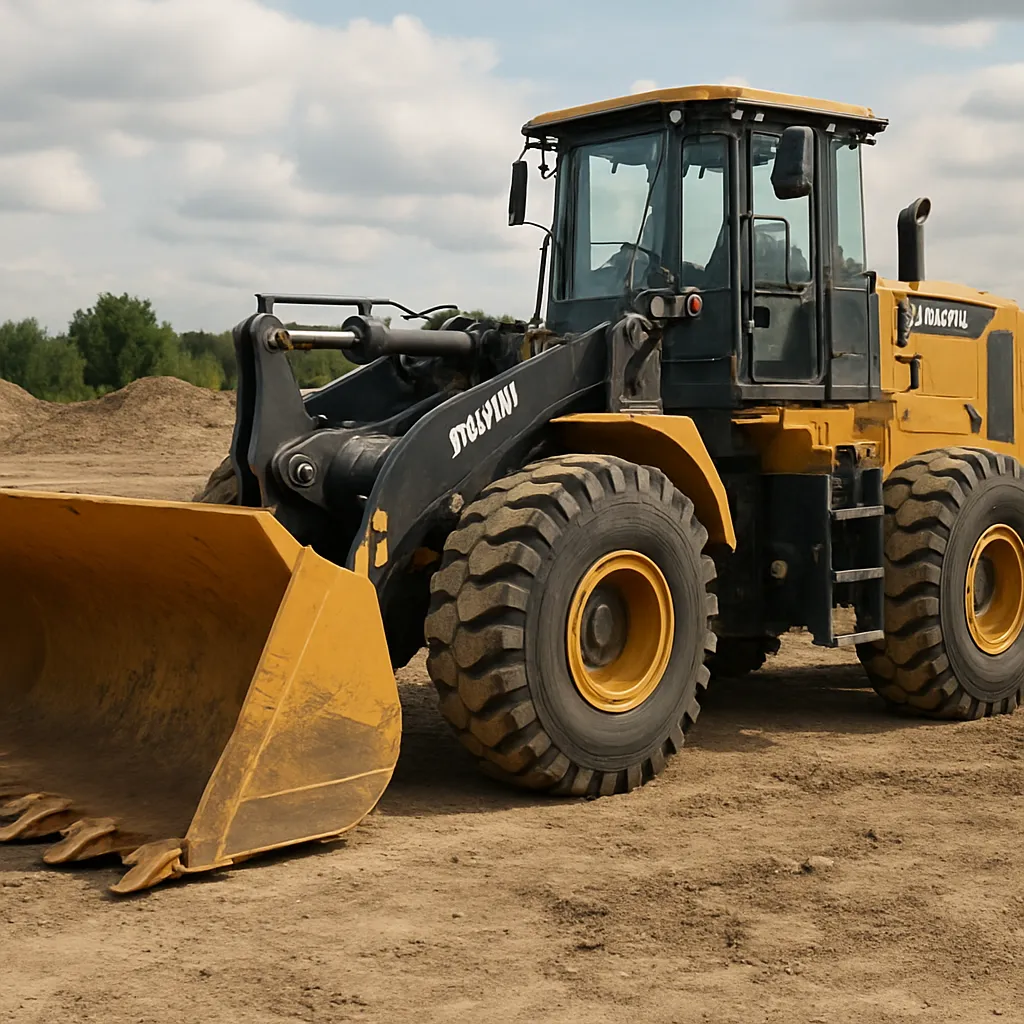
The XCMG LW600KN wheel loader represents a modern approach to heavy-material handling, combining higher productivity, robust design and operator-focused features. In this article we explore the machine’s principal characteristics, typical applications, operational advantages and important considerations for buyers and fleet managers. Wherever relevant, typical specification ranges and performance indicators are provided to help evaluate how the LW600KN fits into construction, mining and industrial operations.
Overview and positioning
The XCMG LW600KN is positioned as a large-class wheel loader intended for demanding earthmoving, bulk material handling and quarry work. XCMG has developed the LW600KN to compete in markets that require machines with a balance of high lifting capacity, fuel-efficient powertrains and durable components for continuous operation. Key design goals include improved cycle times, simplified maintenance and enhanced operator comfort to reduce fatigue during long shifts.
The LW600KN reflects industry trends toward machines that deliver not only brute force but also intelligent systems that increase overall site productivity. Emphasis has been put on structural strength, hydraulic responsiveness and modular serviceability. For fleet owners seeking a machine that can handle heavy-duty loading, stockpile management and truck loading, the LW600KN presents a compelling value proposition.
Design features and construction
At the heart of the LW600KN’s appeal are several design choices meant to boost durability and uptime. The heavy-duty front frame, reinforced Z-bar or parallel lift linkage options (depending on configuration), and fully boxed chassis members are engineered to withstand the high stresses of quarry and mining applications. XCMG typically uses high-strength steel and strategic gusseting in critical load paths to prolong service life under cyclic loads.
- Hydraulics: The loader features a high-flow hydraulic system with proportional controls for smooth, precise bucket and boom movements. The hydraulic pumps are chosen to balance power needs with fuel economy.
- Engine: The machine is offered with turbocharged diesel engines from established suppliers, tuned to deliver a compromise of torque for breakout performance and fuel consumption for long shifts.
- Transmission: Automatic power-shift transmissions and robust axles are used to deliver traction and durability for heavy loads across rough terrain.
- Cab: A pressurized, sound-insulated cab with ergonomic controls, adjustable seat and broad visibility reduces operator strain and improves safety.
Typical specifications (indicative ranges)
Exact specifications vary by market and configuration; below are typical values reported for machines in this class and for the LW600KN family in publicly available materials. Always verify final numbers with the manufacturer or an authorized dealer for the machine you intend to purchase.
- Operating weight: approximately 18,000–26,000 kg, depending on bucket, counterweight and optional equipment.
- Engine power: commonly in the range of 180–260 kW (roughly 240–350 hp), depending on emission stage and calibration.
- Bucket capacity: standard buckets typically range from 3.5 up to 6.5 m3 for general-purpose and heavy-duty rock buckets larger capacities may be available for lighter materials.
- Breakout force: approximate range 160–220 kN, depending on linkage and bucket choice.
- Maximum travel speed: often around 35–40 km/h in top gear for road transfers.
- Fuel tank capacity: generally in the 300–450 L range for extended operating intervals between refueling.
These figures should be treated as indicative. Specific builds for mining, forestry or specialized material handling will alter ratings, weights and capacities to match operational requirements.
Applications and industries
The LW600KN is versatile and serves multiple industry segments. Its principal roles include:
- Quarrying and mining: Loading haul trucks, stockpile management and feeding crushers where robust breakout force and bucket capacity increase productivity.
- Construction and infrastructure: Bulk earthmoving for roadbeds, embankments and large civil projects where cycle times and reliability matter.
- Ports and terminals: Handling bulk commodities such as aggregates, coal and ores for transfer between barges, ships and storage yards.
- Aggregate production: Feeding screens, conveyors and crushers in sand and gravel operations with high-throughput demands.
- Recycling and waste management: Moving bulk waste or feedstock where a combination of bucket versatility and machine endurance is required.
In each application the loader’s performance is shaped by how well the selected bucket type, hydraulic set-up and tire/axle configuration match the job. For heavy rock handling, rock buckets and reinforced linkage are typical; for lighter, high-volume work, larger-capacity buckets optimize cost per ton moved.
Operational performance and productivity
Productivity in a wheel loader is determined by several interacting elements: bucket fill factor, cycle time, availability and operator skill. The LW600KN is designed to maximize those elements through:
- Efficient powertrain mapping to maintain torque during bucket breakout and uphill hauling.
- Responsive, electronically controlled hydraulics that reduce lag and improve precise material placement.
- Optimized linkage geometry to enhance bucket fill and retention of material during transport.
- Improved visibility from the cab to reduce repositioning and increase safe working speed when loading trucks.
Manufacturer and operator reports for machines in this class often show measurable reductions in cycle time versus older models due to faster boom speeds and smarter transmission control logic. Furthermore, fleet managers often report improved fuel economy when machines employ automatic idle-down and intelligent shift strategies during mixed-cycle work.
Operator comfort, controls and safety
The human-machine interface is a major focus for modern loader design and XCMG has implemented features on the LW600KN to reduce fatigue and enhance safety:
- Ergonomic seating with multi-directional adjustment and suspension to protect the operator during long shifts.
- Intuitive joystick or lever controls with armrests to stabilize operator inputs.
- Clear, multi-function displays that show fuel consumption, hydraulic temperatures, maintenance reminders and fault codes.
- Rollover protective structure (ROPS) and falling-object protective structure (FOPS) as standard or optional to meet workplace safety standards.
- Cameras and proximity sensors are commonly offered to reduce blind spots and improve awareness around busy sites.
Safety systems that reduce the risk of tip-over, load loss and collisions contribute both to reduced downtime and to lower insurance or replacement costs over the machine’s life.
Maintenance, serviceability and lifecycle costs
Designing for ease of service lowers lifecycle costs. The LW600KN typically integrates features that facilitate routine checks and maintenance:
- Ground-level access to daily service points such as filters, fluid-level checks and battery connections minimizes inspection time.
- Long-life components and recommended oil-change intervals help extend planned maintenance windows.
- Modular components (fan drives, pumps, control modules) enable faster swaps and reduce mean time to repair.
- On-board diagnostics assist technicians in quickly identifying and resolving faults.
When calculating total cost of ownership, fleet managers should account for fuel consumption under real working cycles, availability of local dealer support for parts and warranty coverage, tire wear for the chosen tire pattern, and the expected resale value. Machines maintained within OEM guidelines tend to hold value better in the secondary market.
Environmental considerations and emissions
Emissions regulations and corporate sustainability goals influence engine choices and aftertreatment systems. The LW600KN is typically offered with engine packages that meet prevalent regional emission standards such as Stage V (EU), Tier 4 Final (US EPA) or other local equivalents, depending on the market. Features relevant to environmental performance include:
- Selective catalytic reduction (SCR) and diesel particulate filter (DPF) systems where required.
- Engine idle management and automatic shut-down options to reduce fuel use during inactivity.
- Design emphasis on fuel efficiency through matched hydraulic and drive systems to reduce CO2 emissions per tonne moved.
Some operators also pursue retrofits or alternative fuel options in regions where infrastructure is available, but those depend on the compatibility of the engine and aftertreatment systems for long-term durability.
Comparisons and market position
Against competing loaders from well-known global brands, the LW600KN aims to offer competitive uptime, serviceability and a favorable price-performance ratio. Key comparative points for procurement teams include:
- Initial capital cost versus expected lifecycle productivity — how the purchase price compares when normalized to tons moved.
- Availability and cost of local parts and authorized service centers — critical for minimizing downtime.
- Standard equipment levels versus optional packages — weighing whether add-on features should be factory-fitted or retrofitted later.
- Resale support and used machine demand in the target market region.
For many buyers, the choice between established legacy brands and newer global manufacturers comes down to the trade-off between acquisition cost and confidence in dealer networks and parts availability. XCMG has been expanding global service capabilities, which influences the attractiveness of their machines in international fleets.
Case uses and field performance examples
In operations that report favorable outcomes with large-class XCMG loaders, common themes emerge:
- Consistent cycle times when machines are matched to the right bucket size and drivetrain configuration for the haul distance and material type.
- Improved truck loading efficiency due to stable boom control and predictable bucket release characteristics.
- Lower-than-expected maintenance costs when routine checks are performed and genuine parts are used.
Operators frequently note that the machine’s utility increases when combined with proper operator training: techniques that maximize bucket fill and reduce unnecessary idling can significantly reduce fuel consumption and increase throughput.
Buying considerations and specification tips
When evaluating a purchase of an LW600KN or a comparable large wheel loader, consider the following checklist items to ensure the machine fits long-term operational needs:
- Define the primary application (quarry rock vs. aggregate vs. general earthmoving) — choose bucket type and linkage accordingly.
- Match engine power and transmission options to typical cycle profiles: short, heavy breakout cycles require robust torque; long-haul work benefits from transmission gearing and tire selection.
- Ensure local dealer support for parts and service, and ask about typical lead times for critical spares.
- Request fuel consumption data under representative load cycles and check if telematics packages are available for remote monitoring.
- Consider warranty packages, extended service contracts and training programs for operators and technicians.
Summary and outlook
The XCMG LW600KN is a modern heavy wheel loader designed to meet the needs of high-throughput operations across quarrying, mining, construction and materials handling industries. With a focus on structural durability, operator comfort and serviceability, the machine aims to deliver strong productivity and competitive lifecycle costs. Typical specifications place it in the large loader class with substantial bucket capacity and power, suitable for demanding loading tasks.
Ultimately the success of a machine like the LW600KN in any fleet depends on correct application matching, regular preventive maintenance and access to reliable dealer support. For operations seeking a balance of capacity, efficiency and durability, the LW600KN represents a viable option that reflects current priorities in heavy-equipment performance and operator-centered design.


)
)