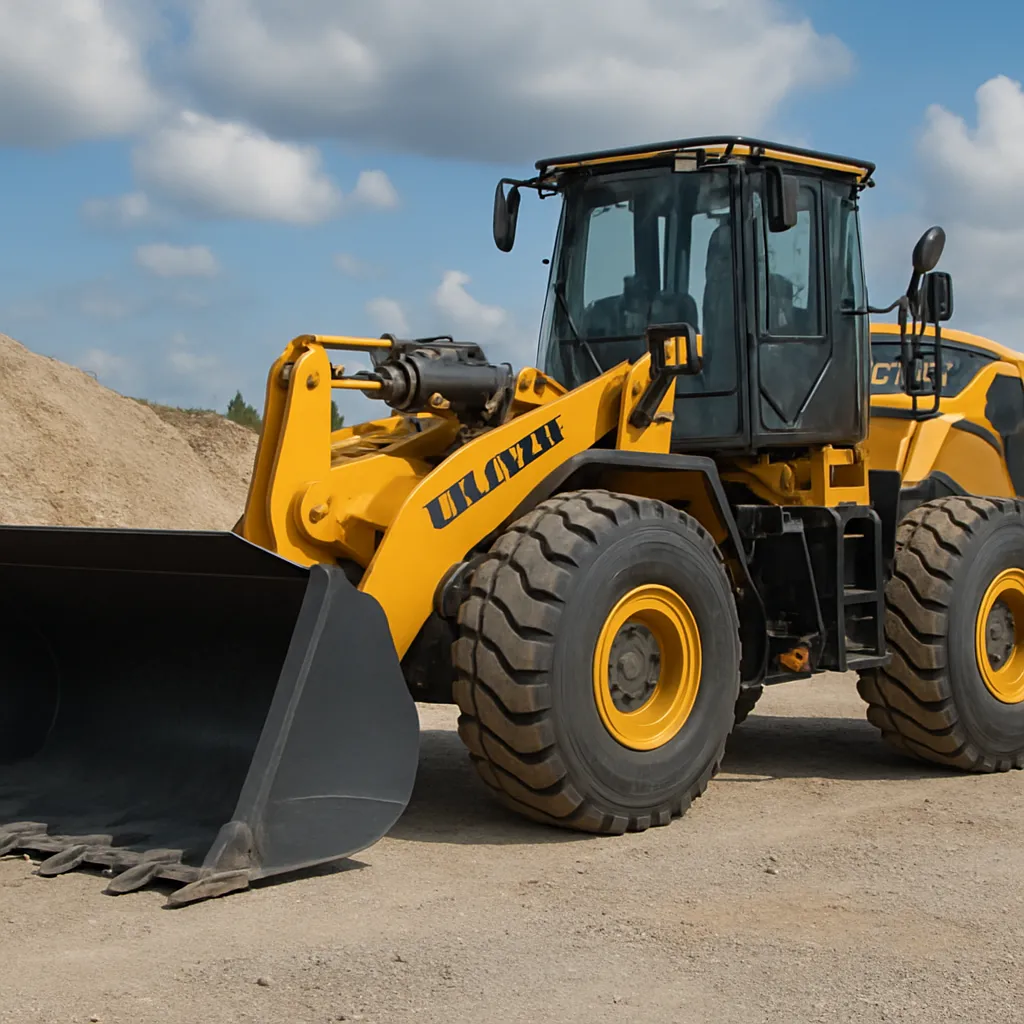
The LiuGong 875H is a heavy-duty wheel loader designed for demanding material-handling tasks in construction, mining, quarrying, ports and industrial yards. Combining robust chassis design, versatile hydraulics and operator-oriented cab features, this model aims to deliver long-term reliability and efficient loading cycles in harsh working environments. In the following sections you will find an overview of typical applications, design and performance highlights, maintenance and lifecycle considerations, and practical guidance for procurement and operation.
Overview and intended applications
The LiuGong 875H sits within the manufacturer’s range of large wheel loaders and is engineered primarily for tasks that require significant lifting capacity, breakout force and bucket volumes. Typical operational roles include:
- Loading and stockpiling of aggregates, sand and gravel at quarries and aggregate plants
- Material handling and truck loading at construction sites and bulk earthworks
- Feeding crushers and mobile screening units in mining and quarry operations
- Handling bulk cargo and container yard support in ports and terminals
- Recycling and waste transfer facilities where robust attachments and frequent cycles are required
- Large-scale agricultural or industrial sites that require heavy material movement
Because of its size and power, the 875H is best suited to medium-to-high production environments where cycle times, lift capacity and machine uptime have a direct influence on site productivity and operating cost.
Design features and performance characteristics
The 875H is built around a heavy-duty frame and drivetrain intended to withstand continuous, high-load duty cycles. Key design areas that influence real-world performance include the powertrain, hydraulics, bucket and linkage systems, and cooling package.
Powertrain and emissions
The model is typically offered with diesel engines configured to meet regional emissions standards. Depending on market and spec options, customers may find variants complying with Tier/Stage regulations such as Tier 3 / Stage IIIA up to Tier 4 Final / Stage V. Engine choices and configurations influence fuel consumption, torque curves and auxiliary power availability for hydraulic systems and cooling.
Hydraulics and linkage
A powerful hydraulic system provides the lift and tilt forces required for heavy loading. The loader linkage is designed for balanced breakout force and reach to maximize bucket fill and minimize cycle time. Hydraulic system tuning often includes flow-sharing or load-sensing valves to optimize simultaneous movements and reduce operator effort.
Bucket options and attachments
Bucket capacities commonly offered for loaders in this size category range from general-purpose buckets for loose materials to higher-capacity rock or light-material buckets. Additional attachments that expand versatility include:
- Multi-purpose (4-in-1) buckets for clamping and dozing
- High-tipping or rock buckets for mining/quarry work
- Pallet forks and log grapples for industrial tasks
- Sweepers, snow blades and cold-planing attachments for specialized duties
Operator environment and controls
Modern LiuGong cabs focus on visibility, ergonomics and simple, durable controls. Key features that affect productivity and safety include a comfortable seat with adjustable controls, HVAC for year-round operation, and sightlines to the bucket and surroundings. Optional multimedia or telematics packages provide remote machine monitoring and diagnostics.
Reliability, maintenance and serviceability
For heavy equipment like the 875H, lifecycle cost is often more important than initial purchase price. Design choices that support low total cost of ownership include accessible service points, robust cooling systems, and readily available spare parts.
Routine maintenance considerations
- Scheduled oil and filter changes (engine, hydraulic, transmission) — intervals depend on duty cycle and environmental conditions
- Regular inspection of pins and bushings on linkage to monitor wear and maintain proper bucket geometry
- Cooling system maintenance to prevent overheating in dusty or hot environments
- Air filter maintenance/replacement to protect the engine in high-dust sites
- Tire inspection and rotation to maximize life and reduce downtime
Serviceability features
A well-designed engine bay and grouped service points reduce downtime during routine checks. On many LiuGong models, quick-access panels and logical layout help technicians perform inspections and repairs efficiently. An optional telematics package can proactively alert fleet managers to service needs, fuel trends and fault codes.
Fuel efficiency and productivity strategies
Fuel consumption and operational efficiency vary greatly with duty cycle, bucket fill factor and operator technique. A few strategies to improve fuel economy without compromising output include:
- Matching bucket size to material density to avoid overloading or repeated partial cycles
- Using economy or smart power modes where available for low-demand operations
- Training operators in smooth hydraulic control and gear selection to reduce unnecessary engine revs
- Routine maintenance to ensure systems operate at peak efficiency
Typical fuel consumption for large wheel loaders in the 20-ton class varies; under heavy continuous loading it may range approximately between 15 and 30 liters per hour, but actual values depend on engine tuning, loads and operating conditions. Exact fuel figures for the 875H should be verified with the manufacturer or dealer for the selected configuration.
Safety systems and operator support
Safety is a prime consideration on modern construction sites. The 875H’s installations and options commonly address:
- Rollover protection structure (ROPS) and falling object protective structure (FOPS) certification for cab safety
- Rearview cameras and proximity sensors for tight yards and busy sites
- Hydraulic lockouts and gate controls to prevent unintended movements during maintenance
- Load charts and lift-assist features to maintain safe operating envelopes
Enhanced visibility and lighting packages help maintain safe operation during night shifts or in poorly lit environments.
Market position and lifecycle considerations
LiuGong positions the 875H as a cost-competitive alternative to legacy global brands offering similar capability. Buyers often weigh initial acquisition cost, local dealer support, parts availability and expected resale value.
Availability and dealer support
LiuGong operates an extensive global dealer network, which can be a key factor when procuring heavy equipment. Dealer availability influences:
- Lead times for spare parts and major components
- Access to factory-trained technicians and warranty service
- Availability of certified pre-owned units and trade-in programs
Resale and residual value
Resale values depend on maintenance history, hours operated, and prevailing market demand for similar-sized machines. Properly maintained 875H units with complete service documentation typically command better resale prices than poorly maintained alternatives.
Purchasing tips and configuration guidance
When evaluating a LiuGong 875H for a fleet, consider the following practical points to ensure the machine matches application needs:
- Define the primary material types and densities to select the correct bucket size and linkage geometry
- Decide on the balance between fuel economy and maximum power — optional power packages or engine calibrations may be available
- Assess local emissions requirements to confirm the appropriate engine emissions level (Tier/Stage)
- Verify the availability of attachments and their compatibility with the loader’s hydraulics and electrical systems
- Confirm dealer capabilities for scheduled maintenance, major repairs and telematics support
Operational best practices and real-world performance
Operators and fleet managers looking to maximize productivity should focus on four pillars: matching equipment to task, operator training, preventive maintenance, and data-driven fleet management.
Match machine and attachment to the task
Using a bucket that is too large will increase cycle times and fuel use, while a bucket that is too small increases the number of cycles needed. For the 875H, working with an equipment specialist to select the right bucket profile and teeth or cutting edge helps balance fill factor and loading speed.
Operator training
Skilled operators reduce machine wear and improve cycle efficiency. Training should emphasize smooth hydraulic control, correct throttle management and situational awareness to avoid unnecessary structural stresses.
Preventive maintenance
Structured maintenance regimes limit unplanned downtime. Recording oil consumption, filter changes, and component replacements helps in predicting end-of-life for major items and scheduling rebuilds or part replacements.
Telematics and data
Using telematics data enables fleet managers to identify high-idle times, inefficient routes, or outlying consumption patterns that can be corrected. Effective use of this data often reduces operating cost per tonne moved.
Environmental and regulatory considerations
Emissions standards and noise regulations differ by country and region. When specifying an 875H, ensure compliance with local regulations for particulate matter and NOx. Aftertreatment options such as diesel particulate filters (DPF) and selective catalytic reduction (SCR) may be required in some markets; these systems influence maintenance practices and operating costs.
Summary and final considerations
The LiuGong 875H is a robust, heavy-duty wheel loader suited to demanding environments where high throughput and machine uptime are critical. Its strong points are typically durability, serviceability and the ability to mount a broad range of attachments, while available telematics and modern cab features support operator comfort and fleet oversight. Buyers should confirm technical specifications, fuel consumption data and emissions compliance with the local dealer for the chosen configuration. Sound operator training, preventive maintenance and correct attachment selection will maximize the 875H’s productivity and lower the overall cost per ton moved.
Note on technical data
Manufacturer specifications for the LiuGong 875H — including exact engine power, operating weight, bucket capacity, breakout force and fuel consumption — vary with region and configuration. For precise, model-specific statistics and certified performance figures, consult the official LiuGong datasheet or an authorized LiuGong dealer.


)
)