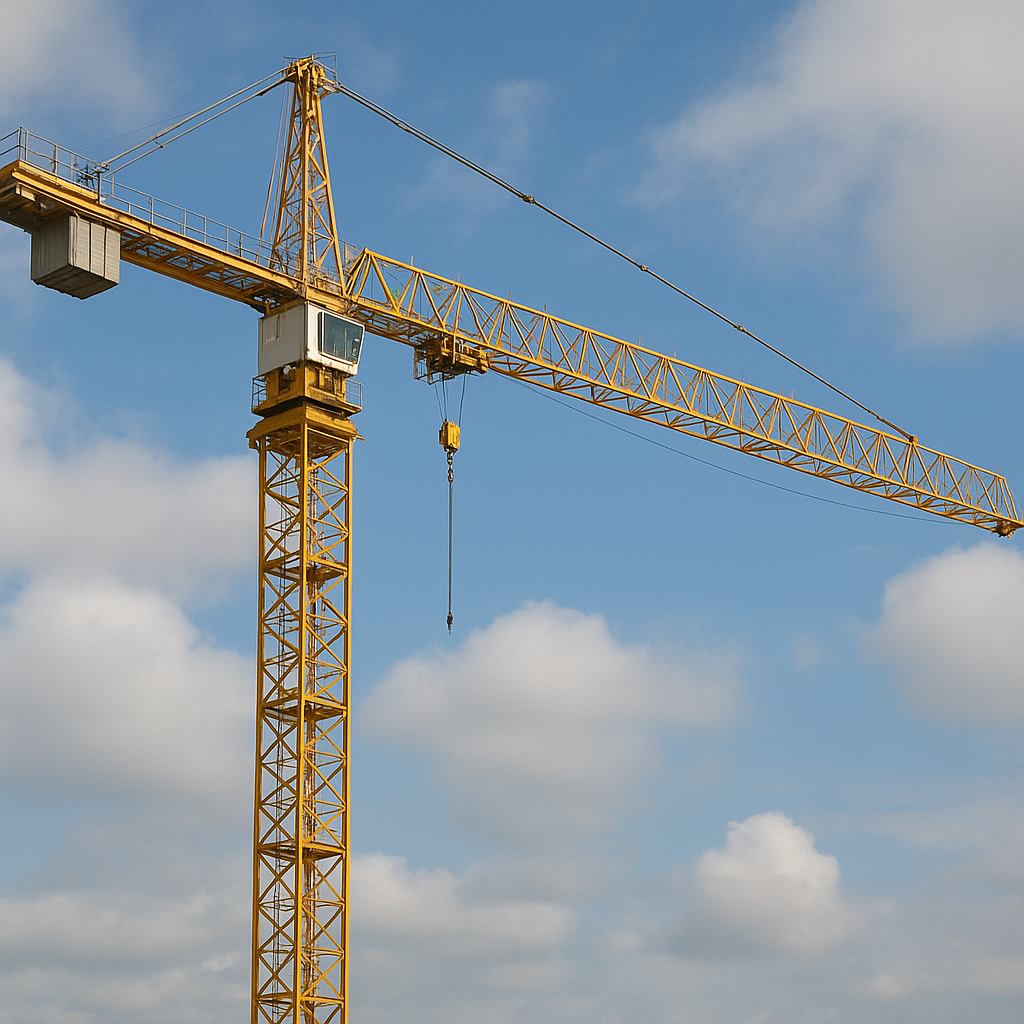
The Terex CTL 272-18 is a member of Terex’s family of tower crane solutions designed for a wide range of construction and industrial lifting tasks. Combining robust structural design, operator-friendly controls and modular assembly options, this crane model is often selected for projects that require reliable mid-to-high capacity lifting with flexible deployment. In the following sections we explore the machine’s typical applications, key features, operational considerations, maintenance requirements, and other interesting facts that can help owners, operators and project planners get the most value from the CTL 272-18.
Overview and intended applications
The Terex CTL 272-18 targets markets that need a balance between lifting capacity, reach and fast assembly. Typical uses include urban building construction, commercial complexes, medium-height residential towers, industrial plant work and infrastructure projects such as bridges and public works. Its design is well suited for sites where ground space is limited but vertical and horizontal reach are essential.
Key application areas:
- High-rise and mid-rise residential and commercial construction where controlled hoist capacity and reach are required.
- Industrial construction and maintenance projects (heavy equipment positioning, prefabricated modules).
- Infrastructure works, where lifting large components (formwork, precast segments) is common.
- Refurbishment projects in constrained urban environments where modular assembly and compact footprint are advantageous.
Because of its versatility, the CTL 272-18 is often chosen by rental companies as well as contractors who need a dependable crane that can be adapted to many jobsite configurations. The model is compatible with a variety of jib lengths and counterweight arrangements, allowing operators to tailor capacity and reach for project requirements.
Design highlights and performance traits
Although exact technical specifications can vary by configuration and regional model revisions, the CTL series emphasizes several consistent design priorities: structural robustness, operator ergonomics, modular assembly and integrated safety systems. The CTL 272-18 typically features a lattice or flat-top tower design which provides good stiffness-to-weight ratio and simplified erection.
Structural and mechanical features
- Modular mast sections for variable free-standing and tied-in heights, enabling flexibility with limited onsite crane-erection resources.
- Jib and slewing mechanisms engineered for precise load positioning and smooth rotation under load.
- Hydraulic or electro-hydraulic controls (depending on configuration) offering fine control for lifts and improved operator comfort.
- Integrated hoist and trolley systems designed to minimize sway and maximize responsiveness.
Operator environment
Operator cabins on Terex tower cranes are typically designed to provide clear visibility, ergonomically arranged controls, climate control and good ingress/egress for safety. Modern CTL cabs can be fitted with monitoring systems that provide real-time information on load, radius and wind conditions, helping reduce human error while improving productivity.
Typical performance characteristics
In practical terms, a crane like the CTL 272-18 aims to deliver:
- Reliable handling of medium-to-heavy construction components with controlled lift dynamics.
- Flexible boom/jib configurations to reach across urban lots or long span industrial sites.
- Rapid adaptation to different site constraints through modular assembly and disassembly.
Technical specifications (guidance only)
Model designations and configurations vary by region and production year. The figures below are intended as indicative values to illustrate the class and capabilities of a mid-to-large tower crane such as the CTL 272-18. For exact numbers and safe working load (SWL) charts always consult the manufacturer’s datasheet or an authorized dealer.
- Maximum rated capacity: commonly in the mid-to-high tonnage range for this class (illustrative example: up to around 18 tonnes at short radius depending on configuration).
- Maximum working radius: depends on jib length; many cranes in this class offer options from around 30 m to 70+ m.
- Tip load capacity: decreases with radius — at maximum radius the tip capacity is typically a small fraction of the crane’s maximum rated capacity.
- Mast modularity: mast sections allow variable heights — free-standing heights typically extend multiple tens of meters; tied-in heights allow much greater elevation.
- Rotation: 360° continuous slewing with hydraulic drive and braking systems for controlled movement.
- Power: electric or diesel-electric drive options for hoist, trolley and slewing systems, depending on site power availability.
- Transport footprint: designed for disassembly into road-transportable sections to fit common heavy transport regulations.
Important note: These numeric pointers are illustrative. Actual SWL tables, jib permutations, mast section dimensions and counterweight requirements must be taken from the specific CTL 272-18 documentation supplied by Terex or from the crane’s load charts stamped on the machine.
Installation, assembly and logistics
One of the CTL 272-18’s operational strengths is its adaptability during assembly and disassembly. Efficient site logistics reduce downtime and overall project costs.
Pre-assembly planning
- Site survey and planning: lift plans, ground-bearing capacity and access routes are verified in advance.
- Foundation or pad design: depending on crane configuration, temporary concrete pads or ballast arrangements are designed to achieve stable load distribution.
- Crane positioning: strategic placement for maximum coverage and minimum re-erection time as the project progresses.
Assembly sequence
- Unloading of mast sections, jibs and counterweights using mobile cranes or other lifting devices.
- Mast erection using gin poles or mobile crane assistance, followed by jib mounting.
- Connection to power supply, instrumentation setup and load chart verification on-site.
- Commissioning lifts and safety checks prior to regular operation.
Transport and storage
CTL-series components are typically designed to fit within standard heavy transport regulations, with components sized for highway movement and crane trailers. Onsite storage considerations include protection from weather for electrical components and secure stacking of counterweights and lattice sections.
Safety, operation and regulatory considerations
Safety is paramount in tower crane selection and operation. The CTL 272-18 supports a range of safety features and best practices to protect personnel and assets.
Common safety systems
- Load moment indicators (LMI) and overload protection to prevent lifts beyond rated capacities.
- Anti-collision systems for sites with multiple cranes, reducing the risk of swing-path conflicts.
- Wind speed monitoring and automated limits to prevent unsafe operation in high winds.
- Redundant braking systems and fail-safe hoist arrangements.
Operational best practices
- Regular operator training and certification to local regulatory standards.
- Daily pre-start inspections following checklist protocols for ropes, brakes, safety devices and communication systems.
- Adherence to manufacturer-prescribed maintenance intervals and any rebuild cycles.
- Strict exclusion zones under suspended loads and clear communication protocols (radio, tag lines, signals).
Maintenance, lifecycle and cost considerations
Maintaining a tower crane like the CTL 272-18 requires a structured program combining preventive maintenance, condition-based monitoring and occasional major overhauls. Effective maintenance extends useful life and preserves resale or rental value.
Typical maintenance tasks
- Regular lubrication of slewing gears, hoists and trolley equipment.
- Inspection and replacement of wire ropes, sheaves, insulation for electrical components and structural fasteners.
- Control system diagnostics and periodic software updates for electronic safety management systems.
- Non-destructive testing (NDT) of critical welds and structural members at intervals defined by regulation or OEM guidance.
Lifecycle and total cost of ownership
Total cost of ownership includes acquisition (purchase or rental), transportation and erection, insurance, maintenance and downtime costs. For contractors, rental models can be cost-effective for short-duration projects; ownership becomes economical when utilization is high. The resale market for well-maintained tower cranes is healthy in many regions because such cranes represent durable capital equipment with long service lives when properly cared for.
Market context and industry trends
Tower cranes, including models like the CTL 272-18, are influenced by broader construction industry trends. Urbanization, modular construction and the increasing use of prefabrication tend to increase demand for cranes with versatile reach and capacity, while rental markets grow where project schedules are variable.
- Growth of modular and prefabricated construction increases need for precise lifting and repetitive placement — a natural fit for tower cranes with accurate hoist and trolley control.
- Urban infill projects require cranes that can operate in tight footprints and offer flexible mast/tie-in configurations.
- Advances in telematics and remote monitoring help owners improve utilization and reduce unscheduled downtime.
Case examples and practical considerations
Projects that showcase the strengths of a crane like the CTL 272-18 typically involve a combination of reach, repeatability and lifting demands. Examples include:
- A mid-rise apartment development in an inner-city block where the crane’s modular mast allowed erection within confined space and provided coverage to multiple points of the lot without repositioning.
- An industrial plant expansion where heavy process equipment had to be lifted into place with precise alignment; the crane’s stable hoist control improved speed and safety of the operation.
- Bridge segment placement where long jibs and coordinated lifts were required to position large precast sections over existing infrastructure.
In each case, careful lift planning, proper foundation preparation and adherence to maintenance protocols were decisive for productivity and safety.
Interesting technical and operational facts
- Many modern tower cranes integrate condition monitoring sensors that track vibration, temperature and usage hours — enabling predictive maintenance strategies that reduce unexpected downtime.
- Design trends favor modularity, allowing rapid reconfiguration of mast height and jib length to suit different project phases.
- Increasingly, manufacturers provide telematics packages that allow owners to monitor crane location, operating hours and alarm events remotely — useful for rental fleets.
- Counterweight systems are engineered to be stackable and transport-friendly, reducing the number of heavy lifts needed during assembly.
Summary
The Terex CTL 272-18 represents a flexible and capable choice within the class of mid-to-large tower crane offerings. Its combination of modular design, operator-focused controls and integrated safety features make it suitable for a broad range of construction and industrial applications. While detailed performance metrics and load charts must come from Terex or authorized documentation for safe operation, the CTL 272-18’s general strengths—flexibility, durability and ease of service—explain why cranes of this type remain central to modern vertical construction and heavy-lift projects.


)
)