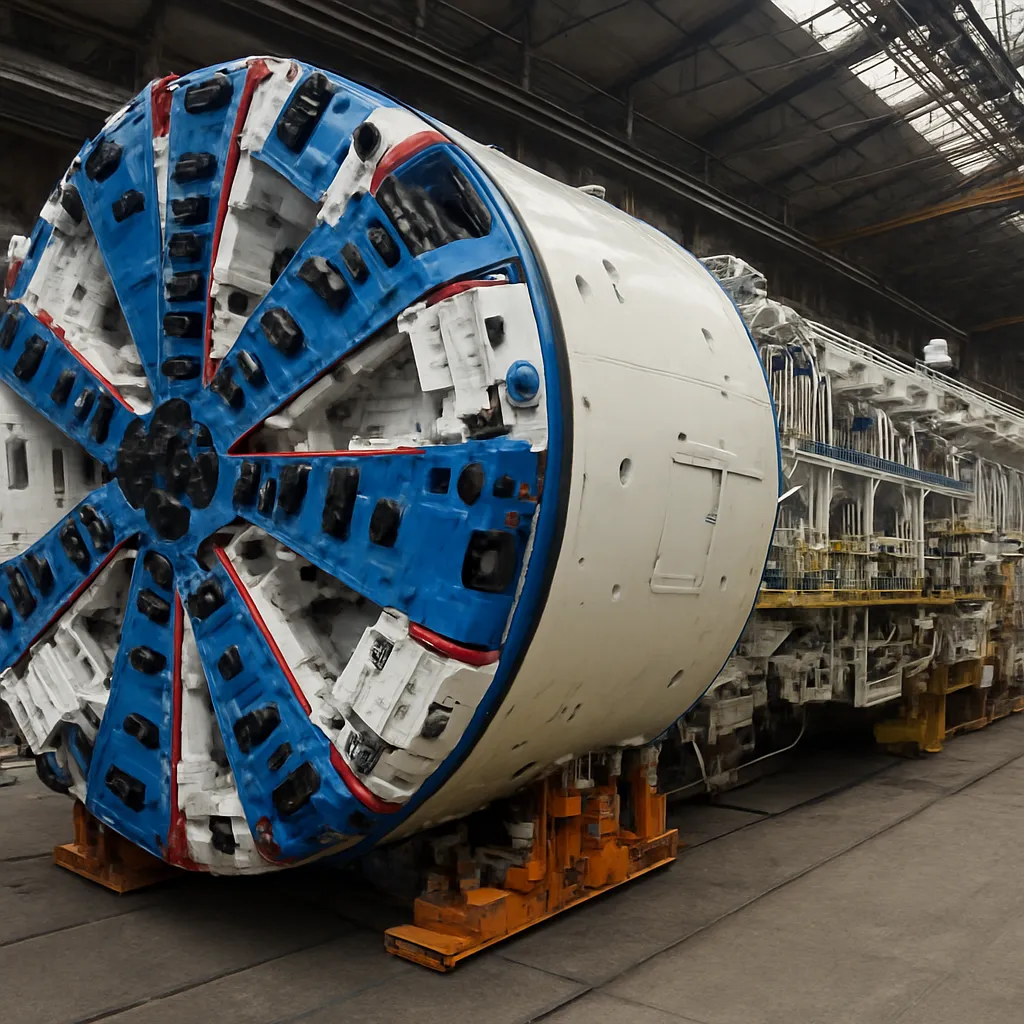
The following article explores the design, function and applications of Earth Pressure Balance Machines produced by NFM Technologies, with emphasis on where they are used, how they perform, and what makes them distinct in modern tunneling projects. The text covers technical features, operational practice, safety and environmental factors, and the likely future development of these machines. It is intended for engineers, project managers and anyone interested in the mechanics and practical use of contemporary tunneling equipment.
Overview of NFM Technologies EPBM machines
NFM Technologies is recognized in the tunneling industry for delivering bespoke tunneling solutions, including a range of Earth Pressure Balance Machines (EPBMs). EPBMs are a category of tunnel boring machine designed to excavate in soft ground by maintaining a controlled pressure at the tunnel face. This pressure balance reduces the chance of face collapse and surface settlement, making EPBMs particularly well-suited for dense urban environments, under rivers, and in heterogeneous soils.
EPBMs from manufacturers such as NFM Technologies combine a rotating cutterhead, a sealed excavation chamber (the pressure balance zone), and a system to condition and remove excavated material. Their core function is to maintain equilibrium between the subterranean pressures and the internal pressure in the machine to ensure a stable excavation face. While the basic EPB principle is shared across suppliers, NFM machines are often noted for customized configurations, modular design choices and integration of remote-control systems.
Design and technical features
Cutterhead and drive system
The cutterhead is the rotating front-end component that breaks the ground. It is tailored to the expected ground conditions—ranging from soft clays to mixed soils with cobbles. EPBM cutterheads can incorporate a mix of disc cutters, scrapers, and cutting tools arranged to optimize penetration and muck size. Drives are typically hydraulic or electric with planetary gearboxes that deliver the required torque for rotation and forward thrust.
- Typical cutterhead diameters for EPB machines can range from small-diameter units (a few meters) up to large-diameter machines used for metro tunnels; exact diameters are chosen to match tunnel lining and project geometry.
- Drive systems include torque-limiting features and sensors to monitor torque, rotation speed and thrust to protect the machinery and the ground.
Face pressure, shield and chamber
Maintaining a controlled pressure at the excavation face is the principal task of an EPBM. The rotating cutterhead feeds excavated material into the pressure chamber behind it. The machine’s shield supports the tunnel while segments are installed. A combination of screw conveyors, augers and pumps transfers conditioned spoil from the chamber out of the face. The shield also houses the segment erector and provides a working environment for personnel.
The face pressure is adjusted through regulation of the rate of spoil extraction, use of soil conditioning agents, and control of chamber volume. This three-pronged approach allows operators to react to ground variability and maintain stability.
Soil conditioning and muck handling
Effective soil conditioning is crucial in EPB operations. Conditioning agents—such as foams, polymers and bentonite slurries—modify the rheology of excavated material to become plastic and cohesive enough to be conveyed efficiently by screw conveyors. Correct conditioning improves cutting performance, reduces cutter wear and limits settlement at the surface.
- Screw conveyor systems are the most common muck-removal method in EPBMs; conveyor capacity and screw pitch are adapted to the expected specific volume of spoil.
- In certain mixed-face conditions a combination of conveyors and pumping systems may be used to manage high water content or fines.
Muck transport and logistics
Once conditioned, spoil is moved away from the face. Depending on the tunnel geometry and launch strategy, spoil can be transported via conveyors to muck cars, pumped hydraulically, or transferred to slurry treatment plants. Efficient muck logistics are essential to maintain steady advance rates and to reduce downtime.
Controls, monitoring and automation
Modern EPBMs incorporate sophisticated monitoring and automation systems. Real-time sensors track forces, face pressure, torque, cutterhead speed, thrust, shield position and settlement outside the tunnel. These inputs feed into control systems that assist operators in making rapid adjustments and enable automatic modes for repetitive operations such as segment installation and cutterhead rotation schedules.
Remote diagnostics, predictive maintenance algorithms and digital twin models are increasingly used to optimize machine availability and productivity while reducing unplanned stoppages.
Applications and typical uses
EPBMs are primarily used in projects where ground conditions and surface sensitivity demand a controlled excavation method. Typical applications include:
- Urban metro and subway tunnels beneath built environments
- Sewer and stormwater tunnels where minimized settlement is mandatory
- Utility tunnels and cable ducts in constrained corridors
- Under-river crossings and tunnels below high groundwater tables
- Cross passages and station box connections where face control is essential
Compared with open-cut methods, EPB-based tunnelling can dramatically reduce surface disruption, traffic interference, and the need for heavy temporary works. It also allows tunnelling in populated areas with sensitive structures, historic buildings and complicated underground utilities.
Operational performance, productivity and statistics
Operational performance of EPBMs depends on machine design, site conditions and project logistics. Although precise performance metrics vary, the following general observations are typical for EPB operations:
- Advance rates in soft ground commonly range from a few meters per day up to around 20 meters per day in favorable, homogeneous conditions. Instantaneous rates may be higher during continuous long runs.
- Cutter life and maintenance intervals depend strongly on abrasive materials and presence of cobbles; routine cutter replacement windows are planned in the machine schedule to avoid unscheduled stops.
- Face pressure control reduces ground settlements often to a few millimetres per meter of tunnelling, though actual values are site-dependent.
From an economic standpoint, EPBMs are capital-intensive equipment but offer lower overall societal and indirect costs in urban tunnelling by reducing surface restoration and mitigation expenses. The payback in large metro programs is realized through steady production rates and reduced compensation claims for settlement damage.
While specific aggregated market statistics for a single manufacturer like NFM Technologies can be project-specific and vary by year, industry-wide trends indicate continuous investment in EPB and slurry TBM technology. The global market for tunnel boring machines remains strong due to ongoing urbanization, the expansion of metro systems, and large infrastructure programs in many regions.
Safety and environmental considerations
Safety is paramount in tunnelling. EPBMs contribute to safer underground work by stabilizing the excavation face and by providing a controlled working chamber. Key safety features and practices include:
- Continuous monitoring of face pressure, gas levels and groundwater to detect hazardous conditions early.
- Emergency systems for rapid pressurization/depressurization, evacuation routes and shelter zones within the shield.
- Strict protocols for breakout operations, cutter replacement and segment erection to minimize risks of ground loss and personnel hazard.
Environmental considerations are increasingly important in modern EPB deployments. Effective soil conditioning reduces dust and fugitive emissions; controlled spoil handling prevents contamination of watercourses; and modernization of power systems (e.g., energy-efficient drives and regenerative power solutions) reduces the carbon footprint of tunnelling operations.
Controlling groundwater inflows and managing slurry or conditioned spoil in an environmentally compliant manner are mandatory on most contemporary projects, and NFM-style EPBMs are designed with interfaces for on-site treatment plants and closed-loop systems.
Case examples and project types (typical)
EPBMs are employed across a spectrum of project scales and types. Representative examples include:
- Long metro drives between stations where continuous boring reduces urban interruption.
- Short cross-passages that require precise face control to protect adjacent tunnel linings.
- Utility diversions under congested city centers where open trenching is infeasible.
In many projects, the decision to use an EPBM versus a slurry TBM or conventional excavation is made after detailed geotechnical investigations. Factors such as the water table, soil cohesion, presence of cobbles, and environmental constraints weigh heavily in selection.
Maintenance, lifecycle and cost considerations
Maintaining an EPBM is a planned, recurring activity that reflects expected wear on cutters, seals, bearings and conveyor systems. Best practice includes:
- Scheduled maintenance windows aligned with cutter replacement and segment installation cycles.
- Condition monitoring that predicts failures before they occur, minimizing downtime.
- Spare parts logistics staged along the tunnel alignment for rapid intervention when necessary.
Lifecycle cost of an EPBM encompasses acquisition or rental, mobilization/demobilization, operation (including consumables like conditioning agents), maintenance, and disposal or repurposing. While initial capital cost is high, total cost per meter becomes attractive for long drives and complex urban projects where alternative methods are more disruptive and therefore more expensive in indirect costs.
Innovation and future trends
The tunnelling industry is moving toward increased automation, digitalization and sustainability. Innovations likely to influence future NFM-style EPBMs include:
- Advanced sensor fusion and AI-driven face-condition recognition to automate soil conditioning and reduce reliance on operator experience.
- Digital twins and predictive maintenance, allowing operators to simulate machine behavior and plan interventions with minimal downtime.
- Hybrid machines which combine EPB and slurry features to handle mixed-face conditions more flexibly.
- Electric drive systems with energy recovery to lower emissions and operating costs.
Such developments aim to increase the overall productivity of EPBMs while improving safety and reducing environmental impact.
Practical recommendations for project teams
For engineers and project managers considering an EPBM from NFM Technologies or similar suppliers, the following practical steps are advisable:
- Undertake thorough geotechnical investigation and ground modelling to understand variability and to size the machine appropriately.
- Plan muck handling and spoil treatment logistics in parallel with machine design to avoid bottlenecks during production.
- Invest in operator training and remote-support tools to maximize the benefits of automation and to shorten learning curves.
- Incorporate robust monitoring for settlement and groundwater to manage risk and to comply with regulatory and community requirements.
Concluding remarks
EPBMs produced by companies such as NFM Technologies represent a mature and adaptable solution for tunnelling in soft ground and urban settings. Their combination of a controlled face, soil conditioning, and automated control systems allows projects to proceed with minimized surface disturbance and heightened safety. As the industry adopts more digital tools and greener power systems, these machines will continue to evolve, offering greater efficiency and resilience for the large-scale infrastructure programs shaping modern cities.


)
)