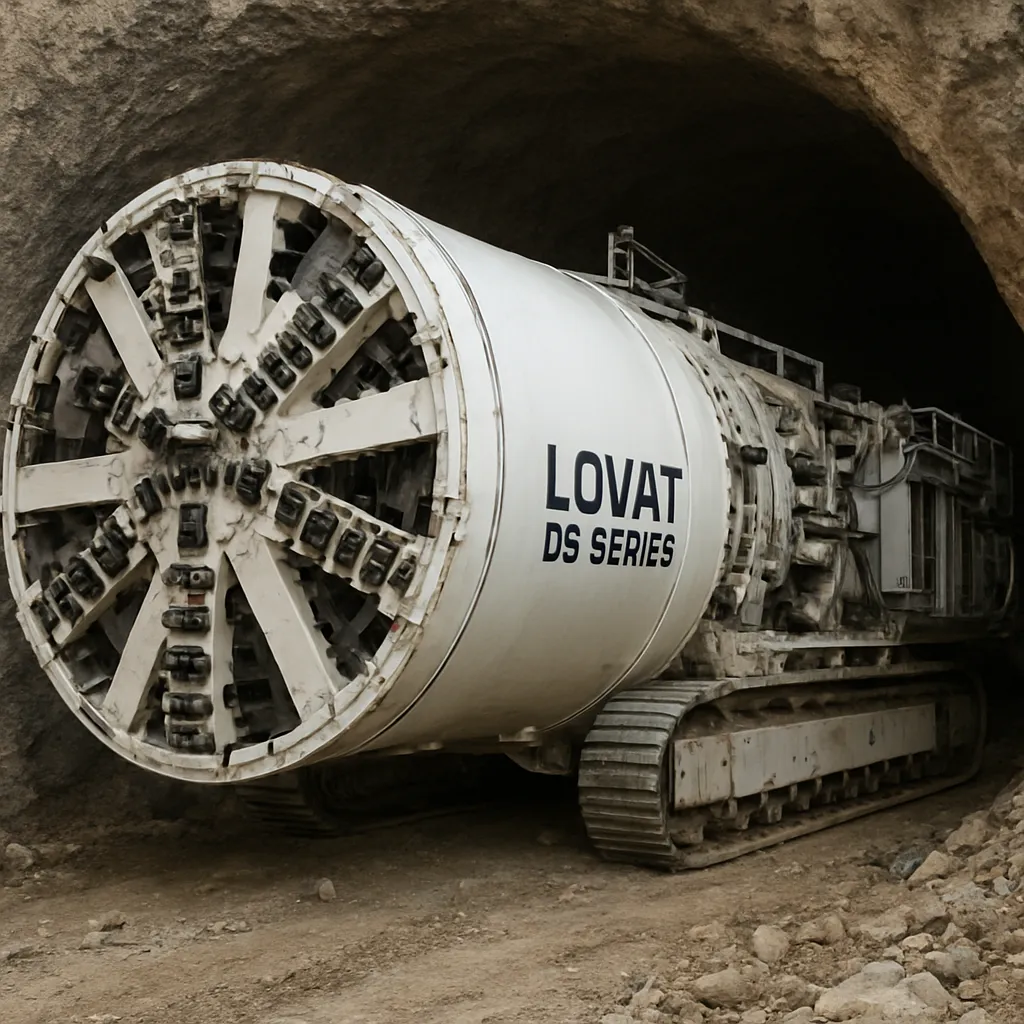
The Lovat DS Series represents a family of mechanized tunneling machines developed to meet the demands of modern underground construction and mining. Designed for a range of geological conditions and project types, these machines combine robust mechanical design, modularity, and innovations in control and muck handling systems to deliver safe and efficient excavation. This article explores the design principles, typical applications, operational statistics and real-world considerations for the Lovat DS Series, and offers practical insights into selection, logistics and future trends.
Design features and technical characteristics
The Lovat DS Series is engineered around several core design priorities: adaptability to different ground conditions, efficient material removal, and integration of support installation systems. While exact specifications vary by model and by customer requirements, typical design characteristics can be outlined to show the intent and capabilities of the series.
Platform architecture
- The machines are generally modular, allowing for on-site assembly and customization of components such as the cutting head, shield length, and trailing gear. This modularity helps with transport and adaptation to specific tunnel sizes.
- The basic platform can be configured as a shielded tunneling machine or as a machine with an open-back design where immediate wall support is not required.
- Hydraulic and electric drive systems are used depending on machine size and contractor preference, with integrated power management to optimize energy consumption.
Cutting systems
At the heart of the DS Series is the cutting assembly. Lovat offers a variety of cutterheads to match differing ground conditions:
- Disc cutters and roller-cone elements for hard rock conditions.
- Specialized multi-segment cutterheads for mixed-face conditions to reduce vibration and maintain steering accuracy.
- Exchangeable cutting tools and wear packages to extend service life between maintenance intervals.
These cutting solutions are designed to provide a balance between penetration rate, tool life and energy consumption. The selection of a cutterhead and tool package is driven by geotechnical data and anticipated abrasive conditions.
Muck removal and conveyor systems
Muck handling is a critical element of productivity. DS Series machines typically use an integrated continuous conveyor or screw conveyor system to transport excavated material from the cutterhead area to the tunnel portal or a muck skip. Conveyor sizing and capacity are optimized for anticipated advance rates to avoid bottlenecks. Where slurry or segmented spoil management is used, the DS platform can incorporate pumps and separation equipment.
Support and lining integration
For projects requiring immediate structural support, the DS machines can be equipped with segment handling and erector systems to place precast concrete segments. These machines can therefore act as a combined excavator and installer of tunnel lining, increasing overall cycle efficiency. The segment handling subsystem works in conjunction with a mechanized segment erector and typically includes grippers, rotation systems and a small gantry for precise placement.
Controls, automation and instrumentation
Modern DS Series machines include advanced control systems for monitoring and automation. Key features often include:
- Telematics for remote condition monitoring and diagnostic data.
- Automated guidance and steering controls to maintain line and grade.
- Real-time torque, thrust and penetration monitoring allowing adaptive cutting strategies.
These systems support improved automation and better decision-making during operations, decreasing downtime and improving safety margins.
Power and size ranges (typical)
Because the DS Series includes different models and configurations, any numerical values are approximate and depend on machine build. Typical ranges observed in the market for similar mechanized tunneling platforms include:
- Cutterhead diameters: approximately 1.5 m up to 7.5 m, depending on application.
- Installed drive power: from several hundred kilowatts for small units to several megawatts for larger units.
- Machine mass: from a few tens of tonnes for micro/midsized units to several hundred tonnes for larger shielded systems.
Applications and use cases
The Lovat DS Series is suitable for a wide array of underground projects. Its design flexibility makes it useful in civil infrastructure, utilities, and mining. Below are the primary application categories and the specific roles DS machines play in each.
Urban tunneling and metros
In densely populated urban environments, minimizing surface disruption is critical. The DS Series can be adapted to produce lined tunnels for metro systems, pedestrian underpasses, and utility diversions. The ability to install precast lining segments immediately after excavation helps control settlements and reduces the need for ground surface interventions. Key advantages in urban work include controlled muck transport, steering accuracy and integrated lining installation.
Water conveyance and sewer systems
Water supply tunnels, aqueducts and large sewer systems often require continuous, watertight linings and precise alignment over long distances. DS machines configured with segment erectors and slurry management systems are a strong match, especially where mixed ground conditions are expected along the alignment. Using mechanized tunnelling reduces long-term infiltration risks and speeds up completion versus traditional drill-and-blast methods in many contexts.
Road and rail tunnels
For new road and rail links through hills or urban obstacles, the DS Series offers predictability and the possibility to work with minimal traffic disruption on the surface. In addition, the modular platform allows for OEM customization for different tunnel diameters and support types.
Mining decline and access development
In mining, mechanized tunnelling improves the speed and safety of decline ramps and haulage drifts. DS machines fitted with robust rock-cutting heads and enhanced muck handling are used in both hard rock mining and softer strata. The continuous nature of mechanized tunnelling can reduce exposure to hazardous blasting and associated vibrations.
Hydroelectric projects
Large hydro projects often require long pressure or diversion tunnels through varied geological formations. The capability to integrate lining systems and handle long-distance spoil transport can make DS machines preferable to traditional methods in many tunnel segments. Where water ingress or fractured rock is anticipated, additional ground treatment modules (pre-grouting, face stabilizers) can be added.
Operational performance, statistics and cost considerations
Quantifying the performance of any tunneling machine family requires consideration of geology, project management, crew skill, and support systems. The following summarized statistics reflect typical ranges found for mechanized tunnel boring and are indicative rather than prescriptive for any single DS model.
Advance rates
- Soft ground (EPB-like conditions): typical averages of 5–20 meters per day under favorable conditions; peak short-term rates can be higher in very consistent soils.
- Mixed face: 1–15 meters per day depending on the degree of variability and the need for ground conditioning.
- Hard rock: 5–50 meters per day depending on rock strength, fracturing, and cutter wear schedules; double-shielded configurations often yield higher sustained daily advances because of simultaneous lining erection.
These ranges show how variable performance can be even for machines in the same family. Contractors should prepare geotechnical baselines to refine expected productivity figures.
Machine availability and utilization
Availability (the percentage of time a machine is operational excluding planned maintenance) for well-supported TBMs typically ranges from 70% to 90% depending on logistics, tooling supply, and ground conditions. High availability depends on:
- Proper spares and tooling inventory.
- Rapid access to consumables and experienced maintenance crews.
- Efficient muck removal and surface logistics.
Power consumption and efficiency
Power demand varies with cutterhead size and ground resistance. Typical continuous power consumption can range from a few hundred kilowatts to multiple megawatts for larger diameter units under heavy cutting load. Efficiency gains are realized through adaptive cutting strategies, optimized rotation and thrust profiles, and well-matched conveyor/muck removal systems.
Typical costs
Purchase and deployment of a mechanized tunnelling machine is a significant capital investment. Ballpark figures (variable by model, customization, and market conditions) include:
- Procurement of a mid-size DS-type machine: several million to tens of millions of USD.
- Transport, assembly and commissioning: often adds several hundred thousand to a few million USD depending on distance and site complexity.
- Operating cost per meter: widely variable, but mechanized tunnelling frequently becomes competitive with drill-and-blast for long drives and in urban projects when externalities (settlement control, vibration limits, speed of lining installation) are considered.
Contractors should perform a detailed cost-benefit analysis that includes not only machine capital and operating costs, but also savings from reduced surface mitigation, faster schedule, and safety improvements.
Example statistical scenarios (illustrative)
- Urban sewer project, 3.5 m diameter DS-configured machine, expected average advance: 12 m/day; total tunnelling length 2,500 m; estimated tunnelling time ~210 days excluding breaks and maintenance; power: ~800–1,500 kW.
- Mining decline, 4.2 m diameter machine in competent hard rock, expected average advance: 20–30 m/day with double-shield configuration enabling nearly continuous lining installation; cutter wear intervals every 1,000–3,000 m depending on abrasivity.
Logistics, maintenance and safety
Successful deployment of a DS Series machine depends as much on project planning and logistics as on machine capability. The following considerations are critical for project managers, engineers and site personnel.
Transport and assembly
- Due to their size and weight, DS machines are shipped in components, then assembled in-portal. This requires heavy-lift equipment, adequate staging areas and precise planning to minimize on-site schedule impacts.
- Portals and access declines must be sized to allow entry of assembled units or of the largest modules that will be transported through the tunnel route.
Maintenance regimes and spare parts
Planned maintenance includes scheduled cutter replacement, lubrication systems upkeep, hydraulic checks and conveyor inspections. A well-planned spare parts inventory is essential to maintain high availability. Typical spare inventories include spare cutters, bearings, hydraulic hoses, conveyor components and control electronics spares. Condition-based maintenance supported by telemetry reduces unplanned downtime.
Health and safety
Mechanized tunneling reduces many hazards associated with blasting, but introduces other risks that must be managed:
- Confined-space protocols for personnel entering the cutterhead area or shield tail.
- Dust and respirable silica control, especially in abrasive rock or mixed-face conditions.
- Emergency egress planning and ventilation to manage exhaust, fumes and heat.
- Training for operators, maintenance crews and emergency response teams regarding hydraulic failures, cutterhead jams and conveyor incidents.
Selection guidance and best practices
Choosing a specific DS Series configuration requires a structured approach to reduce risk and maximize efficiency. Below are recommended steps and best practices for owners and contractors.
1. Thorough geotechnical investigation
Obtain geological and hydrogeological data along the alignment, including rock mass rating, expected water inflows, presence of squeezing ground, and abrasive constituents. Matching cutterhead design and support systems to the anticipated ground is the most important determinant of success.
2. Pilot testing and mock-ups
Where uncertainty is high, execute pilot tunnels, probe drilling and in-situ testing. This helps calibrate advance rate estimates, cutter wear rates and muck handling capacity.
3. Define integration requirements
Establish how the TBM will interface with surface logistics, spoil handling, lining supply and transport. For example, continuous conveyor systems may need bespoke surface facilities to handle the volumes produced during peak advance days.
4. Plan for tooling and consumables
Factor in local supply chains for cutters and wear parts. In remote areas, longer lead times require stocking additional inventory. Consider contractual support for spare part delivery during critical project phases.
5. Invest in training
Operator and maintenance training at the manufacturer level or through experienced contractors reduces startup time and improves safety. Cross-training personnel for multiple roles increases flexibility during maintenance windows.
Trends and future developments
Mechanized tunneling continues to evolve. The DS Series, as an adaptable platform, is likely to incorporate several industry trends:
- Increased automation and AI-assisted control to optimize cutting parameters in real time, extend tool life and improve advance predictability.
- Hybrid power systems and energy recovery measures to reduce emissions and operational costs.
- Improved wear materials and cutter designs tailored for extreme abrasivity.
- Enhanced remote monitoring and predictive maintenance to further increase availability and lower lifecycle costs.
Such advancements will make machines like the DS Series even more competitive against traditional excavation methods, particularly where schedule certainty, urban impact mitigation and safety are priorities.
Conclusion
The Lovat DS Series offers a versatile, modular approach to mechanized tunnelling suitable for civil infrastructure and mining projects. By combining robust cutterhead options, integrated conveyor systems, segment installation capability and modern control systems, DS machines are designed to handle a wide range of ground conditions while maximizing on-site productivity. Operational success depends on proper matching of machine configuration to geology, strong logistics planning, and disciplined maintenance and safety regimes. Typical performance metrics—advance rates, power consumption and availability—vary greatly with ground conditions and project constraints, but with careful planning the DS Series can significantly reduce project risk and accelerate schedules. As automation, materials science and monitoring technologies continue to improve, the practical capabilities and cost-effectiveness of such mechanized tunneling platforms will continue to expand.


)
)