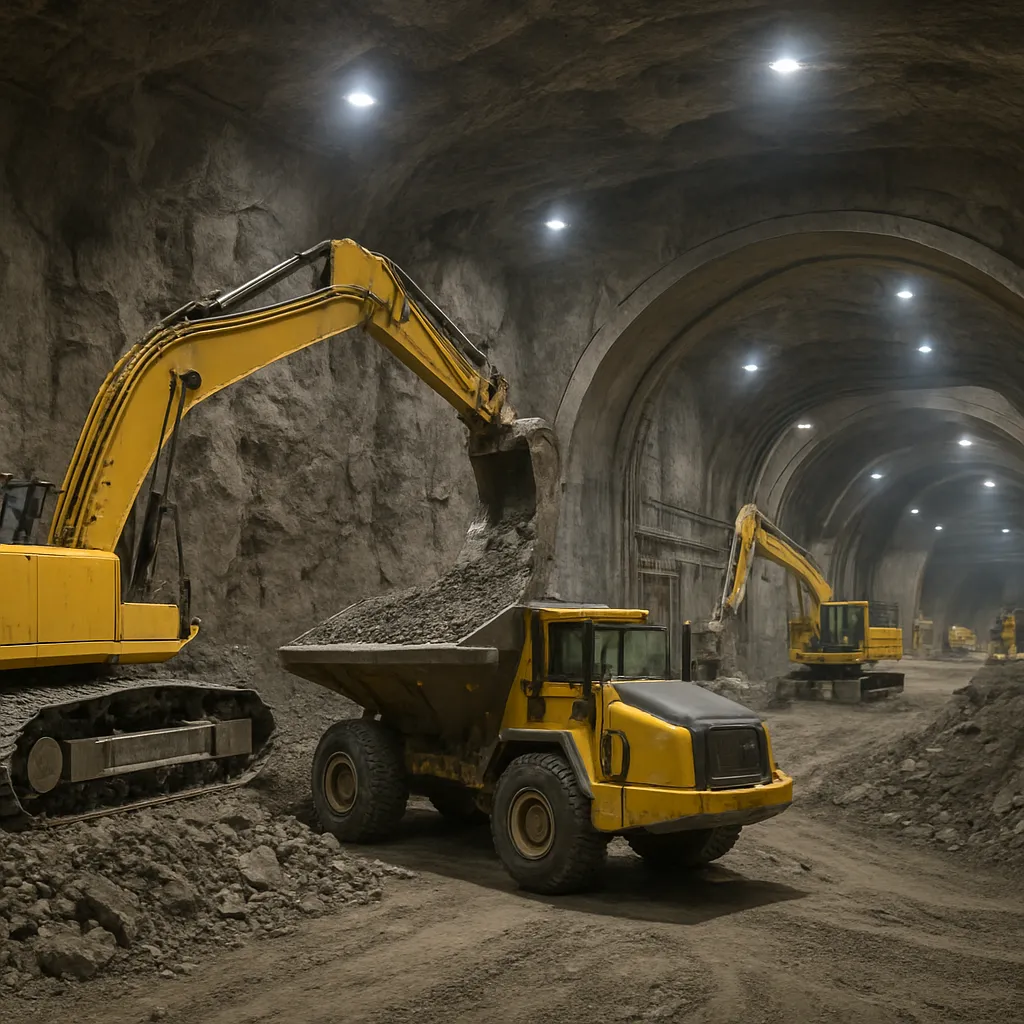
The advancement of modern machinery has revolutionized the way we build beneath the Earth’s surface. From sprawling subway networks to vast underground research facilities, machines play a pivotal role in creating safe, efficient, and large-scale subterranean spaces. This article explores how these powerful tools work, the technological breakthroughs driving progress, and the environmental and safety considerations shaping the future of underground construction.
Digging Deeper: The Rise of Automated Excavation
Excavation is at the heart of underground construction. While manual digging once dominated, the emergence of automation and specialized equipment has significantly increased efficiency and reduced project timelines. The introduction of tunnel boring machines (TBMs), continuous miners, and robotic excavation platforms has expanded possibilities for complex subterranean designs.
Tunnel Boring Machines (TBMs)
TBMs are massive, cylindrical devices equipped with rotating cutting heads designed to pulverize rock and soil. These machines operate on the principle of mechanical fragmentation, smashing through hard strata while simultaneously installing concrete lining segments to maintain tunnel stability. Key components include:
- Cutting Head: A rotating disc fitted with cutters that grind through geology.
- Shield: Protects the machine’s body and crew from collapsing material.
- Conveyor System: Transports excavated spoil to the surface for removal.
- Trailing Gear: Houses power units, ventilation systems, and segment erectors.
Modern TBMs feature advanced robotics for precise alignment and automated segment placement. Integrated sensors monitor pressure, temperature, and torque, ensuring continuous operation and minimal downtime.
Continuous Miners and Roadheaders
In settings where flexibility is required—such as coal mines or soft rock tunnels—continuous miners and roadheaders provide an alternative to TBMs. These vehicles combine cutting drums, conveyors, and articulated booms, enabling them to carve out shapes and profiles in various materials. Their advantages include:
- Agility in irregular spaces
- Capability to handle mixed geology
- Lower initial investment compared to full-scale TBMs
However, they typically achieve slower advance rates and require more frequent maintenance, making them ideal for smaller-scale or specialized projects.
Innovations in Subterranean Infrastructure
Beyond excavation, establishing reliable underground infrastructure demands cutting-edge technologies. Conveyance systems, communication networks, and environmental controls all rely on intelligent machinery and automated assemblies. These solutions ensure safety, precision, and operational continuity.
Robotic Surveying and Mapping
Accurate mapping of subsurface conditions is crucial before, during, and after construction. Autonomous ground vehicles (AGVs) and drones equipped with LiDAR, ground-penetrating radar (GPR), and multi-beam sonar offer detailed three-dimensional models of underground voids and obstacles. Benefits include:
- High-resolution scans in real time
- Reduced human exposure to hazardous areas
- Streamlined decision-making with digital twins
These systems feed data into building information modeling (BIM) platforms, enabling engineers to anticipate challenges and optimize machine deployment.
Smart Ventilation and Environmental Control
Maintaining air quality and temperature is vital for both worker health and machine longevity. Advanced ventilation systems integrate variable-speed fans, CO₂ and particulate sensors, and automated dampers to direct airflow where needed. Key features include:
- Dynamic adjustment to excavation progress
- Energy-efficient operation tied to sensor readings
- Integration with fire suppression and emergency response protocols
Innovations such as heat recovery units and humidification control further advance sustainability, minimizing energy consumption and reducing the environmental footprint of underground projects.
Sustainability and Safety in Underground Construction
Building beneath the surface presents unique environmental and safety challenges. Advances in material science, machine automation, and monitoring systems help address these concerns, ensuring projects meet rigorous standards and protect both workers and ecosystems.
Eco-Friendly Excavation Practices
Reducing the ecological impact of tunneling and mining has become a priority. Methods to achieve this include:
- Use of biodegradable hydraulic fluids in heavy machinery
- Electric and hybrid drivetrains to cut emissions
- On-site recycling of spoil into backfill or construction aggregates
- Noise reduction technologies, such as acoustic enclosures around cutting heads
Many projects now target net-zero goals by harnessing renewable power sources for machine operation and employing carbon capture techniques for unavoidable emissions.
Worker Safety and Remote Operation
Ensuring worker well-being underground demands rigorous controls. Tele-operated machines and remote monitoring stations minimize human exposure to unstable ground and hazardous gases. Key systems include:
- Proximity detection sensors to avoid collisions
- Real-time health monitoring wearables that track vital signs
- Automated roof bolting machines that secure tunnel ceilings without manual intervention
- Emergency evacuation vehicles with independent power and communication systems
By leveraging precision robotics and comprehensive data analytics, companies can maintain high productivity while safeguarding their workforce.
Future Trends: Towards Fully Autonomous Underground Cities
As urban populations grow, the concept of expanding cities downward is gaining traction. Fully integrated underground complexes—complete with transportation networks, energy generation, and living quarters—depend on intelligent machines and digital ecosystems. Anticipated advancements encompass:
- AI-driven excavation planning that adapts to ground conditions in real time
- Swarm robotics for simultaneous multi-point construction
- Self-healing concrete technologies deployed by automated sprayers
- Wearable exoskeletons that augment human operators during maintenance tasks
The synergy between innovation and engineering expertise promises to unlock subterranean frontiers, delivering resilient, infrastructure solutions and redefining how cities grow.