The modern construction environment has become a tapestry of advanced machinery and skilled labor, where the synergy between tools and technology drives unprecedented levels of efficiency and precision. From unmanned aerial vehicles scanning vast landscapes to massive excavators reshaping terrain, each piece of equipment plays a vital role in accelerating timelines and reducing costs. The integration of cutting-edge drones, robust excavators, on-site 3D printing units, and connected IoT modules creates an interconnected ecosystem. Project managers and engineers harness real-time data streams to improve productivity, enhance safety, and ensure environmental compliance. Across every phase—from initial surveying and site preparation to final inspections—automated solutions and intelligent machines redefine best practices. This article delves into key categories of construction machinery at work, illustrating how site teams leverage emerging capabilities to deliver complex structures faster, greener, and smarter.
Integrating Drones for Site Surveying and Real-Time Monitoring
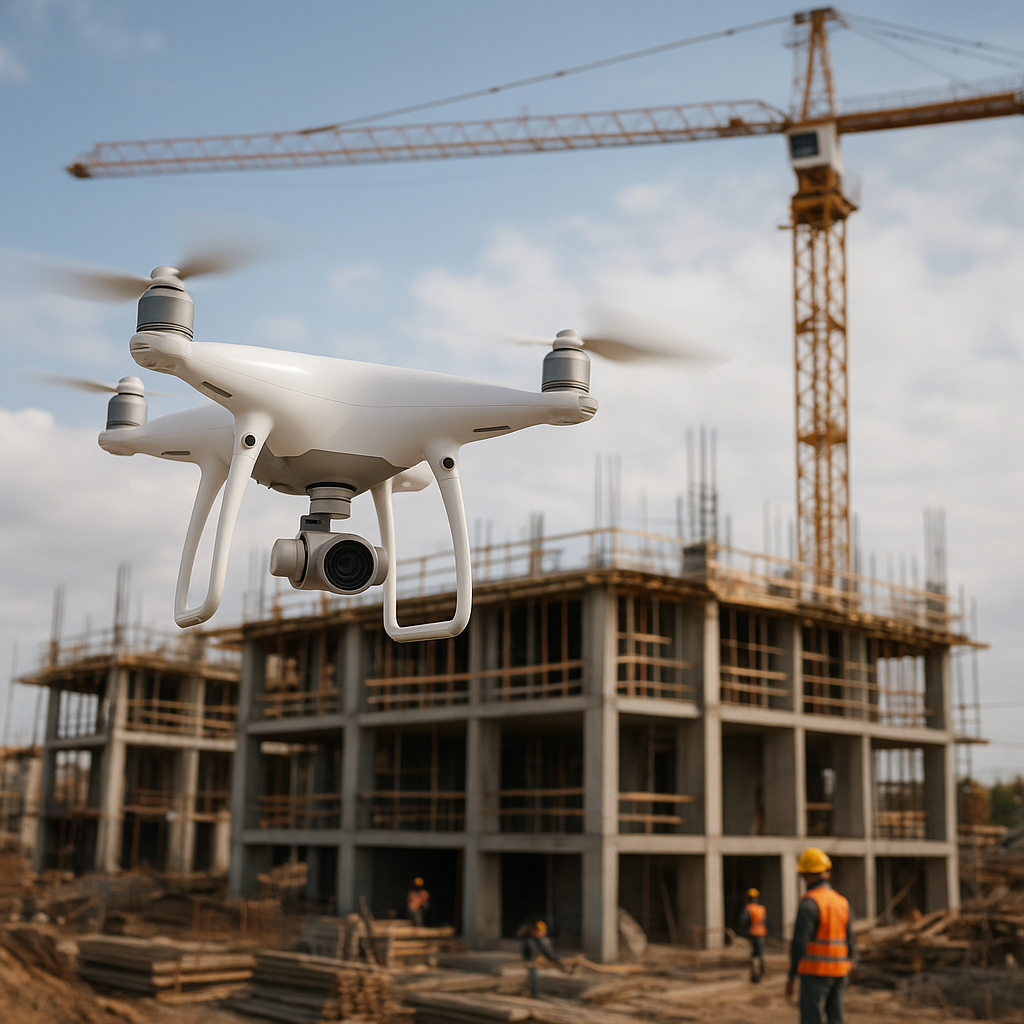
Unmanned aerial systems have revolutionized the way topographical data is captured. Equipped with high-resolution cameras and LiDAR sensors, drones provide comprehensive site imagery within minutes, replacing labor-intensive ground surveys. By automating flight paths, project teams obtain consistent scans that feed into Building Information Modeling (BIM) platforms. Advanced flight software also enables collision avoidance, ensuring safe operation above dynamic worksites. Rapid data acquisition accelerates decision-making on grading, drainage, and structural layout.
Precision Mapping
Drones generate centimeter-level accuracy when mapping terrain contours, utility lines, and existing structures. These georeferenced orthomosaics integrate seamlessly into GIS applications, enabling engineers to identify potential clashes before excavation begins. Accurate digital twins reduce rework and minimize material waste.
Progress Tracking
Weekly drone flights capture time-lapse sequences that chart project progress. Stakeholders review annotated images to verify milestones, spot deviations, and adjust schedules. Remote monitoring capabilities also improve security by detecting unauthorized access after hours.
- Faster data collection across large areas
- Reduced labor costs for topographical surveys
- Enhanced site safety with remote inspection
- Immediate integration with CAD and BIM tools
Heavy Machinery Meets Automation: Earthmoving and Material Handling
Traditional heavy equipment—bulldozers, backhoes, wheel loaders—has evolved with the addition of autonomous and semi-autonomous features. Manufacturers now offer retrofit packages that equip older machines with GPS-guided control systems. Operators receive real-time feedback on blade angles, bucket fill levels, and load balances, streamlining routine tasks. Remote-control consoles that work via secure radio links allow teams to operate machinery from safe distances in hazardous conditions or confined spaces. As environmental regulations tighten, automated grading reduces fuel consumption and emissions compared to manual operations.
Teleoperation and Robotics
Teleoperated excavators and robotic arms handle repetitive tasks such as trench digging, stockpile loading, and demolition with consistent accuracy. Predefined routines execute complex maneuvers while operator oversight focuses on quality control. This division of labor lowers fatigue and enhances throughput on expansive earthworks projects.
Safety Enhancements
Collision-avoidance sensors and onboard cameras create virtual safety zones around moving equipment. Audible alarms and automated braking systems prevent runovers and machinery-on-equipment strikes. Crews working near heavy loaders can wear wearable beacons linked to machine control modules, triggering instant shutdowns if they enter unsafe proximities.
3D Printing and Additive Manufacturing on Construction Sites
Deployable concrete printers and polymer-extrusion units allow on-site fabrication of structural elements, formwork, and custom architectural details. Large-format printers build walls layer by layer, reducing reliance on traditional formwork, scaffolding, and manual labor. Digital blueprints drive robotic printheads, delivering complex geometries impossible with conventional methods. The result is faster turnaround on repetitive segments such as retaining walls and façade panels.
Rapid Prototyping
Design teams iterate digital models and print scale prototypes to assess fit, finish, and functional features before full-scale production. This iterative loop accelerates client approvals and reduces costly design changes once construction is underway.
Material Efficiency
Additive manufacturing minimizes waste by depositing material only where needed. Some systems recycle excess concrete slurry or composite filaments, lowering overall consumption. The ability to blend additives—such as glass fibers or insulating foams—directly within printed layers further enhances thermal and structural performance.
Data Analytics and IoT: Optimizing Machine Performance
Connected sensors and telematics platforms gather performance metrics from equipment engines, hydraulics, and electrical systems. Fleet managers monitor fuel usage, idle times, and maintenance schedules through centralized dashboards. Predictive algorithms analyze patterns—such as vibration anomalies or temperature spikes—to forecast component failures before breakdowns occur. By embracing integration between physical machinery and digital twins, construction teams maximize uptime and reduce reactive maintenance costs.
Predictive Maintenance
Vibration sensors mounted on bearings detect the earliest signs of wear, prompting timely lubrication or replacement. Engine-control units relay error codes to cloud-based analytics engines that benchmark against historical datasets. Automated alerts schedule service interventions at optimal intervals, avoiding unplanned downtime.
Unified Control Platforms
Centralized software unites GPS-guided grading, drone flight plans, and on-site printer operations under a single interface. Supervisors assign tasks to different machine types, track asset locations, and upload design revisions instantly. Mobile apps enable field crews to report issues, capture time logs, and confirm quality checks, creating a seamless feedback loop.
- Real-time visibility into asset utilization rates
- Data-driven decisions for resource allocation
- Automated compliance reporting for audits
- Enhanced lifecycle management of critical components