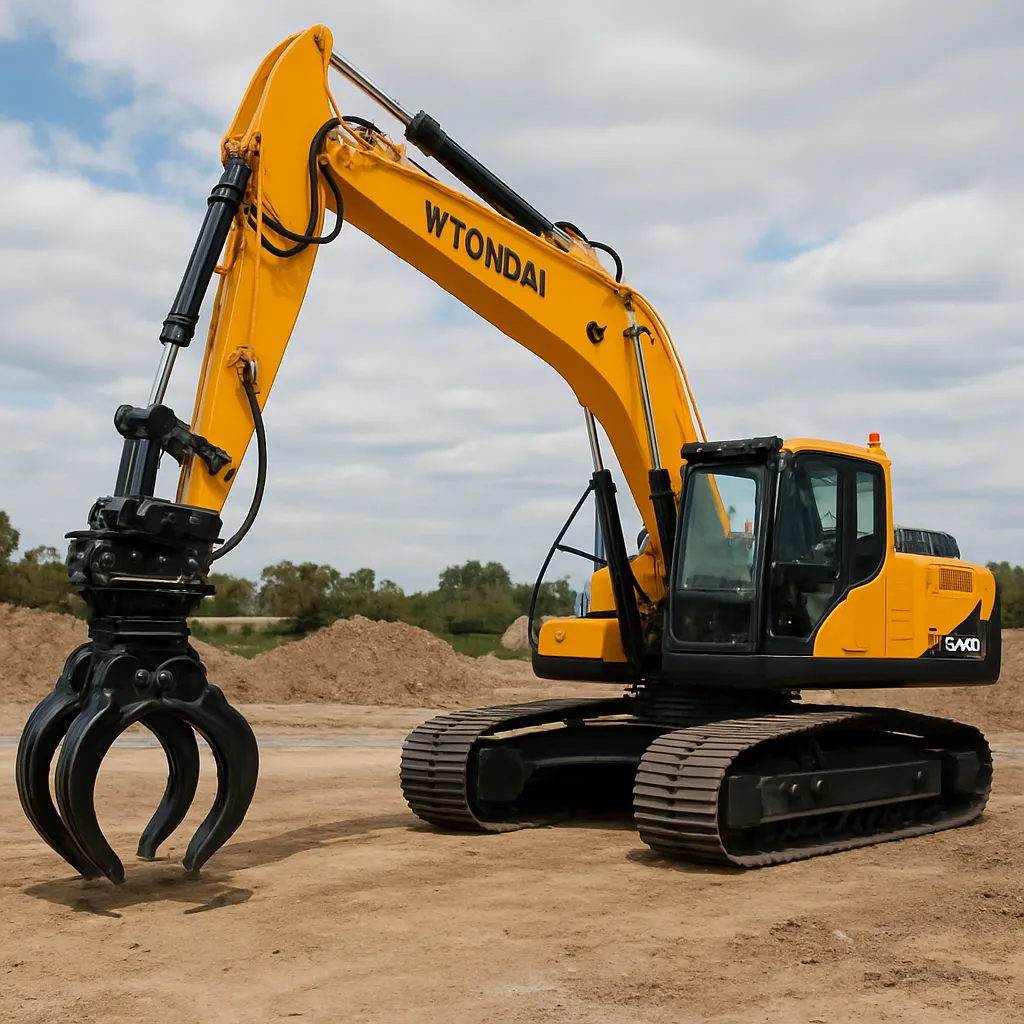
The Hyundai R230LC MH is a purpose-built material handler derived from the R230LC excavator platform and optimized for lifting, sorting and moving bulk goods in industrial environments. Combining a robust undercarriage with a specialized upper structure, long-reach boom options and a high-visibility cab, the R230LC MH is intended to serve sectors such as scrap recycling, ports and terminals, demolition, timber yards and bulk material handling. The following article outlines the machine’s main characteristics, typical applications, operational advantages and practical considerations for buyers and operators.
Design and core features
The Hyundai R230LC MH retains the reliable chassis and powertrain architecture of the R230LC excavator family, but incorporates a number of adaptations that convert it from a digging-focused excavator into a dedicated industrial handler.
Structural modifications
- Reinforced boom and stick: Compared with standard excavator booms, the material-handling versions often use thicker steel, additional gussets and redesigned pin locations to withstand frequent high‑reach lifting and the lateral stresses that come with grapples and magnets.
- Elevated cab options: To improve operator sightlines over loads and stacks, the R230LC MH is commonly offered with a raised or extended cab on a stronger sub‑frame. This improves visibility and can be combined with extra shielding or pressurization for dusty environments.
- Counterweight and stability enhancements: Additional or re-profiled counterweights and wider track or undercarriage options help counterbalance longer booms and heavy attachments, increasing the machine’s safe working radius.
Powertrain and hydraulics
The machine typically uses a reliable diesel engine tuned for steady torque output rather than peak digging power. The hydraulic system is optimized for continuous, smooth operation with strong flow for heavy attachments like magnets, grapples and shears. Key hydraulic features usually include:
- High-capacity pump(s) to feed continuous or simultaneous functions
- Proportional control valves for precise attachment movements
- Optional hydraulic lines and quick couplers for multi-attachment use
Operator environment and controls
Given the extended duty cycles in material handling, the R230LC MH emphasizes operator comfort and ergonomics. Cab upgrades often include:
- Large glazing area for 360-degree visibility or improved forward/upward sight lines
- Air suspension seats, climate control and reduced-vibration mounts
- Specialized joysticks and control layouts for use with magnets, grapples and rotators
- Integrated cameras and proximity sensors for blind-spot mitigation
Primary applications and industry uses
The Hyundai R230LC MH is a versatile machine tailored to tasks where reach, lifting capacity and attachment versatility matter more than digging depth. Typical sectors and tasks include:
Scrap and recycling yards
- Loading and unloading trucks and rail cars
- Sorting and stacking scrap metal with grapples
- Working with hydraulic or electric lifting magnets to sort ferrous materials
In scrap environments the machine’s robustness and ability to host strong magnets or heavy-duty grapples make it a mainstay. Corrosion protection, reinforced components and easy-access service points are valued in these harsh workspaces.
Ports, terminals and intermodal facilities
- Handling bulk cargo such as scrap, steel billets, wood, aggregates and recycled materials
- Loading/unloading barges, trucks and rail wagons where reach and lift height are critical
- Working alongside cranes and conveyor systems to feed processes
In ports, the R230LC MH’s maneuverability and compact undercarriage (compared with large stationary cranes) provide cost-effective, flexible handling. Machines with magnets are often used to separate ferrous materials from mixed cargo.
Demolition and material sorting
- Light-to-medium demolition with dedicated attachments (shears, pulverizers)
- On-site sorting and loading of demolition waste for recycling or transport
The material handler conversion allows operators to perform selective demolition and pick-and-place tasks with precision, rather than relying solely on a larger excavator or fixed crane.
Timber yards and biomass handling
- Sorting, lifting and stacking logs
- Feeding biomass into processing lines
High reach and grapple control make the R230LC MH suitable for timber handling. Optional timber grabs, rotators and bark-protecting features are commonly fitted.
Attachments and versatility
One of the R230LC MH’s greatest strengths is the wide array of compatible attachments that multiply its applications. The machine becomes a multifunctional platform when fitted with the right tools.
Common attachments
- Hydraulic grapples (orange-peel, demolition, sorting)
- Electro/hydraulic magnets for ferrous separation
- Rotators for precise load orientation
- Hydraulic shears and pulverizers for demolition
- Clamshell buckets for bulk loading/unloading
- Specialized lifting jibs and spreader bars for container handling
Attachment interfaces and options
Modern R230LC MH installations typically offer multi-function hydraulics, quick-coupler systems and optional electrical power lines for electric magnets. These interfaces allow rapid switching between tasks and keep downtime to a minimum. Hydraulic flow rates, circuit pressure ratings and control logic must be matched carefully to each attachment for safe and reliable operation.
Performance, productivity and fuel efficiency
Material handlers prioritize continuous operation and controlled movements over high-impact digging cycles. This impacts how manufacturers tune engines and hydraulics for working cycles typical in yards and terminals.
Productivity aspects
- Sustained hydraulic flow and smooth controllability deliver impressive throughput when loading trucks, wagons or vessels.
- High visibility and operator controls reduce cycle times and handling errors.
- Attachment-specific features (such as magnet power or rotator speed) directly influence tons-per-hour metrics.
Fuel consumption considerations
Fuel efficiency depends on duty cycle, attachment weight, and operator technique. Material handlers can be more fuel-efficient than full-size cranes for moderate lifts because they relocate under their own power and use compact, efficient hydraulic systems. Operators and fleet managers can improve fuel economy through:
- Engine idle management and automatic shutdown features
- Hydraulic system load-sensing and demand-based pumps
- Routine maintenance to keep filters, injectors and cooling systems optimal
Safety and operator aids
Material handling environments pose hazards from falling loads, overhead obstructions and shifting stacks. Safety measures on the R230LC MH are therefore both structural and electronic.
Structural safety features
- ROPS/FOPS-certified cabs to protect operators from rollovers and falling debris
- Reinforced boom guarding and hydraulic hose routing to reduce the risk of sudden failures
- Stability-enhancing counterweights and optional outrigger or wider track choices
Electronic aids and monitoring
- Load moment indicators (LMI) or maximum reach/lift charts displayed in-cab
- Rear and side cameras to mitigate blind spots
- Proximity sensors and audible warnings near high-traffic areas
- Telematics packages for remote monitoring of machine health, fuel usage and location
Maintenance, lifecycle and total cost of ownership
A sound maintenance strategy is central to achieving a long productive life from an R230LC MH. Material-handling tasks can impose different wear patterns than excavation, so preventive care should be adapted.
Key maintenance areas
- Hydraulic system: frequent checks for leaks, hose chafing and fluid contamination
- Undercarriage: track tension, wear on rollers and sprockets due to frequent travel and turning loads
- Attachment interfaces: pin wear, rotator seals and quick-coupler integrity
- Engine and cooling: filters and radiators must be kept clean in dusty or metallic-dust environments
Lifecycle expectations
With appropriate upkeep, material handlers based on robust excavator platforms can reach well into tens of thousands of operating hours. Lifespan depends on operating intensity, attachment types and environmental severity. Reconditioning major components, replacing booms or re‑structuring the upper frame are common mid-life investments that extend service life and retain resale value.
Buying considerations and configuration tips
When selecting an R230LC MH for a specific operation, buyers should analyze the work profile, expected duty cycle and attachment mix.
Match reach and lifting capacity to the task
Choose boom and stick lengths that place the machine within its effective load charts for typical lifts. Over-reaching beyond rated envelopes increases risk and accelerates wear.
Consider undercarriage and counterweight options
Wider tracks or supplemental counterweights provide improved stability for heavy, high-reach lifts. However, larger undercarriage footprints can reduce maneuverability in confined sites.
Attachment compatibility and control systems
Confirm hydraulic flow, circuit type and electrical capacity before buying attachments. Integrated rotators, grapples and magnets may require additional valve banks, custom piping and software assignments for precise control.
Examples of operational metrics and typical specifications
Exact specifications for any R230LC MH vary by year, factory conversion and optional packages. The following figures are representative ranges based on the R230/R235 class of material handlers and typical conversions; verify with the manufacturer or dealer for the specific machine.
- Operating weight: approximately 22,000–26,000 kg (depends on counterweights and undercarriage)
- Engine power: roughly 110–150 kW (150–200 hp) depending on emission stage and model tuning
- Reach (boom + stick): common configurations between 6–11 meters effective working radius
- Hydraulic flow: main pump flows often in the range of 200–350 L/min depending on pump choice and attachments
- Typical operating speed: travel speeds similar to excavator family, usually 2.5–5 km/h under load
- Fuel consumption: highly dependent on duty cycle; mixed handling cycles often fall in the range of 12–30 L/hour
Because these metrics can vary widely, purchasing decisions should weigh certified load charts and the conversion shop’s expertise.
Case study snapshots and real-world usage
Operators and fleet managers report that the R230LC MH typically excels where a balance between mobility and lifting capability is required. Common success stories include:
- Scrap yards achieving faster truck turnaround by pairing a 10–11 m reach configuration with a powerful magnet and quick-attach grapple—reducing manual sorting labor.
- Regional port terminals using medium-class material handlers to complement large ship unloaders; the R230LC MH provides flexible berth-to-yard movement and lower operating costs for intermittent loads.
- Demolition contractors swapping between grapples and shears on a fast-coupler-equipped R230LC MH to selectively dismantle multi-storey structures while segregating recyclable materials on-site.
Sustainability and future developments
Material handling is evolving with electrification, hybrid powertrains and improved telematics. Hyundai and many OEMs are testing or offering electrified excavator platforms and battery-assist systems that reduce fuel consumption and emissions during stop-start material handling cycles. Other trends affecting the R230LC MH category include:
- Greater adoption of remote monitoring for predictive maintenance and fleet optimization
- Increased use of operator assistance systems (geo-fencing, automatic load limiting) to improve safety
- Battery-electric or hybrid drivetrains for indoor or emission-sensitive sites
Practical tips for operators
To get the most from an R230LC MH, operators and maintenance teams should consider the following practical actions:
- Learn and follow the machine’s specific load charts for each boom configuration; do not extrapolate from excavator charts.
- Keep hydraulic oil and filtration systems clean—material handling often creates fine metal and dust contamination.
- Use camera systems and maintain clean windows to maximize visibility in dusty or smoky yards.
- Plan jobsite layouts to minimize travel with heavy loads and reduce exposure to tipping or overreach situations.
- Rotate work assignments and train operators on attachment-specific techniques to extend component life.
Summary
The Hyundai R230LC MH is a flexible and robust platform for medium-class material handling tasks. It combines the proven undercarriage and powertrain of the R230LC excavator family with structural and hydraulic modifications tailored to lifting, sorting and loading. Ideal for scrap yards, ports, demolition and timber handling, the R230LC MH offers operators a balance of reach, stability, attachment versatility and operator comfort. Buyers should carefully match boom lengths, undercarriage options and hydraulic supply to their expected tasks, while maintaining a strong preventive maintenance program to achieve long life and reliable productivity. As the industry moves toward cleaner power and smarter monitoring, the R230LC MH and its successors will continue to evolve, offering further improvements in fuel efficiency, safety and total cost of ownership.


)
)