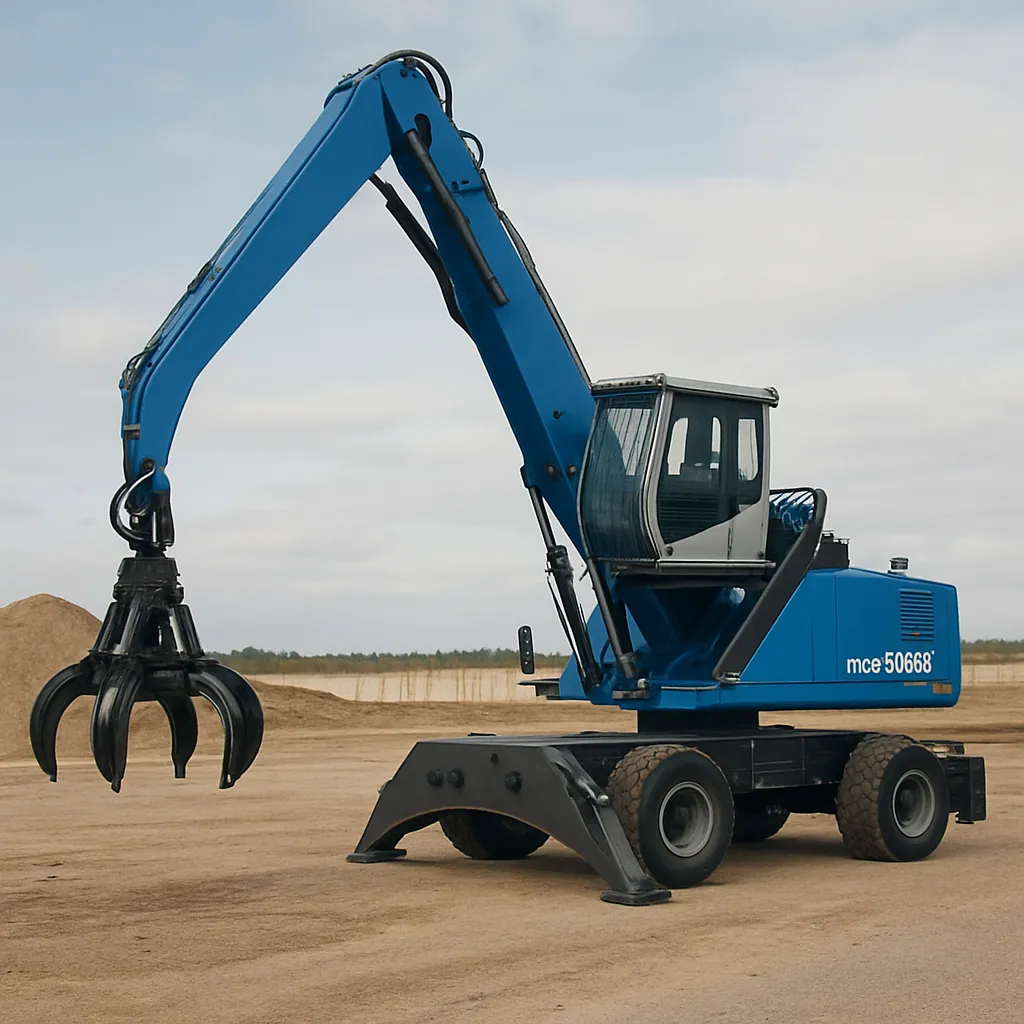
The Fuchs MHL 350F is a purpose-built heavy-duty material handler designed for demanding tasks in scrap handling, recycling, port operations, and industrial yards. Combining a high-reaching boom, robust undercarriage options, and a range of purpose-made attachments, the MHL 350F is engineered to move, sort, and load bulk materials efficiently and safely. This article explores the machine’s design, typical applications, technical characteristics, operation and maintenance considerations, and practical insights for owners and operators.
Design and key features
The Fuchs MHL 350F follows the lineage of purpose-built material handlers that emphasize reach, lifting capacity, and visibility rather than earthmoving traction. Key design elements reflect the machine’s role as a stationary or slow-travel handler that spends most of its time rotating to load trucks, stack materials, and handle scrap.
- Upper structure: The MHL series typically features a heavy-duty, reinforced upper frame with a counterweight optimized for stability during extended reach operations. The cab is mounted above the undercarriage and is designed for 360-degree rotation.
- Boom and stick: Long, box-section booms with reinforced linkages give the machine extended reach and controlled lifting characteristics. Boom configurations often come in multiple lengths to suit port, recycling, or demolition environments.
- Hydraulic system: A high-flow, variable-displacement hydraulic system is central to performance, delivering smooth boom movement and reliable operation of powerful attachments like grapples, magnets, and clamshells.
- Cab and visibility: Material handlers prioritize operator sightlines. The MHL 350F usually offers a high-visibility, noise-insulated cab with large glazing and elevated seating for safer material handling.
- Stability and undercarriage: Depending on configuration, the machine may come with crawler tracks or wheeled chassis. Tracks provide stability for port or yards, while wheeled carrier versions offer limited mobility on paved surfaces.
Primary applications and industries
The Fuchs MHL 350F is engineered for sectors where controlled lifting, sorting and transfer of loose or bulky materials is required. Its core applications include:
- Scrap yards and metal recycling: The machine excels at sorting, charging shredders, and loading scrap onto trucks, thanks to its reach and specialized grapples.
- Ports and terminals: Handling breakbulk, scrap, and general cargo is a common role. The machine’s reach and optional magnet attachments make it useful for loading and unloading vessels and barges.
- Construction and demolition sites: For selective material handling — removing rebar, sorting demolition debris, or loading containers — the MHL 350F offers precision and durability.
- Waste-to-energy and transfer stations: Efficient material transfer and feeding of processing lines benefit from the machine’s controlled movements and attachment options.
- Industrial plants and steel mills: Charging furnaces or moving large metal parts and stockpiles are typical uses where heavy-duty handling is required.
Technical specifications and performance (typical)
Exact specifications vary by model year, optional packages, and attachments, but typical performance figures for the Fuchs MHL 350F class can be summarized. Where precise numbers are model-dependent, ranges are provided.
- Operating weight: Approximately 30–40 metric tons (30,000–40,000 kg), depending on configuration and counterweight options.
- Engine power: Typically in the 150–220 kW range (200–300 bhp), with later production machines complying with Stage IV / Tier 4 Final or comparable emissions standards.
- Maximum reach: Boom and stick combinations commonly allow a working reach of 10–14 meters (33–46 ft) or more, depending on boom configuration.
- Lifting capacity: Lifting capacity is highly dependent on reach and configuration. Close to the machine, capacities may be several tonnes (e.g., 6–12 t near the pivot), decreasing with reach. Rated load charts from the manufacturer should always be referenced for safe operation.
- Hydraulic flow and pressure: High-flow systems often deliver 200–350 L/min at operating pressures aligned with heavy hydraulic circuits to power large grapples or hydraulic rotators.
- Swing system: Heavy gear-driven swing with high torque enables continuous 360-degree rotation under load, a defining trait of material handlers.
- Attachments: Grapples (4- or 5-tine orange-peel), electromagnets (for scrap), clamshell buckets, sorting grabs, and specialized tools are all commonly fitted.
- Travel speed (if wheeled): Mobility-focused carriers provide on-site travel at modest speeds (e.g., up to 20–30 km/h), although many examples are track-based and not optimized for high speeds.
Performance considerations
Material handlers like the MHL 350F trade digging force for reach, precision and lifting capacity. The machine’s design delivers fine control and extended operational life when used in the intended material-handling roles rather than heavy ground excavation.
Attachments and adaptability
The versatility of the MHL 350F is largely realized through its attachment options. Selecting the correct attachment dramatically impacts productivity and safety.
- Orange-peel grapples: Preferred for scrap and bulk handling. They come in different jaw sizes and jaw counts for varied volumes and densities.
- Electromagnets: Used extensively in scrap yards and ports for picking and placing ferrous material quickly. Magnet power and control systems are matched to boom capacities.
- Clamshell and clamshell buckets: Ideal for bulk loading of loose materials like coal, sand, or refuse.
- Sorting grabs: Specialized grabs with rotating heads or rotators aid in sorting tasks requiring orientation control.
- Shears and demolition tools: For selective demolition tasks where cutting and separation are required.
Quick-coupler systems and hydraulic circuits with multi-function controls are typical, allowing fast changeovers and effective use of power across different tools.
Operation, ergonomics and safety
Operators of the MHL 350F benefit from a cab focused on safety, comfort, and visibility. Material handlers emphasize ergonomic controls and minimized fatigue during long shifts.
- Visibility: Large windows, elevated cabs and optional camera systems improve sightlines to the working area.
- Controls: Proportional joystick controls, programmable operating modes, and adjustable sensitivity enhance precision handling.
- Operator comfort: Air suspension seats, climate control, and reduced noise/vibration levels reduce fatigue and improve attention.
- Safety systems: Load moment indicators (LMI), overload protection, stabilizer and outrigger interlocks, and emergency stop systems are commonly integrated. Operators should always reference the machine’s load chart and follow safe operating procedures.
Maintenance, downtime reduction and lifecycle costs
Well-executed maintenance is critical to preserving uptime and asset value with heavy material handlers. The MHL 350F benefits from straightforward service access and robust component selection, but owners should plan for the realities of high-cycle material handling.
- Preventive maintenance: Regular greasing of boom pins, scheduled hydraulic oil and filter changes, and engine service intervals are essential. Heavy-use environments may require more frequent intervals than general-purpose machines.
- Hydraulic health: Monitoring hydraulic temperatures, contamination levels, and hose integrity prevents catastrophic failures. Use of proper filtration and regular sampling extends component life.
- Wear parts: Grapple teeth, bushings, pins, and seals are typical wear items. Maintaining an inventory of consumables reduces downtime.
- Diagnostics: Modern machines often include on-board diagnostics for engine and hydraulic systems. Early fault-finding reduces repair times and costs.
- Total cost of ownership: Fuel, insurance, parts, operator training, and periodic rebuilds factor into lifecycle cost. For heavy material handlers, planned rebuilds of booms and undercarriage systems may occur after several years of intense service.
Fuel efficiency and environmental considerations
Newer MHL models and retrofit packages aim to reduce emissions and improve efficiency. Depending on model year and market, engines comply with different standards (e.g., Stage IIIA, Stage IV or Tier 4 Final).
- Engine emissions: Machines from the last decade often include aftertreatment systems and selective catalytic reduction (SCR) to meet emissions norms.
- Fuel consumption: Fuel use depends heavily on duty cycle. Heavy, continuous lifting and use of hydraulic attachments increase consumption. Typical consumption in intense scrap-handling operations can be in the tens of liters per hour; lighter, intermittent operations will be significantly lower.
- Energy-saving features: Idle-reduction systems, automatic engine idle-down, and hydraulic power management modes help reduce fuel use and wear.
Market considerations, resale value and buying tips
Purchasing a Fuchs MHL 350F — new or used — requires evaluation of intended duty, attachment needs, and total cost of ownership. Material handlers often retain value well when maintained due to the specialized nature of the work they perform.
- New vs used: New machines offer warranty and latest emissions tech, while used units can represent significant capital savings. Typical used prices vary widely by condition, age, hours and attachments — for machines in this class a rough window could be €150,000–€400,000 or more, depending on market and specification.
- Hours and duty cycle: Because material handling is cyclical and often high-cycle, hours alone don’t tell the whole story. Ask about duty type, maintenance records, and attachment wear history.
- Attachments included: Job-ready machines that come with grapples, rotators and mag systems have higher resale value. Verify the condition of electrical and hydraulic interfaces for magnets and other tools.
- Spare parts and dealer support: Availability of parts and local dealer/service support significantly affect operating costs and downtime. Confirm regional support networks for filters, seals, and specialty components.
Practical use-cases and operational tips
Operators and site managers can get the most from an MHL 350F by optimizing workflow and matching machine configuration to job requirements.
- Match attachment to material: Use grapples sized for typical piece sizes; magnets for ferrous-only scrap improve throughput; clamshells suit bulk loose materials.
- Plan work zones: Position the machine to minimize unnecessary boom extension and rotation under load. Shorter lifts and frequent repositioning can be more efficient than long reaches.
- Operator training: Trained operators reduce damage to attachments and structures and improve cycle times. Practice controlled, smooth movements to reduce hydraulic shock and wear.
- Routine inspections: Daily checks of pins, hoses, grapple teeth and bolts find problems early. Track wear and schedule replacements before failures.
- Use technology: Cameras, wireless monitors, and load-management systems increase safety and productivity in busy yards.
Interesting facts and historical context
Fuchs has a long history as a specialist in material handlers. Machines like the MHL 350F are distinct from excavators due to their intended role: whereas excavators focus on earthmoving and digging forces, material handlers prioritize lift, reach, rotation and attachment versatility. This specialization has led to innovations in cab ergonomics, counterweight design and hydraulic controls that specifically address the needs of scrap yards, ports, and industrial handlers.
- Specialization pays: Material handlers are built around predictable, repetitive motion patterns — high-frequency cycles, precise placement and constant lift/rotate activity — which in turn drives different engineering trade-offs compared with general-purpose diggers.
- Attachment ecosystems: The success of a model like the MHL 350F depends on a wide ecosystem of third-party attachment manufacturers offering grapples, magnets and tools tailored to industry needs.
- Operator-centered design: Over decades, manufacturers have improved cab environments, control feel and operator interfaces to reduce fatigue — a decisive factor in high-throughput facilities.
Conclusion: where the MHL 350F shines
For operators who require a dedicated, heavy-duty machine for sorting, loading and moving bulk materials, the Fuchs MHL 350F class machine offers a compelling combination of reach, lifting capacity, and attachment versatility. Its design emphasizes stability, operator comfort, and robust hydraulic performance to handle demanding cycles in scrap yards, ports, and recycling centers. Purchasing decisions should balance initial cost against maintenance history, attachment inventory, dealer support, and the machine’s match to the intended duty cycle. With proper care and trained operators, these material handlers deliver the precision and throughput required in heavy material-handling industries.
)
)