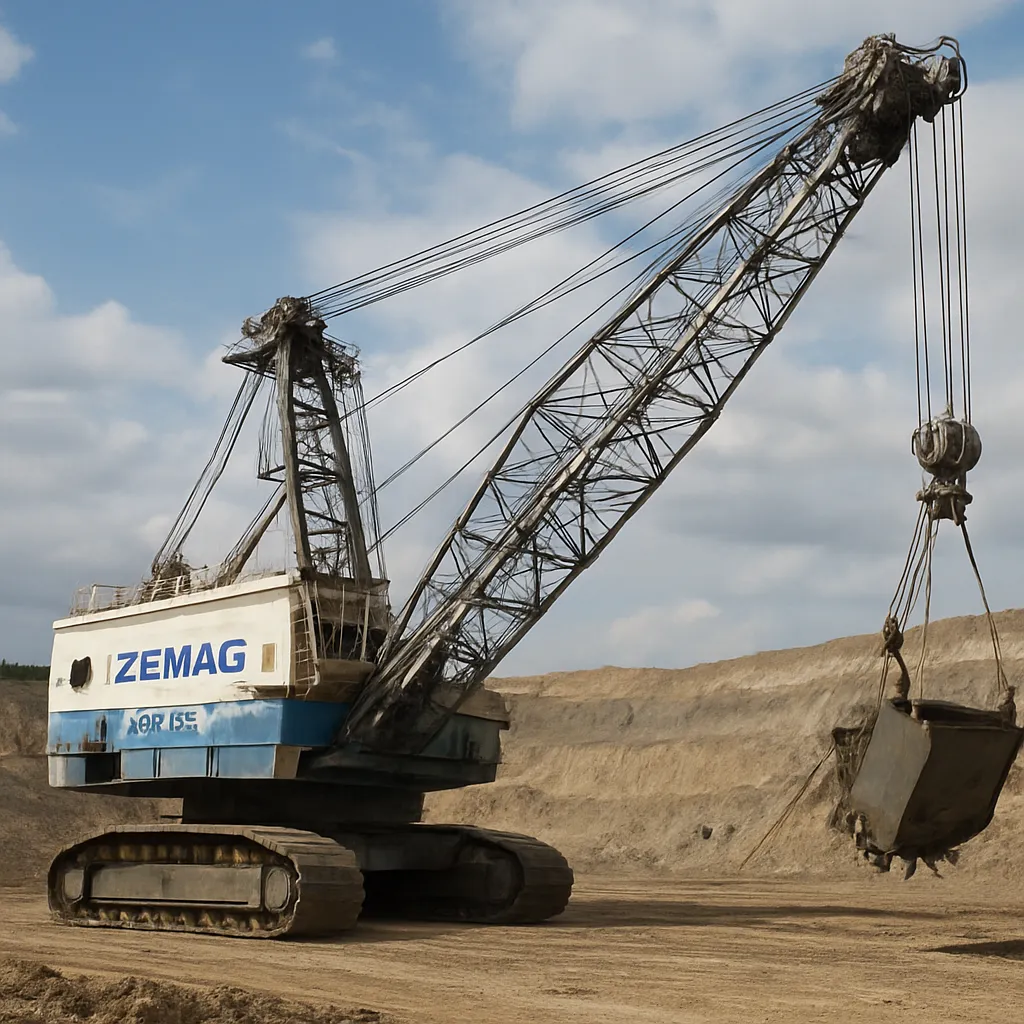
The ZEMAG ES1600 is a type of large-scale surface excavator known as a dragline, designed for removing overburden, moving bulk material, and performing heavy excavation tasks in open-pit mines and other large civil-engineering projects. This article outlines the machine’s design, typical technical characteristics, applications, operational requirements, environmental and safety aspects, and the market context in which machines like the ES1600 are used. Publicly available, detailed manufacturer specifications for the ZEMAG ES1600 are limited; where precise data are not widely documented, the discussion relies on established characteristics of draglines in this class and practical information relevant to owners, operators and planners.
Design and engineering principles
Draglines are among the largest mobile excavators. The ZEMAG ES1600 follows the classical dragline layout: a large revolving superstructure mounted on a tracked or crawler undercarriage, a long lattice or box-section boom that projects out from the superstructure, and a heavy steel bucket suspended from the boom by wire ropes. The bucket is dragged across the material by a hoist/drag rope arrangement and is lifted by the hoist mechanism for swinging and dumping.
Key design elements include:
- Boom length: Determines reach and maximum digging depth; longer booms allow deeper excavation and increased surface coverage from a single machine position.
- Bucket system: The bucket is typically single-shell or toothed and is selected for the ground conditions—abrasive materials require heavier wear protection.
- Hoist and drag ropes: High-strength steel ropes and large drum winches provide the mechanical advantage to move heavy buckets and overburden.
- Powertrain: Draglines use large electric motors powered by on-board diesel generators or external electrical supplies. Electrical systems can be AC or DC with variable-speed control for improved efficiency.
- Superstructure and counterweight: The body houses the winches, motors, operator cabin, and counterweight system that balance the boom and payload during operation.
The ZEMAG ES1600, like other large draglines, is a machine optimized for continuous, high-tonnage stripping operations. Its mechanical systems emphasize robustness—heavy gearboxes, large bearings, and reinforced boom sections—to withstand the strains of multi-ton buckets and repetitive cycles.
Typical technical specifications and performance statistics
Exact published specifications for the ZEMAG ES1600 are not widely available in open-source records. However, draglines marketed or classified under similar model designations can be characterized by a set of typical parameters. The ranges below represent common values for draglines in the medium-to-large class associated with ES1600-type machines; they should be interpreted as indicative rather than definitive for every unit.
- Bucket capacity: Typically ranges from approximately 20 m3 to 80 m3 for medium-to-large draglines. Larger, ultra-class draglines exceed 100 m3, but ES1600-class units are usually in the 30–60 m3 range depending on configuration and application.
- Boom length: Commonly between 50 m and 100 m. Boom length determines maximum digging depth (often 30–50 m or more) and radius coverage.
- Operating weight: These machines often weigh between 1,000 and 3,000 metric tons for medium-large configurations; this includes the superstructure, counterweight, and undercarriage.
- Installed power: Power systems for this class frequently range from several hundred to several thousand kilowatts (0.5–3+ MW), depending on whether the machine uses on-board diesel generators or is electrically powered from shore supplies.
- Production rate: Typical overburden removal rates for a well-operated dragline of this class can vary widely—tens to hundreds of thousands of cubic meters per month—depending on cycle time, bucket fill factor, material characteristics, and operating hours.
- Cycle time: Full-cycle excavation times vary from 45 seconds to several minutes per cycle based on bucket size, rope lengths, and swing distances.
- Mobility and assembly: Transported in modular components for overland or rail movement and reassembled on-site. Setup and teardown can take weeks for large machines due to the size of the boom and counterweight systems.
These statistics indicate the scale and throughput capability of machines in the ES1600 class. For specific projects, machine selection is tailored to match material characteristics (density, cohesion, abrasivity), stripping ratios, and the mine’s production plan.
Applications and industries
The ZEMAG ES1600 is primarily used in sectors and tasks that require continuous, high-volume surface material removal. Common applications include:
- Open-pit coal and lignite mining: Draglines are particularly suited to removing overburden above shallow-to-moderate-depth coal seams. Their ability to clear large areas without frequent repositioning reduces operating costs in surface coal stripping.
- Hard rock and soft overburden stripping: While not suited for heavy rock demolition, draglines excel in softer overburden or weathered rock layers.
- Bulk earthmoving for civil infrastructure projects: Construction of large reservoirs, levees, or canal excavation where large volumes of material must be moved.
- Reclamation and landscaping: After mining, draglines can be used to redistribute spoil and assist in land reshaping and reclamation works.
- Large-scale port or harbor maintenance: In some instances, dragline-style machines have been adapted for nearshore dredging or material handling tasks, though specialized dredgers are more common for such work.
Draglines are especially cost-effective where the material can be stripped with high fill factors and the machine can access a large working radius without frequent repositioning. Their low operating cost per ton moved (relative to some other excavator types) makes them attractive for certain long-duration mining phases.
Operation, maintenance and lifecycle management
Operating a machine of the ES1600’s scale requires a structured approach to staffing, maintenance, and logistics. A typical operation involves a trained operator, riggers, electricians, maintenance technicians, and a planning team for repositioning and support.
Routine operations
- Daily pre-start inspections of ropes, drums, and critical lubrication points.
- Monitoring of electrical systems and motor temperatures if electrically driven.
- Operator training for optimal bucket fill, swing minimization, and safe positioning relative to spoil piles to maintain productivity.
Maintenance
- Wear parts: bucket lip, teeth, shrouds and wear plates are consumables and require scheduled replacement based on abrasive wear rates.
- Wire rope and winch maintenance: Periodic non-destructive testing (NDT) and rope retirements follow manufacturer and regulatory guidelines to mitigate catastrophic failure risks.
- Structural inspections: Boom and boom pins require scheduled ultrasonic or visual inspections to detect fatigue cracks before failure.
- Major overhauls: Gearboxes, slewing bearings, and motors may require planned rebuilds after tens of thousands of operating hours.
Lifecycle management also addresses component obsolescence and parts availability—especially relevant for machines built by legacy manufacturers or older units that remain in service for decades. Refurbishment and retrofitting with modern controls or remote monitoring sensors can extend operational life and improve availability.
Environmental and safety considerations
Draglines are massive industrial machines whose environmental and safety impacts must be managed proactively.
- Dust and noise: Dust suppression systems, water sprays, and phased blasting/stripping plans reduce airborne particulates. Noise abatement measures include acoustic enclosures for certain equipment and strategic scheduling.
- Ground stability and vibration: The mass and operation of draglines require assessment of pit bench integrity and exclusion zones to prevent slope failures or subsidence hazards.
- Emissions: Electrically powered draglines offer lower on-site emissions compared with diesel-generator-driven units. Grid power availability and reliability influence choices for electrification.
- Safety: Strict exclusion zones around operating radius, redundant emergency-stop circuits, and rigorous rope-handling procedures are standard. Training and documented safe systems of work limit the human risk associated with large moving components.
Modern upgrades often include condition monitoring, geofencing, and partial automation to minimize human exposure to hazardous areas and improve both safety and machine availability.
Historical and market context
Manufacturers of heavy mining equipment, including specialized designs such as draglines, have evolved across decades. ZEMAG is known historically as a manufacturer of heavy machinery; like many heavy-equipment makers, its product lines reflected needs in mining, construction and industrial sectors. Machines bearing the ZEMAG name were part of a European engineering tradition where reliability and robustness were key selling points.
The market for large draglines has been influenced by commodity cycles (particularly coal and lignite demand), the scale of open-pit mining projects, and the increasing preference in some regions for alternative excavation systems (shovels and trucks) or for electrified, automated equipment. Despite these trends, draglines remain valuable in niche applications where continuous, wide-radius stripping is the most economical solution.
Case studies and operational considerations
Real-world use of ES1600-type draglines emphasizes planning to maximize machine uptime and cost-efficiency. Typical operational lessons include:
- Site layout optimization: Positioning spoil heaps and haul roads to minimize idle swings and repositions increases daily throughput.
- Complementary fleets: Draglines often work alongside shovels, dozers, and truck fleets. Coordinated scheduling reduces interference and increases overall mine productivity.
- Rebuild and retrofit programs: Long-serving draglines can be refurbished with modern drives, rope monitoring and control systems that improve productivity and extend service life.
Procurement decisions often weigh initial capital cost against lifecycle operating costs, availability of spare parts, and local service support. In many operations, a refurbished ES1600-class machine can be a cost-effective alternative to purchasing a brand-new ultra-class excavator—especially where the geology and mine plan favor dragline operation.
Future outlook: modernization and competitiveness
Looking ahead, several trends will shape the serviceability and competitiveness of machines like the ZEMAG ES1600:
- Electrification: Increasing adoption of grid-supplied electric drives where power infrastructure allows will reduce on-site emissions and operating costs.
- Digitalization: Condition monitoring, predictive maintenance, and remote diagnostics reduce downtime and improve component management.
- Automation: Partial automation for repetitive motions—rope handling, swing control and bucket positioning—can raise efficiency and lower human risk.
- Parts and aftermarket services: A strong aftermarket supply chain and skilled refurbishers will determine how long older ES1600 units remain competitive.
For owners and operators, investment in upgrades, training, and data-driven maintenance will typically yield the best returns by increasing availability and reducing lifecycle costs.
Summary
The ZEMAG ES1600 embodies the characteristics of a heavy-duty surface dragline built for large-scale overburden removal and continuous excavation. Although specific manufacturer data may be scarce in public sources, machines in this class are defined by significant bucket capacity, long boom spans, and high installed power to support steady, high-volume productivity. They are widely used in open-pit mining (notably coal and lignite), major earthworks, and reclamation projects where their unique combination of reach, low per-ton operating cost, and durability provide economic advantages. Successful operation depends on rigorous maintenance, well-trained crews including the operator, and careful planning around environmental and safety requirements. Upgrades in electrification, digital controls and condition monitoring will continue to keep draglines like the ES1600 relevant in the heavy-mining sector for years to come.


)
)