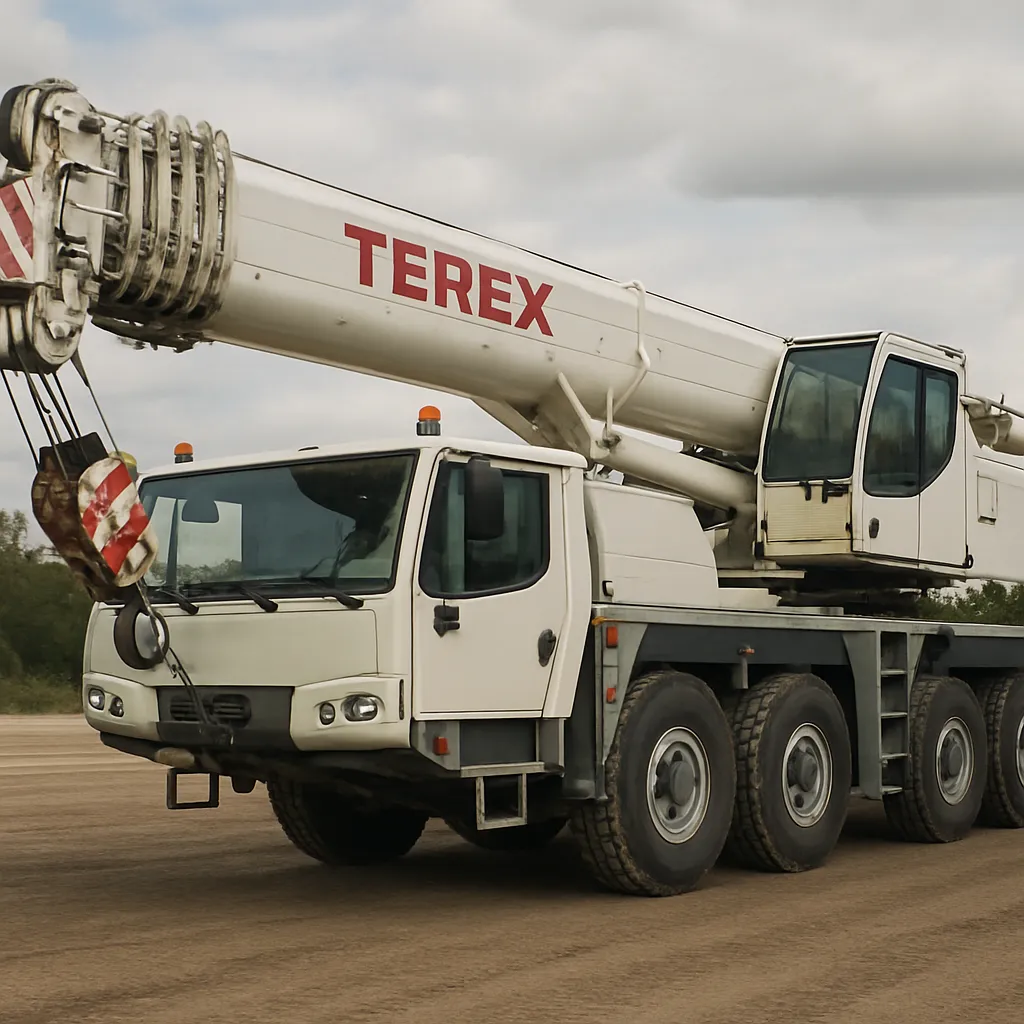
The Terex AC 200-1 is a versatile all-terrain crane designed to combine road mobility with robust lifting capability on a wide range of job sites. Known for its balance of transportability, strength and compact footprint compared to larger 200-ton-class machines, the AC 200-1 is commonly used by contractors, rental fleets and specialized lifting companies. This article explores the machine’s characteristics, typical technical parameters, practical applications, operational considerations and lifecycle aspects that make the AC 200-1 a popular choice where medium-heavy lifts and flexible mobility are required.
Overview and design highlights
The Terex AC 200-1 belongs to the 200-ton capacity class of all-terrain cranes, a segment that aims to provide significant lifting power while remaining maneuverable on public roads and capable on rough site terrain. As an all-terrain crane, it is engineered with a multi-axle carrier for highway travel and a superstructure with a telescopic boom and slewing mechanism for lifting operations.
Key design objectives for this model include fast set-up, straightforward transport between jobs, and a lifting system able to handle a broad range of attachments and jibs. The crane’s carrier is built to maintain good on-road behavior and provides the structural base for the superstructure; the crane’s outrigger system and hydraulic controls give the operator precise control during lifts.
- Mobility: Road-legal travel without the need for disassembly in many jurisdictions, enabling quick movement between sites.
- Versatility: Telescopic boom and optional lattice jib arrangements for varying reach and height requirements.
- Rigging options: Multiple hook blocks and fly jib configurations to adapt to heavy or high-reach lifts.
- Safety systems: Integrated load monitoring and automatic protections to reduce the risk of overload and unsafe operating conditions.
Technical specifications and typical performance figures
Specifications for the AC 200-1 vary by market and fitted options (boom length, jib types, counterweight configuration). The following figures are typical for machines in this class and provide a practical sense of capability. Note that exact numbers depend on factory configuration and national regulatory modifications.
- Rated capacity: Approximately 200 tonnes at the minimum working radius; rated capacity reduces as radius increases.
- Telescopic boom: Common configurations offer a telescopic main boom that extends from a compact transport length to approximately 35–40 meters in many setups. Combined with jibs, tip heights can exceed 50–70 meters depending on configuration.
- Jib options: Lattice or telescopic fly jibs typically extend the reach by up to 20–30 meters; offset angles and combinations allow for flexible reach/height trade-offs.
- Carrier axles and mobility: The carrier commonly has multiple axles (often five or six axles in this class) giving a good balance of load distribution and road-legal gross vehicle weight.
- Counterweight: Modular counterweight systems let operators configure the crane from a lower-weight transport setup to a full counterweight arrangement on site. Typical counterweights can range from several tonnes in a transport setup to tens of tonnes in full configuration.
- Hydraulic systems: High-pressure hydraulics drive boom extension, hoisting and slewing with electronic controls and feedback for precise movement.
- Operating systems: Modern variants are equipped with load moment indicators (LMI), anti-two-block systems, electronic load charts and sometimes remote monitoring/telemetry for diagnostics.
- Travel speed and dimensions: Designed for highway speeds consistent with heavy commercial vehicles; transport width and height comply with many regional limits but may require special permits for oversized loads in certain jurisdictions.
Performance in practical terms
In practice, the AC 200-1 excels when a job requires a high degree of flexibility: the crane can travel on public roads between sites, set up quickly using hydraulic outriggers, and perform mid-range heavy lifts without the assembly effort of a lattice crawler. The modular counterweight and jib options make it suitable for lifts that need either maximum capacity at short radii or extended reach at moderate capacities.
Common applications and industry use cases
The Terex AC 200-1 is deployed across a broad range of sectors where mobility plus meaningful lifting capacity is essential. Typical uses include:
- Construction: Structural steel placement, precast concrete installation, facade modules and HVAC units where lifts are medium-heavy and often require repositioning throughout a site.
- Wind energy: Installation and maintenance of mid-sized wind turbines (nacelles, hubs and prefabricated tower sections) where reach and controlled lifting are essential.
- Industrial plants and factories: Equipment setting and replacement, heavy machinery relocation, and maintenance tasks that benefit from a crane that can travel inside industrial parks and set up in constrained spaces.
- Oil and gas / petrochemical: Module skidding and equipment lifts in refineries and petrochemical plants where site access may be restricted and the crane must be adaptable to tight work envelopes.
- Infrastructure and utilities: Bridge maintenance, overhead line component installation, and other municipal works where frequent repositioning and road travel are required.
- Ports and maritime: On-dock maintenance, light-to-medium cargo handling and shipboard support where a compact footprint and wheeled mobility are useful.
- Rental fleets: Because of its flexibility, the AC 200-1 is popular with rental companies that need a machine that fits diverse jobs, from commercial construction to specialized industrial lifts.
Operator features, controls and safety systems
Modern all-terrain cranes like the AC 200-1 integrate ergonomic operator cabins, advanced control systems and a suite of safety features to reduce risk and maximize precision.
- Operator cabin: Comfortable, climate-controlled cabins with wide visibility, adjustable seating and intuitive controls help reduce operator fatigue and improve accuracy during critical lifts.
- Electronic load management: Load moment indicators, dynamic load charts and real-time feedback on boom angle, extension and load ensure safe operation within rated envelopes.
- Anti-two-block and hoist protection: Mechanical and electronic systems prevent hook block contact with the boom head and protect hoist mechanisms from overload.
- Outrigger monitoring: Sensors and interlocks confirm correct outrigger deployment and ground contact before full load operations can commence.
- Remote control/telemetry: In many contemporary units, remote diagnostics and service telemetry allow fleet managers and service engineers to monitor machine health, troubleshoot issues and schedule maintenance proactively.
All these systems combine to make the AC 200-1 both safer and easier to operate effectively in demanding or constrained environments. Proper training and certification remain essential for operators due to the complexity and inherent hazards of crane work.
Site planning, setup and best practices
Successful use of the AC 200-1 depends not only on the machine itself but on careful site planning and adherence to best practices. The following points summarize typical considerations:
- Ground assessment: Evaluate bearing capacity and prepare outrigger pads or cribbing as required; soft or uneven ground increases risk and reduces lifting capacity.
- Transport logistics: Plan for road permits, escort vehicles and route clearance if the crane moves in a configuration that exceeds local transport limits.
- Lift planning: Develop detailed lift plans and risk assessments, including charted crane capacities at the radii and boom angles expected for the job.
- Weather and environmental conditions: Wind speed limits and site conditions directly affect crane operations; many lifts must be suspended if conditions exceed rated parameters.
- Communication and signaling: Use trained riggers and clear communication protocols (radios, standard signals) to coordinate complex lifts.
- Maintenance checks: Pre-shift inspections of hydraulics, wire ropes, hooks, controls and safety devices reduce unexpected downtime and enhance safety.
Maintenance, lifecycle costs and fleet considerations
Owning or operating an AC 200-1 involves considerations beyond initial purchase price. Maintenance planning, parts availability and operator training impact total cost of ownership and fleet readiness.
- Preventive maintenance: Regular hydraulic and mechanical inspections, lubrication schedules and component replacements (wires, sheaves, seals) extend service life and preserve resale value.
- Parts and service network: Access to manufacturer parts and authorized service centers reduces downtime. For older models, availability of compatible parts can be a deciding factor when maintaining a machine long-term.
- Fuel and consumables: Diesel engine consumption, hydraulic oil and wear components should be included in lifecycle cost models.
- Residual value: Well-maintained cranes in this class tend to hold value in rental markets, but depreciation curves vary based on hours, geography and technological obsolescence.
- Upgrades and retrofits: Electronic systems, telematics and safety upgrades can be retrofitted on some units, improving performance and diagnostic capability without full replacement.
Market role and rental economics
The AC 200-1 has a distinct role in rental fleets and contractor inventories because it bridges the gap between smaller truck-mounted cranes and very large lattice or crawler cranes. Its combination of mobility and capacity makes it suitable for projects where hiring multiple machines or performing extensive disassembly would be inefficient.
From a rental perspective, demand often follows cycles in construction, infrastructure spending, and renewable energy installation. When properly marketed, a 200-ton all-terrain crane can achieve good utilization rates because of its adaptability across job types. Key financial considerations include daily or weekly rental rates, transport costs to and from the site, and operator/service packages.
Practical examples and case studies (typical scenarios)
Examples of jobs where an AC 200-1 or similar machine is commonly used:
- Steel erection for mid-rise buildings: Lifting steel trusses and prefabricated components between floors where the crane repositions frequently and must travel on city streets.
- Wind turbine component handling: Installing turbine hubs and heavy nacelles onshore or in locations with limited access for bigger crawler cranes.
- Industrial maintenance shutdowns: Replacing heavy exchangers or compressors inside process plants, where mobility and the ability to configure the crane in tight environments are essential.
- Bridge segment installation: Lifting precast segments into place in constrained right-of-way spaces, where a wheeled crane can get closer than larger machines.
Final considerations and selection tips
When evaluating the AC 200-1 for a fleet or a specific project, consider the following:
- Match capacity to the heaviest expected lift: Ensure the crane’s rated charts cover the maximum load at the required radius with an appropriate safety margin.
- Assess transport and permit implications: Road travel capability may reduce transport costs but check local rules for axle loads and dimensions.
- Evaluate service and parts access: Confirm the availability of qualified technicians and spare parts in your region.
- Consider rental vs purchase: For intermittent use, renting a crane like the AC 200-1 may be more economical than owning; for continuous or fleet-level demand, ownership may be justified.
- Operator training: Invest in certified training to leverage the crane’s advanced control and safety systems effectively.
Closing summary
The Terex AC 200-1 is a strong candidate in the medium-heavy lifting segment where a combination of mobility, reliable lifting capacity and flexible configuration matter most. Its typical use across construction, industrial maintenance, energy and infrastructure sectors reflects the balanced design approach: enough power to handle demanding lifts, yet compact and roadable enough to be economically practical on many job sites. Careful selection, proper maintenance and professional operation unlock the full value of the machine, making it a dependable tool in modern lifting fleets.


)
)