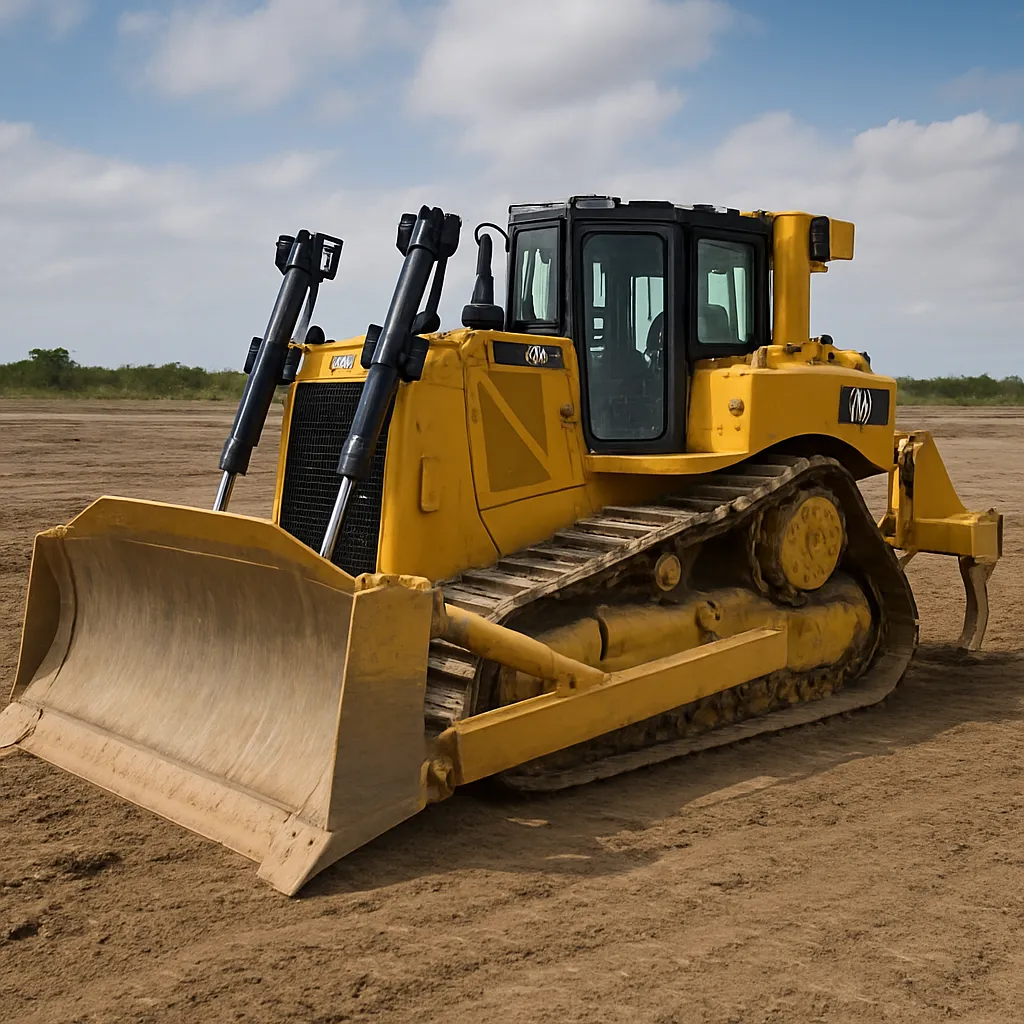
The Caterpillar D8T is a medium-to-large class crawler dozer widely used around the world for heavy earthmoving tasks. Built to combine durability, traction and operator comfort, the D8T occupies a versatile niche between smaller site dozers and the largest mining machines. This article discusses the machine’s core characteristics, typical applications, technical and operational highlights, and other practical information that can help fleet managers, operators and prospective buyers understand what the D8T offers.
Overview and key characteristics
The Caterpillar D8T is designed as a workhorse for projects that require powerful dozing capability, stable traction and long-term reliability. In the field it is prized for its balance of horsepower, blade capacity and undercarriage robustness. The D8T is frequently specified with a range of blade and ripper options, multiple track shoes and undercarriage packages to match soil types and application needs.
Core design features
- Engine: a turbocharged, emissions-compliant diesel engine tuned for consistent torque at low rpm for pushing loads.
- Undercarriage: heavy-duty track frames and durable track components that handle abrasive soils and steep gradients.
- Blade options: S-U blades, straight blades (S), universal blades (U) and semi-universal configurations to balance capacity and finish grading.
- Ripper: multi-shank or single-shank rippers for breaking compacted or frozen ground and rock.
- Operator environment: a climate-controlled, ergonomically designed cab with visibility, controls and suspension to reduce fatigue.
The machine’s purpose is to move and spread significant volumes of material efficiently while minimizing downtime through serviceability and component life design.
Typical applications and industry uses
The Caterpillar D8T is used across multiple sectors because of its adaptability. Typical applications include:
- Construction: bulk earthmoving on large site developments, building platforms, grading and road base preparation.
- Mining and quarrying: waste and overburden pushing, stockpile trimming and site leveling in surface mining and quarry operations.
- Forestry: land clearing, skid trail construction and site prep for reforestation when fitted with forestry guards and undercarriage protection.
- Agriculture and land reclamation: contouring, drainage preparation and reclamation of degraded land.
- Infrastructure: highway embankment shaping, dam and levee construction, and airport runway subgrade preparation.
- Military and emergency response: rapid earthworks, obstacle clearance and temporary road creation in austere environments when mobility and reliability are critical.
Because of its size and capabilities, the D8T fits projects that need more power and blade capacity than machines like the D6 series but are not large enough to justify the biggest mining dozers.
Technical specifications (typical/approximate)
Specifications vary by configuration and optional packages. The figures below represent typical values for modern D8T configurations; consult manufacturer documentation for exact numbers on a given machine.
- Operating weight: approximately 35,000–40,000 kg (77,000–88,000 lb) depending on undercarriage, blade and attachments.
- Engine power: net power in the range of roughly 200–250 kW (270–335 hp) depending on tuning and emission stage.
- Blade capacity: typical blade capacities from about 4.5 to 6.5 m3 (6 to 8.5 yd3) depending on blade type and material.
- Fuel capacity: typically 600–900 liters (160–240 gallons) — varies with installed tanks and optional packages.
- Ground pressure: varies with track shoe width and machine configuration; typical pressures are engineered to balance traction and minimal ground disturbance.
- Transmission: powershift/planetary final drives and gear ratios optimized for pushing torque and low-speed control.
- Ripper penetration force: depends on ripper type; multi-shank configurations deliver broad loosening capability while single-shank rippers produce deeper penetration and higher tear-out force.
These numbers are intentionally presented as ranges because D8T machines are frequently customized with heavier undercarriages, different blade widths, reinforced guards and environmental packages that change weight, capacity and fuel consumption.
Productivity, fuel economy and lifecycle considerations
When measuring productivity, the D8T is evaluated by cubic meters (or cubic yards) moved per hour, fuel consumed per hour and machine uptime. Key factors influencing productivity include operator skill, blade selection, soil type, and the use of electronic aids such as grade control systems.
Fuel efficiency and operating cost
- Modern D8T machines include engine and hydraulic tuning aimed at improved fuel efficiency under load. Operators who run the engine at optimal rpm and use appropriate gear selection typically see the best fuel economy.
- Telematics and machine monitoring (for example, Caterpillar’s Product Link or similar systems) enable fleet managers to track fuel usage, operating hours and idle time. This data is essential to reduce unnecessary fuel burn and improve operator training.
- Lifecycle cost is often a more meaningful metric than purchase price. Components such as the undercarriage, final drives and cooling systems account for large portions of long-term maintenance expense. Regular inspection, proper track tensioning and proactive replacement of wear parts extend service intervals and reduce total cost of ownership.
Productivity-enhancing technologies
- Grade-control and GPS-integrated systems can improve dozing accuracy, reduce rework and speed up projects by giving operators real-time guidance for blade position and pass planning.
- Telematics and remote diagnostics reduce unscheduled downtime by enabling early warning and faster parts delivery.
- Automatic blade control and semi-automated cycles increase repeatability and allow less experienced operators to achieve higher production rates safely.
Attachments and customization
The D8T’s usefulness is extended by a wide range of attachments and customization options that allow the machine to be tailored to mission-specific tasks.
- Blades: Standard S-U (semi-universal) blades for general work; straight blades for flattening and finishing; heavy-duty U blades for pushing larger volumes and high-traction tasks.
- Rippers: Single-shank rippers for deep ripping; multi-shank rippers for ripping continuous shallow depths; stump cutters and specialized rock rippers for very hard ground.
- Winches: for forestry or steep-slope work where winch assist is necessary.
- Cab/guarding packages: heavy-duty guards for forestry, rock protection for quarry work and environmental packages for dusty or corrosive settings.
- Track shoe options: narrow shoes for softer ground, wide shoes for reduced ground pressure, or grouser designs that prioritize traction and durability.
Operator comfort, controls and safety
Modern D8T models place emphasis on operator ergonomics and safety, which directly affect productivity and retention of skilled operators.
- Cab design: spacious, with adjustable suspension seats, reduced noise and vibration levels and superior sightlines to blade and ripper.
- Controls: either traditional joystick/pedal layouts or electronically controlled joysticks that can be integrated with automated systems for precision work.
- Visibility: wide glass areas, optional rearview cameras and right-hand windows improve site awareness.
- Safety: ROPS and FOPS certified cabs, improved service access to reduce slips and falls, and well-placed handholds and steps for safe ingress/egress.
Maintenance, serviceability and common service intervals
Maintenance design is a major factor in minimizing downtime for heavy dozers. The D8T incorporates service points intended for easy access and extended intervals where possible.
Routine maintenance tasks
- Daily: pre-start inspection, fluid level checks, visual inspection of undercarriage, cooling package cleaning, air filter checks.
- Weekly: grease points, more thorough undercarriage inspection, track tension correction and inspection of blade/ripper pins and bushings.
- Monthly/By-hours: oil and filter change intervals are determined by operating conditions; many recommend oil sampling to determine optimal drain intervals.
- Major service milestones: transmission and final drive inspections, hydraulic system checks, undercarriage overhaul planning and engine valve/service checks at manufacturer-specified hours.
Using high-quality oils, scheduled inspection, and condition monitoring (oil analysis, vibration monitoring, telematics alerts) helps extend component life and avoid catastrophic failures.
Variants, competitors and market position
The Caterpillar D8T sits within a product line that includes both smaller and larger dozers. It competes with machines from other major OEMs offering similar size classes. Buyers evaluate the D8T based on brand support, parts availability, resale value and the availability of factory-installed technology suites.
- Variants: factory and dealer-installed options vary by region; special configurations exist for forestry, mining, cold climate operation and high-altitude adjustments.
- Competitors: comparable dozers from other manufacturers aim for similar pushing power and operator comfort; choice often depends on service network, local parts supply and existing fleet commonality.
- Resale and lifecycle: Caterpillar machines tend to retain value well in many markets due to wide dealer networks and established service support.
Environmental and regulatory considerations
Like most modern heavy equipment, D8T models are engineered to meet current emissions standards and often include aftertreatment systems to comply with regional regulations (e.g., Tier/Stage/UNECE levels depending on market and model year). Environmental considerations for operation include:
- Choosing appropriate engine and aftertreatment configurations for the region to ensure compliance.
- Using biodegradable hydraulic fluids where required or preferred for sensitive environments.
- Reducing idling time and implementing fuel-efficient operating practices to lower emissions and operating cost.
- Choosing track and blade combinations to minimize soil compaction where preserving ground structure is important.
Performance examples and real-world metrics
Performance in the field depends heavily on soil type, operator technique and attachments. Typical production figures experienced in practice might be:
- Bulk dozing in cohesive soils: several hundred to over a thousand cubic meters per hour per machine on continuous high-production cycles, depending on blade size and push strategy.
- Finish grading: lower volumes but higher precision when using GPS/grade control systems, often with significant time savings in final pass stages.
- Fuel burn: varies widely — lighter duty grading may see modest fuel consumption, while heavy ripping and pushing in hard conditions will increase hourly fuel use substantially. Monitoring systems should be used to quantify machine-specific consumption.
Operators and fleet managers commonly track metrics such as cubic meters per liter (or cubic yards per gallon) to compare productivity and fuel efficiency across machines and sites.
Buying, leasing and lifecycle planning
Decisions around acquisition typically weigh purchase price against operating costs, expected utilization and resale value. Common approaches include:
- Buying new for the latest emissions compliance, factory warranties, and new-technology integration.
- Buying used where lower capital outlay is essential; careful inspection of undercarriage, hydraulic systems and service history is critical.
- Leasing or rental for short-term projects or surge capacity, which provides flexibility and avoids long-term ownership costs.
- Lifecycle planning that includes scheduled overhauls of major systems (engine, transmission, undercarriage) and budgeting for component replacement to maintain productivity.
Choosing the right D8T configuration
Selecting the most effective D8T configuration requires matching machine specifications to the jobsite demands:
- For wet, soft ground, choose wider track shoes and lower ground pressure options.
- For hard rock and quarry work, choose reinforced undercarriage, rock guards and a heavy-duty blade and ripper package.
- For precision grading, equip the machine with integrated grade control and the appropriate blade for finish work.
- Consider telematics and remote monitoring from the start if fleet management and uptime optimization are priorities.
Notable strengths and limitations
Strengths:
- Durability and proven Cat componentry in demanding environments.
- Versatility via blade and ripper options and a broad range of attachments.
- Operator comfort and integrated technology that improves productivity.
- Dealer support and parts availability in most regions where Caterpillar operates.
Limitations:
- Fuel consumption under heavy loads can be significant; managing operational practices is necessary to limit costs.
- Initial capital outlay for new machines and high-spec technology packages can be substantial.
- Transport and logistics for moving the machine between sites can be complex due to weight and dimensions.
Summary and practical advice
The Caterpillar D8T is a reliable and flexible machine suited to a wide array of earthmoving and site-preparation tasks. Its balance of power, blade capacity and operator features makes it a preferred choice for contractors and mine operators needing dependable production without stepping up to the very largest dozers. Maximizing value from a D8T requires matching configuration to soil conditions and job tasks, investing in operator training, using telematics to monitor fuel and maintenance metrics, and following rigid maintenance routines to preserve undercarriage and drivetrain life.
When evaluating a D8T for purchase or lease, focus on: application fit, known service support in your region, available attachments, and the potential benefits of integrated technology for productivity and uptime. Properly configured and maintained, the D8T can be a cornerstone of an efficient and productive heavy-equipment fleet.


)
)