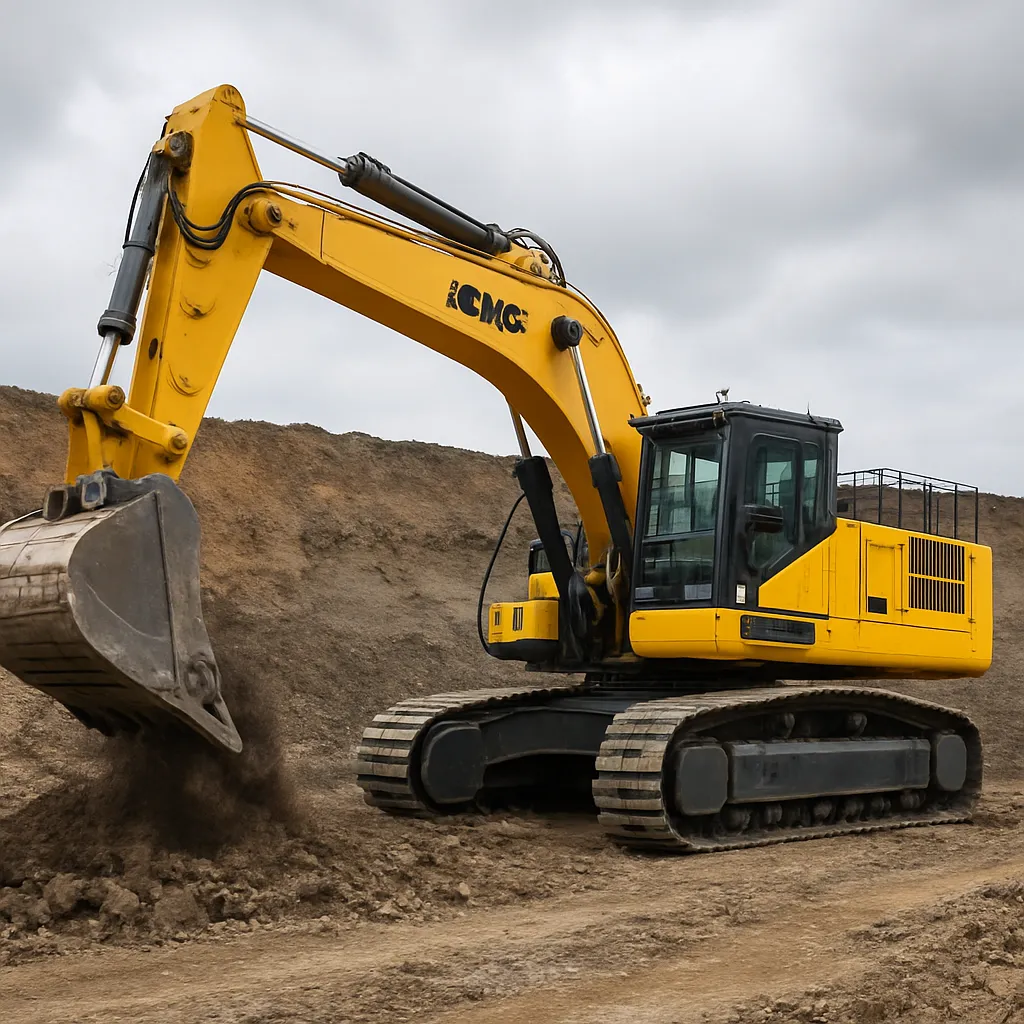
The XCMG XE3000 represents a class of large hydraulic mining excavators designed for heavy-duty surface mining and quarrying operations. Combining robust mechanical design with modern hydraulic systems and operator-focused features, the XE3000 aims to deliver high levels of reliability and continuous production in demanding environments. This article examines the machine’s design, typical technical characteristics, primary applications, operational performance, maintenance considerations, safety and environmental aspects, and its position in the global market. Where precise figures are uncertain, typical ranges for the 300-ton class excavator are provided to give context for expected performance.
Overview and design philosophy
The XCMG XE3000 is positioned in the upper tier of hydraulic mining excavators, intended to compete in the 250–350 tonne operating weight segment. Its design philosophy emphasizes a balance between heavy lifting and continuous loading capacity, with focus on structural strength, ease of service, and operator comfort. Key design elements typically include a reinforced undercarriage, durable boom and arm assemblies, a large capacity bucket or multiple bucket options, and a hydraulic system tuned for both high-flow and variable-response work cycles.
The machine is engineered to meet the needs of large-scale surface mining operations such as open-pit coal, copper, iron ore, and aggregate quarries. By providing a platform capable of high hourly production when matched with appropriate shovels/trucks and site logistics, the XE3000 is intended to increase overall fleet productivity while reducing per-ton handling costs.
Technical characteristics and typical specifications
Exact manufacturer specifications can vary by configuration and regional package. The following items describe typical ranges and common features for a 300-ton class mining excavator like the XE3000.
Powertrain and engine
- Engine: Heavy-duty diesel powerplant, often from established suppliers or in-house tuned models designed for continuous high-load mining duty cycles.
- Rated power: Typically in the range of 1,800–2,400 kW (approximate for the class), with electronic engine management to optimize fuel consumption and emissions.
- Cooling and air systems are oversized to sustain high-power operation in hot and dusty environments, and often include advanced filtration and staged cooling fans.
Hydraulic and working systems
- Hydraulic pumps and valves sized for high flow and pressure to support fast cycle times and heavy digging forces.
- Advanced hydraulic control logic for smooth multi-function operation, anti-stall features, and load sensing to improve fuel efficiency and control.
- Attachment options: standard backhoe or face shovel arrangements, with a range of buckets (from rock to face and general purpose) and optional hydraulic quick couplers for attachments.
Structural and dimensional features
- Operating weight: approximately ~300,000 kg (300 tonnes) class, depending on configuration and attachments.
- Bucket capacity: widely variable by application; typical ranges for the class are 10–25 m³ depending on material density and bucket type.
- Robust undercarriage and reinforced swing circle to tolerate heavy loads and extended duty cycles.
Performance parameters
- Digging reach and depth are optimized for open-pit operations. Reach can be engineered to enable effective loading of large haul trucks in single pass cycles.
- Bucket fill factor and breakout forces are tuned to maximize productivity while minimizing unnecessary stress cycles on structure and hydraulics.
- Cycle times depend on matching to truck fleets; when paired with large-capacity haul trucks the XE3000 aims to deliver high bank cubic meters per hour loading rates.
Primary applications and operational roles
The XCMG XE3000 is intended for use in environments that demand heavy excavation and continuous loading. Typical applications include:
- Surface mining — loading of large haul trucks in open-pit coal, copper, iron ore and other metal mines.
- Large-scale quarrying — limestone, aggregate and dimension stone extraction where large benches and high production rates are present.
- Major civil engineering and earthmoving projects — where mass excavation and bulk material handling are required.
- Stockpile reclaim and processing plant feed — when fitted with suitable buckets or rakes.
In each of these applications, the XE3000 is typically integrated into a mining fleet where compatibility with truck sizes, cycle time planning, and bench design dictates the particular equipment specification (boom/arm length, bucket type, and counterweight options).
Performance, productivity and efficiency
Performance of a machine like the XE3000 is measured not only by raw power or weight but by its ability to sustain production for long shifts and through varied operating conditions. Factors contributing to higher output include optimized hydraulic response, bucket fill performance, operator efficiency, and matching to the haulage fleet.
Typical productivity metrics for a 300-ton class excavator when optimally matched to the site may include:
- Hourly bank cubic meter (BCM) rates that depend on material type and bucket size — in many operations these machines achieve several thousand BCMs per hour when operating in soft to medium overburden.
- Daily material moved often exceeds tens of thousands of tonnes under continuous operation and effective cycle matching.
- Fuel burn per tonne is a key KPI for mining operations. Modern designs and engine management systems aim to reduce liters per tonne by improved hydraulic efficiency and powertrain control.
Real-world fuel consumption varies with material density, operator technique, and duty cycle. Typical consumption for machines of this size in heavy duty cycles could be in the order of several hundred liters per hour, but effective fleet management and idle-reduction strategies can markedly improve per-ton fuel figures.
Maintenance, serviceability and lifecycle considerations
For large mining excavators like the XE3000, maintenance planning is a central part of lifecycle cost management. Key aspects include:
- Modular access panels and service platforms for routine checks and major component replacement reduce downtime.
- Use of condition monitoring (oil analysis, hydraulic diagnostics, vibration monitoring) enables predictive maintenance approaches and scheduled component overhauls.
- Availability of local dealer support and parts logistics greatly influences total cost of ownership; manufacturers often offer lifecycle support packages including training for site mechanics.
- Wear items — buckets, teeth, pins and bushings, track components — need regular inspection and scheduled replacement in heavy abrasive environments.
Planned maintenance intervals for engines, hydraulic systems, and structural inspections are longer when high-quality filtration and clean operating practices are maintained. A well-serviced XE3000 can achieve expected service lives of many thousands of operating hours before major overhaul, making it a long-term asset in large mining operations.
Safety, ergonomics and operator features
Mine-site safety is a top priority. The XE3000 is expected to include features that address both operator protection and safe interaction with the surrounding fleet:
- ROPS/FOPS certified cabs with vibration damping to protect operators from impact and reduce fatigue.
- Advanced visibility systems, including wide-view windows, camera packages and proximity sensors to reduce blind spots during swing and travel.
- Ergonomic controls, adjustable seating, climate control and low-noise environments increase operator comfort and reduce error rates over long shifts.
- Integrated monitoring systems with alarms for over-temperature, high hydraulic pressures, and other critical conditions to prevent catastrophic failures.
Safety systems also include emergency shutdowns, fire suppression options in engine compartments, and secure access ladders and handrails to minimize risk during maintenance and cabin ingress/egress.
Environmental impact and emission control
Environmental regulations continue to shape the design and operation of heavy mining equipment. Features that reduce the ecological footprint of machines like the XE3000 include:
- Engine packages compliant with regional emission standards (Tier or Stage equivalent), often paired with after-treatment systems to reduce NOx and particulate emissions.
- Fuel-efficient hydraulic systems with load-sensing pumps and smart control logic that lower overall carbon output per tonne moved.
- Reduced noise options and acoustic enclosures for engine compartments to diminish site noise pollution.
- Designs that facilitate recycling of major components and use of long-life lubricants and filters to reduce waste generation.
Mines increasingly report carbon intensity metrics. While large excavators are energy-intensive, improvements in fuel efficiency and fleet optimization can reduce the per-ton emissions footprint substantially over older equipment.
Market positioning, operators and global adoption
XCMG has positioned the XE3000 to compete with other major global manufacturers in the large excavator segment. Key selling points often emphasize a competitive price-to-performance ratio, local service networks in many regions, and the ability to customize configurations to local mining practices.
Operators that adopt the XE3000 typically value:
- High payload and sustained hourly production.
- Robustness for abrasive materials and high duty cycles.
- Ease of maintenance and availability of parts and service in remote mine sites.
Adoption tends to be higher in markets where capital investment cycles favor aggressive replacement of older fleets, or where rapid growth in mining activity demands higher-capacity equipment. Partnerships with leasing companies and aftermarket support providers further increase deployability in diverse regions.
Case studies and practical examples
While specific customer names and project details are dependent on confidentiality and individual contracts, typical case study themes for the XE3000 class include:
- Open-pit coal mine retrofit: replacing a fleet of older excavators with a pair of XE3000 machines resulted in higher truck fill factors and reduced cycle times, improving overall pit throughput.
- Quarry scaling: in high-abrasion limestone operations the XE3000’s reinforced bucket options and wear packages extended wear part intervals, reducing downtime.
- Multi-shift operations: with improved operator ergonomics and scheduled condition-based maintenance, sites operating 24/7 reduced unplanned maintenance and increased cumulative monthly production.
These practical deployments commonly emphasize the need to match shovel geometry and bucket type to material characteristics — a crucial factor in achieving predicted productivity gains.
Buying considerations and lifecycle economics
When evaluating a major capital purchase such as the XE3000, mine managers and procurement teams typically consider:
- Total cost of ownership including purchase price, expected fuel consumption, maintenance and parts costs.
- Compatibility with existing fleet — truck size, pit layout, and haul road design.
- Resale value and expected operating life under the mine’s particular duty cycle.
- Availability of remote monitoring and telematics to integrate the machine into the site’s fleet management systems.
Good procurement practice includes life-cycle modeling to forecast per-ton costs and to compare different machine sizes or manufacturers under the actual pit conditions.
Conclusion
The XCMG XE3000 is representative of modern large hydraulic mining excavators designed to balance raw digging capability with operational efficiency, reliability, and serviceability. Intended for high-production environments, the XE3000 class machines are most effective when carefully matched to truck fleets, bench design, and material characteristics. Important decision factors include expected productivity, fuel efficiency, availability of local service and parts, and the machine’s adaptability to the site’s maintenance practices.
As mining operations continue to prioritize lower per-ton costs and reduced environmental impact, machines in the 300-ton class like the XE3000 will be judged not only on their mechanical strength, but also on the effectiveness of their integrated systems, support networks, and how they contribute to an optimized fleet. With proper selection, configuration and maintenance, the XE3000 can be a cornerstone asset for large-scale mining and quarrying operations seeking to improve throughput and reduce unit costs.


)
)