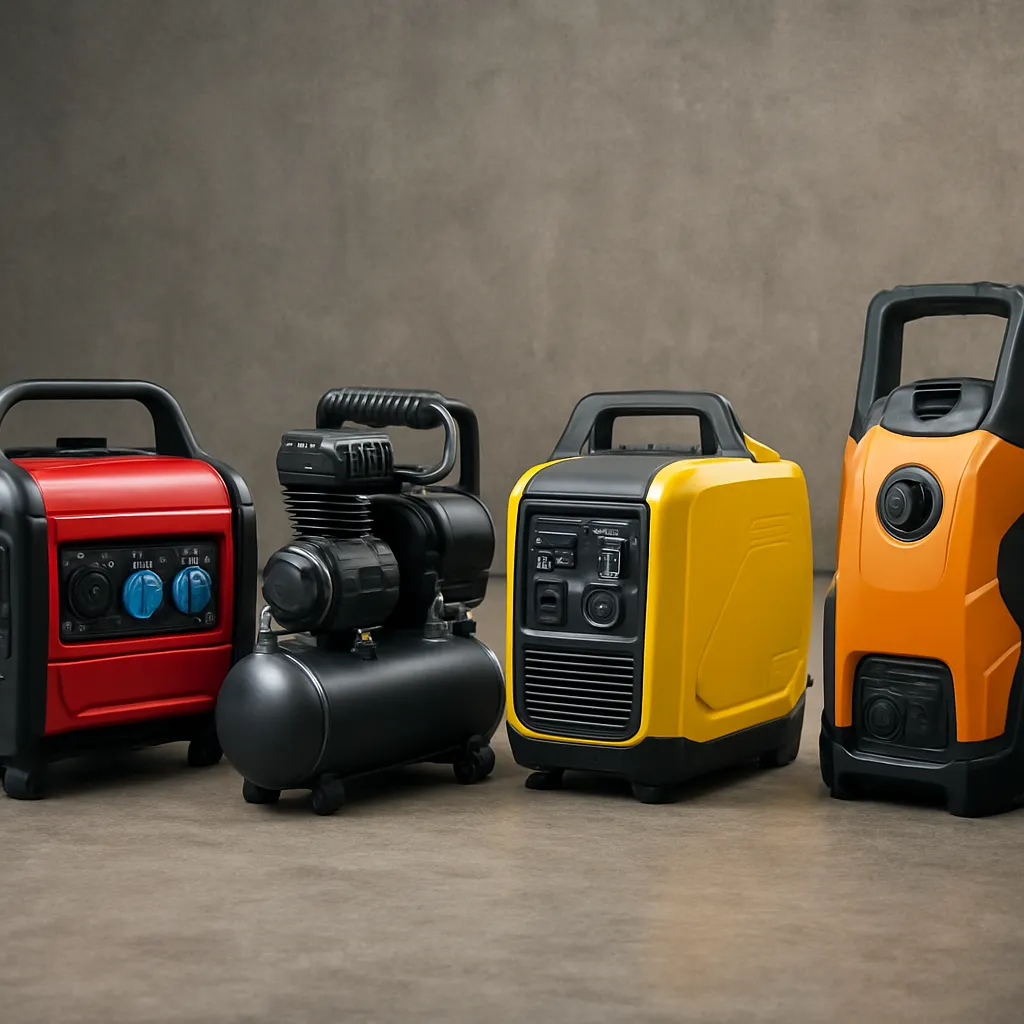
The world of modern industry thrives on the synergy between size and strength, where tiny yet formidable machines reshape the way we approach tasks in factories, construction sites, and laboratories. From autonomous bots weaving through warehouses to handheld devices drilling through concrete, these **compact** marvels bring unprecedented levels of **efficiency** and **productivity** to the workplace. In this article, we will explore the characteristics, innovations, and real-world applications of the coolest compact machines that pack huge **power** into remarkably small footprints.
Compact Powerhouses: Redefining Efficiency
Engineers and designers have long sought to maximize output while minimizing bulk. Thanks to breakthroughs in materials science, microelectronics, and mechanical design, today’s compact machines deliver performance once reserved for larger equipment.
One key driver is the integration of high-torque, brushless **motors** that deliver exceptional rotational force without adding weight. Coupled with advanced gear trains made from lightweight alloys, these motors transform small packages into torque monsters capable of tackling heavy loads. Another innovation is the use of lithium-ion battery cells with ultra-high energy density, allowing portable tools to run longer on a single charge.
From a systems perspective, the move toward automation has encouraged the adoption of embedded control units within tiny frames. Microcontrollers equipped with real-time sensors continuously adjust speed, torque, and temperature, ensuring optimal performance under varying conditions. The result is a new generation of machines that are not just downsized versions of larger counterparts but are complete, intelligent systems in their own right.
Key Characteristics
- Portability: Lightweight designs under 10 kg enable easy transport and deployment.
- Precision: High-resolution sensors ensure repeatable accuracy within micrometers.
- Durability: Sealed housings and shock-resistant frames protect internal components.
- Energy Efficiency: Optimized power management extends runtime and reduces waste heat.
- Connectivity: Wireless protocols allow remote monitoring and firmware updates.
Innovations Driving Portability and Performance
A closer look at recent breakthroughs reveals how manufacturers are shrinking components without sacrificing **durability** or **versatility**. Miniaturized hydraulic pumps now fit inside a handheld shell yet deliver pressures exceeding 10,000 psi. Meanwhile, microprocessor-driven compressors produce compressed air on demand, eliminating hoses and bulky tank storage.
One standout example is the pocket-sized robotic arm that combines six degrees of freedom with a payload capacity of 5 kg. Using carbon-fiber links to reduce weight, and harmonic drives for near-zero backlash, this arm achieves exceptional **precision** in tasks like electronics assembly and medical device testing. It exemplifies the trend of turning desktop labs into production-ready environments.
In construction, the new breed of nano-drills employs high-frequency piezoelectric actuators. These actuators vibrate the drill bit at ultrasonic speeds, enabling it to cut through reinforced concrete with minimal operator fatigue. Built-in cooling channels suppress heat buildup, ensuring continuous operation without downtime. Integrating IoT modules, these drills stream usage data to cloud dashboards, empowering site managers with real-time insights on tool wear and maintenance needs.
Breakthrough Technologies
- Piezoelectric Actuation for ultra-fast, low-vibration cutting.
- Carbon-Fiber Composites to balance strength and weight.
- Embedded AI for predictive maintenance and adaptive control.
- Modular Design allowing field-swappable attachments.
- Advanced Cooling systems utilizing microfluidic channels.
Real-world Applications and Future Trends
Across industries, compact yet powerful machines are enabling new workflows and opening up markets that were once cost-prohibitive due to equipment size. In agriculture, drone-mounted harvesters equipped with micro-scaled saws prune vineyards with surgical accuracy, reducing labor costs and crop damage. Solar-powered autonomous mowers maintain parks and golf courses, guided by AI to avoid obstacles and optimize cutting patterns.
In the realm of healthcare, portable MRI units the size of small suitcases are revolutionizing diagnostics in remote areas. These machines leverage lightweight superconducting coils and cryocoolers to achieve high-resolution imaging without the logistical demands of traditional MRI suites. Emergency response teams deploy them within minutes, offering critical insights where time is of the essence.
Manufacturing floors have seen the rise of versatile cobots – collaborative robots that work side by side with humans. These cobots, often under 20 kg, handle tasks from screw-driving to quality inspection, guided by force sensors and vision systems. Their small footprints free up floor space and simplify reconfiguration of production lines for batch sizes of one.
Looking ahead, continued advances in nanomaterials, quantum sensors, and edge computing will further shrink the size of industrial-grade machines. Imagine 3D printers no larger than a desktop speaker but capable of fabricating complex metal components with lattice infill structures. Or micro-factories where entire assembly lines fit on a single mobile cart, serving pop-up retail or on-demand spare-part production in remote locations.
As these machines evolve, key considerations will include sustainable manufacturing, end-of-life recyclability, and cyber-physical security. Developers are already experimenting with biodegradable polymers for casings and blockchain-based ledgers to secure firmware updates. The next decade promises to blur the lines between gadget and industrial equipment, empowering businesses of all sizes to harness the immense **potential** of compact, powerful machinery.