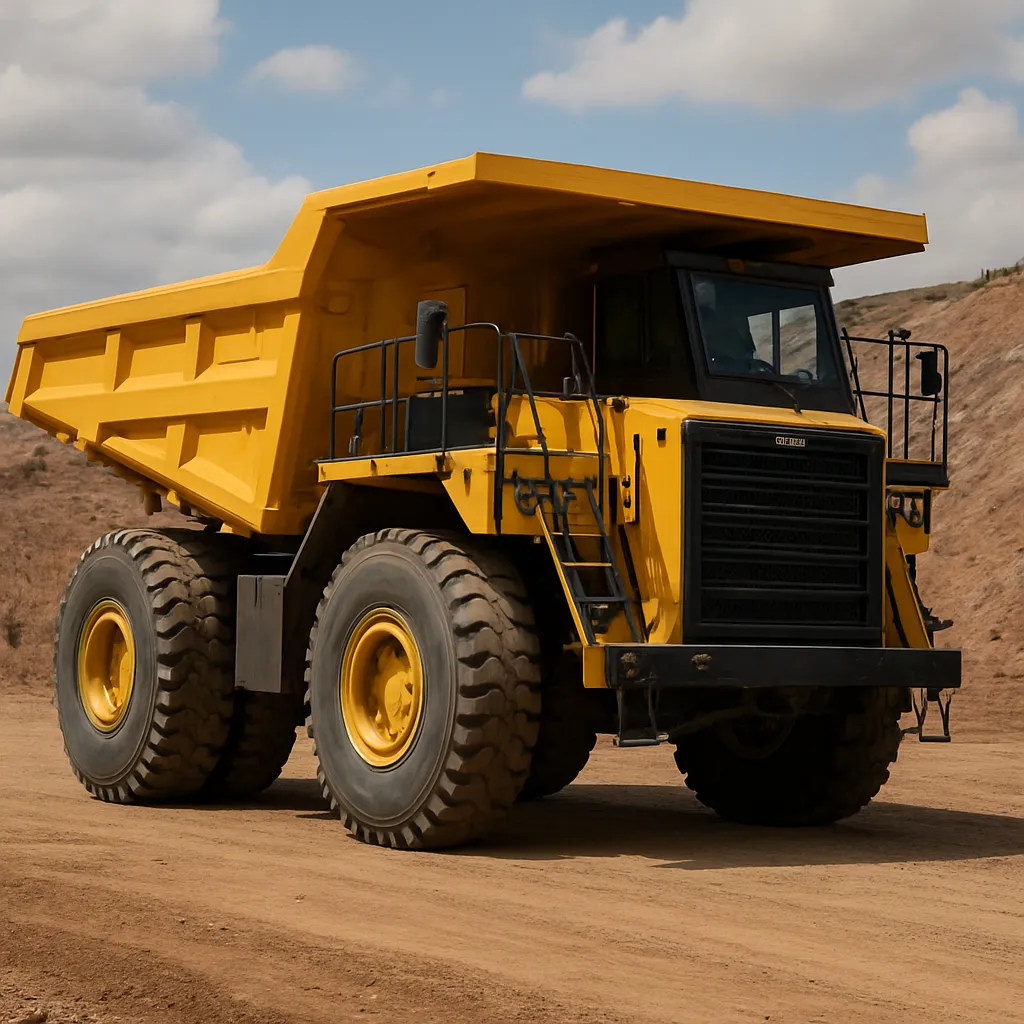
The SANY SKT105 is a purpose-built mine transport machine designed to move personnel, materials and light payloads in the demanding environment of underground and surface mining operations. Combining robust construction, compact dimensions and a design philosophy focused on durability and serviceability, the SKT105 is positioned as a versatile solution for settings where maneuverability, safety and cost-effectiveness are priorities. This article explores its design, typical applications, technical and operational characteristics, maintenance and safety considerations, and the economic and environmental context in which such a machine is used.
Overview and design philosophy
The SANY SKT105 is developed to answer the specific needs of mining operations that require a compact but capable transport vehicle. From the outset, the machine emphasizes SANY’s intent to deliver equipment that balances performance with lifecycle costs. The SKT105 is tailored to environments where tunnel size, low ceilings, narrow drifts and harsh working conditions make off-the-shelf surface haulage equipment unsuitable.
Key design priorities include robustness, ease of maintenance, and operator ergonomics. The chassis and powertrain are engineered to withstand repeated shock loads, abrasive dust and corrosive environments. The driveline and hydraulic systems typically feature heavy-duty components derived from longer-proven mining platforms, adapted to the smaller footprint of the SKT105. The cab and control layout are designed so that an operator can stay efficient and comfortable during long shifts while maintaining maximum situational awareness.
- Compactness — optimized dimensions for narrow heading access and turning in confined spaces.
- Durability — reinforced structures and wear-resistant materials in high-abrasion zones.
- Serviceability — ground-level access points for routine checks, modular components for rapid replacement.
- Safety — integrated systems for lighting, braking and emergency egress suited to underground mines.
Applications and typical operating environments
The SKT105 is most commonly found in several mining and related sectors where a combination of size, payload and maneuverability is essential. Typical applications include:
- Underground personnel and material transport in small- to medium-sized tunnels.
- Haulage of utilities and supplies along service drifts, including pipes, cables and support materials.
- Transport in construction sites, tunneling projects and civil works where restricted access precludes larger machines.
- Light duty ore or waste transfer on short haul cycles, especially where battery or low-emission options are preferred.
Operating environments can range from deep underground metal mines to coal operations, as well as tunneling for infrastructure projects. The machine is used in situations where dust, moisture, and uneven surfaces are constant challenges, making reliability and straightforward maintenance critical factors for selection.
Technical characteristics and performance (typical figures)
Specifications for mine transport platforms like the SKT105 vary by configuration and market, but there are common performance characteristics that define this class of machine. Below are representative figures and descriptions to give a clear idea of expected capabilities. Note that exact numbers may differ depending on optional packages, powertrain choices and regional adaptations.
Payload and dimensions
- Payload capacity: approximately 9–12 tonnes (typical for a model denoted “105” reflecting a 10.5-class capacity in some naming conventions).
- Overall length: often in the range of 5.5–7.0 meters, depending on body configuration.
- Width: compact track or wheel widths around 2.0–2.6 meters to fit standard drift clearances.
- Height: low-profile cab designs commonly under 2.5 meters for underground applications.
Powertrain and mobility
- Engine power: typical diesel engines in this class deliver roughly 120–180 kW (160–240 hp) depending on emission standards and tuning.
- Transmission: heavy-duty automatic or powershift gearboxes with torque converters or hydrostatic options for smooth low-speed control.
- Drive configuration: 4×4 wheel drive with locking differentials to maximize traction on slippery ore and muck surfaces.
- Speed: designed for low-speed haul cycles — top speeds usually between 20–35 km/h (depending on gearing and safety setups).
Hydraulics, brakes and attachments
- Hydraulic systems are sized for responsive steering and any auxiliary functions, such as tailgate control, hoists or auxiliary pumps for on-board compressors.
- Braking systems combine service brakes, parking brakes and often secondary/redundant braking for emergency stops in confined workfaces.
- Attachments can include specialized body shapes (flatbed, enclosed personnel cabin, bulk-material tub), winches, tipping mechanisms and integrated lift platforms for maintenance access or cable laying.
Fuel consumption varies with duty cycle, load and terrain. Typical consumption for comparable machines is often in the range of 15–30 liters per hour under continuous working loads; intermittent or light duty can be substantially less. Battery-electric or hybrid variants, where available, can dramatically lower fuel use and emissions, though they require different charging infrastructure and maintenance regimes.
Operation, crew and ergonomics
Operators of the SKT105 benefit from an ergonomically arranged cab and control system tailored to reduce fatigue and enhance safety during repetitive transport tasks. Effective cab design includes:
- Clear sightlines with work lights and reflective signage for low-visibility conditions.
- Intuitive control layout with protection for critical switches to prevent accidental activation.
- Seating and vibration control to reduce operator fatigue on long shifts.
- Climate control options in surface-adapted units; for underground models, attention is given to minimizing heat rejection and maintaining ventilation compatibility.
Many modern SKT105 configurations incorporate telematics and fleet management integration as standard or optional features. These systems transmit data on machine location, fuel use, engine hours, fault codes and maintenance intervals. Fleet managers can use this data to improve utilization, reduce downtime and plan preventative maintenance.
Maintenance, serviceability and lifecycle considerations
Maintenance philosophy for the SKT105 focuses on maximizing uptime and simplifying routine tasks in constrained underground environments. Key features that aid serviceability include:
- Ground-level service points for daily checks such as oil, coolant and hydraulic fluid levels.
- Modular components (filters, pumps, electrical modules) for quick replacement and minimal specialized tooling.
- Accessible cooling and air-intake systems with dust-preventing solutions to extend filter life.
- Comprehensive diagnostic systems to identify issues before a failure causes extended downtime.
Common maintenance intervals in mining depend on operating hours, but a typical schedule might include daily visual checks, weekly greasing and filter inspections, monthly hydraulic and brake system inspections, and major servicing on a 500–1,000 hour cycle. Keeping a spare parts inventory for wear items (tires, brake pads, hydraulic hoses, filters) on-site is a common practice to maintain continuity of operations.
Safety systems and regulatory compliance
Safety is paramount in mining. The SKT105 is equipped with multiple layers of protection tailored to underground and surface use:
- Robust rollover protective structures (ROPS) and falling-object protective structures (FOPS) where applicable.
- Redundant braking and emergency-stop systems to prevent uncontrolled movements in decline ramps or on steep grades.
- Lighting packages that meet underground illumination standards, plus audible alarms and proximity detection options.
- Fire suppression systems or provisions for retrofitting depending on mine regulations.
Operator training is a critical component of safe operation. Training covers vehicle-specific procedures, confined-space operation, emergency egress, and daily inspection routines. Mines often mandate additional site-specific induction training to ensure compliance with local occupational health and safety regulations.
Economic factors and total cost of ownership
Choosing the SKT105 for a mine transport role hinges on balancing capital expenditure, operating costs and expected utilization. Important economic factors include:
- Initial purchase price versus payload capacity and expected working life.
- Fuel or energy costs and the availability of refueling/charging infrastructure underground.
- Parts availability, local dealer support and the network for rapid repairs.
- Resale values for similar mining equipment in secondary markets and refurbish options.
In many operations, the SKT105’s relative simplicity and compatibility with standard workshop tooling translate into lower lifetime costs compared with highly specialized or very large haul units. Telematics that track utilization and fault codes also contribute to reducing operating expenses by enabling predictive maintenance and optimized scheduling.
Environmental impact and electrification trends
Mining operators face growing pressure to reduce emissions, improve underground air quality and lower noise. The SKT105 can contribute to these goals through:
- Engine options meeting stringent emission stages, where available.
- Retrofit or factory-supplied electric or hybrid drivetrains that eliminate or reduce diesel particulate and NOx emissions underground.
- Regenerative braking in electric variants that improves energy efficiency on downhill hauls.
Electrification is an increasing trend in underground fleet planning. While battery-electric versions require investment in charging infrastructure and modifications to maintenance practices, they deliver significant ventilation cost savings and improved working conditions. For projects where ventilation is a dominant operating cost, electric SKT105 derivatives can deliver compelling lifecycle benefits.
Comparisons, competitive positioning and common alternatives
The SKT105 competes in a market segment that includes small and medium underground haul trucks, utility vehicles and specialized personnel/material carriers. Competitive strengths typically highlighted for the SKT105 are its balance of efficiency, payload capacity and ease of service. Alternatives by other manufacturers may offer marginal advantages in specific metrics (e.g., slightly higher payload, more advanced telematics, or different powertrain choices), so selection often depends on fleet commonality, dealer support and total lifecycle costs.
When comparing units, operators commonly evaluate:
- Payload-to-weight ratio, which affects fuel efficiency and haulability.
- Turning radius and maneuverability in plan and vertical profiles.
- Availability of factory-fitted safety and emissions packages.
- Aftermarket support, training and parts availability in the operating region.
Innovations and future developments
The next generation of mine transport machines, including platforms like the SKT105, is likely to integrate enhanced autonomy, improved battery systems and advanced materials. Promising directions include:
- Partial autonomy for repetitive transfer routes, reducing operator fatigue and increasing cycle consistency.
- Improved battery chemistries and modular packs that allow rapid swapping for minimal downtime.
- Lightweight high-strength materials for body and chassis components to increase useful payload without enlarging dimensions.
- Advanced sensor suites for real-time condition monitoring of driveline and structural components to enable truly predictive maintenance.
These advances will influence the total cost of ownership, safety profiles and environmental performance of mine transport fleets.
Case uses and illustrative examples
Examples of where an SKT105-type machine brings tangible benefits include:
- Tunneling projects where frequent small deliveries of support materials (rock bolts, shotcrete rigs, ventilation ducts) must be made into narrow headings.
- Underground mining operations that need a reliable multi-use vehicle to rotate crews, deliver maintenance equipment and transport small ore loads to a central collection point.
- Emergency response logistics in mines where a compact, well-equipped transporter can rapidly bring first-aid, extraction tools and personnel to a workface.
In each case the value proposition rests on minimizing disruption, reducing cycle times and increasing worker safety.
Conclusion
The SANY SKT105 represents a practical and versatile choice for mining and tunneling operations that demand a compact, durable and serviceable transport platform. With a focus on robustness, safety and operational economy, the SKT105-type machine fills the role between very small utility carriers and larger haul trucks, offering the flexibility required in constrained underground environments. Ongoing trends toward electrification, telematics and partial automation will only increase the strategic importance of well-designed mine transport vehicles for modern, efficient and sustainable operations.
Note: Specific technical details and exact specifications depend on the chosen configuration and market region; operators should consult the manufacturer or an authorized dealer for precise data, options and compliance information.


)
)