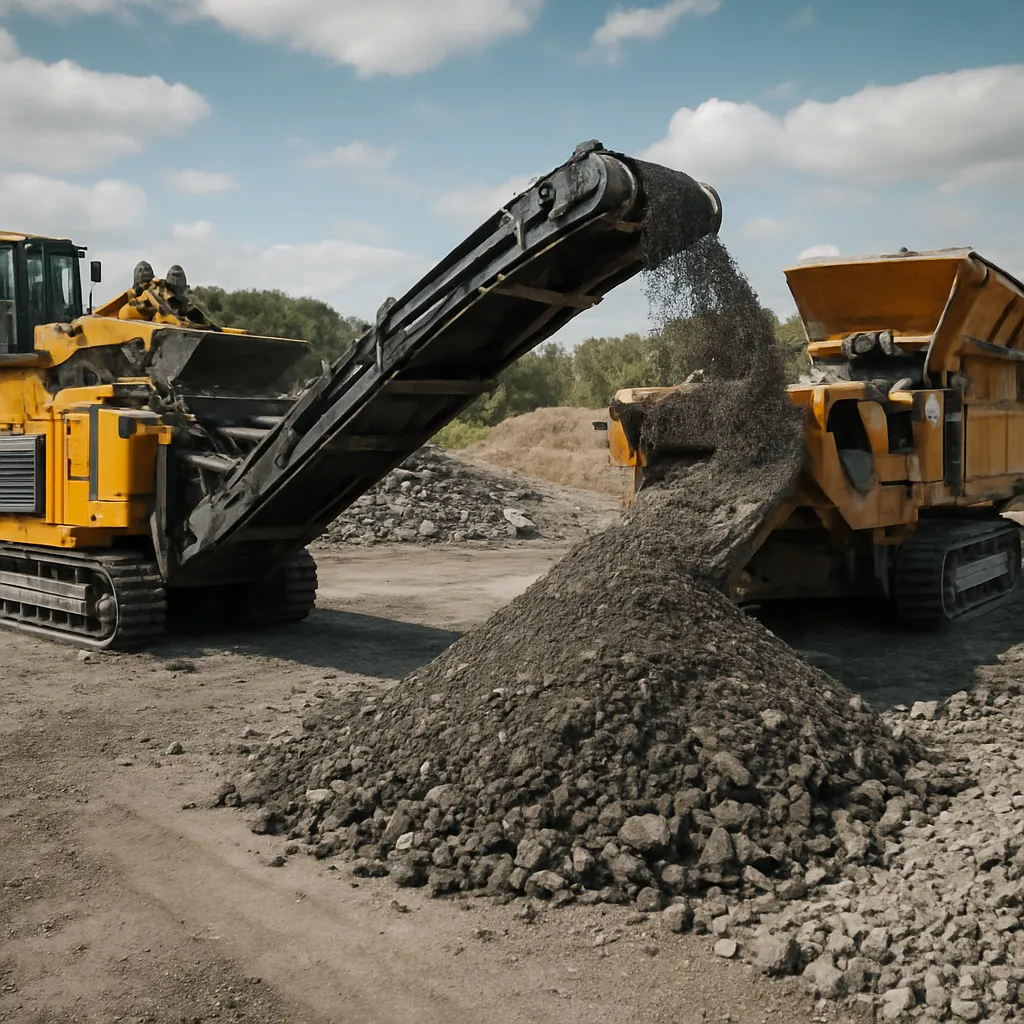
Modern infrastructure demands not only durable roadways and sturdy foundations but also mindful stewardship of resources and the environment. A wave of compact yet powerful machines has emerged, capable of processing asphalt and concrete directly on-site, minimizing transport, reducing waste, and maximizing cost savings. This article explores how today’s equipment reshapes the way we approach road rehabilitation and material reuse, delving into the core technologies, workflows, and benefits driving this transition.
Evolution of Asphalt and Concrete Processing Equipment
Over the past few decades, the heavy construction industry has undergone a profound transformation. Traditional methods involved hauling demolished pavement to distant recycling centers, only to bring back processed aggregate at significant expense. Today’s machines blur the line between demolition and reconstruction:
- Cold Milling Machines strip the asphalt surface and transfer granular material to an adjacent crusher or screening plant.
- Mobile Crushers reduce reclaimed concrete or asphalt into consistent-sized aggregate ready for reuse in the same project.
- Asphalt Recycling Trains integrate multiple units—milling, crushing, screening, and mixing—into a single convoy, streamlining on-site operations.
From Static Plants to Fully Mobile Systems
Earlier recycling plants were stationary installations requiring extended haul distances. Innovations in mobility led to self-contained units that unfold within minutes of arrival, generating productive output rates rivaling those of large fixed facilities. These machines can process hundreds of tons per hour, feeding ready-to-lay aggregate directly to paving trains or stockpiles.
On-site Recycling Techniques and Workflow
Performing material reclamation directly on the job site involves a series of coordinated steps. Each stage leverages specialized machinery to ensure a seamless chain from demolition to repaving.
1. Surface Milling and Removal
The process begins with precise cold milling to remove the upper asphalt course. Advanced milling drums equipped with wear-resistant carbide bits carve out layers as shallow as 25mm or as deep as 300mm. Operators adjust cutting depth and slope via electronic controls, achieving high accuracy and reducing over-excavation.
2. Crushing and Screening
Reclaimed chunks of concrete or asphalt feed into mobile jaw or impact crushers. The initial reduction yields a coarse fraction, which then passes over vibrating screens for separation into multiple grades:
- Fine aggregate for asphalt mix enhancement
- Mid-size material for base or sub-base courses
- Oversized pieces recycled back into the crusher
3. Mixing and Stabilization
Some operations incorporate on-the-fly mixing with additives—cement, lime, or foamed bitumen—to stabilize reclaimed base material. A dedicated mixer unit blends the crushed aggregate with binding agents. Precise metering systems ensure consistent dosage, improving the durability and structural integrity of recycled layers.
4. Paving and Compaction
Once the recycled material meets specification, pavers and compactors follow immediately. Modern pavers equipped with intelligent screeds adapt to varying layer thicknesses and maintain uniform compaction. Vibratory rollers ensure dense, smooth surfaces. Coordinated machine fleets minimize downtime and traffic disruption.
Environmental and Economic Advantages
On-site recycling machines deliver compelling efficiency gains and environmental benefits:
- Lower Fuel Consumption – Less trucking reduces diesel use and emissions.
- Minimized Landfill – Precious aggregate stays in circulation rather than accumulating in disposal sites.
- Resource Conservation – Utilizing reclaimed material cuts demand for virgin aggregates and binder.
- Cost Savings – Savings on material procurement, haulage, and landfill fees can exceed 30% of total project costs.
Carbon Footprint Reduction
By eliminating long-distance transport and leveraging cold processes that require no heating, projects can reduce greenhouse gas emissions significantly. The carbon footprint per ton of recycled asphalt is often less than half that of new mixes produced at central plants.
Circular Economy and Sustainability
On-site recycling embodies the principles of a circular economy, keeping materials within the local ecosystem. Each reuse cycle prevents new quarrying and promotes responsible sustainability. Local governments and contractors increasingly mandate minimum recycled content in resurfacing projects, driving wider adoption of these technologies.
Technological Challenges and Innovations
Despite strong momentum, several challenges persist. Moisture control in reclaimed material, variability in input quality, and precise additive dosing demand constant attention. Cutting-edge solutions are emerging to address these hurdles:
- Real-time Material Monitoring using sensors to measure moisture, gradation, and binder content, allowing automatic adjustments.
- AI-driven Control Systems that optimize machine parameters based on live data, boosting productivity and consistency.
- Hybrid and Electric Powertrains reducing onsite emissions while maintaining torque and power for heavy-duty processing.
Innovations in Material Preheating
Although cold processes dominate, some recycling schemes integrate low-energy preheaters to restore asphalt flexibility. Infrared or hot-oil heaters softens reclaimed material before mixing, enhancing adhesion without the high fuel demands of traditional drum-dryer systems.
Modular Machine Architectures
New designs allow contractors to combine only the necessary modules—crushing, screening, mixing—tailoring equipment to project scale. Quick-coupling frames and universal connections reduce setup time, promoting fleet versatility across diverse applications.
Looking Ahead: The Future of On-Site Recycling
As cities expand and infrastructures age, the need for rapid, low-impact pavement renewal grows ever more urgent. On-site recycling machines stand at the forefront of this shift, fusing innovation with practical benefits. Key trends to watch include:
- Integration of Internet of Things (IoT) for remote fleet management and predictive maintenance.
- Advances in binder technologies that enable higher recycled content without sacrificing performance.
- Collaboration between manufacturers, contractors, and municipalities to establish universal recycling standards.
- Increased automation and robotics for safer operations in challenging environments.
By harnessing these developments, the construction industry can pave the way toward more resilient, cost-effective, and sustainable road networks. The machines at work today are not merely tools; they represent a fundamental shift in how society values materials and manages infrastructure lifecycles.