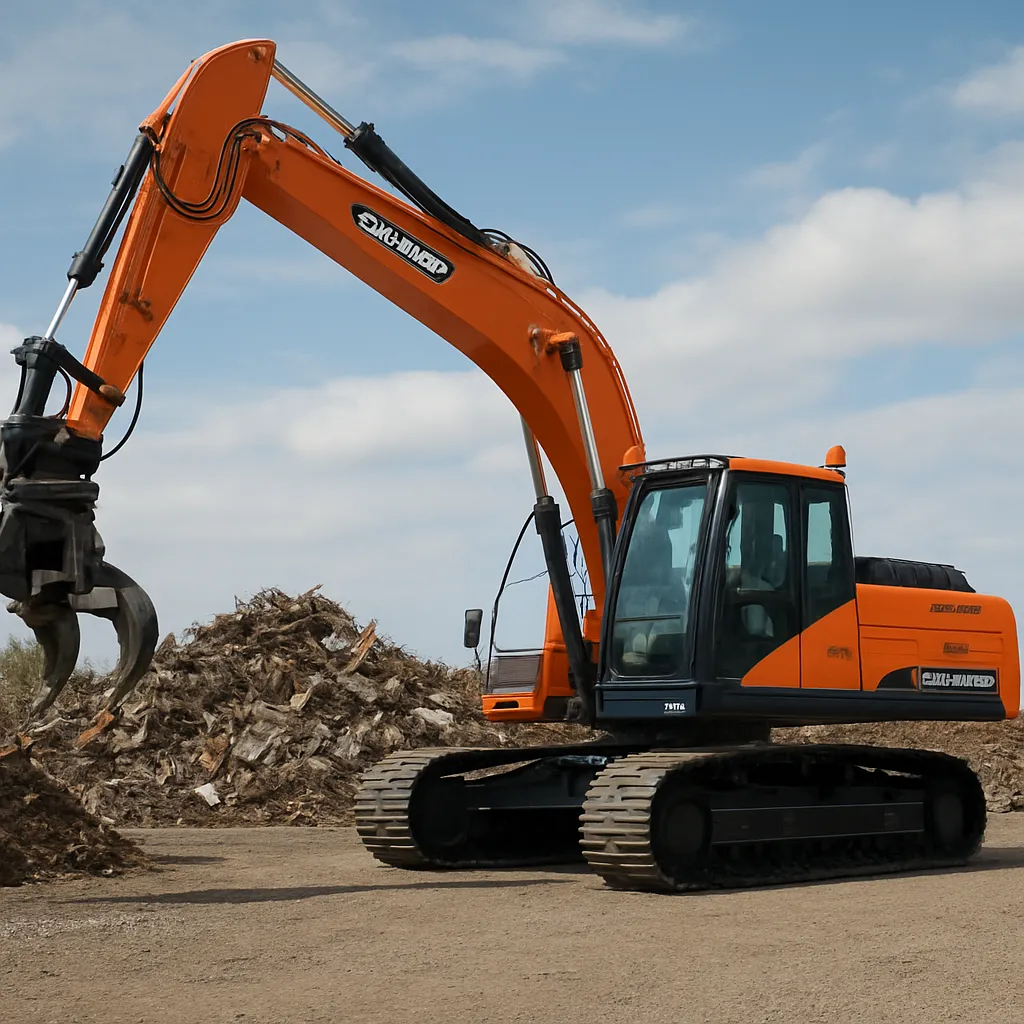
The Doosan DX250MH is a specialized variant of a medium-duty excavator adapted for heavy-duty handling tasks in industries that demand extended reach, superior visibility and robust hydraulic performance. Designed to move bulk materials, sort scrap and handle timber or recycled materials, this equipment bridges the gap between traditional excavators and purpose-built port or scrap handlers. In the following sections you will find an in-depth look at the machine’s design principles, typical applications, technical characteristics, operational guidance and economic considerations.
Overview and design philosophy
The Doosan DX250MH is built on the proven platform of the DX250 excavator family but optimized specifically as a material handler. The “MH” configuration typically includes an elevated or tilting cab, extended booms or sticks for increased reach, reinforced undercarriage and a counterweight package tuned to stabilize the machine during high-reach lifting operations. Manufacturers such as Doosan adapt existing excavator platforms to produce material handlers because this approach delivers a balance of durability, accessibility of parts and serviceability while meeting the unique needs of handling yards, ports and recycling facilities.
Key design elements include a strengthened upperstructure, a high-visibility operator station (sometimes on a pedestal or with an elevated cab option), hydraulic circuits designed for continuous duty with long-reach attachments, and modular attachment interfaces that accept grapples, magnets or clamshells. The overall design emphasizes a combination of lifting capability, stable operation at extended radii and ease of maintenance to minimize downtime.
Typical specifications and performance characteristics
Exact specifications for the Doosan DX250MH vary by market and optional equipment, but typical figures for a machine in this class are:
- Operating weight: approximately 25,000–28,000 kg depending on counterweights and attachments
- Engine power: typically in the range of 140–170 kW (approximately 190–230 hp), meeting regional emissions standards (EU Stage V or equivalent / EPA Tier 4 Final where required)
- Fuel tank capacity: commonly around 300–400 liters
- Maximum reach (boom + stick): configurations for material handling frequently extend to 8–12 meters laterally or more with specialized long booms
- Hydraulic flow and pressure: machine hydrauics are tuned for attachment performance — main pump flows in many systems run in the range of 160–220 liters per minute at service pressures designed for continuous work
- Rotational torque and slew capacity: enhanced slew bearings and drive systems allow for continuous rotation and stable handling with heavy loads at radius
Beyond raw numbers, two performance characteristics matter most for material handlers: continuous-duty hydraulic reliability (for long cycles with grapples or magnets) and stability at extended outreach. The DX250MH configuration addresses both with reinforced booms, heavy-duty swing gear and optioned counterweights.
Applications and common industries
The Doosan DX250MH is versatile and finds use across a variety of sectors. Typical applications include:
- Scrap yards and metal recycling — sorting, loading trucks, feeding shredders and handling loose scrap
- Ports and terminals — bulk handling of loose cargo, loading/unloading materials and working with electromagnet or hydraulic grapple attachments
- Timber yards and biomass facilities — sorting logs, feeding chippers and stacking timber
- Demolition and site clearance — selective material recovery, loading containers and placing recyclable material
- Waste transfer and recycling centers — moving mixed waste streams, sorting recyclables and loading conveyors
- Construction and civil works (specific tasks) — aggregate handling, stockpile management and site logistics
These environments benefit from the DX250MH’s combination of hydraulic endurance, operator visibility and capability to accept specialized attachments such as grapples, clamshells, shear units or magnet systems.
Attachments and tooling
One of the greatest strengths of a material handler is attachment flexibility. The DX250MH supports a wide array of tools, each expanding the machine’s utility:
- Orange peel and sorting grapple — for high-cycle scrap and waste sorting
- Hydraulic clamshell buckets — for bulk loading of aggregates and loose material
- Electromagnets and permanent magnets — for ferrous scrap handling (often paired to dedicated control valves and generator systems)
- Shears and shear-boom combos — for selective demolition and scrap cutting
- Log grapples and bulk timber rotators — for forestry and sawmill operations
- Quick couplers and rotators — enabling fast tool change and 360-degree material orientation
Correct hydraulic and electrical integration of these attachments is crucial. Many operators specify additional hydraulic circuits, increased hydraulic oil coolers and remote electrical controls to optimize attachment responsiveness and reliability.
Operator environment, visibility and ergonomics
Material handling demands prolonged, precise operator work. The DX250MH’s cab is often elevated and offers improved panoramic visibility of the working area and attachment. Typical cab features include climate control, adjustable suspension seats, multi-axis joysticks, and sometimes camera systems or additional mirrors for blind-spot reduction.
Ergonomic design reduces operator fatigue, which in turn increases productivity and decreases error rates. Many DX250MH units come with sound-deadening features, wide glazing, and optional joystick-mounted proportional controls for attachment rotation and clamping.
Safety systems and operational best practices
Safety is paramount in high-reach handling. Recommended safety systems and practices for the Doosan DX250MH include:
- Load moment indicators and overload warning systems to prevent tipping during high outreach lifts
- Rear view cameras, 360-degree camera systems and proximity sensors to detect personnel or obstacles
- Regular inspection of boom pins, hydraulic hoses and stabilizers to prevent in-service failures
- Ground-condition assessments and proper pad or outrigger placement to ensure stability
- Operator training specific to handling attachments (e.g., magnets require knowledge of electrical isolation and safe switching procedures)
Routine safety briefings, permit-to-work systems and lock-out procedures for attachment maintenance are standard in professional handling sites.
Maintenance, durability and lifecycle management
Doosan machines are known for robust build quality, but material handlers operate under heavy cyclical loads and abrasive environments. Effective lifecycle management of a DX250MH includes:
- Frequent greasing of pivot points and slew bearings
- Hydraulic oil and filter change intervals tuned to duty cycle and contaminant exposure (higher frequency in dusty, metallic environments)
- Inspection and replacement schedules for wear parts — boom/arm wear plates, pins and bushings
- Cooling system checks and radiator cleaning, especially where particulate contamination is present
- Monitoring of fuel and DEF (if applicable) quality to ensure emission system longevity
Planned preventative maintenance reduces unplanned downtime and extends the resale value of the machine. Many owners implement telematics systems to track operating hours, fuel consumption and fault codes, enabling predictive maintenance strategies.
Economic and productivity considerations
Investment in a Doosan DX250MH should be evaluated on both capital and operational metrics. Key considerations include:
- Hours to payback — depends on throughput improvements, labor cost savings and reduction in handling time. Material handlers often improve cycle times significantly compared with standard excavators when dealing with bulk or loose material.
- Fuel efficiency — modern engines and hydraulic systems are optimized for reduced consumption; the specialized hydraulic circuits of MH variants are tuned to balance power and economy.
- Resale and residual value — well-maintained MH units retain value due to specialized demand in recycling and port sectors.
- Attachments and customization cost — initial machine price typically increases with additional counterweights, extended booms, elevated cabs and hydraulic/electrical attachment packages.
Typical productivity figures vary widely by operation. For example, a skilled operator using a properly equipped DX250MH with a sorting grapple in a scrap yard can often move tens of tonnes per hour; in port operations, effective cycle times for container or bulk transfer tasks can be similarly productive, depending on material density and handling distance. Exact tons-per-hour numbers depend on attachment, material, operator skill and site layout.
Market position and competitive landscape
In its class, the DX250MH competes with other mid-class material handlers from major OEMs. The differentiators for buyers usually include total cost of ownership, parts availability, dealer support and the ability to customize the machine for specific attachments or operational constraints. Doosan’s global dealer network, availability of aftermarket parts and compatibility with existing Doosan service programs often weigh in its favor for fleet owners who already operate Doosan equipment.
Emissions compliance is another factor in the market: machines equipped to meet EU Stage V or US Tier 4 Final rules may cost more upfront but reduce regulatory risk and may provide fuel efficiency gains through modern engine and aftertreatment technologies.
Selection guide — choosing the right DX250MH configuration
When selecting a DX250MH for purchase or lease, consider the following checklist:
- Define the primary application (scrap sorting, bulk loading, timber handling, port work) to size reach and hydraulic requirements properly
- Assess attachment needs and ensure hydraulic flow, auxiliary circuits and electrical power are matched to those tools
- Decide on cab configuration (elevated, rotating or standard) based on visibility and operator comfort requirements
- Evaluate counterweight options to ensure the machine remains stable at required outreach
- Consider service access and local dealer support for parts and scheduled maintenance
- Factor in resale value and potential resale market for MH-configured machines in your region
Consulting with an experienced dealer who can provide demonstrative data from similar operations is a practical way to refine specifications and ensure the machine meets throughput targets.
Environmental impact and regulatory considerations
Modern DX250MH models incorporate engine and exhaust aftertreatment technology that reduces particulate and NOx emissions, enabling operation in regulated zones. Operators should confirm the machine’s emissions certification for their operating region. Other environmental considerations include:
- Fuel-efficient engine maps and idle management systems to cut fuel consumption and emissions during shift changes
- Oil and filter disposal programs to minimize environmental contamination risk
- Noise reduction packages for operations near residential areas or noise-sensitive ports
Real-world performance observations and statistics
Actual performance figures for the DX250MH are influenced by configuration, attachments and site conditions. Some general, field-observed tendencies across similar mid-class material handlers include:
- Utilization rates in busy scrap yards or ports often exceed 60–70% of shift hours when a machine is properly specified and supported by operators and logistics
- Fuel consumption in heavy-duty handling cycles typically ranges between 15 and 35 liters per hour depending on load, hydraulic demands and engine tuning
- Routine preventative maintenance intervals (oil/filter changes) are often scheduled every 250–500 hours depending on contamination levels and manufacturer guidance
- Typical operational lifetime for a well-maintained mid-class material handler can exceed 15,000–20,000 working hours with major overhauls, though many units remain productive far beyond that in secondary markets
Exact statistics will vary and operators should track their own telematics to obtain site-specific data for planning and optimization.
Best practice operational tips
Maximize the effectiveness and longevity of a DX250MH with these practical tips:
- Match the attachment to the duty — using a tool designed for the material minimizes cycle times and wear
- Train operators on efficient swing paths and load placement to reduce unnecessary movement and fuel consumption
- Implement a telematics and reporting system to monitor idling, fuel use and hydraulic loads for targeted improvement
- Plan counterweight and boom geometry for anticipated maximum outreach tasks rather than occasional extremes
- Keep a consumables inventory (filters, hoses, pins) on-site to shorten repair turnaround
Conclusion
The Doosan DX250MH is a versatile and robust solution for medium-class material handling needs. Its strengths lie in optimized hydraulic systems, enhanced cab visibility and a flexible attachment ecosystem that enables work across recycling, port, timber and demolition sectors. When properly specified and maintained, it delivers high uptime and strong throughput, making it a compelling choice for operators looking to improve productivity in bulk handling operations. Prioritizing operator training, preventive maintenance and correct attachment matching will unlock the most value from the machine over a long service life.


)
)