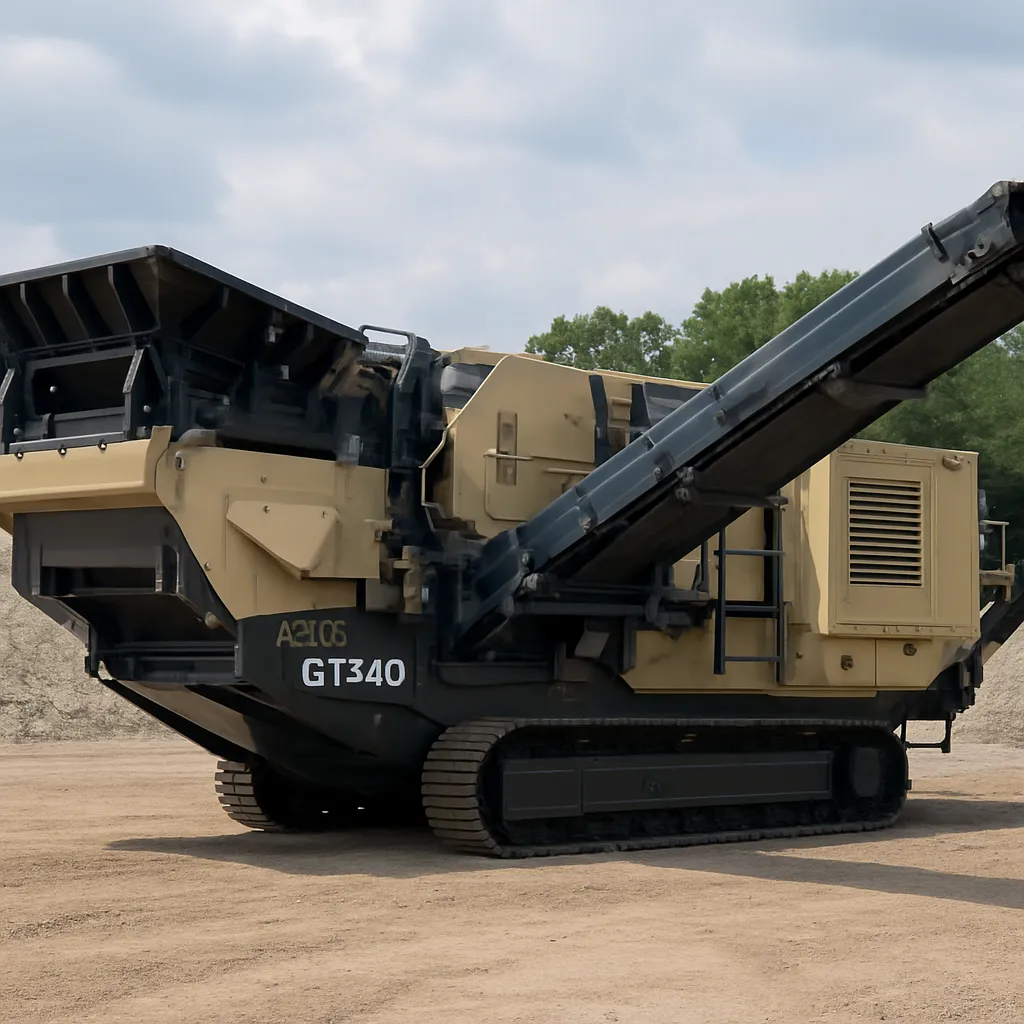
The Astec GT440 is a versatile mobile crusher designed to meet the needs of modern aggregate producers, contractors, and recycling operations. Combining robust mechanical design with flexible configuration options, the GT440 is positioned to handle a wide variety of materials and site conditions. This article provides an in-depth look at the machine’s design, typical applications, operational performance, maintenance considerations, and environmental and safety aspects. Throughout, key terms such as GT440, Astec, and throughput are emphasized to highlight the most relevant features for potential operators and fleet managers.
Overview and Main Characteristics
The GT440 is a mobile crushing solution intended to deliver high productivity while maintaining ease of transport and setup. As a mobile unit, it integrates a primary crusher (often an impact or cone-style chamber in similar platform models), feed hopper, conveyors, and optional screening equipment on a single tracked or wheeled chassis. This integration reduces the need for fixed infrastructure and allows for rapid redeployment between sites.
Core design elements
- Chassis and mobility: Built on a tracked or wheeled undercarriage for maneuverability on rough terrain, enabling quick repositioning without heavy ancillary lifting equipment.
- Crusher chamber: Designed for robustness and optimized reduction, with options for different chamber types to suit feed material and desired product gradation.
- Feeding system: Large-capacity hopper and heavy-duty apron feeder or vibrating feeder to ensure continuous, controlled supply of material to the crusher.
- Conveyors: Integrated conveyors for product transfer and stockpiling, often with folding systems to facilitate transport.
- Power unit and controls: Diesel engine or hybrid powerpack options, paired with centralized hydraulic and electronic controls for efficient operation and monitoring.
These components are engineered to deliver a balance of performance and reliability, with attention to service access and component life. The GT440 platform typically emphasizes modularity—operators can specify different crushing and screening configurations depending on application needs.
Applications and Typical Use Cases
The GT440 is suitable for a broad spectrum of industries and tasks where on-site crushing is advantageous. Its adaptability makes it a popular choice for companies that require a single machine to manage multiple material types and production schedules.
Primary industries and tasks
- Quarrying and aggregate production: Producing graded aggregates for concrete, asphalt, and general construction use. The GT440 can be used as a primary or secondary crusher depending on the rock type and desired end product.
- Construction and demolition recycling: Crushing concrete, brick, and masonry to produce recycled aggregate for site backfill, road base, or new concrete mixes.
- Road and infrastructure projects: Producing and processing material directly on roadworks or civil engineering sites to reduce material haulage.
- Mining and ore processing (selective applications): On smaller-scale or remote operations where a mobile crusher can reduce ore for downstream processing.
- Asphalt recycling and RAP processing: Where controlled crushing and screening produce reusable asphalt mixes.
Because the unit is mobile and can be rapidly redeployed, it is particularly valuable in temporary operations, remote sites, and projects with changing production requirements. The ability to pair crushing with on-board screening allows producers to generate multiple product sizes in a single pass, reducing handling and transportation costs.
Performance, Productivity and Typical Specifications
When considering a machine like the GT440, operators evaluate throughput, reduction capability, product quality, and operating costs. Although exact performance depends on the specific configuration, material characteristics, and operator practices, there are common performance benchmarks for mobile crushers in this class.
Throughput and reduction
Typical throughput for mobile crushers of this scale usually falls in a broad range to account for material variability. In practice, throughput can vary:
- Light to medium-duty materials: 150–350 tonnes per hour
- Hard or abrasive rock: 80–250 tonnes per hour
Reduction ratios can be influenced by crusher chamber choice and rotor design; operators often expect primary crushing ratios in the 3:1 to 6:1 range depending on the feed size and the desired product. Product gradation is controlled through a combination of chamber settings and secondary screening stages.
Power and fuel considerations
Mobile crushers are powered by diesel engines sized to the machine’s duty cycle; for machines in the GT440 class, engine outputs commonly fall into the mid-range for heavy mobile equipment. Fuel consumption depends heavily on load and material, with typical operational ranges from low-to-mid tens of liters per hour at moderate loads to higher figures under continuous heavy duty. Attention to load matching and modern engine management can optimize fuel efficiency and reduce operating cost per tonne.
Product quality and consistency
Achieving consistent product gradation depends on:
- Feed uniformity and control
- Crusher chamber selection and wear condition
- Screening configuration and maintenance
With proper setup, the GT440 platform can produce high-quality graded products suitable for concrete and asphalt production, or a range of construction fill specifications.
Maintenance, Wear Parts and Lifecycle Costs
Maintenance strategy is one of the most important factors affecting uptime and lifecycle cost. The GT440’s design typically prioritizes easy access to service points and rapid replacement of high-wear components.
Wear parts and replacement
- Wear liners and hammers: Crusher liners and blow bars are among the most frequently replaced items; choice of material and hardness will determine lifespan when processing abrasive feeds.
- Conveyor belts: Routine inspection for wear, alignment, and splicing integrity is crucial to avoid unscheduled stoppages.
- Feed and screen media: Vibrating screens and screening media require periodic inspection and replacement to maintain product quality.
Typical life expectancy of wear parts varies greatly: non-abrasive materials can allow longer intervals (multiple hundreds to thousands of operating hours), while highly abrasive rock may shorten component life significantly. Implementing a planned maintenance schedule and keeping critical spares on hand are common best practices to maximize uptime.
Serviceability and design for maintenance
Ease of maintenance is achieved through smart design choices such as hydraulic-assisted access panels, centralized greasing points, and modular components. These features reduce downtime by allowing technicians to perform routine tasks quickly and safely. Remote monitoring and telematics—available as options on many modern mobile crushers—help predict maintenance needs and schedule interventions before failures occur.
Operational Best Practices and Site Integration
To get the most from a GT440-class mobile crusher, operators should consider the whole system, not only the crusher itself. Effective site planning, feed management, and operator training are all critical to sustained productivity.
Feed and material handling
- Ensure uniform feed size and consistent feed rate to avoid blockages and peak loads on the crusher.
- Use prescreening to remove fines that can reduce crusher efficiency and cause dust issues.
- Coordinate haulage and stockpiling so the crusher has a steady supply without excessive buildup that can cause bridging.
Operator training and monitoring
Well-trained operators will manage feed rates, monitor wear patterns, and make optimum use of control systems. Modern control consoles provide diagnostic information, load monitoring, and performance metrics—tools that can significantly improve efficiency when used properly.
Safety, Environmental and Regulatory Considerations
Safety and environmental performance are central to modern crushing operations. The GT440 platform typically includes design elements aimed at compliance with local regulations and safer working conditions.
Noise and dust control
- Dust suppression: Water spray systems, enclosed conveyors, and dust extraction options help reduce airborne particulates—critical for worker health and regulatory compliance.
- Noise reduction: Engine enclosures, acoustic covers, and vibration isolation contribute to lower onsite noise levels, which matters in urban or noise-sensitive locations.
Emissions and fuel management
Engines meeting modern emissions standards (Tier/Stage-compliant) reduce pollutant output. Where required, selective catalytic reduction (SCR) and particulate filters may be available. Operators are increasingly adopting fuel-management practices, such as idling reduction and load-optimized operation, to cut emissions and operating costs.
Integration with Plant and Fleet Management
The mobility of the GT440 is a key asset, but integration into a larger plant or fleet maximizes value. This includes pairing with conveyors, screens, and wash plants, and coordinating with material flow systems on site.
Telematics and remote diagnostics
Many modern mobile crushers support telematics that provide real-time data on engine hours, fuel usage, fault codes, and operating parameters. Fleet managers use this data to optimize equipment allocation, schedule maintenance proactively, and improve overall plant productivity.
Modularity and upgrade paths
Because job requirements evolve, modular designs allow operators to add or change components such as screen decks, additional conveyors, or different crusher chambers to adapt to new products or materials. This flexibility prolongs the machine’s useful life and improves return on investment.
Economic Considerations and Return on Investment
When evaluating a capital purchase like the GT440, companies weigh acquisition cost against expected lifetime productivity, maintenance costs, and the savings from reduced haulage and third-party materials purchases. Key economic drivers include:
- Reduced transportation costs by crushing on-site
- Lower material procurement costs through recycling
- Increased uptime from smart maintenance strategies
- Resale value and residual life potential due to modular upgrades
Operators who optimize crushing parameters and maintenance programs generally see the best financial outcomes. Payback periods vary by project type, but in many applications an efficient mobile crusher can justify its cost through operational savings and increased revenue from higher-quality products.
Summary and Practical Recommendations
The Astec GT440 is a flexible mobile crusher platform suited to a wide range of material-processing tasks. Its strength lies in combining mobility, configurability, and robust construction to serve quarries, construction projects, and recycling operations. Key takeaways and recommendations for prospective users include:
- Match the machine’s crusher chamber and screening options to the material and product specifications to achieve the best productivity and product quality.
- Invest in operator training and telematics to maximize uptime and reduce operating costs.
- Adopt a planned maintenance strategy focusing on high-wear components like liners, blow bars, and belts to minimize unplanned downtime.
- Implement dust and noise control measures to meet environmental and community requirements while safeguarding worker health.
- Consider modularity and upgrade options to extend the machine’s useful life and adapt to changing jobsite needs.
With proper configuration and operational discipline, the GT440 can be a high-value asset that delivers consistent performance, operational flexibility, and cost-effective material processing across a variety of site conditions.
)
)