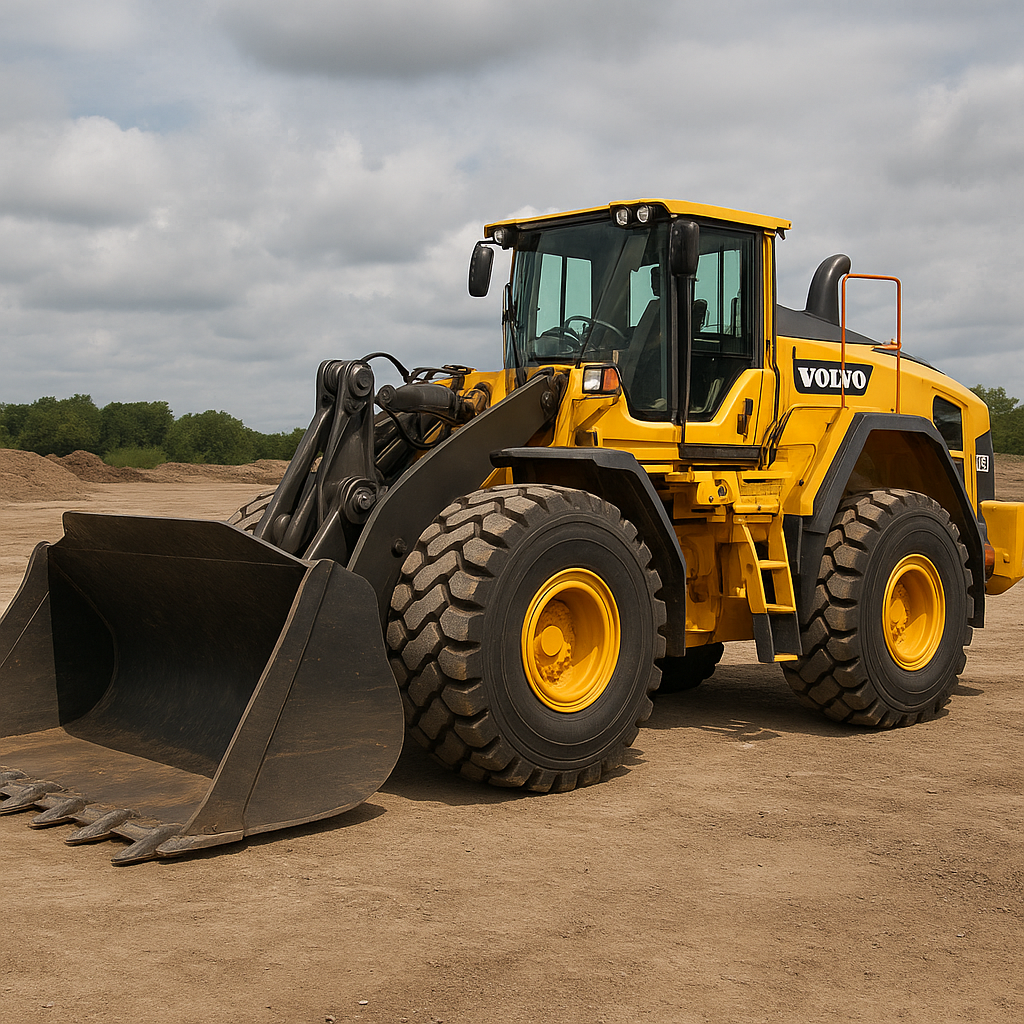
The Volvo L220H is a heavy-duty wheel loader engineered for demanding tasks in construction, mining, quarrying, and material handling. Combining robust engine performance, versatile hydraulic systems, and operator-focused design, the L220H aims to maximize productivity while controlling operating costs and ensuring long-term reliability. In the following article we explore the machine’s main characteristics, typical applications, maintenance and operational best practices, and other notable details that make the L220H a widely used choice for large-scale material-moving operations.
Overview and key features
The Volvo L220H belongs to Volvo Construction Equipment’s H-series of wheel loaders, designed to deliver a balance of power, durability and efficiency. This loader is intended for heavy workloads where large material volumes must be moved quickly and reliably. Volvo’s design philosophy for the H-series centers on improved fuel efficiency, refined hydraulics for faster cycle times, and enhanced operator ergonomics to reduce fatigue and increase precision.
- Powertrain: The L220H is fitted with a high-torque, reliable engine calibrated specifically for heavy-duty loader applications to provide strong acceleration, consistent travel speeds under load and dependable performance in harsh conditions.
- Hydraulics: A responsive hydraulic system delivers high breakout and lift forces for fast bucket fill and efficient load transfer, improving cycle times and overall productivity.
- Transmission and torque management: Robust drivetrain components and intelligent torque distribution help maintain traction and reduce wheel spin on loose or uneven surfaces, optimizing fuel use.
- Frame and undercarriage: Reinforced frame design and durable axles support heavy loads and provide resistance to severe operating stresses, resulting in improved machine longevity.
- Operator environment: The cab includes ergonomic controls, good visibility, and comfort features aimed at reducing operator fatigue and increasing safety during long shifts.
Typical applications and industry use
The Volvo L220H is versatile and finds application across many sectors where high-capacity material handling is required. Its typical uses include:
- Quarrying and mining — Loading haul trucks with blasted rock, moving ore, and feeding crushers. The machine’s mass and bucket options enable high-volume cycles for raw material extraction.
- Bulk material handling — Managing stockpiles of aggregates, coal, ores, fertilizers, and other bulk commodities in ports, terminals and large warehouses.
- Construction and infrastructure — Earthmoving for major roadworks, site clearance, site preparation for large building projects and heavy civil engineering tasks.
- Recycling and waste management — Handling loose or compacted recyclables, waste materials, and loading shredder or baler inputs.
- Forestry and biomass — Moving wood chips, biomass, and related materials when fitted with appropriate bucket or grapple attachments.
For each application, operators can choose specific attachment configurations — high-capacity buckets, rock buckets, light-material buckets, pallet forks, or grapples — to match the job requirements and improve cycle efficiency.
Dimensions, capacities and performance (typical figures)
Specification numbers can vary by market and optional configuration. The figures below are indicative ranges and common values associated with the L220H model family to help understand scale and capability.
- Operating weight: approximately 25–30 tonnes (25,000–30,000 kg), depending on configuration and attachments.
- Engine power: typically in the range of 240–270 kW (approximately 320–360 horsepower), tuned for high torque at low engine speeds to aid in heavy loading.
- Bucket capacity: standard buckets range from about 4.0 m3 to 6.5 m3, with specialized buckets available outside this range for particular materials.
- Tipping load: a common tipping load for this class may be around 18–22 tonnes, allowing the loader to handle large-volume tasks safely when loading trucks or operating on ramps.
- Breakout force: hydraulic breakout and tilt forces are optimized for aggressive digging and scooping; typical breakout forces are in the order of several hundred kilonewtons, depending on bucket geometry and hydraulic options.
- Fuel capacity: fuel tanks are sized to support full-shift operation; typical capacity is in the range of 350–600 liters, influenced by tier/emissions packages and regional specifications.
These figures are intended to provide a general sense of the machine’s scale. Exact specifications should be confirmed with the manufacturer or local dealer when selecting an L220H for a specific project.
Design details that improve productivity
Volvo’s engineering on the L220H focuses on measurable productivity gains and lower operating costs. Several design aspects contribute directly to how much work the machine can accomplish per hour and per liter of fuel:
Efficient engine mapping and power delivery
A purpose-built engine map gives the L220H strong torque at lower RPMs, enabling effective bucket filling and reliable travel under load while keeping fuel consumption controlled. The engine and electronic control systems often include features to optimize combustion and reduce idle consumption.
Optimized hydraulic system
Hydraulic flow and control prioritization reduce cycle times by enabling faster lift and tilt speeds when the full flow is not required for other simultaneous functions. Pilot-operated controls and carefully tuned valve architecture help operators place loads smoothly and precisely.
Automatic and semi-automatic modes
Many L220H machines offer selectable operating modes (for example, economy, standard, and power) and automatic features that manage engine rpm, throttle response and hydraulic flow to match the job, improving fuel economy without sacrificing output when full power is needed.
Enhanced visibility and ergonomics
Improved visibility to the bucket and around the machine reduces repositioning and increases safety during loading operations. The cab’s ergonomic layout, adjustable seating and low-vibration design reduce operator fatigue, indirectly boosting consistent productivity throughout shifts.
Attachments and adaptation for specific jobs
The L220H becomes significantly more flexible when paired with the right attachments. Volvo and third-party manufacturers supply an extensive range to match materials and operating conditions:
- General-purpose bucket — Balanced for digging and loading mixed materials; suitable for construction and general sitework.
- Rock bucket — Reinforced with heavy-duty wear plates for quarry and secondary crusher feed operations.
- High-capacity bucket — Larger volume buckets for low-density materials such as snow, coal, or light aggregates.
- Pallet forks — For handling loaded pallets and other industrial materials in logistics or port yards.
- Grapples — For scrap handling, recycling, or timber operations.
- Blades or dozer-style attachments — For pushing or leveling tasks on site.
Choosing the correct bucket geometry and cutting-edge material enhances fill factor and cycle efficiency. In many fleet operations, quick-coupler systems are used to switch attachments rapidly, keeping machine downtime to a minimum.
Maintenance, wear parts and lifecycle costs
Heavy equipment economics are defined as much by lifecycle maintenance costs as by purchase price. The L220H incorporates design choices to make service and parts replacement manageable for fleet owners:
- Accessible service points — Grouped and easy-to-reach filters, dipsticks and daily check locations reduce routine service time.
- Robust components — Heavy-duty pins, bushings and axle assemblies reduce frequency of replacements in high-stress applications.
- Wear packages — Optional hardened surfaces, bolt-on wear edges, and protection packages extend component life in abrasive environments.
- Telematics and remote monitoring — Many L220H units can be equipped with fleet management systems that track fuel consumption, operating hours, and diagnostic codes to plan proactive maintenance and reduce costly downtime.
Operators and fleet managers should develop a preventive maintenance plan tailored to the material abrasiveness, duty cycle, and environmental conditions. Regular lubrication intervals, hydraulic fluid and filter changes, and routine inspection of cooling systems and drivetrain components are essential to preserve machine value.
Safety features and operator aids
Safety on large loaders is a priority, and Volvo typically includes multiple features to protect operators and bystanders:
- Rollover and falling-object protection (ROPS/FOPS) certified cab structures to increase operator safety in rollover or falling-object scenarios.
- Visibility aids such as rearview cameras, mirrors and optional proximity sensors to reduce blind spots around the machine.
- Operator alert systems and interlocks to prevent unsafe operations (for example, machine movement at high engine revs or while maintenance panels are open).
- Emergency egress and ergonomic access ladders/handholds to minimize slips and falls during cab entry and exit.
Operational tips to maximize efficiency
How the L220H is operated makes a major difference in fuel consumption, component wear and throughput. Consider these practical tips:
- Match bucket size to load density — Oversized buckets with dense material cause strain, under-filled large buckets reduce productivity. Select a bucket that achieves a high fill factor for the target material.
- Use appropriate operating modes — Engage economy modes for light duty and power modes for heavy digging to optimize fuel usage.
- Train operators — Skilled operators lower cycle times, reduce fuel burn and minimize wear on critical components.
- Monitor tire condition and pressure — Correct tire selection and inflation lower rolling resistance and improve traction, directly influencing fuel efficiency and tire life.
- Plan material flow — Position machines and haul trucks to minimize travel distances and minimize unnecessary turning or repositioning.
Environmental and emissions considerations
Later series Volvo engines comply with regional emissions regulations (such as EU Stage or EPA tiers), typically using electronic controls and aftertreatment systems to reduce NOx and particulate emissions. Operating practices and maintenance also influence emissions: clean air filters, correct fuel injection settings and well-maintained exhaust aftertreatment systems help the machine run efficiently and within regulatory limits.
Case examples and real-world performance
The L220H has been used in many large-scale operations worldwide. Common operational feedback includes praise for its steady loading performance, smooth hydraulic controls and solid reliability under heavy cycles. In quarry operations, customers report that properly matched bucket and tire choices deliver strong truck-loading rates with predictable fuel consumption. In recycling yards and ports, operators value the machine’s stability and visibility when moving large, irregular loads.
Fleet managers often use telematics to benchmark individual machines. Typical productivity indicators tracked include tonnes moved per hour, fuel consumption per tonne, cycles per hour and uptime percentage. Improvements in these metrics often stem from optimized attachment selection, operator training and adherence to scheduled maintenance.
Conclusion
The Volvo L220H is a robust, high-capacity wheel loader designed for demanding material-handling tasks across mining, quarrying, construction and bulk handling industries. Its combination of power, hydraulic responsiveness, and operator-focused design supports high productivity while offering options to control fuel and lifecycle costs. When matched with correct attachments and operated with attention to maintenance and efficiency best practices, the L220H can be a central asset in a heavy-duty fleet.
Important note:
Specifications and performance figures vary by market, configuration and optional packages. For precise data, configuration advice, and up-to-date technical specifications, consult the manufacturer’s documentation or a local Volvo dealer.
)
)