Firefighting has evolved far beyond buckets of water and hand-held hoses. Today’s emergency responders rely on an array of specialized machines designed to tackle blazes in the most extreme environments. From gravity-defying aerial units to fully autonomous ground vehicles, these advanced apparatuses merge cutting-edge technology and unwavering reliability to safeguard communities worldwide.
Technological Marvels in Aerial Firefighting
When a wildfire races across rugged terrain, ground crews alone cannot always keep pace. Enter the world of high-altitude aerial units, where aircraft and drones deliver precise drops of water, retardants, or specialized foam. These machines exemplify innovation and unmatched efficiency under pressure.
Super Scoopers and Airtankers
Super Scoopers, like the Canadair CL-415, can touch down on lakes, fill tanks in seconds, and climb toward a blazing inferno. These scooping amphibians feature:
- High-capacity water tanks (6,140 liters or more)
- Rapid fill-and-release systems guided by automation
- Reinforced hulls for repeated water pickups
- Advanced avionics enabling low-level flight in smoky conditions
Large airtankers, such as the Boeing 747 Supertanker, carry up to 74,000 liters of retardant. Their massive wings, robust engines, and precision GPS systems ensure a targeted application that can contain a small wildfire in a single pass.
Firefighting Drones
Unmanned Aerial Vehicles (UAVs) are transforming reconnaissance and drop capabilities. Modern firefighting drones can:
- Detect hotspots via infrared cameras
- Relay real-time video to command centers
- Carry small payloads of foam or gel for initial containment
- Navigate hazardous zones without risking crew lives
Equipped with resilience-tested frames and heat-resistant coatings, these UAVs scout perimeters and even pinpoint embers beyond visual range.
Ground-Based Giants: Monster Fire Trucks
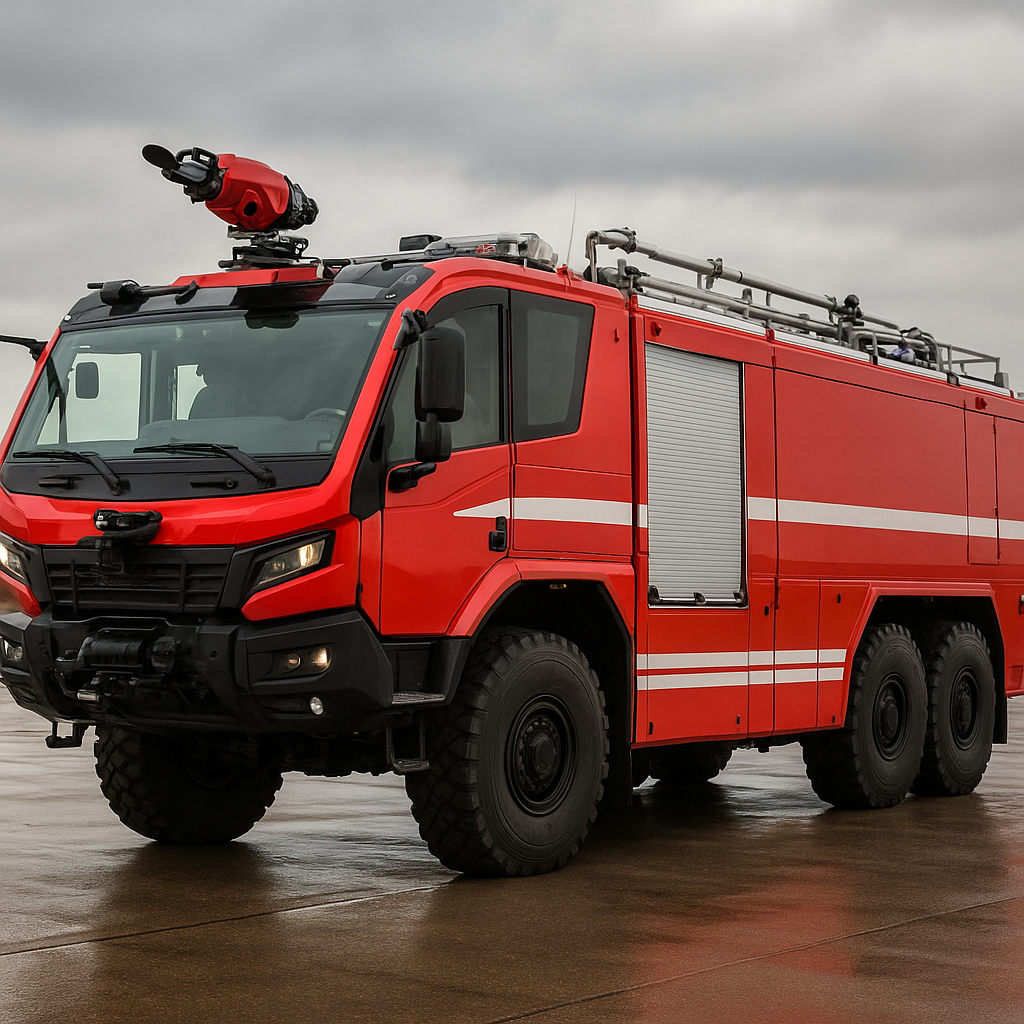
On the front lines, massive fire trucks deliver high-pressure streams and foam blasts. These ground-based beasts combine robustness with hydraulics, allowing firefighters to combat multi-story infernos and industrial accidents.
Ultra-High Pressure (UHP) Units
UHP fire engines operate at pressures exceeding 30,000 psi. Designed to:
- Penetrate deep-seated hotspots within walls or machinery
- Reduce water usage by generating fine mist for better heat absorption
- Employ stainless steel pumps for performance at extreme pressures
Turntable Ladder Platforms
These towering rigs come with ladders extending over 100 feet. Key features include:
- 360-degree hydraulic rotation
- Integrated monitors for large-volume water or foam discharge
- Advanced stabilizer legs with automated leveling
- Communications pods for on-ladder command and control
Operators use touchscreen consoles to adjust elevation, tilt, and flow rate—demonstrating the fusion of automation and human expertise.
Robotics and Autonomous Firefighters
As artificial intelligence matures, robotic platforms take on the most dangerous tasks. Whether navigating toxic chemical fires or confined industrial spaces, these robots deliver firefighting solutions with minimal human risk.
Tracked Firefighting Robots
Powered by electric or hybrid drivetrains, tracked robots can:
- Attach remotely controlled nozzles capable of 20-bar pressure
- Use thermal imaging to approach unseen hotspots
- Traverse obstacles up to one meter high and uneven terrain
Designed for safety and reliability, these machines incorporate collision sensors, emergency stop functions, and redundant power systems.
Autonomous Hazmat Response Units
Specialized autonomous vehicles equipped with sensors can detect chemical leaks or radiation. Features include:
- Onboard gas chromatography sensors
- Self-adjusting foam mixing units
- Real-time cloud data-sharing for coordinated multi-agency response
Thanks to AI-driven navigation and obstacle avoidance, these units perform reconnaissance missions that would otherwise endanger human crews.
Advanced Materials and Safety Systems
Protection for firefighters extends beyond personal gear. The vehicles themselves integrate next-generation materials and systems to endure the harshest fireground conditions.
Heat-Resistant Composites
Firefighting apparatus frequently face radiant heat exceeding 1,000°C. To combat this, engineers use:
- Ceramic-matrix composites on pump housings
- Graphene-infused panels for thermal insulation
- Nanocoatings that repel water and retard flame spread
Integrated Sensor Networks
Modern rigs include arrays of sensors to monitor:
- Structural integrity of the vehicle chassis
- Pressure and flow in pump lines
- Air quality around the crew cabin
- Tire temperature and brake health for high-speed highway response
Data from these sensors feed a central command unit that issues alerts and adjusts system parameters in real time. This level of efficiency and proactive maintenance ensures that every mission proceeds without mechanical failure.
The Future of Firefighting Machines
Emerging trends point toward even greater integration of AI, robotics, and material science. Concepts under development include:
- Swarm drone formations for simultaneous multi-drop suppression
- Self-healing hydraulic lines embedded with microcapsules of sealant
- Exoskeleton suits that multiply human strength and endurance
- Hydrogen-powered fire trucks with zero carbon emissions
These upcoming innovations promise to elevate firefighter capabilities, enhancing both safety and reliability on the front lines of disaster response.