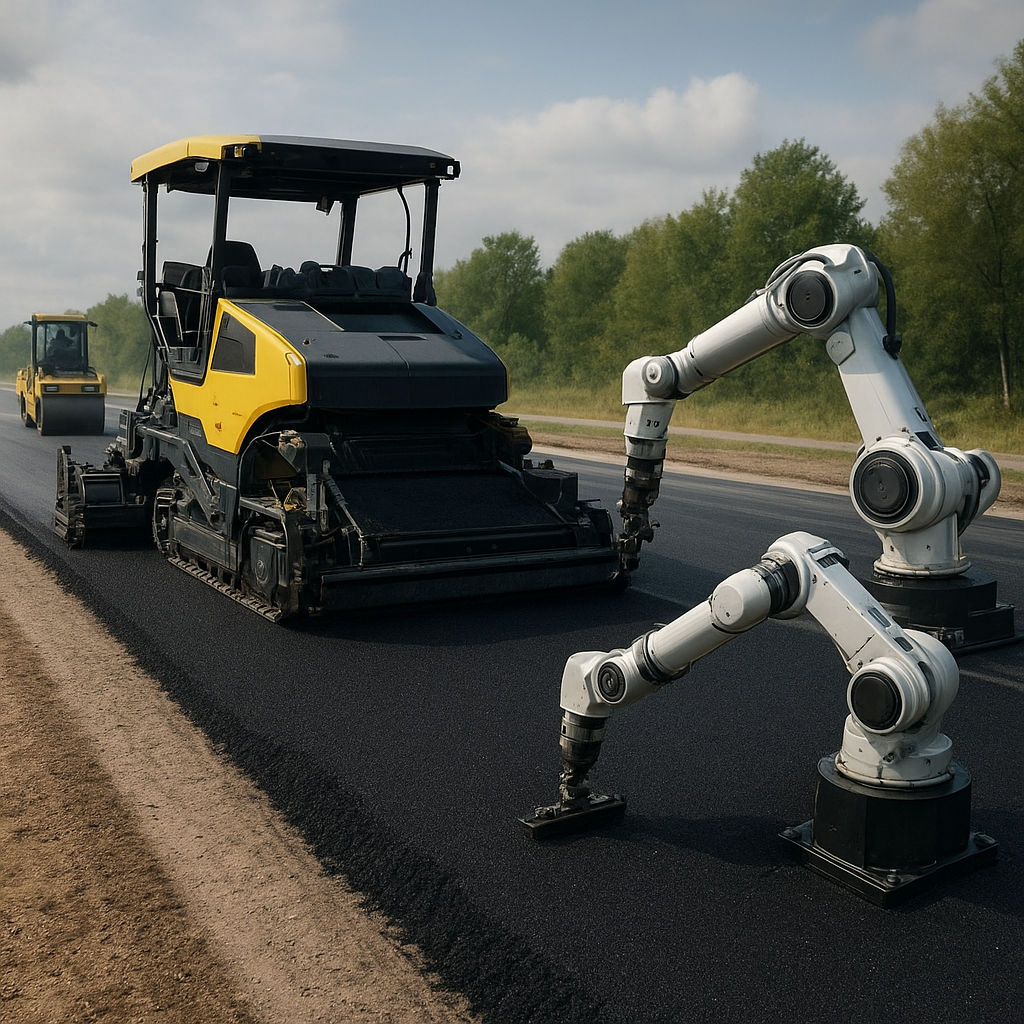
The rapid advancement of robotics is transforming the way road construction projects are planned, executed, and maintained. From autonomous earthmovers to AI-driven quality control drones, machines at work are reshaping an industry traditionally dominated by manual labour and heavy equipment. This article delves into the most exciting developments, the practical applications of cutting-edge systems, and the key challenges that must be addressed to harness the full potential of automation on the highway.
Emerging Robotic Technologies in Road Building
Innovations in hardware and software are converging to produce a new generation of construction machines. Among the most disruptive trends are:
- Autonomous Vehicles: Self-driving bulldozers, graders, and pavers that follow digital blueprints with centimetre-level precision.
- 3D Printing: Large-scale concrete printers that deposit material layer by layer, creating pavement structures with intricate internal lattices for enhanced durability.
- Drone-based Inspection: Aerial systems equipped with LiDAR and high-resolution cameras for mapping terrain, monitoring progress, and identifying defects.
- Robotic Arms: Stationary or mobile manipulators capable of laying pipes, placing reinforcement bars, and performing repetitive welding tasks.
These technologies rely heavily on advanced sensing suites combining optical cameras, radar, ultrasonic sensors, and sensor fusion algorithms. By integrating data streams in real time, machines can adjust their movements to account for uneven terrain, underground utilities, or unexpected obstacles.
Applications on the Construction Site
Robotic systems are not mere prototypes—they are already operating across diverse phases of road projects. Notable applications include:
- Site Preparation: Autonomous dozers clear vegetation and level soil, using GPS-guided paths to optimize material removal and grading.
- Subgrade Compaction: Smart rollers equipped with feedback controls ensure uniform density by measuring soil stiffness and adjusting vibration frequency dynamically.
- Paving and Finishing: Robotic pavers with integrated sensors maintain consistent asphalt thickness, temperature, and surface texture to reduce cracking and rutting.
- Quality Assurance: Mobile inspection robots conduct non-destructive testing, scanning pavements for voids or moisture intrusion using ground-penetrating radar.
Collectively, these systems accelerate project timelines, minimize human exposure to hazardous environments, and deliver unparalleled uniformity in material placement. This shift toward machine-driven workflows is underpinned by developments in predictive maintenance—software platforms that forecast mechanical failures days or weeks in advance, ensuring near-continuous operation.
Benefits and Challenges of Automated Construction
Integrating robotics yields a spectrum of benefits:
- Increased Efficiency: Automated machines can run 24/7, drastically reducing project durations and labour costs.
- Enhanced Safety: Removing workers from high-risk zones cuts the rate of on-site accidents and long-term health issues.
- Improved Quality: Algorithm-driven controls maintain tighter tolerances than manual execution, resulting in smoother, more resilient pavements.
- Sustainability: Precision placement of materials reduces waste and lowers carbon footprints by optimizing fuel usage and raw material consumption.
However, several challenges must be overcome before full-scale adoption:
- High Capital Investment: The upfront cost of robotic fleets and accompanying infrastructure can be prohibitive for small contractors.
- Technical Expertise: Operating and maintaining sophisticated machines demands skilled technicians trained in Machine Learning and advanced electronics.
- Regulatory Frameworks: Current safety and zoning regulations often lag behind technological capabilities, creating legal hurdles for autonomous operations.
- Data Security and Privacy: Wireless communication networks connecting heavy equipment are vulnerable to cyberattacks, necessitating robust encryption and authentication protocols.
Integration of Artificial Intelligence and Collaboration
Artificial intelligence lies at the heart of next-generation road construction robotics. Through deep learning, systems can:
- Recognize and classify terrain types, predicting load-bearing capacity before excavation begins.
- Optimize logistics by coordinating multiple machines, ensuring materials are delivered just in time to each work cell.
- Adapt to changing weather conditions, adjusting pavement curing times or implementing temporary shelters to maintain quality.
Collaboration between human operators and robots is equally vital. Concepts such as human-in-the-loop control allow supervisors to intervene in critical stages, while exoskeletons and wearable robotics amplify worker strength for heavy lifting, marrying the best of man and machine. Digital twins—virtual replicas of job sites—enable stakeholders to simulate workflows, identify bottlenecks, and refine strategies before physical deployment.
Future Directions and Innovations
Looking ahead, the intersection of robotics, AI, and materials science promises to revolutionize infrastructure development:
- Self-Healing Pavements: Embedded microcapsules releasing repair agents in response to microcracks, applied by automated injectors.
- Modular Construction: Prefabricated road segments built by robotic factories, shipped to sites for rapid assembly with minimal on-site labour.
- Swarm Robotics: Fleets of small, cooperative robots performing tasks in parallel—measuring, excavating, paving—under centralized AI coordination.
- Renewable Energy Integration: Solar-embedded asphalt laid by automated systems, capturing sunlight to power roadside sensors and street lighting.
As these concepts mature, the role of the construction workforce will evolve from manual operators to system integrators, data analysts, and AI trainers. Embracing these changes will be essential for meeting the ever-growing global demand for resilient, efficient, and sustainable road networks. The next decade promises an era where machines at work not only pave our highways but also drive human progress forward.