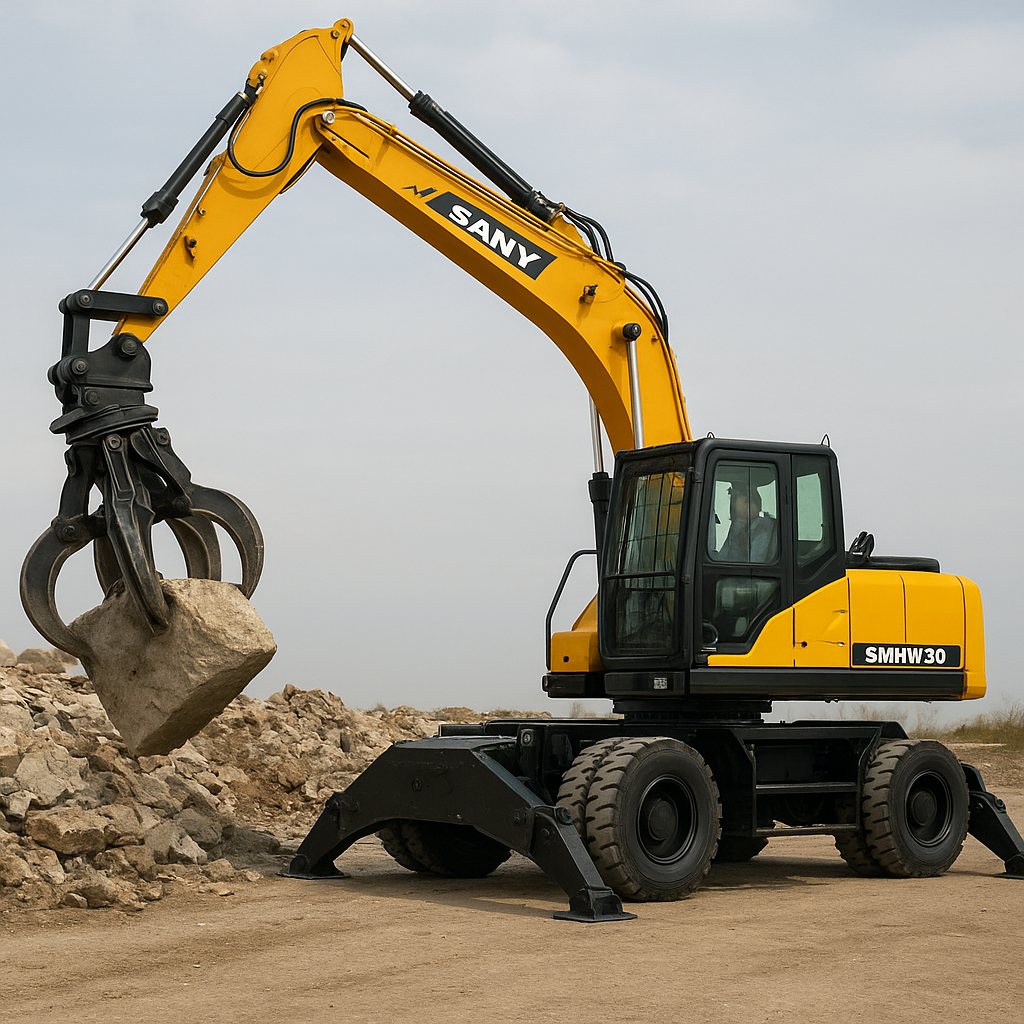
The SANY SMHW30 is a contemporary example of the specialized class of construction equipment known as a material handler. Designed to move, sort and load bulk materials with precision and speed, this machine bridges the gap between conventional excavators and heavy-duty port or scrap-handling equipment. In the following sections, we explore the SMHW30’s design characteristics, typical applications, useful technical considerations, attachment options and operational aspects. The goal is to outline where the machine excels, how it is typically used and what managers and operators should know when selecting an SMHW30 for their fleet.
Design and technical overview
The SANY SMHW30 belongs to the family of purpose-built material handlers that emphasize reach, rotation, lifting capacity and operator visibility rather than digging force. Compared with standard excavators, material handlers like the SMHW30 feature an elevated cab, longer booms and specialized slewing systems to support continuous rotation and high-cycle operations.
Basic configuration
- Operator cab mounted on a reinforced upper structure often offers 360-degree visibility and can be raised or rotated for optimal sight lines when handling loads at height.
- Hydraulic system is tuned for smooth, responsive motions with priority for attachment control — crucial for grapples, magnets and clamshell buckets.
- Undercarriage options typically include large tracked platforms for stability in heavy-lift conditions or wheeled carriers for better mobility on paved surfaces such as ports and terminals.
Estimated technical parameters
Exact specifications for the SMHW30 can vary by configuration and market. The following values represent typical characteristics for machines in the 30-ton material handler class and are useful as general guidance:
- Operating weight: approximately 28–34 tonnes
- Engine power: roughly 130–220 kW (depending on emissions package and regional engine options)
- Maximum reach: typically 8–12 meters with standard boom-and-arm combinations; long-reach options can extend further
- Rated lifting capacity at ground level: variable, commonly in the 3–8 tonne range depending on reach and counterweight
- Hydraulic flow and pressure: optimized for high-cycle handling with auxiliary circuits to drive attachments
These estimates are intended to position the SMHW30 within its class. Buyers should consult up-to-date factory specifications for precise numbers for a given serial configuration.
Where the SMHW30 is used
The SMHW30 is built for tasks that require frequent pick-and-place cycles, excellent visibility and attachment flexibility. Its design lends itself to a range of specialized industries:
Ports and terminals
- Loading and unloading bulk materials from trucks and barges
- Moving containerized or bagged goods across short distances within the terminal
- Handling breakbulk and loose cargo where precise placement is required
Scrap yards and metal recycling
- Feeding shredders, sorting scrap and stockpiling processed metal
- Operating with heavy-duty grapples, magnets or shears to sort ferrous and non-ferrous material
Waste handling and recycling facilities
- Managing municipal solid waste, construction & demolition debris and RDF (refuse-derived fuel)
- Facilitating transfer between conveyors, hoppers and compactors
Forestry and biomass operations
- Loading timber, handling wood chips or managing biomass stockpiles
- Using specialized logging grapples and rotators
Industrial yards and stockpile management
- Reclaiming aggregate, soil, coal or fertilizers from piles
- Working around conveyors and crushers where a dedicated, high-visibility handling machine is preferred
The SMHW30’s combination of reach and controlled motion is advantageous wherever rapid cycles and careful placement are more important than digging penetration or trenching capability.
Attachments and versatility
One of the main strengths of material handlers is their compatibility with a wide range of attachments. The SMHW30 supports many tools that expand its utility across multiple industries.
- Grapples — Multi-dexterous hydraulic grapples for scrap, logs and general material handling.
- Electromagnets — Powerful magnets for ferrous scrap handling, typically mounted on the boom tip and powered by an onboard generator or hydraulic-driven alternator.
- Clamshell buckets — Ideal for bulk-loading operations where controlled release and volume handling matter.
- Shears and cutters — For demolition and scrap processing where metal cutting is required.
- Rotators and tilt couplers — Provide continuous rotation and angled positioning for efficient sorting and handling.
Attachment integration often includes quick-change couplers and dedicated hydraulic circuits with flow control to match attachment demands. An important operational advantage is that a single SMHW30 can serve multiple roles across a site simply by switching tools, reducing equipment redundancy and overall fleet cost.
Performance, fuel efficiency and maintenance
High productivity in material handling depends on cycle speed, hydraulic responsiveness and uptime. The SMHW30 prioritizes those factors through drivetrain choices and serviceability features.
Productivity factors
- Hydraulic systems are tuned for quick response and continuous duty cycles.
- Counterweight and chassis stability allow for confident lifting at reach without sacrificing safety.
- Operator ergonomics and visibility directly affect cycle times—taller cabs with panoramic windows and camera systems reduce repositioning and increase throughput.
Fuel consumption
Fuel use will vary considerably with the task, attachment and duty cycle. Typical fuel consumption for machines in the 30-ton class performing material handling tasks can range from roughly 10–25 liters per hour under normal operating conditions. High-demand cycles with heavy magnets or shears may push consumption higher. Many modern handlers include eco-modes, idle-shutdown features and hydraulic power management to lower fuel burn during light-load periods.
Maintenance and serviceability
- Ground-level service points and grouped maintenance checks reduce downtime and service labor costs.
- Long-life hydraulic filters and easy-access cooling packages minimize routine intervention.
- Proactive monitoring systems available on contemporary models can report faults, hours and fuel usage remotely to streamline fleet management.
Owners who maintain a structured preventive maintenance schedule and use genuine parts usually see higher residual values and lower total cost of ownership. The SMHW30’s design typically reflects these priorities, balancing rugged components with accessibility for quick repairs.
Safety and operator comfort
Safety is paramount in material handling environments where heavy loads move continuously and bystanders may be present. The SMHW30 typically includes several safety and ergonomic features:
- Elevated cab design with reinforced ROPS/FOPS protection improves operator line of sight and crash protection.
- Integrated camera systems and optional proximity sensors or radar to detect personnel or obstacles in blind zones.
- Rotary limiters and load-sensing hydraulics to prevent overloading at extended reaches.
- Ergonomic seats, joystick controls and climate control to reduce operator fatigue and maintain consistent productivity.
In many markets, machine packages can be specified with additional safety elements such as audible alarms, working lights for night shifts and automatic fire suppression systems for high-risk environments like scrap yards.
Market position and statistical context
SANY is a major global manufacturer of construction and heavy equipment and has invested heavily in expanding its product range of specialized handlers. While precise sales figures for individual models such as the SMHW30 are not publicly disclosed in a standardized global database, some useful market pointers include:
- SANY operates in more than 100 countries and frequently updates its regional offerings to meet local regulations and customer needs.
- The material handler segment has grown with rising demand from port automation, recycling and infrastructure refurbishment projects; demand drivers include increased commodity movement and tighter recycling regulations.
- Machines in the 20–40 tonne material handler class are widely popular because they balance reach, capacity and operating cost for medium-sized terminals and industrial yards.
For fleet planners, the choice of a material handler like the SMHW30 should consider local labor costs, fuel prices, the complexity of attachments required and anticipated annual operating hours. High-utilization operations and those that switch frequently among tasks generally realize faster payback from a purpose-built handler versus an adapted excavator.
Buying considerations and fleet integration
When evaluating the SMHW30 or comparable material handlers, consider the following practical points:
- Attachment ecosystem — Verify local availability of grapples, magnets and clamshells as well as service support for attachment hydraulic circuits.
- Transport and footprint — Handler weight and dimensions affect transport logistics and site planning, particularly when moving between yards or ports.
- Operator training — Specialized handling techniques and attachment operation require training for safe and efficient use; many OEMs provide factory training programs.
- Emissions and compliance — Engine certification (Tier, Stage, or local equivalents) may dictate which SMHW30 configurations can be used in certain regions.
- Resale and service network — Check local dealer support and parts availability to reduce downtime and protect residual value.
Case examples and typical workflows
To illustrate typical workflows, consider two common site examples:
Port bulk-handling operation
- The SMHW30 loads bulk fertilizer from trucks to hoppers and reclaims material from stockpiles. An operator with a raised cab and camera system maintains clear visual control while a clamshell bucket cycles quickly to avoid bottlenecks at the conveyor feed.
- With an optional quick-change system, the machine can switch to a magnet during scrap removal tasks on the same shift, increasing utilization.
Scrap yard and recycling facility
- The machine operates a heavy-duty grapple for feeding shears and moving sorted bundles. A magnet attachment on a different shift streamlines loading for ferrous shipments.
- Remote monitoring helps maintenance staff schedule oil sampling and filter replacements during low-production windows to maximize uptime.
These scenarios underline the value of flexibility, quick attachment changes and reliable hydraulics in site productivity.
Conclusion
The SANY SMHW30 is a versatile and purpose-built material handler designed to serve a wide range of industries from ports and terminals to scrap yards and recycling centers. Its emphasis on operator visibility, hydraulic responsiveness and attachment flexibility make it well-suited for high-cycle pick-and-place tasks where precision and uptime matter. While exact specification values should be checked with a local dealer for the precise model and configuration, the SMHW30 typically fits into the 30-ton class with an emphasis on reach, controlled lifting and adaptability.
Purchasing decisions should weigh attachment needs, service support, fuel and maintenance costs, and local regulatory requirements. When these factors align, the SMHW30 can be an efficient, productive asset that reduces cycle times and streamlines material flows in demanding operational environments.
)
)