
The Robbins Crossover XRE represents a class of advanced mechanized excavation equipment designed to tackle some of the most challenging underground conditions. Combining attributes of hard-rock tunnel boring machines and mixed-face or earth-pressure devices, this machine is intended to offer flexibility, improved uptime and safer tunneling in variable geology. Below, you will find a detailed overview of the machine’s design principles, typical applications, operational performance, maintenance and safety considerations, economic and environmental aspects, and real-world deployment scenarios.
Design and technical features
The core idea behind a crossover machine like the Robbins Crossover XRE is adaptability. Rather than being optimized solely for either open-face hard-rock excavation or closed-face mixed-ground (EPB/slurry) operation, a crossover machine incorporates systems that allow a tunneling team to switch operational modes or operate continuously across transitions in face conditions.
Main components and layout
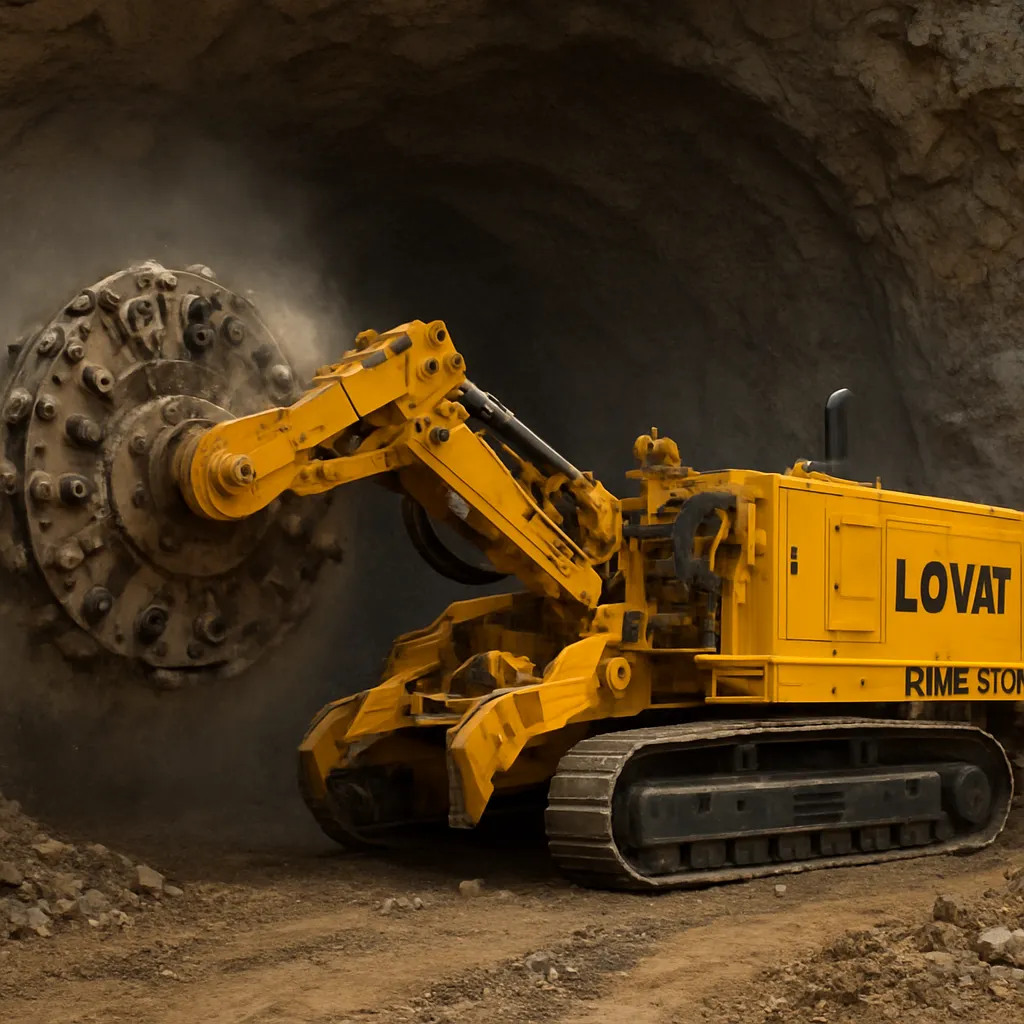
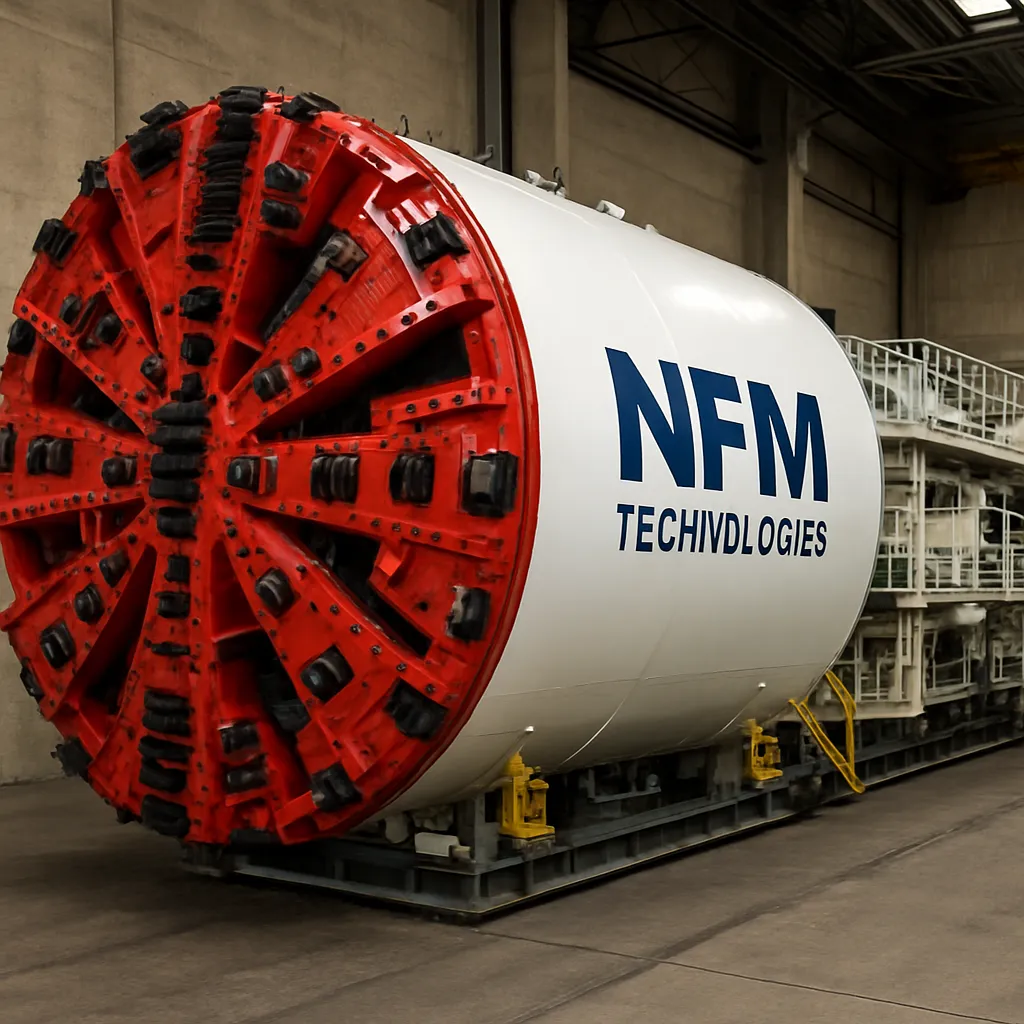
- Cutterhead and cutting tools: The cutterhead is designed to accept a combination of disc cutters for competent rock and specialized tools (rippers, carbide picks) for fractured or abrasive zones. Replaceable cutter assemblies and interchangeable tool holders increase on-site flexibility.
- Shield and shield extensions: A pressurized shielding arrangement provides support in weaker ground and accommodates segment erectors and conveyor systems.
- Muck handling system: Typically a belt conveyor or screw conveyor within the shield, sometimes combined with slurry circuits or muck cars depending on the mode of operation.
- Thrust system: Hydraulic cylinders anchored to the shield provide forward thrust against the installed lining, with capacities scaled to the machine diameter and rock strength.
- Segmentation and lining equipment: Integrated or modular segment erectors allow installation of segmental lining rings immediately behind the cutterhead, improving stability and safety in poor ground.
- Support systems: High-voltage electric drives, ventilation, slurry separation (if applicable), and instrumentation for navigation and face monitoring.
Mode-switching capability
Crossover TBMs are engineered to switch between operating modes without complete disassembly. Typical mode-switching features include:
- Variable cutterhead openings and soil-conditioning ports.
- Ability to operate as an open-faced hard-rock TBM when competent rock is encountered.
- Capability for pressurized face control (EPB or slurry features) in mixed or soft-ground sections to reduce settlements and control water inflow.
Instrumentation and automation
Modern crossover machines incorporate extensive monitoring systems: torque and thrust sensors, cutterhead torque mapping, face-pressure sensors, and real-time alignment/navigation tools. These allow operational optimization and predictive maintenance planning.
Applications and typical use cases
The tunneling versatility of the Robbins Crossover XRE makes it suitable for a wide array of underground works. Its primary strengths are in projects where ground conditions vary along the alignment or where both hard rock and mixed-face segments are expected.
- Urban metro and rail tunnels crossing variable geology, including sections under rivers or soft alluvium.
- Hydroelectric headrace tunnels and pressure tunnels where long stretches of competent rock are interrupted by fault zones or water-bearing strata.
- Water transmission, sewer and utility tunnels where minimizing surface settlement is critical.
- Mining declines and service tunnels that transition from consolidated rock into broken ground or ore bodies with variable competency.
- Road tunnels with variable stratigraphy and high requirements for continuous lining installation.
In each of these applications the principal advantage of a crossover machine is reducing the need for multiple machines or lengthy changeovers — the XRE family aims to provide consistent progress through non-homogeneous ground.
Performance, productivity and statistical data
Performance of any TBM, including crossover designs, is heavily geology-dependent. Rather than presenting a single fixed rate, it is more useful to offer typical ranges and factors affecting output:
Advance rates
- Competent hard rock: average advance rates for hard-rock TBMs can range from 5 to 30 meters per day depending on rock strength, jointing and machine size. Higher rates are achievable in favorable, massive rock with optimized cutter configurations.
- Mixed-face / softer ground: in EPB or slurry conditions, typical rates are often lower, commonly in the range of 3 to 15 meters per day, limited by muck handling, face-conditioning and ground support installation.
- Transition zones and faulted ground: rates can drop substantially — sometimes to less than 1–2 meters per day — during extended interventions or grouting operations required for face stabilization.
Power and thrust
Typical power requirements for crossover machines vary with diameter and geology; for medium to large machines they often fall within 1–7 MW electrical drive power. Thrust capacities typically range from tens to hundreds of meganewtons of cumulative cylinder thrust depending on the machine class. Exact values for a given XRE unit depend on diameter and project specification.
Utilization and availability
High availability and reduced downtime are major selling points: well-operated TBM projects often report machine availability above 75–85% over long drives, although short-term availability can vary with geological surprises. Cutter change frequency depends on abrasivity; carbide disc cutter wear in abrasive ground can necessitate changes every few hundred meters of advance, while in less abrasive rock cutters can last significantly longer.
Material handling and spoil removal
Muck rates are a direct function of advance rate and cross-sectional area. For example, a 5-meter diameter tunnel advanced 10 meters/day produces roughly 196 cubic meters/day of spoil (before accounting for swell). Logistical systems — conveyors, slurry pipelines, or muck cars — must be sized accordingly.
When quoting statistical data it is important to treat numbers as indicative ranges. Performance benchmarking should be based on geology, machine sizing, tooling program and project logistics rather than nominal manufacturer ratings alone.
Operational considerations: safety, maintenance and logistics
Safety
- Pressurized-face operation requires strict procedures for manlocks and decompression when workers must access the face under pressure.
- Continuous monitoring of face pressures, groundwater inflow and convergence minimizes risk of collapse or uncontrolled water ingress.
- Local ventilation and gas detection are essential, especially in longer drives or when cutting into mineralized zones.
Maintenance and wear
Routine maintenance activities include cutter inspection and replacement, lubrication of bearings and seals, hydraulic system checks and conveyor upkeep. Cutter wear is a primary consumable cost — rock abrasivity, jointing, and operational parameters influence cutter life significantly. Predictive maintenance using torque patterns and vibration monitoring can reduce unplanned stops and extend component life.
Logistics and assembly
Large crossover TBMs are assembled underground from transported components; shaft or port access, site space and crane capacity determine assembly time. Logistics planning for spare cutters, hydraulic parts and electric components is a major part of project risk management.
Economic and environmental aspects
Crossover TBMs are typically capital-intensive. Their value proposition rests on reduced overall project duration and fewer machine changeovers when geology varies. Cost factors include initial machine acquisition or rental, tooling, spare parts inventory, power consumption and manpower.
- Capital expenditure is offset by lower tunneling risk in mixed geology and potentially faster project completion.
- Operational cost drivers: energy, cutter and consumable replacements, and muck transportation.
- Environmental benefits: mechanized tunneling reduces surface disturbance compared with conventional drill-and-blast or open-cut alternatives, leading to lower noise, vibration and surface settlement impacts.
Project owners often evaluate life-cycle costs and risk reduction (reduced insurance and contingency expenses) when choosing a crossover TBM versus conventional machines or multiple specialized TBMs.
Case studies and notable deployments
Although specific machine configurations and performance are project-dependent, crossover-style machines have been effectively applied to:
- Urban metro lines where alignments pass through alternating alluvial fills, weak filled valleys and hard bedrock segments.
- Hydropower tunnels that require long drives in competent rock interspersed with faulted or water-bearing sections — the ability to switch modes reduces stoppages for ground treatment.
- Utility tunnels beneath rivers or cities where keeping settlement to a minimum is critical and ground conditions are unpredictable.
Success factors in these deployments include thorough pre-tunneling site investigation, flexible tooling programs, experienced tunneling teams and robust monitoring regimes. Where such elements are present, crossover machines often deliver smoother project delivery compared to frequent machine swaps.
Advantages and limitations
Advantages
- Operational flexibility across varying ground conditions reduces the need for multiple machines.
- Improved safety through immediate installation of lining and face control when required.
- Potentially higher average progress on mixed geology projects, lowering total schedule risk.
- Reduced surface disruption and environmental impacts relative to some conventional methods.
Limitations
- Higher upfront cost and complexity compared to single-mode TBMs.
- Heavier logistical footprint — more spare parts and specialized support are required.
- In extreme ground conditions (very coarse boulders, extremely abrasive horizons, or highly swelling clays), specialized and singular solutions may outperform a crossover concept.
Selecting the right machine and best practices
Choosing an XRE-style crossover unit requires an integrated evaluation of geology, alignment, program timeline and available site logistics. Best practices include:
- Detailed geotechnical investigations with face probe data and geological baselines to inform cutter and tooling selection.
- Flexible contract structures allowing tooling adjustments and mode optimizations as ground conditions evolve.
- Investment in real-time instrumentation to track cutter performance and face behavior for adaptive operations.
- Comprehensive spare parts and consumables strategy to minimize downtime during tough ground encounters.
Conclusion
The Robbins Crossover XRE concept targets a persistent industry challenge: how to keep tunneling progress steady when geology does not cooperate. By blending the best features of hard-rock machines with closed-face capabilities, crossover machines offer project teams the ability to navigate transitions with fewer interruptions, lower risk of settlement and improved safety. Ultimately, success with a crossover TBM depends on rigorous planning, adaptable tooling strategies, and experienced operations and maintenance teams. While not a panacea for every geological scenario, in many mixed-face projects the crossover approach provides a compelling balance of productivity, risk reduction and operational resilience.
)
)