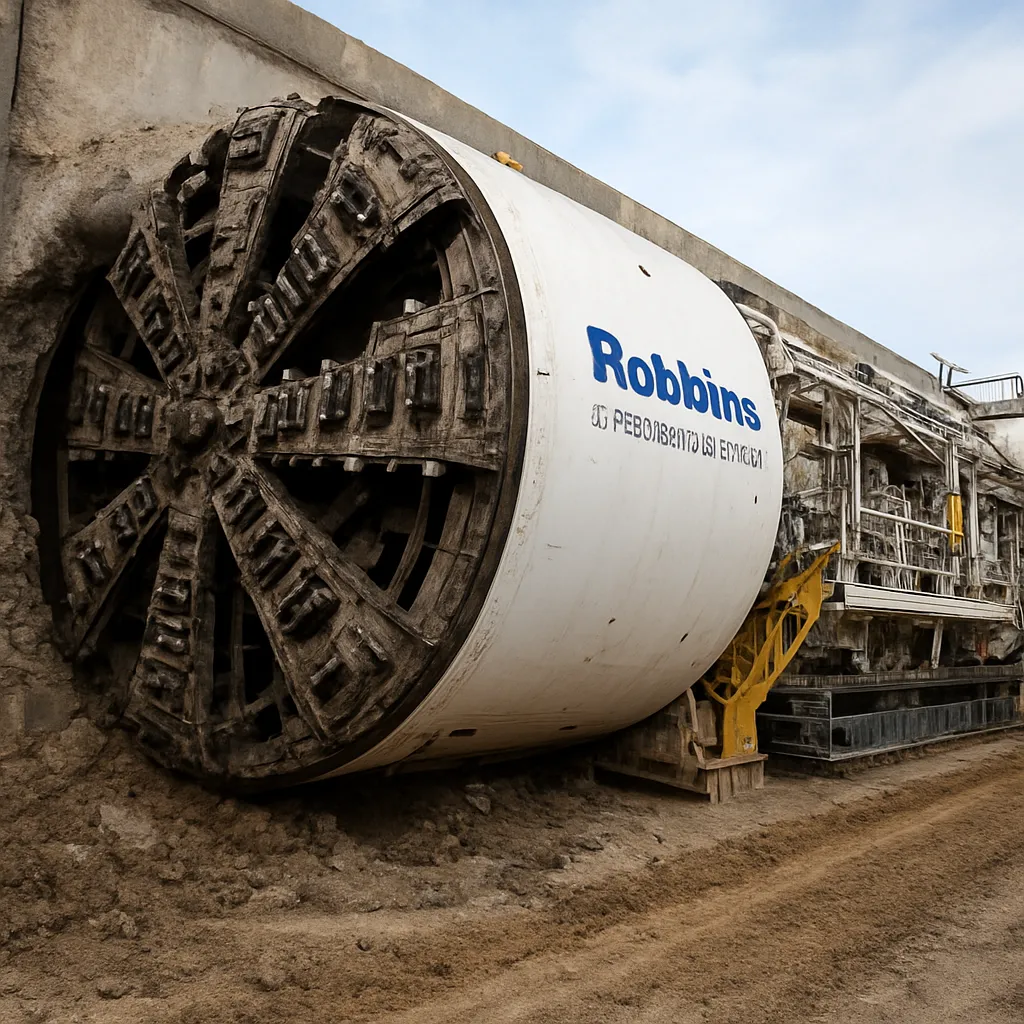
The Robbins Crossover XRE 13m represents a versatile approach to modern mechanized tunneling, designed to bridge the gap between differing ground conditions and project needs. Combining adaptable cutterhead technology, robust muck handling systems and modular machine design, machines of this kind are used where geology is variable or where contractors require flexibility to switch between excavation modes. This article explores the design philosophy, typical applications, technical characteristics and operational considerations for the Crossover XRE 13m class of tunneling machines, drawing on industry norms and available performance statistics for similar Robbins machines.
Overview and design philosophy
The Robbins name is well known in the tunneling industry for producing high-quality tunnel boring machines (TBMs) suited to a wide range of conditions. The term Crossover denotes machines engineered to operate effectively in more than one excavation mode — for example both slurry and earth-pressure-balance (EPB) techniques — or to accommodate different cutterhead designs without the need for a full machine replacement. The XRE designation typically indicates a model tuned for robust performance in mixed-face or variable geology, while the 13m figure identifies the nominal outer diameter, placing the machine in the medium-to-large class suitable for major infrastructure works such as metro tunnels, large-diameter utility conduits and hydroelectric penstocks.
The core design goals for a crossover TBM like the XRE 13m are:
- Flexibility to handle different ground conditions (soft soils, mixed face, rock).
- Rapid conversion between cutterhead or support systems to minimize downtime.
- Efficient muck removal and spoil handling across modes.
- High levels of operator control for face pressure and ground conditioning.
To achieve these goals engineers integrate features such as interchangeable cutterheads, adaptable spoil conveyors or slurry circuits, variable-pressure support systems, and modular shields and backup systems. The result is a machine capable of being deployed on projects where subsurface conditions vary over the alignment or where a contractor wishes to hedge geological risk.
Typical applications and project roles
A Crossover XRE 13m machine is suited to a variety of heavy civil tunneling tasks where diameter and flexibility are required. Key application areas include:
- Urban transit tunnels — Metro and regional rail tunnels with large station caverns or sections requiring wider bores for utilities and ventilation.
- Water conveyance — Large-diameter water supply tunnels, aqueducts and hydroelectric penstocks where high flow capacity is needed.
- Sewer and combined sewer overflow — Major gravity sewers and storage tunnels with diameters that reduce the need for multiple parallel conduits.
- Utility crossings — When crossing under rivers, highways or sensitive infrastructure, a single-pass large-diameter TBM reduces number of open-cut disruptions.
- Mixed-geology drives — Alignments that traverse layers of soft alluvium, stiff clays and fractured rock require a machine that can adapt its support and excavation approach.
Because of its size, a 13m TBM also facilitates the construction of internal lining systems or pre-cast segment rings that are larger and therefore better suited to high-capacity or maintenance-intensive tunnels. The crossover capability reduces the need to launch two separate machines for different sections of a project, cutting total mobilization time and potentially lowering cost and schedule risk.
Technical features and operational mechanics
While exact specifications vary with project customization, several technical elements are characteristic of the Robbins Crossover XRE 13m concept. These include:
Cutterhead and interchangeability
The cutterhead is the TBM’s working face and its design dictates how a machine performs in a given formation. Crossover machines typically support:
- Open hard-rock cutterheads equipped with disc cutters for competent rock.
- Closed-face EPB cutterheads with soil conditioning ports for soft/pressurized ground.
- Slurry-capable cutterheads with fluid circuits for water-bearing strata.
Interchangeability means the cutterhead or at least parts of the front shield can be swapped or adapted on site, allowing the TBM to change excavation mode without replacing the entire machine.
Face pressure and ground control
To prevent collapse or excessive settlement in urban settings, the crossover design emphasizes active face support. This can include hydraulic jacking systems, pressurization chambers, and fluid injection systems. Operators monitor face pressure, torque and penetration rates and adjust conditioning additives (e.g., polymers, foams) or slurry parameters accordingly.
Muck removal and handling
Efficient spoil handling is essential in large-diameter TBMs. The XRE 13m class often uses heavy-duty conveyor systems in the backup train, slurry pipelines and separation plants, or a hybrid arrangement depending on the mode. For slurry-mode operations, on-site separation and recycling equipment reduces waste volume and water consumption.
Power, thrust and torque
Machines of this diameter typically require multi-megawatt power packages and hydraulic systems capable of delivering very large thrust forces to press the cutterhead against the face and maintain progress in competent rock. Exact numbers depend on configuration, but the emphasis is on delivering high continuous torque and controlled thrust to optimize penetration without overloading cutters or the main drive.
Segment erection and lining
The larger bore makes the installation of pre-cast concrete segments faster in terms of coverage per ring. Automated erectors and ring-building systems are integrated into the backup to ensure efficient lining installation and immediate structural support behind the machine.
Performance statistics and operational benchmarks
Publicly available, model-specific performance data for proprietary configurations like the XRE 13m are limited and project-dependent. However, industry benchmarks for large Robbins TBMs and crossover-class machines allow estimation of likely performance ranges:
- Average advance rates in mixed geology: typically 3–12 meters per day, with peak days reaching 20–30 m/day in favorable conditions.
- Cutter life: Disc cutter wear rates vary, but in abrasive rock cutters may require replacement every few hundred to a few thousand meters; effective operator practices and good conditioning can extend service life.
- Spoil volumes: A 13m diameter drive produces roughly 132 m3 of spoil per meter of advance (based on a 13m outside diameter and a typical segment thickness), subject to lining and overcut variations.
- Power consumption: Multi-megawatt main drive systems are common; total installed power on the backup can exceed several megawatts depending on conveyors, pumps and surface support systems.
For a hypothetical continuous drive of 1,000 meters, spoil volumes for a 13m bore could be on the order of 132,000 m3, illustrating the logistics scale of muck handling and removal. Actual figures will vary with overcut, segment thickness and spoil conditioning (water content, addition of conditioning agents).
Site logistics, assembly and launch considerations
Large TBMs require significant staging areas for assembly, segments, slurry separation plants and spoil stockpiles. Typical logistical tasks include:
- Constructing a launch pit or shaft adequate to accommodate the shield, backup cars and assembly cranes.
- Establishing slurry processing or EPB disposal systems near the drive to minimize haul distances.
- Coordinating deliveries of pre-cast segments and spare parts, including heavy components like the cutterhead, main drive and hydraulic systems.
- Implementing vibration and settlement monitoring where tunneling occurs under urban infrastructure.
Modularity in the XRE design helps reduce assembly time; pre-assembled modules can be joined at the site and commissioning can proceed in a staged manner to accelerate startup.
Maintenance, troubleshooting and lifecycle management
Maintenance of a Crossover XRE 13m machine is complex due to the size, number of systems and hybrid capabilities. Key maintenance themes include:
- Predictive monitoring: Sensors on the main drive, cutterhead, hydraulic systems and backup conveyor provide early warning of wear, enabling planned interventions.
- Rapid replacement strategies: Interchangeable cutterhead components and modular access points reduce downtime for cutter or bearing changes.
- Spare parts strategy: Large-diameter TBMs require heavy and often long-lead components; a robust spares inventory on site prevents extended stoppages.
- Refurbishment and resale: At the conclusion of major projects, components may be refurbished for reuse; crossover machines retain residual value due to their adaptability.
Well-documented maintenance protocols and trained crews are essential. Typical scheduled maintenance windows occur every few hundred meters of advance for cutter inspection and wear item replacement, with larger overhauls coordinated at pre-defined milestones.
Safety, environmental impact and community considerations
Safety and environmental protection are major concerns for large urban tunneling works. The crossover design supports control of face pressure to minimize ground settlement, reducing risk to surface structures. Other measures include:
- Continuous monitoring of ground movement, noise, vibration and air quality.
- Closed-loop slurry handling and treatment to prevent discharge of contaminated water.
- Low-emissions power systems and dust suppression during segment handling to reduce local impacts.
- Community relations programs to inform and mitigate perceived impacts during launch, operation and retrieval stages.
By reducing the need for open cut work and enabling single-machine completion of variable geology drives, crossover TBMs can lower overall environmental disturbance and surface disruption compared to more invasive methods.
Case study examples and industry experience
While project-specific data for the XRE 13m model are often proprietary, industry experience with Robbins and other crossover-class TBMs provides insight into performance on complex projects. Typical lessons learned from large-diameter drives include:
- Investing in detailed geological investigations and probe drilling reduces surprises and enables timely mode changes.
- Flexible cutterhead designs that allow incremental changes (e.g., adding disc cutters or changing face plates) reduce downtime compared to full head replacement.
- Well-integrated spoil handling (on-site separation for slurry, robust conveyors for EPB) is as critical as the TBM itself for sustaining production rates.
- Strong contractual and logistical planning for segments and spares prevents schedule slippage, especially when operating in congested urban environments.
Contractors have reported that crossover machines reduce overall project risk when alignments cross heterogenous ground, as they avoid the need to change machines or implement complex ground-freezing or dewatering for short problematic sections.
Comparisons with other tunneling options
Choosing a Crossover XRE 13m machine over other approaches depends on multiple factors:
- Compared to specialized slurry-only or EPB-only TBMs, a crossover machine provides greater flexibility but may involve slightly higher initial cost for swapping systems.
- Compared to sequential small-bore tunnels, a single large-diameter TBM reduces the number of drives and surface interfaces but requires more substantial launch infrastructure.
- Compared to cut-and-cover, mechanized tunneling minimizes surface disruption and is often faster in congested urban settings despite higher underground equipment complexity.
Decision-makers weigh the trade-offs of flexibility, cost, schedule, and environmental impacts when selecting the machine type. For alignments with known variable geology and high surface sensitivity, the crossover approach frequently ranks favorably.
Conclusion and outlook
The Robbins Crossover XRE 13m concept embodies the industry’s response to increasingly complex tunneling challenges: larger diameters, variable geology and tighter urban constraints. By combining adaptable cutterheads, robust muck-handling systems and strong monitoring and maintenance regimes, machines in this class offer contractors a versatile tool for projects ranging from major transit tunnels to water conveyance and large utility crossings. While precise model-specific statistics are project-dependent, industry benchmarks indicate that 13m-class crossover TBMs can achieve competitive advance rates when planned and operated effectively, and they provide tangible benefits in risk reduction and reduced surface impact on complex alignments.
For projects contemplating a machine of this type, early integration of geological investigations, logistics planning and spare-part strategies is essential to realize the potential advantages of crossover technology.


)
)