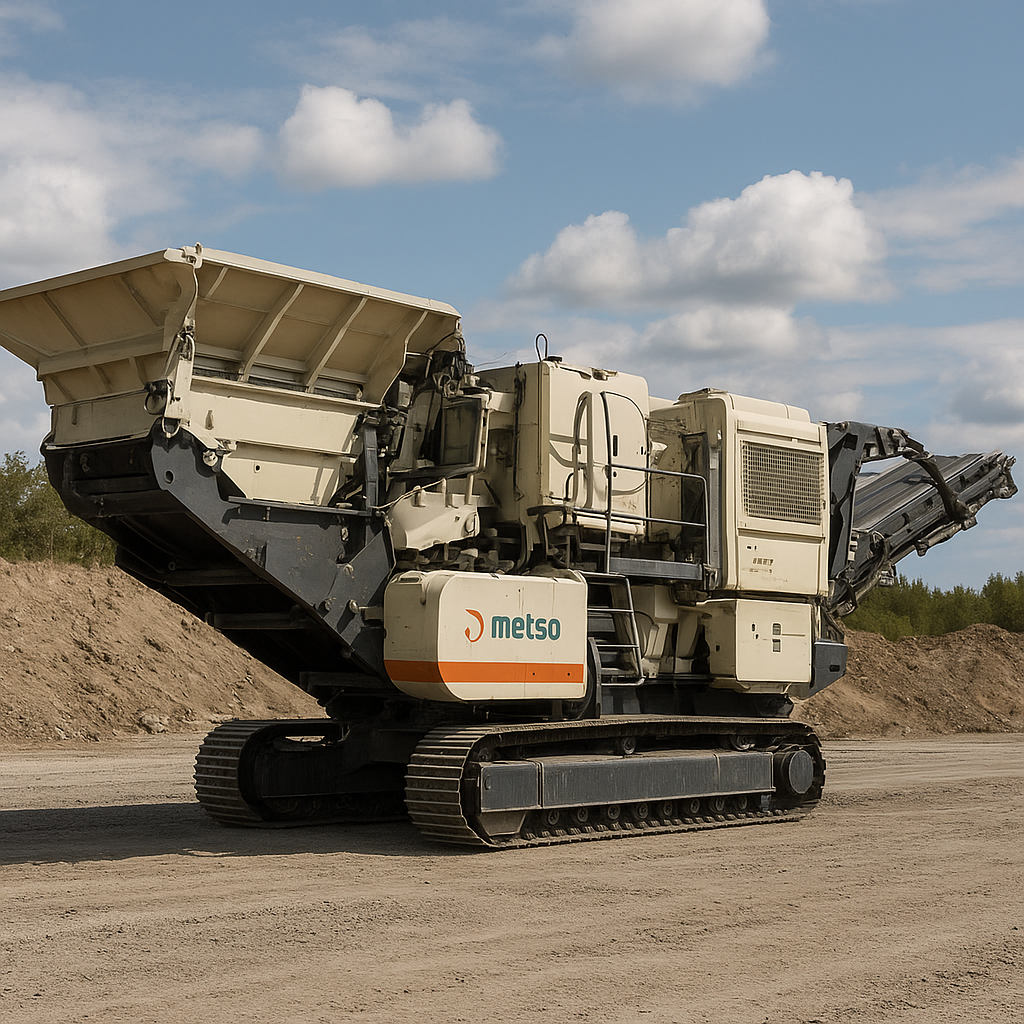
The Metso Lokotrack LT1213 is a robust and widely used tracked jaw crushing plant designed to deliver reliable primary crushing in a range of demanding environments. Built for mobility, productivity and quick setup, this machine combines the proven mechanics of a jaw crusher with a compact, road-legal tracked chassis. The LT1213 has become a workhorse in quarries, construction sites, recycling operations and smaller mining applications where a combination of mobility, durability and consistent throughput is required. Below you will find a detailed exploration of its design, applications, operational features, and practical considerations for operators and fleet managers.
Design and Core Technical Characteristics
The LT1213 is fundamentally a tracked, mobile unit that integrates a primary jaw crusher with feeder and conveyor systems on a self-contained chassis. Its design emphasizes quick relocation between sites, fast commissioning, and straightforward operation. The jaw crusher fitted on the LT1213 is engineered for heavy-duty primary crushing of abrasive and hard rock, as well as demolition and recycled concrete material.
Key components
- Crusher unit: A robust single-toggle or similar jaw crusher suited for primary crushing duties.
- Feed hopper and feeder: Large capacity hopper with hydraulic folding sides on some configurations, and a heavy-duty vibrating feeder to ensure continuous feeding.
- Conveyor system: Main discharge conveyor and sometimes side conveyors, designed to handle produced material volumes and to enable stockpiling.
- Tracked undercarriage: A crawler chassis for site-to-site mobility without the need for external transport equipment for short moves.
- Onboard power: Diesel engine(s) that power the crusher, feeders and conveyors; electrical drive options may be available for semi-permanent installations.
The model designation LT1213 suggests a crusher capable of handling a sizeable feed opening; typical configurations for this class deliver a feed opening in the vicinity of 1.2 m by 1.0–1.3 m, allowing the machine to accept large lumps of raw material. Exact dimensions and geometry vary by the specific jaw fitted and by production year or variant.
Performance parameters (typical / approximate)
- Feed opening: approximately 1200 mm x 1000–1300 mm (model and jaw liner dependent)
- Typical production capacity: broadly in the range of 150–500 tonnes per hour, depending on feed material, selected crusher chamber, and closed-side setting
- Nominal operating weight: often reported in the 30–50 tonne range depending on configuration and optional equipment
- Installed power: diesel engine options typically vary; prime mover power often lies between 200–350 kW (depending on the year, emission standards and optional electrification)
- Mobility: crawler undercarriage for on-site movement and folding hopper/conveyor options for road transport compliance
Note: the above numbers are indicative and can vary by model variant, aftermarket modifications and site-specific choices. Exact specifications should be confirmed with the manufacturer or authorized dealer for the particular LT1213 unit under consideration.
Applications and Typical Use Cases
The LT1213 is designed for versatility in primary crushing operations and is commonly deployed where a reliable first stage of crushing is required. Its mobility and straightforward operation make it suitable for a variety of industries and situations, including:
- Quarrying: Primary reduction of blasted rock to a size suitable for secondary crushing or direct sale as coarse aggregate.
- Construction and road building: On-site crushing of oversize material to produce base course, sub-base or fill material during infrastructure projects.
- Recycling: Demolition concrete and asphalt recycling where the LT1213 can crush demolition waste into reusable aggregates, reducing material handling costs and landfill use.
- Small- to medium-scale mining: Primary crushing of ore to prepare feed for downstream crushing or milling circuits in lower-capacity operations or remote sites.
- Quarry development and contract crushing: Contract crushers and rental fleets favor the LT1213’s quick setup and mobility to move between short-term jobs.
The unit’s ability to operate autonomously (with operator control from a remote cabin or via an on-board control panel) and to be integrated into a compact crushing and screening train makes it particularly attractive for operations where footprint and logistics are constrained.
Operational Advantages and Features
The LT1213 is designed around a set of operational priorities that make it practical in fast-paced, demanding environments. Important advantages include:
- Rapid setup and teardown: Hydraulic systems for folding conveyors and hopper sections reduce the time needed to prepare the unit for transport or production.
- High uptime: Robust steel structures, easy access to service points, and straightforward wear-part replacement contribute to uptime and predictable maintenance cycles.
- Integrated feed control: Heavy-duty vibrating feeders and feed-control systems stabilize material flow to the jaw, improving crusher performance and liner life.
- Operator ergonomics and automation: Many LT1213s feature advanced control systems to monitor crusher settings, engine parameters and conveyor functions; automated tramp release systems and overload protection minimize downtime and mechanical risk.
- Transportability: The chassis and foldable components are designed to meet regional transport limits with minimal disassembly for highway moves.
Additional features often found on equipped units include remote diagnostics and fleet-monitoring capabilities, which support preventive maintenance and remote troubleshooting. These systems help operators detect trends in fuel consumption, wear-part status and production levels so that interventions can be planned rather than reactive.
Maintenance, Wear Parts and Total Cost of Ownership
Owning and operating an LT1213 implies attention to routine maintenance and an understanding of key wear items. Main wear parts include jaw plates, toggle plates, crusher bearings, feeder grizzly bars, conveyor belts and idlers. Effective maintenance practices and good site management can extend component life and reduce the total cost of ownership.
Maintenance best practices
- Establish a scheduled greasing and lubrication program for crusher and feeder bearings.
- Monitor jaw plate wear and rotate or replace liners before performance falls below acceptable levels.
- Check and adjust the crusher’s closed-side setting (CSS) as necessary to maintain product size and to avoid overload.
- Maintain conveyor belt alignment, cleanliness and tracking to prevent premature wear and conveyor-related downtime.
- Use dust suppression and correct screening to limit abrasive dust ingress to mechanical components.
When comparing machines for purchase or rental, consider not only the capital cost but also the following lifecycle factors: parts availability, dealer network and support, expected liner life under your material, fuel consumption and resale value. A well-supported LT1213 with accessible spare parts and an experienced maintenance crew will often deliver a lower per-tonne cost than a cheaper-but-less-supported alternative.
Safety, Environmental and Regulatory Considerations
The LT1213 is typically equipped with features that enhance safety on site: emergency stop systems, guarding around moving parts, safe access ladders and platforms, and clear sightlines for operator stations. Because it is often used in environmentally sensitive or urban-adjacent sites, environmental controls are also important.
- Noise reduction: Modern units incorporate mufflers and acoustic enclosures where feasible; add-on acoustic screens and careful site placement further limit noise impact.
- Dust control: Water spray bars, dust suppression systems and enclosed conveyors help reduce airborne dust emissions during crushing operations.
- Fuel and emissions: Engine choices and after-treatment systems impact fuel efficiency and compliance with local emissions regulations (Tier/Stage standards). Electrification options can reduce local emissions and operating costs where grid power is available.
- Site safety: Proper guarding, lock-out/tag-out procedures during maintenance and clearly marked exclusion zones around conveyors and the crusher discharge are essential.
Operators should assess local regulatory requirements for emissions, noise and dust prior to deployment and implement mitigating measures as necessary.
Market Adoption, Variants and Practical Examples
The Lokotrack series, including the LT1213, has been widely adopted by rental companies, quarries and civil contractors. Its adaptability to different work patterns—rental short-term jobs, permanent installations, or as part of a modular crushing train—makes it a common sight in many regions.
Variants and optional equipment
- Pre-screen modules to remove fines before the crusher, improving throughput and product gradation.
- Extended conveyors for larger stockpiles or to integrate with downstream screens and conveyors.
- Electric drive packages for reduced fuel consumption and lower onsite emissions where electrical supply is practical.
- Different jaw chamber profiles and liners suited to concrete recycling, soft stone aggregate or highly abrasive rock.
Real-world examples of LT1213 deployment include contract crushing on urban demolition sites where the machine’s compact footprint and relatively low noise profile enable operation close to populated areas, and rapid-response quarries where the machine is moved between blast sites to reduce hauling of oversized rock. Rental fleets also favor the LT1213 due to its broad applicability and ease of transport.
Statistics and Performance Indicators
While fleet- and site-specific factors strongly influence measured performance, some industry-reported indicators can help assess expected results from an LT1213-class mobile crusher:
- Average production: Many operators report practical production figures in the range of 150–350 tonnes per hour on typical aggregate materials under normal operating conditions. Peak rates may be higher with optimal feed and a well-selected jaw profile.
- Fuel consumption: Typical on-site fuel burn can vary widely based on engine size and workload; commonly observed ranges for comparable mobile primary crushers are on the order of 15–40 liters per hour during continuous operation.
- Availability: With proper maintenance, experienced operators report availability in excess of 85–90% for rental fleets—downtime is often driven by wear-part changeover and scheduled maintenance windows.
- Resale and lifecycle: Well-maintained LT1213 units retain significant resale value due to strong demand in used equipment markets, particularly where service history and parts availability are documented.
These figures are indicative and should be used as a planning guide rather than guaranteed outputs. Material hardness, feed gradation, operator skill, and plant configuration are primary determinants of achievable throughput and consumption.
Practical Considerations When Choosing an LT1213
Choosing an LT1213 or similar mobile jaw plant should be driven by an assessment of your site’s production goals, material characteristics and logistic constraints. Key considerations include:
- Material type: Hard, abrasive rock will increase wear costs and may reduce throughput compared to softer materials.
- Desired product size and subsequent processing: If the primary product needs to be close to final gradation, a larger crushing circuit or additional screening will be required.
- Mobility needs: Frequent site-to-site moves favor tracked units with hydraulic folding components for quick setup.
- Service and spare parts: Access to a local dealer or certified service provider shortens downtime and supports long-term ownership.
- Emission and noise restrictions: Match engine and muffler options to local regulations or consider electric options where available.
For contractors who require flexibility, the LT1213 strikes a balance between capacity and mobility. For permanent high-capacity quarry operations, larger fixed installations may offer lower per-tonne operating costs, but they lack the mobility that is a core advantage of the LT1213.
Summary
The Metso Lokotrack LT1213 is a compelling choice for operations needing a dependable, mobile primary crushing solution. It combines the ruggedness of a proven jaw crusher with features that support rapid deployment, relatively simple maintenance and integration into mobile crushing trains. Its strengths lie in its versatility, user-friendly maintenance access, and the ability to operate in diverse applications from quarrying to recycling.
When planning for acquisition or rental, evaluate the specific feed material, production targets and site constraints. Confirm the precise technical specifications for the LT1213 variant you intend to use, and coordinate with suppliers for the most appropriate liner profiles, engine options and auxiliary equipment. With proper selection, operation and maintenance, the LT1213 can be a high-performing asset that delivers reliable production in challenging environments, while supporting efficient fleet management and competitive lifecycle costs.
Metso and Lokotrack LT1213 remain recognized names in mobile crushing. For accurate, up-to-date technical data and options, consult the manufacturer’s documentation or an authorized dealer to match the machine configuration precisely to your needs. The balance of mobility, automation features and practical engineering make the LT1213 an enduring choice in the realm of mobile crusher solutions, especially where rapid redeployment and dependable primary crushing are required. Key operational components to review before purchase include the feed hopper, jaw chamber size and the crusher’s feed opening, since these directly influence achievable throughput and final product quality.
)
)