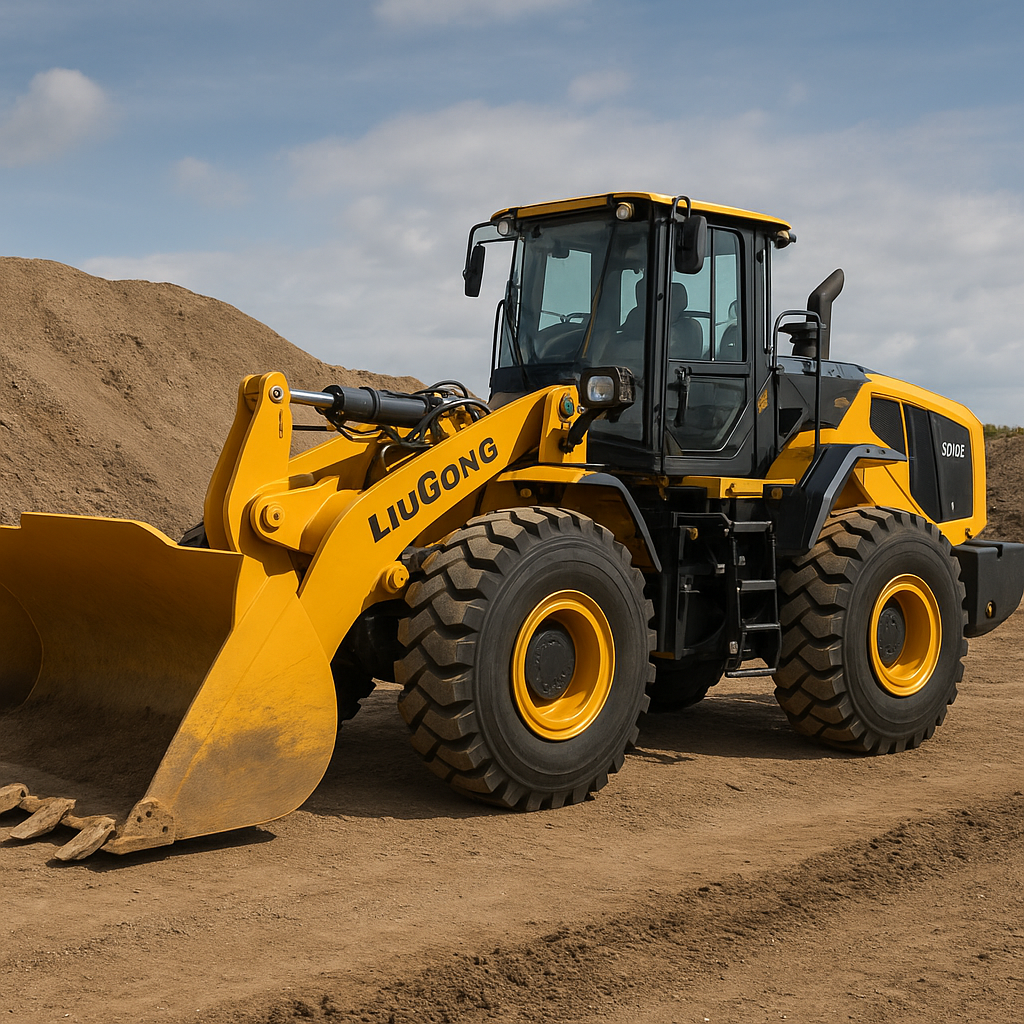
The LiuGong 888H is a heavy-duty wheel loader designed for demanding material-handling tasks across construction, quarrying, mining, ports and industrial yards. Combining robust mechanical components, operator comfort features and flexible attachment options, this model aims to deliver high productivity, durability and manageable lifecycle costs. The following article explores the machine’s typical specifications, common applications, technical highlights, maintenance considerations and tips for maximizing performance in different working environments.
Overview and key characteristics
The LiuGong 888H sits in the larger class of wheel loaders, sharing design priorities common to machines that must move large volumes of bulk material quickly and reliably. Its architecture typically includes a heavy-duty frame, articulated steering, an efficient drivetrain and a reinforced Z-bar or integrated linkage for strong lifting and breakout force. Control ergonomics and visibility are optimised to support long shifts and complex loading cycles.
- LiuGong engineering emphasizes a balance of cost-efficiency, serviceability and robust component selection.
- The 888H is commonly specified with emission packages that meet regional standards (Tier/Stage/Euro equivalents) depending on market and model year.
- Usability features such as climate-controlled cabins, intuitive joysticks and electronic monitoring systems are often included to improve operator effectiveness and reduce fatigue.
Typical specifications and performance figures
Exact figures vary by configuration, engine choice, local emissions controls and optional packages. The values below represent typical or commonly quoted ranges for the 888H family in many markets. Use these as a guideline and confirm with the vendor or original equipment documentation for any purchase decision.
- Operating weight: approximately 18,000–22,000 kg (typical range depending on counterweights and attachments)
- Engine power: roughly 190–260 kW (260–350 hp) depending on specific engine and tuning
- Rated bucket capacity: generally 3.5–6.0 m3 (varies by material density and application)
- Breakout force: commonly in the region of 150–220 kN (varies with linkage and bucket choice)
- Maximum travel speed: about 35–45 km/h (transport speed depending on axle ratio)
- Fuel consumption: typical working consumption often between 15–35 L/h depending on load and cycle intensity
- Dump height and reach: industry-typical lifting geometry allowing effective truck loading in the same size class as comparable 20-ton loaders
Note: the ranges above reflect typical build options and may be different for specific sub-models, regional variants or machines fitted with heavy-duty packages. Always verify exact numbers for a given serial number or spec sheet.
Primary applications where the 888H excels
The LiuGong 888H is particularly effective in operations demanding high material throughput and the ability to withstand abrasive or heavy loads. Typical applications include:
Quarrying and aggregates
- Loading haul trucks, hopper feeding for crushers and short-haul stockpile management.
- Large bucket options and high breakout force make it effective when handling dense stone and gravel.
Open-pit mining (support and secondary haulage)
- Used as site loaders for transferring blasted material to crushers or processing areas.
- Strength and durability in hydraulic and undercarriage components are critical for abrasive, high-cycle work.
Construction and civil engineering
- Site preparation, backfilling, roadbase handling and material placement for large projects.
- Fast cycle times and flexible attachments (forks, buckets, rakes) increase versatility.
Ports and bulk materials
- Handling bulk cargoes—coal, fertilizer, scrap—or loading/unloading material from ships and barges.
- Wheel loaders like the 888H provide mobility and reach for stockpile management where excavators might be impractical.
Industrial yards and recycling
- Working in scrap yards, recycling facilities and biomass handling, where heavy-duty frames and robust hydraulic systems reduce downtime.
Design features and technical highlights
Several design aspects enable the 888H to perform reliably in tough environments. Highlights commonly found on this model include:
- Engine options optimized for torque at low rpm to deliver strong lugging capacity and fuel efficiency under heavy loads.
- Heavy-duty axles and reinforced final drives designed to tolerate high impact loading cycles and reduce wear.
- Advanced hydraulic systems with load-sensing pumps or prioritized flow control to balance lift and tilt functions while maintaining smooth operation.
- Durable cooling packages sized for continuous heavy-duty use in hot climates or dusty conditions.
- Cabin features: ROPS/FOPS protection, air suspension seats, HVAC, and visibility-enhancing glazing and camera options for safer operation in congested sites.
- Transmission: powershift multi-speed transmissions with torque converters that are selected to balance tractive effort and travel speed.
Attachments and customization
A major strength of the wheel loader platform is attachment versatility. Typical compatible attachments for the 888H include:
- General-purpose and heavy-duty buckets (with bolt-on teeth or cutting edges)
- High-capacity buckets for low-density materials
- Forks and pallet forks for container and logistics work
- Grapples and rock buckets for logging, demolition and scrap handling
- Snow blades and sweepers for municipal or winter maintenance
- Quick couplers to minimize downtime when switching tools
Operational performance and productivity considerations
Maximising the 888H’s value focuses on matching machine specification to the job and following practices that improve cycle efficiency and reduce costs per tonne:
- Choose the correct bucket size and fill strategy: over-sized buckets on dense materials reduce effective cycles per hour; under-sized buckets increase cycle frequency and fuel per tonne.
- Optimize engine and hydraulic cruise settings for consistent load cycles—many machines have electronic controls or ECO modes to reduce fuel burns during light duty.
- Maintain proper tire specification and pressure—incorrect tires or pressures increase rolling resistance and fuel consumption, and can reduce traction in soft ground.
- Train operators in smooth hydraulic control, reduced idle time and correct loading techniques to increase life of driveline components and cut fuel costs.
Maintenance, serviceability and total cost of ownership
Long-term ownership costs are heavily influenced by maintenance practices and the availability of parts and service. The 888H was designed with serviceability in mind, but best results come from a proactive regime:
- Regular inspection of hydraulic hoses, fittings and cylinders for wear or leaks prevents sudden failures on site.
- Scheduled oil and filter changes for engine, transmission and hydraulics according to operating hours—frequent dust and heat can require accelerated intervals.
- Greasing pivot points and checking cutting edges and bucket teeth reduces stress on boom and linkage structures.
- Cooling system maintenance: clean radiators and check fan drives to prevent overheating, especially in dusty or hot environments.
- Monitor fuel and air filters—dirty filters reduce engine power and increase fuel consumption.
Key serviceability choices that influence uptime:
- Accessible service points and grouped filters reduce routine service time.
- Onboard diagnostics and telematics (if fitted) allow trend-based maintenance and remote health monitoring to predict failures.
- Availability of OEM parts and regional dealer support directly affects repair lead times and machine availability.
Safety and operator comfort
Wheel loader safety extends beyond structural protections to include systems and human factors:
- ROPS/FOPS certified cabins protect against rollovers and falling objects.
- Good visibility to the bucket and blind-spot awareness systems reduce collision risks in busy yards.
- Operator aids like load meters, rearview cameras and stable ride features support safer, more efficient operation.
- Climate control and ergonomic seating reduce fatigue and contribute to consistent performance over long shifts.
Environmental and emissions considerations
Engines for the 888H are offered in versions compliant with various emissions regulations (local Tier or Stage requirements). Mitigation measures commonly used include:
- After-treatment systems such as diesel particulate filters (DPF) and selective catalytic reduction (SCR) where required;
- Engine tuning and exhaust gas recirculation (EGR) strategies to meet NOx and particulate regulations;
- Fuel-efficient drivetrains and hydraulics designed to lower CO2 per tonne moved.
Incorporating telematics and idle-reduction policies can materially reduce the overall environmental footprint of operations by lowering fuel use and unnecessary idling.
Buying new vs. used and lifecycle notes
When considering a purchase, evaluate total lifecycle cost rather than only upfront price. Key questions and analysis points include:
- Operating hours and maintenance history for used units—heavy abuse or poor maintenance will increase near-term rebuild costs.
- Availability and cost of spare parts in your region—some older or region-specific variants can have longer lead times.
- Resale trends: machines from large manufacturers with global dealer networks often maintain stronger residual values.
- Typical lifespan for a well-maintained loader in heavy-duty applications can be measured in tens of thousands of hours; major components like engines and transmissions may require rebuilds or replacements during this life depending on duty cycles.
Practical tips for operators and fleet managers
- Match bucket size and material density to optimize fill factor and reduce cycle count.
- Use telematics where available to measure fuel burn per tonne and idling duration; these KPIs guide operator coaching and operational changes.
- Plan preventive maintenance during scheduled downtime windows to avoid production interruptions.
- Keep a local stock of high-wear consumables (teeth, cutting edges, filters) to minimize downtime in remote locations.
- Consider installing protective guarding or rock shields in extremely abrasive environments to prolong component life.
Conclusion — where the 888H brings the most value
The LiuGong 888H is a rugged, high-capacity wheel loader well-suited to large-scale material handling in quarries, heavy construction, bulk material yards and mining support roles. Its advantages are greatest when the machine is properly matched to the material type and duty cycle, supported by regular maintenance and skilled operators. For businesses that require a balance of strong lifting capability, flexible attachment options and manageable operating costs, the 888H is a compelling option in its class.
For specific purchase decisions, always request the exact specification sheet for the serial number or factory build, confirm emission compliance for your region and obtain fuel-usage data for the duty cycles you expect to run. This ensures the equipment choice aligns with both the operational demands and long-term cost targets of your operation.
)
)