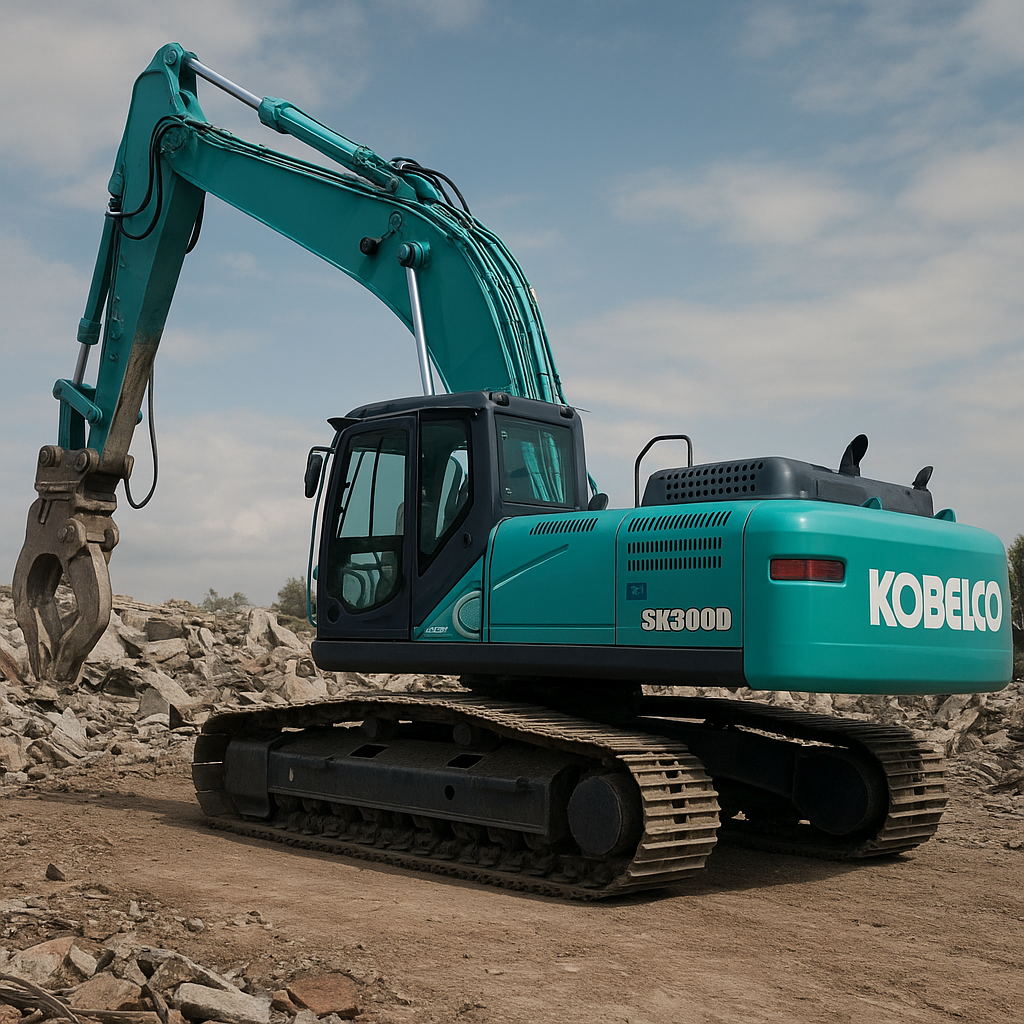
The Kobelco SK300D configured as a demolition or material handler is a versatile, heavy-duty machine that bridges the gap between midsize excavators and specialized handling equipment. Built on a proven Kobelco excavator platform, the SK300D versions offered for demolition and material handling are adapted with reinforced structures, extended booms or grapples, and a range of dedicated attachments to meet demanding urban demolition, recycling, scrap handling, port operations, and industrial dismantling tasks. This article explores the SK300D’s design, typical specifications, practical applications, safety and maintenance considerations, and market factors relevant to buyers and operators.
Overview and development of the SK300D as a demolition/material handler
The Kobelco SK300D began life as part of Kobelco’s line of durable, medium-to-large excavators aimed at construction and earthmoving. The SK300 series sits in the roughly 30-ton class of machines, a sweet spot for contractors who need substantial power and reach without the footprint and transport complexity of larger class machines. As demolition and material recovery sectors grew, manufacturers and equipment modifiers adapted standard excavator platforms like the SK300D into specialized material handlers and demolition units.
Key adaptations that transform an SK300D from a general excavator into a demolition/material handling machine include:
- Extended or specialized booms and sticks to increase reach and access.
- Reinforced undercarriage and upper structure for different stress profiles.
- Attachment-ready hydraulic systems for grapples, shears, magnets, and pulverizers.
- Operator protection and enhanced visibility packages for hazardous work zones.
These changes preserve the core advantages of the SK300D—reliability, robust hydraulics, and a compact-enough transport footprint—while optimizing performance for demolition and material handling tasks.
Design, features and technical characteristics
Platform and structural reinforcements
Converting an SK300D into a demolition or handling machine often involves adding structural reinforcements to the boom, arm, and upper frame to cope with different load paths, shocks, and side loads that come from using long-reach booms and heavy attachments. Counterweights may be increased and the slew system may be upgraded to maintain rotational control and stability under eccentric loads.
Engine, hydraulics and power management
SK300D models intended for heavy-duty material handling typically retain the OEM diesel engine but may be tuned or paired with upgraded hydraulic pumps and circuits to support high-flow attachments. As a guideline (actual figures vary by year, market and configuration):
- Operating weight: approximately 28,000–33,000 kg (counterweight and attachments alter this).
- Engine power: roughly 170–200 hp (127–150 kW), depending on emission stage and market.
- Hydraulic system: high-flow circuits capable of powering large grapples, magnets, and shears; main system pressures typically in the 280–350 bar range on modern excavators.
- Typical fuel consumption: broadly 10–20 L/h in working conditions; heavy handling cycles and attachments increase consumption.
Manufacturers and upfitters often add additional hydraulic lines, quick connectors, and control valves to allow for rapid swapping of attachments while maintaining optimal flow and pressure for each tool.
Attachments and tooling
A major strength of the SK300D as a demolition/material handler is its compatibility with a wide array of attachments:
- Grapples (demolition, sorting, orange-peel) for scrap, waste and recyclable material manipulation.
- Hydraulic shears and concrete pulverizers for structural demolition and steel cutting.
- Hydraulic thumbs and clamshells for precise material handling.
- Electromagnets for scrap yards and port handling of ferrous steel.
- Sweeps and crushers for multi-stage processing at demolition sites.
Attachment selection is critical: it determines cycle times, fuel use, and the effective productivity of the machine. Many owners standardize on a set of quick-coupler equipped attachments to switch tasks rapidly on site.
Cabin, controls and operator comfort
Given the long shifts and precision work required in demolition and material handling, the SK300D’s cab is often fitted with enhanced comfort and safety features: improved seating, joystick controls with multiple function mapping, 360-degree camera packages, and climate control. Reinforced glass, FOPS/ROPS protection and additional guarding are common to protect the operator from falling debris. Upgraded control electronics enable smoother, predictable hydraulic response—important for delicate sorting tasks.
Typical applications and industry use-cases
The SK300D configured for demolition/material handling is used across multiple industries where reach, strength and maneuverability matter. Primary application areas include:
- Building demolition: Carefully deconstructing structures in urban environments where controlled dismantling is necessary to protect neighboring buildings and utilities.
- Recycling and waste recovery: Sorting mixed demolition waste, separating materials for recycling, and feeding processing lines.
- Scrap yards and metal handling: Lifting, rotating and placing scrap bundles; paired with magnets and heavy grapples.
- Ports and bulk material handling: Transloading steel, rebar bundles and scrap from ships to yard areas.
- Industrial plant dismantling and retrofit: Safe removal of equipment, conveyors and structural elements within constrained spaces.
- Bridge and civil infrastructure removal: Segmental demolition where reach and precise placement are critical to avoid damaging adjoining structures.
Across these use-cases, the SK300D’s balance of power, reach and transportability allows contractors to apply a single chassis to many jobs, reducing capital expense relative to owning separate specialized machines.
Performance, operational statistics and real-world metrics
While exact numbers vary by configuration and task, operators and fleet managers consider several key metrics when measuring SK300D performance in demolition and handling roles:
Lift capacity and reach
With long-reach booms, the machine’s lifting capacity at extended radii decreases significantly compared to standard excavator arms. Typical long-reach setups on a 30-ton class machine will have:
- Maximum reach: approximately 9–12 meters or more, depending on boom length.
- Lift capacity at maximum reach: often limited to a few hundred kilograms to a couple of tons depending on counterweight and boom geometry.
Cycle times, throughput and productivity
Productivity in demolition and material handling is measured in throughput—tons per hour processed, number of pieces sorted, or linear meters of structure removed per shift. Typical throughput figures depend dramatically on attachment choice and operator skill, but experienced teams using an SK300D with optimal attachments can achieve:
- Scrap handling: several tens to hundreds of tons per shift in a well-run yard.
- Demolition: removal rates vary widely—small buildings may be deconstructed at rates of tens to hundreds of square meters per day depending on complexity.
Fuel and operating cost considerations
Running costs depend on many variables: duty cycle, idling time, attachment drag, and maintenance regime. Operators commonly observe:
- Fuel burn between 10–20 L/h under typical handling loads; heavy demolition tasks or continuous lifting increases consumption.
- Major component lifetimes (engine, hydraulic pumps) in the tens of thousands of hours with proper maintenance; heavy-duty demolition use accelerates wear.
Lifecycle cost models frequently indicate that a well-maintained SK300D converted for handling/demolition duties remains economically viable for many years, particularly when attachments extend the machine’s usefulness across multiple job types.
Safety, maintenance and lifecycle management
Safety and upkeep are paramount when operating an SK300D in demolition and scrap handling contexts. The working environment poses risks from falling debris, unstable material, and heavy lateral loads. Addressing these risks involves machine design and operational discipline.
Safety features and recommended additions
- FOPS/ROPS cabin and heavy-duty guarding to protect operators from falling objects.
- High-visibility cameras and sensor packages to eliminate blind spots during material sorting.
- Emergency-stop and lockout systems for quick isolation of hydraulic circuits during maintenance.
- Load-management systems and limiters to prevent overreach and tipping when lifting eccentric loads.
Maintenance practices
Regular preventive maintenance extends service life and maintains safety:
- Daily inspections: hydraulic lines, quick fittings, wear points, track tension, and attachment integrity.
- Frequent lubrication of pins and bearings; demolition use increases frequency requirements.
- Hydraulic oil and filter replacement schedules that reflect heavy-duty cycles—shorter intervals than earthmoving-only duty.
- Monitoring electronic fault codes and performing timely repairs to prevent cascading damage.
Major structural inspections—Boom and arm fatigue checks, weld integrity checks, and frame alignment—should be scheduled regularly. For high-utilization fleets, non-destructive testing (NDT) on key welded areas can catch hairline cracks before they grow into critical failures.
Market considerations, buying guidance and resale value
When evaluating SK300D machines for demolition and material handling, purchasers should weigh initial acquisition cost, modification expense, expected utilization rate and residual value. Some practical tips:
- Buy a professionally converted machine or use OEM-approved modification kits to ensure structural integrity and warranty compliance where applicable.
- Consider renting specialized attachments rather than buying them outright if the use-case is intermittent.
- Track hours and maintenance stringently: well-documented service history significantly improves resale value.
- Inspect for signs of attachment misuse—shear jaws, grapple linkages and boom tips show the earliest signs of harsh handling.
Resale values for 30-ton class machines like the SK300D remain healthy in markets with strong construction and recycling activity. The flexibility of a material handler/demolition configuration often adds value compared to a basic excavator package, because prospective buyers can immediately deploy it to handling and demolition tasks without substantial retrofits.
Operator tips and best practices
Experienced operators extract the best productivity and longevity from SK300D machines by focusing on four areas:
- Attachment selection: Match the tool to the job carefully; oversized shear heads or undersized grapples reduce cycle efficiency and increase fuel burn.
- Idle management: Minimize unnecessary idling which wastes fuel and increases operating hours without productive output.
- Balanced loading: Keep loads centered and transact lifts within rated charts whenever possible to preserve stability and reduce stress on pins and bearings.
- Operator training: Skilled operators reduce cycle times, extend component life, and maintain safer job sites. Training on hydraulic flow control and multi-function operation yields immediate productivity gains.
Small operational changes—like pre-planning material sorting sequences and staging tools for rapid swaps—can significantly increase throughput without hardware changes.
Summary and practical conclusions
The Kobelco SK300D in demolition/material handler guise offers a compelling balance of power, flexibility, and durability for contractors and recyclers operating in environments that demand both reach and precision. While exact performance and specifications depend on the chosen configuration and attachments, the general profile is that of a roughly 30-ton class machine with sufficient engine power to drive large hydraulics, adaptable to grapples, shears, magnets and other tools.
Success with an SK300D-based handler depends on careful selection of attachments, rigorous maintenance, and operator skill. When these elements align, the machine can provide strong throughput in scrap yards, demolition sites and material handling operations, while preserving resale value and delivering a favorable lifetime cost of ownership. For companies seeking a single platform to handle multiple tasks—from controlled demolition in tight urban zones to high-volume sorting in recycling yards—the SK300D is a practical and proven option.
)
)