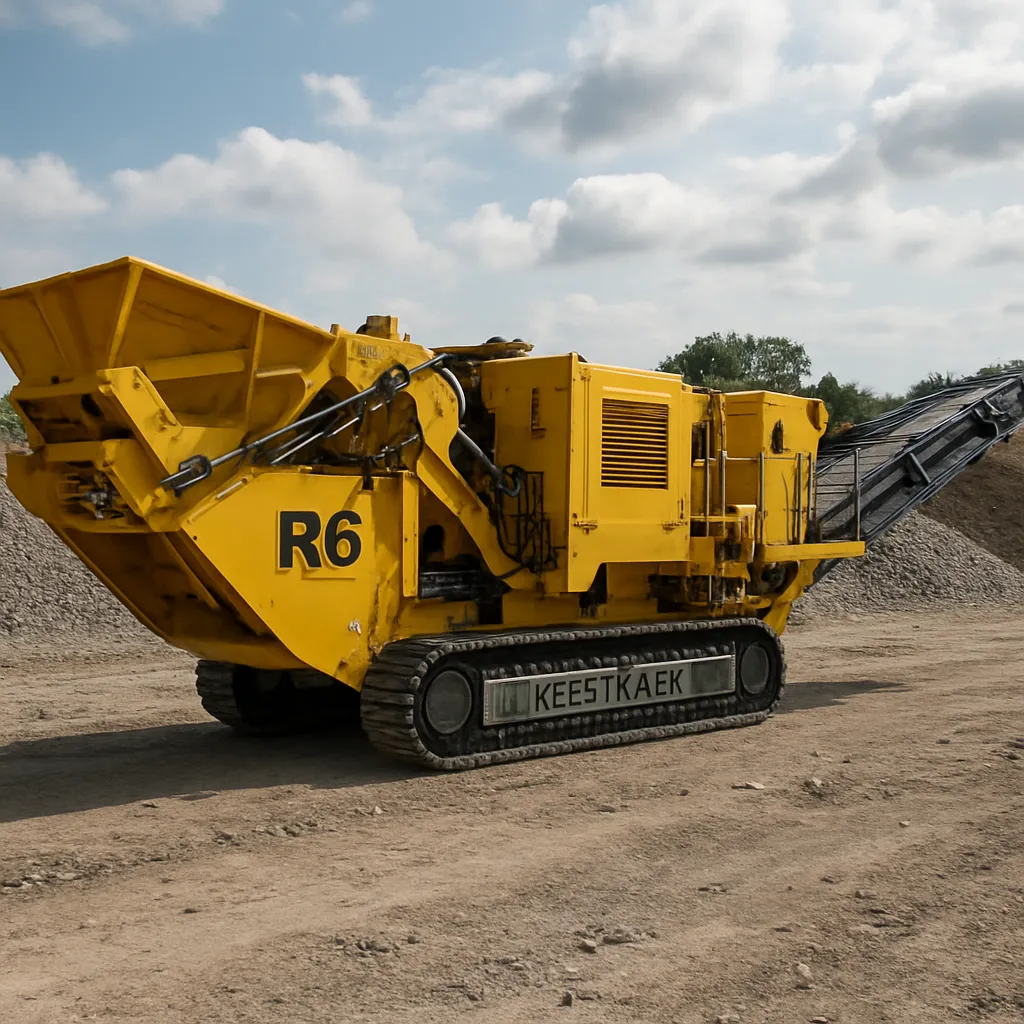
The Keestrack R6 is a versatile, track-mounted mobile crusher designed to meet the needs of modern aggregate production, recycling and demolition projects. Combining compact dimensions with robust crushing technology, it is engineered to perform reliably on-site while offering fast setup and easy transport between jobs. This article outlines the design and capabilities of the Keestrack R6, examines its practical applications, provides operational and maintenance guidance, and offers contextual information about its performance and economic impact.
Overview and design
The Keestrack R6 is part of the R-series mobile crushers, aimed at contractors and quarry operators who require a flexible solution for primary and secondary crushing. At its core is an impact-crushing unit that reduces material by high-speed impact, producing a controlled, cubical product suitable for various applications. The machine is built on a tracked chassis to allow easy mobility on rugged construction sites.
- Compact footprint and rapid set-up: the R6 is designed for quick deployment and minimal site preparation.
- Modular configuration: options for different feed hoppers, conveyors and screening units allow adaptation to specific tasks.
- Operator ergonomics: modern control systems and remote-control options simplify operation and monitoring.
- Robust construction: heavy-duty components and reinforced wear areas extend service life in demanding conditions.
The impact crusher design typically includes a high-speed rotor with exchangeable blow bars, adjustable feed systems and a selection of aprons/counterblow plates to tune product shape and size. Many R6 installations offer optional pre-screening (to remove fines before crushing) and post-screening modules to produce graded fractions on-site.
Applications and typical use cases
The Keestrack R6 is suitable for a wide variety of materials and operational contexts. Its combination of mobility and robust crushing performance makes it a preferred choice for projects that require on-site processing or rapid changes between locations.
Primary and secondary crushing in quarries
- Processing river gravel, blasted rock and hard limestone to produce aggregate fractions for concrete and asphalt.
- Creating a cubical product that improves concrete workability and paving layer compaction.
Recycling and demolition
- Crushing reinforced concrete, brick, asphalt and demolition waste to recover reusable aggregates.
- On-site crushing reduces the need to haul bulky waste off-site, cutting transport costs and emissions.
Road building and infrastructure projects
- Producing sub-base and base materials directly at the jobsite.
- Handling recycled asphalt pavement (RAP) when equipped with appropriate wear materials and screening.
Specialized tasks
- Military engineering, mining support and disaster-response tasks where mobility and rapid setup are crucial.
- Small to medium-scale contractors who need a flexible single-unit solution capable of different duties.
The machine’s versatility means it is often used where a balance between performance, portability and ease of maintenance is required.
Technical characteristics and performance
Performance of the Keestrack R6 depends on the engine and rotor configuration, feed material characteristics and circuit layout (with or without prescreening or recirculating systems). Below are typical technical characteristics and performance ranges that are representative of machines in this class. Exact specifications vary by build year and optional equipment.
- Throughput: Typical production rates range from approximately 150 to 300 tonnes per hour (tph), depending on material hardness, feed size and desired final product.
- Feed size: The crusher can accept feed sizes commonly in the range of 200–800 mm, depending on configuration and whether pre-scaling is used.
- Final product grading: Adjustable by rotor speed, blow bar type and gap settings to produce a variety of fractions from coarse aggregates to screened sands.
- Drive options: Available with diesel-hydraulic drives, and on some models optional hybrid or electric-drive systems that reduce fuel consumption and emissions when connected to a grid or a battery source.
- Mobility: Track-mounted undercarriage provides good site access; transport dimensions are compact enough for easy road towing with appropriate permits.
Manufacturers like Keestrack design these machines to be resilient with standardized wear parts to simplify maintenance. Key wearing components include blow bars, aprons and bearings. The rotor system is engineered for structural balance and ease of replacement.
Operational advantages and key features
The R6 offers several operational benefits that make it attractive for many site managers and contractors:
- On-site productivity: By crushing material at the point of origin, customers drastically reduce haulage volumes and associated costs.
- Fast mobilisation: Low setup time and compact transport dimensions minimize downtime between sites.
- Modular adaptability: choose between direct feed or fed via a tracked or wheeled feeder, add pre- or post-screening modules to optimize output.
- Advanced control systems: user-friendly PLCs and remote-control functionalities support quick adjustments and diagnostics, improving uptime.
- Environmental management: optional dust-suppression systems and emissions-reducing drives lower environmental footprint on urban or restricted sites.
These advantages translate into practical benefits: operators can scale production quickly, adjust product grading to market demands and reduce operating costs through improved fuel economy and reduced wear.
Maintenance, wear parts and lifecycle considerations
Proper maintenance is essential to maximize the lifespan and cost-effectiveness of the Keestrack R6. Regular inspection and timely replacement of wear parts keep productivity high and prevent unplanned downtime.
Routine maintenance tasks
- Daily visual checks: belts, conveyors, hydraulic lines and screening media.
- Lubrication schedule: bearings and articulated joints require grease at manufacturer-recommended intervals.
- Blow bar and apron inspection: replace when worn to maintain product shape and protect rotor components.
- Cleaning: remove fines and trapped material from chutes and screens to prevent clogging and uneven feed.
Wear parts and consumables
Wear parts represent a significant portion of ongoing costs. Typical consumables include blow bars, impact aprons, conveyor belts, screen panels and hydraulic hose assemblies. Many operators maintain an inventory of common spare parts to reduce downtime. Choosing the right blow bar material (e.g., manganese steel vs. alloyed castings) and screen media depending on material type will improve wear life and overall economics.
Lifecycle and resale
With consistent maintenance, mobile impact crushers such as the R6 can remain productive for many years. Resale values are supported by the machine’s reputation, modularity and the availability of parts globally. When upgrading or replacing major components, it is common to refurbish or rebuild key modules to extend service life while containing cost.
Practical advice for optimal operation
To achieve the best performance and longest equipment life from a Keestrack R6, follow these practical practices:
- Feed consistently: avoid large tramp material and reduce fines entering the chamber by using pre-screening when possible.
- Match rotor speed and blow bar type to the material: higher rotor speeds improve fineness but increase wear.
- Grade control: use adjustable conveyors and screens to manage product sizing and reduce recirculation needs.
- Monitor fuel and emissions: where available, use hybrid or electric modes on sites with power access to lower costs.
- Document maintenance: keep a log of hours, parts replaced and inspections to schedule preventive maintenance efficiently.
Proper training for operators and maintenance personnel further reduces the risk of accidental damage and optimizes throughput and product quality.
Environmental and economic impact
Mobile crushers like the Keestrack R6 contribute to more sustainable construction practices by enabling local processing of materials. On-site crushing reduces truck movements, cutting fuel consumption and CO2 emissions. Recycling concrete and asphalt reduces the demand for virgin aggregate and lowers landfill usage.
- Economic benefits: lower transport costs, reduced gate fees for waste disposal and the ability to generate salable products directly at the jobsite.
- Environmental benefits: reduced haulage emissions, decreased need for quarrying virgin materials and better management of demolition waste streams.
In urban renovation projects or constrained sites, the R6’s compact design and optional dust-control equipment are particularly valuable for meeting regulatory requirements and minimizing neighborhood impact.
Market context and comparative notes
The mobile crusher market includes several established manufacturers, and selection depends on priorities such as capacity, mobility, cost of ownership and availability of service. The Keestrack R6 competes by emphasizing flexibility, compactness and operator-friendly features. When choosing a machine, consider:
- Throughput needs: match the unit’s capacity range to expected production volumes.
- Material characteristics: hardness and abrasiveness affect wear costs and may direct choice of blow bar material and rotor design.
- Service network: proximity of dealers and parts availability influence lifecycle costs and downtime.
Many end users evaluate total cost of ownership (TCO), factoring in fuel consumption, wear parts, servicing intervals and resale value. For operators with variable jobsites and a need for frequent relocation, track-mounted units like the R6 often present better overall value than stationary systems.
Technical summary and typical specifications (approximate)
Below is a representative summary of typical technical parameters for a machine in the R6 class. These figures are indicative and will differ based on exact model year, options and configuration.
- Approximate production capacity: 150–300 tph (depending on material and set-up)
- Typical feed size capability: up to 200–800 mm (varies by configuration)
- Drive options: diesel-hydraulic as standard; optional hybrid/electric configurations for reduced emissions
- Mobility: tracked undercarriage for on-site manoeuvrability
- Product flexibility: adjustable rotor speed, blow bar types and apron settings to tailor output
Final considerations when selecting a Keestrack R6
Choosing the right mobile crusher involves assessing site conditions, production requirements and available after-sales support. The Keestrack R6 is a robust choice for businesses that need a combination of mobility, reasonable throughput and flexibility across multiple material types. Before purchasing, consider conducting a test run with representative material to validate throughput and product quality. Review service agreements and parts availability to ensure that the machine will deliver reliable results over its lifecycle.
Well-maintained and properly configured, the Keestrack R6 enables contractors and quarry operators to reduce operating costs, improve sustainability and deliver consistent aggregate products for a wide range of construction and recycling projects. Its balance of portability and performance makes it a practical asset for many modern crushing operations.
)
)