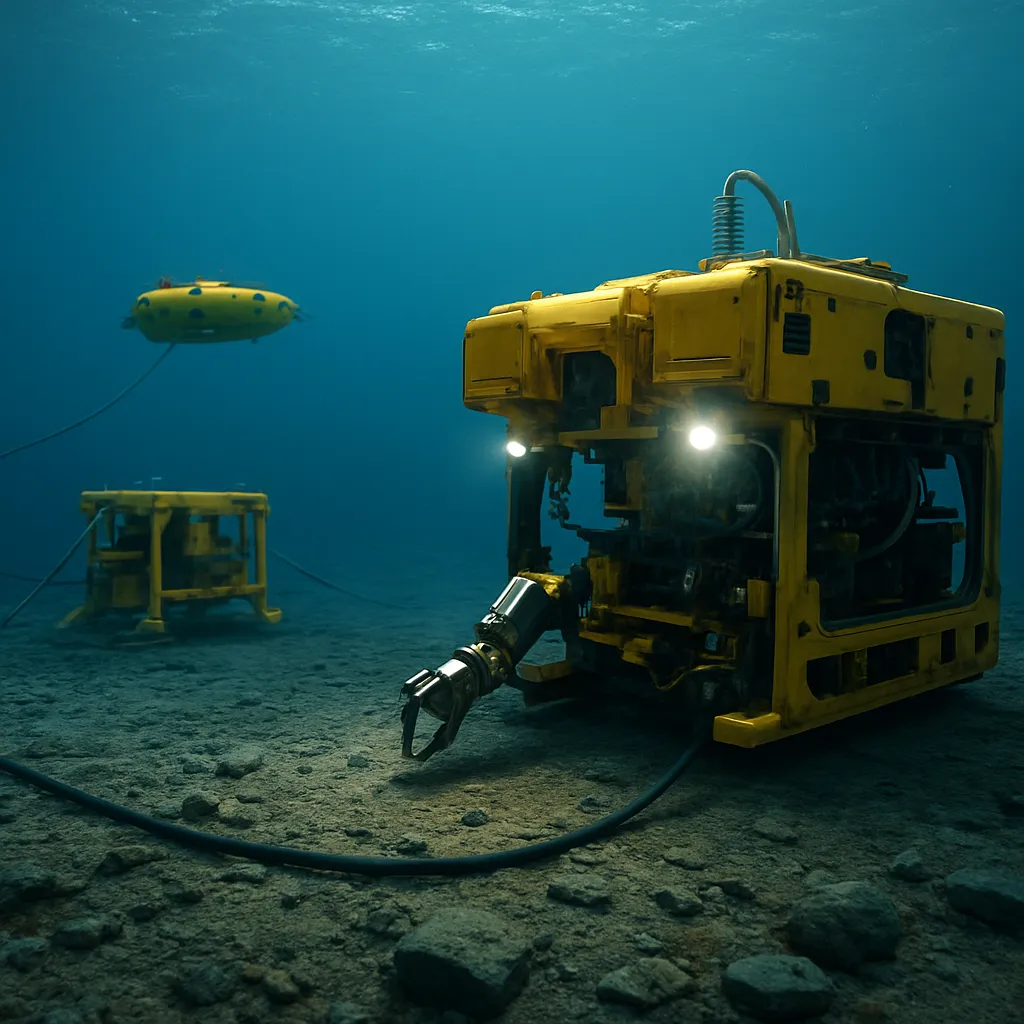
The operation of complex machines on the ocean floor represents a remarkable fusion of engineering prowess and scientific discovery. By leveraging innovation in robotics and sensors, modern subsea systems execute precise tasks at depths once thought unreachable. This article explores how these marvels of technology withstand extreme pressure, ensure safety and reliability, and pave the way for deeper exploration of the planet’s least known frontiers.
Design and Engineering of Deep-Sea Equipment
Developing machinery that can function thousands of meters below sea level requires mastery over materials, hydrodynamics, and control systems. Components must resist corrosion, handle sudden shifts in temperature, and avoid biofouling—growth of marine organisms on surfaces. Key considerations include:
- Material Selection: High-grade alloys and composite polymers deliver the durability needed to survive the pressure of the deep ocean.
- Hydraulic vs. Electric Actuation: Many systems employ hydraulics for their high power-to-weight ratio, though electric actuators are gaining ground due to improved automation and lower maintenance.
- Modular Architecture: Breaking complex systems into modules facilitates transport, assembly, and rapid repair in remote locations.
- Redundancy and Fail-Safes: Dual systems and emergency shutoff protocols prevent catastrophic failures during mission-critical operations.
In addition to raw strength, marine environment machines integrate sophisticated control algorithms, remote communication links, and real-time monitoring. Engineers simulate deep-sea conditions in pressure chambers to validate performance before deployment. Computational fluid dynamics (CFD) models help optimize shapes to minimize drag and avoid sediment disturbance.
Key Applications on the Ocean Floor
Subsea machines perform a variety of tasks that support both industrial and scientific missions. Their versatility is rooted in specialized tooling and adaptable platforms capable of switching between roles:
- Oil and Gas Extraction: Remotely operated vehicles (ROVs) and autonomous underwater vehicles (AUVs) inspect pipelines, repair wellheads, and install subsea manifolds.
- Scientific Research: Deep-diving submersibles equipped with sampling arms collect geological cores, biological specimens, and water chemistry data for climate studies.
- Renewable Energy Support: Wind farm foundations and tidal power installations require subsea construction and maintenance, tasks handled by heavy-duty trenchers and cable-laying machines.
- Underwater Mining: Emerging fields target mineral deposits such as polymetallic nodules, with robotic harvesters extracting resources while minimizing environmental impact.
Each mission demands precise control and extensive planning. Survey vehicles first map the seafloor in high resolution, identifying hazards and optimal work zones. Data from multibeam sonar and sub-bottom profilers feed into mission plans that detail trench depths, anchor placements, and excavation strategies.
Operational Challenges and Solutions
Working in the abyss presents formidable obstacles. Unpredictable currents, zero visibility, and potential entanglements with debris or marine life can jeopardize both equipment and objectives. Operators rely on a combination of real-time telemetry and advanced visualization tools to maintain situational awareness.
- Communication Latency: Signals through kilometers of water introduce delays. To counter this, AUVs often operate semi-autonomously, executing pre-programmed tasks when link quality degrades.
- Power Management: Extended missions require efficient energy storage. Battery technologies such as lithium-polymer and fuel cells provide high energy density for prolonged endurance.
- Sediment Plumes: Excavation and drilling roil fine particles, reducing visibility and clogging filters. Engineers mitigate this through low-disturbance cutting tools and localized suction systems.
- Equipment Retrieval: Lost or stuck devices represent significant cost and risk. Acoustic tracking beacons and detachable flotation modules ensure safe recovery if entrapment occurs.
Rigorous maintenance protocols and pre-deployment checklists further reduce risk. Virtual reality (VR) simulations train operators for rare emergency scenarios, ensuring swift, coordinated responses when unforeseen issues emerge.
Advances in Remote Operation and Autonomy
The convergence of artificial intelligence, machine learning, and sensor miniaturization is revolutionizing how subsea machines carry out tasks without constant human supervision. Cutting-edge developments include:
- Adaptive Path Planning: Algorithms allow AUVs to adjust routes in real time based on obstacle detection, optimizing mission efficiency.
- Machine Vision: High-resolution cameras paired with deep learning models identify objects such as pipeline anomalies or rare biological specimens.
- Swarm Coordination: Groups of micro-ROVs collaborate, distributing workloads to cover larger areas and perform simultaneous inspections.
- Self-Diagnosis: Embedded diagnostic routines detect wear or damage, alerting operators to schedule maintenance before failures occur.
This shift toward autonomy reduces dependence on surface vessels, cutting operational costs and human exposure to harsh marine weather. Researchers are also exploring energy harvesting from ocean currents and thermal gradients to power long-duration missions.
Future Trends and Emerging Technologies
The next generation of subsea machinery promises even greater capabilities. Key trends on the horizon include:
- Biomimetic Propulsion: Inspired by fish and cephalopods, new propulsion systems achieve higher efficiency and quieter movement to minimize disturbance to marine life.
- Advanced Materials: Nanocomposite coatings resist biofouling and abrasion, extending service intervals and improving reliability.
- Hybrid Underwater-Aerial Platforms: Vehicles capable of transitioning between diving and short surface flights streamline multi-environment surveys.
- Digital Twins: Real-time virtual replicas of subsea assets enable predictive maintenance and remote experimentation in virtual settings before real-world deployment.
Industry collaboration and open-source software initiatives are accelerating innovation. Universities, oceanographers, and private enterprises share data and simulation tools, fostering breakthroughs in deep-sea exploration and resource management.
Conclusion
Machines operating on the ocean floor represent the cutting edge of human ingenuity, combining automation, safety, and durability to explore and utilize Earth’s final frontier. As innovation continues to advance, subsea technology will unlock new scientific insights, sustainable energy solutions, and hidden resources, shaping the future of maritime industries and environmental stewardship.