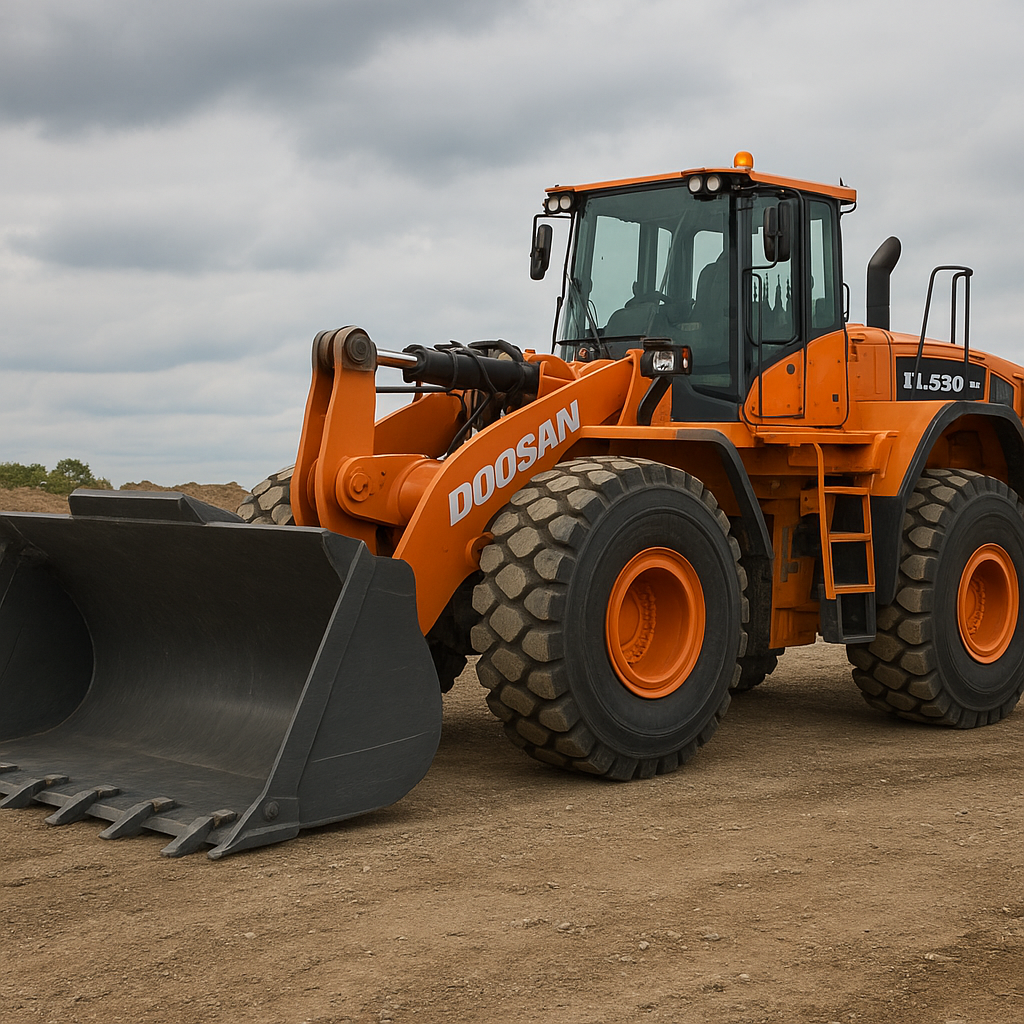
The Doosan DL580-5 is a heavy-duty wheel loader designed for demanding tasks in mining, quarrying, large-scale construction and bulk material handling. Combining robust mechanical components with modern electronics and operator-focused ergonomics, the DL580-5 aims to deliver high productivity, durability and manageable lifecycle costs in the most challenging environments. This article explores the machine’s design philosophy, technical characteristics, typical applications, maintenance considerations and practical buying advice for fleet managers and contractors.
Overview and key features
The DL580-5 is positioned in the upper segment of Doosan’s wheel loader family, intended to replace or complement similar large loaders from international manufacturers. Key attributes include a powerful driveline, a heavy-duty chassis and linkage, and spacious operator accommodations. The machine is built to move large volumes of material quickly and reliably while providing serviceability and options for customization.
- Robust frame and axles engineered for high cyclic loads and abrasive environments.
- Powerful engine tuned for torque at low rpm to maximize bucket filling and loading cycles.
- Advanced hydraulic system designed for responsive control and high breakout forces.
- Operator comfort features including climate control, adjustable seats and low-noise cab environments.
- Telematics and monitoring options for remote fleet management and diagnostic support.
Exact specifications vary with configuration, region and optional equipment. Below is a representative specification range for a typical DL580-5 configured for heavy duty work:
- Operating weight: approximately 28,000–34,000 kg (varies with counterweights and attachments)
- Engine power: roughly 300–380 kW (400–510 hp), depending on emission stage and tuning
- Bucket capacity: normally 4.5–7.5 m3, depending on material and bucket type
- Reported travel speed: up to ~40 km/h in transport configurations
- Fuel tank: commonly in the 400–700 L range
Design and performance
The DL580-5 emphasizes a balance between structural strength and serviceability. Heavy sections in the boom, linkage and loader frame are wear- and fatigue-resistant, often using thick, reinforced steel plates and replaceable wear items in high-abrasion zones. The driveline pairs a high-torque diesel engine with a robust transmission and axle set designed to withstand frequent directional changes and heavy braking loads typical in quarry and mining cycles.
Engine and emissions
Depending on market and regulatory requirements, the DL580-5 may be offered with engines that meet different emissions standards (for example, Stage IIIA / Tier 3 up to Stage IV / Tier 4 final in some regions). The machine is engineered to deliver strong low-end torque for efficient bucket fill and reduced cycle times. Fuel-saving calibrations and optional exhaust aftertreatment systems (DOC/DPF, SCR) are commonly available, allowing fleet operators to comply with local regulations while optimizing operating economy.
Transmission and drivetrain
A heavy-duty powershift or torque-converter transmission is typically used, offering multiple forward and reverse ratios to combine tractive effort with transport speed. Axles are usually full-floating, planetary design, often with optional differential locks for traction in slippery or uneven ground. Cooling systems are sized to cope with continuous heavy duty work, with engineered airflow paths and serviceable cores to minimize downtime.
Hydraulics and linkage
The hydraulic system supplies implement circuits sized for high flow and pressure to achieve quick bucket curl, strong breakout force, and smooth simultaneous operations. The linkage design—often a Z-bar or parallel linkage depending on the chosen bucket and attachment—balances digging performance and dump reach. Hydraulic quick couplers and high-flow auxiliary circuits enable rapid attachment changes and operation of tools like hydraulic breakers or grapples.
Applications and industries
The Doosan DL580-5 is suited to any task requiring the rapid movement of large volumes of loose material. Typical sectors and use cases include:
- Mining and quarrying: primary loading of haul trucks, dozer assist, stockpile reclaim and feed to crushers.
- Construction and earthmoving: heavy earth cut-and-fill, road base preparation and large-scale site clearance.
- Ports and terminals: bulk materials handling such as coal, iron ore, aggregates and fertilizers for ship or rail loading/unloading.
- Waste and recycling: handling bulky loads and organizing large static piles at landfill or recycling centers.
- Industrial sites: handling raw materials and byproducts at cement plants, steel mills and mineral processing facilities.
In mining and quarry applications, cycle time and payload are the two main performance drivers. A machine like the DL580-5 is selected when mechanical strength, large bucket capacity and the ability to work long shifts with minimal stops are priorities. For ports and terminals, robust corrosion protection and specialized buckets (rock or coal) may be specified.
Operator comfort, safety and technology
Modern Doosan cab designs focus on operator productivity through ergonomics and reduced fatigue. The DL580-5 typically offers a spacious cab with a clear sightline to the loading area, vibration-damping mounts, and well-placed controls that reduce operator movement and improve cycle consistency.
- Visibility: large glazed areas, optional rearview cameras and mirrors to enhance safety during maneuvering.
- Controls: electro-hydraulic joysticks or pilot controls for precise implement operation.
- Comfort: heated and ventilated seats, climate control, and reduced cab noise to maintain operator alertness.
- Safety: ROPS/FOPS certified structures, automatic park brakes, and optional fire suppression in high-risk environments like mining.
- Telematics: Doosan systems or third-party solutions for remote monitoring of fuel use, location, fault codes and maintenance scheduling.
Telematics can materially reduce downtime and operating costs by enabling predictive maintenance, tracking idling and inefficient usage, and streamlining parts supply to a site. For large fleets, these systems often pay back quickly through reduced unscheduled repairs and optimized machine deployment.
Maintenance, durability and lifecycle costs
Durability is a central selling point for heavy loaders. The DL580-5’s service design typically provides easy access to routine maintenance points—filters, drains, grease points, cooling cores and battery banks. This accessibility shortens service times and reduces labor costs for frequent checks.
Service intervals and consumables
Typical maintenance schedules include daily pre-start inspections, periodic oil and filter changes based on hours of operation, and major overhauls at defined life intervals. Consumable items like cutting edges, bucket teeth, hydraulic hoses and brake components are expected wear items and are designed to be quickly replaced. Using genuine parts and established service intervals increases component life and keeps resale values higher.
Fuel efficiency and operating costs
Fuel consumption for large loaders depends heavily on application, operator technique and site conditions. In heavy duty loading cycles, a machine in this class often consumes in the order of 20–50 liters per hour under continuous load; lighter duties or economy modes will lower that consumption. Total cost of ownership should include fuel, maintenance, tires, attachments, insurance and downtime risk. Many fleet managers track cost per tonne-move as the key performance indicator—optimizing cycle times, bucket fill factor and truck matching reduces that metric most effectively.
Attachments, customization and options
Flexibility is essential for maximizing equipment utilization. The DL580-5 supports a wide range of attachments and body options that adapt the machine to specific tasks:
- Bucket types: general purpose, rock/coal buckets, high-capacity light material buckets, multi-purpose or clamshell designs.
- Forks and pallet attachments: for container terminals or industrial yards.
- Grapples: for scrap handling and recycling applications.
- Cold-planer or snow removal configurations: for seasonal or specialized uses.
- Quick couplers: reduce downtime by enabling rapid swapping of tools and buckets.
Choosing the right bucket size and type is critical: oversized buckets increase cycle times due to slower fill rates and potentially overload the machine, while undersized buckets waste potential throughput. Manufacturers and dealers usually provide load-matching guidance to align bucket selection with target payloads and matched haul trucks.
Buying considerations and market data
When evaluating a DL580-5 purchase or lease, consider the following aspects:
- Application fit: ensure the machine’s bucket and breakout capacities match the intended material type and production targets.
- Operating environment: mining and coastal sites may require enhanced sealing, corrosion protection and specialized filtration.
- After-sales support: dealer network proximity, availability of parts and qualified service technicians are critical.
- Resale and lifecycle economics: machines maintained with records and genuine parts retain higher resale values.
- Financing and warranty: evaluate warranty coverage, extended service plans and telematics-enabled maintenance programs.
Market data for large wheel loaders shows that total cost of ownership is dominated by fuel and maintenance, particularly in high-utilization scenarios such as mining. Residual values depend heavily on documented service history and the degree of wear on major components. For heavy loaders in this class, depreciation over a 5–7 year service life can vary widely by region and application, but well-maintained units commonly retain a substantial portion of new-machine value when demand for used heavy equipment is high.
Real-world tips for operators and fleet managers
To maximize the productivity and longevity of a DL580-5, operators and fleet managers often follow these practical guidelines:
- Match buckets to trucks: optimize cycles by ensuring the loader’s filled bucket closely matches the haul truck’s rated payload.
- Operator training: invest in operator training to improve fill factor, reduce unnecessary idling and prevent abusive machine use.
- Monitor telematics: use data to schedule preventive maintenance, reduce fuel waste and spot trends before they become failures.
- Manage tire use: tires are a major consumable cost—selecting the right compound and managing tire pressures extends life and improves fuel economy.
- Spare parts strategy: maintain a small stock of high-wear parts (filters, seals, cutting edges) to minimize repair turnaround.
Summary and conclusion
The Doosan DL580-5 is a heavyweight contender for businesses needing reliable, high-capacity wheel loading capability. With a combination of strong structural design, a torque-focused engine, heavy-duty hydraulics and operator-oriented cab features, it suits the continuous, high-throughput demands of mining, quarrying, ports and major construction sites. While exact specifications depend on the chosen configuration and market, the machine’s strengths lie in durability, serviceability and the ability to integrate with modern telematics solutions—factors that materially reduce downtime and operating costs when properly managed.
Key advantage highlights: strong breakout power, substantial bucket volumes, enhanced operator ergonomics and telematics-enabled fleet management.
)
)