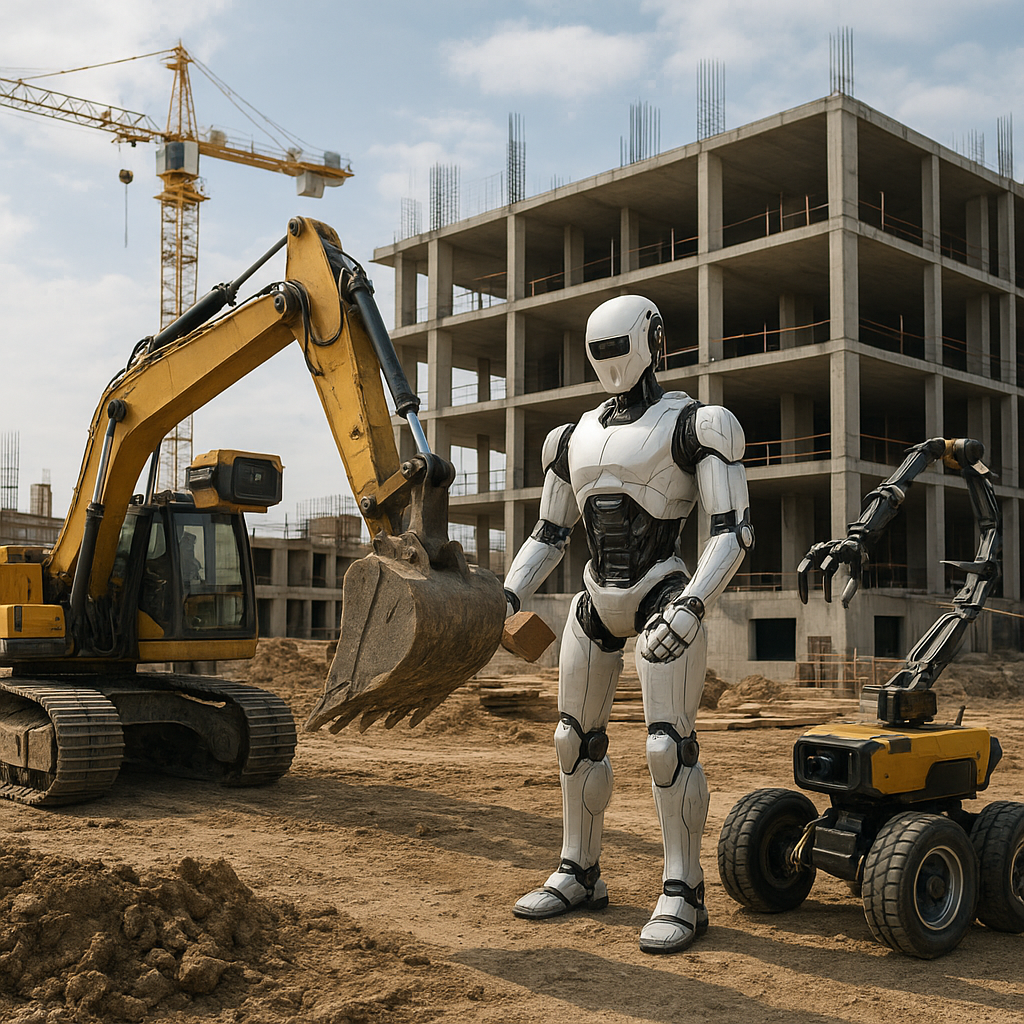
The construction industry is undergoing a radical transformation as cutting-edge machines replace traditional tools on job sites worldwide. These advanced systems merge artificial intelligence, robotics, and state-of-the-art sensors to tackle challenges of time, cost, and human safety. From bricklaying to aerial inspections, each innovation delivers unprecedented levels of precision and efficiency. Below, we explore the most influential technologies redefining how structures rise, teams collaborate, and resources are managed.
Autonomous Bricklayers Revolutionizing Masonry
Automation in masonry has leapt forward with robots capable of laying thousands of bricks per day without fatigue. The robotics units combine vision systems, custom grippers, and advanced algorithms to position, mortar, and align bricks within millimeter tolerances. Key benefits include:
- Enhanced precision that reduces material waste and rework
- Steady performance unaffected by weather or fatigue
- Accelerated timelines, shaving weeks off traditional schedules
By integrating sensors and machine learning, these machines adapt to variances in brick dimensions and mortar consistency. On-site teams supervise via tablets or remote consoles, enabling seamless collaboration between human laborers and robotic assistants. The result is not only faster builds but also significant improvements in overall efficiency.
Exoskeletons: Merging Human Skill and Machine Strength
Exoskeletons represent a fusion of biomechanics and robotics, designed to augment human lifting, carrying, and repetitive tasks. Construction workers equipped with these wearable frameworks report reduced musculoskeletal strain and lower injury rates. Features often include:
- Powered joint actuators that assist in heavy lifting
- Adjustable support levels to accommodate different tasks
- Lightweight materials that maintain mobility without hindrance
Through customizable interfaces and real-time feedback, exoskeletons optimize energy expenditure and prevent overexertion. Field studies show productivity boosts of up to 30%, all while prioritizing safety. As battery and actuator technology evolves, these devices will become even more compact and resilient against harsh jobsite environments.
Drone Technology for Inspection and Survey
Aerial drones have transcended mere photography, now performing detailed surveys and mapping tasks. Equipped with LiDAR, thermal cameras, and multispectral sensors, unmanned aerial vehicles (UAVs) capture topographical data and identify structural anomalies in record time. Advantages include:
- Rapid site scanning, producing 3D models within hours
- Early detection of heat loss, moisture intrusion, or foundation cracks
- Minimized risk by keeping operators safely on the ground
Cloud-based platforms compile drone-gathered data into interactive dashboards, enabling project managers to make data-driven decisions. Integration with building information modeling (BIM) software ensures that design changes reflect real-world conditions, streamlining coordination between architects, engineers, and contractors.
3D Printing Robots: Building Structures Layer by Layer
3D printing on construction sites is emerging as a game-changer for bespoke and sustainable building solutions. Large-scale automation systems extrude concrete, composites, or bio-based materials to erect walls, columns, and even entire pavilions. Highlights include:
- Complex geometries and organic shapes unachievable with conventional formwork
- Reduced material waste due to precise deposition
- On-site fabrication that cuts transportation and assembly steps
These printers operate under tight quality control, using feedback loops from embedded sensors to monitor curing, temperature, and structural integrity in real time. The technology supports sustainable practices by incorporating recycled aggregates or alternative binders, aligning construction with environmental goals.
Integration and Connectivity on Smart Construction Sites
Behind every robotic marvel lies a robust network architecture that enables seamless communication among machines, workers, and management systems. The concept of the Internet of Things (IoT) extends to heavy machinery, wearable devices, and environmental monitors, creating a connected ecosystem. Key components:
- Real-time location tracking for assets and personnel
- Predictive maintenance alerts that reduce downtime
- Secure cloud platforms for data aggregation and analytics
By leveraging 5G or private LTE networks, sites achieve ultra-low-latency control of autonomous vehicles and remote equipment. Project dashboards fuse input from drones, exoskeletons, and bricklaying robots into unified reports, empowering stakeholders with actionable insights. As digital twins become more prevalent, every aspect of the site can be simulated, optimized, and managed with unparalleled granularity.
Challenges and Future Perspectives
Despite the impressive strides, adoption hurdles remain. High initial investment, integration complexity, and workforce reskilling are significant barriers. However, ongoing advancements in machine learning, battery energy density, and modular robotics promise to lower these thresholds. Industry partnerships between technology firms, academic institutions, and construction leaders are crucial for:
- Standardizing communication protocols that ensure cross-vendor compatibility
- Developing training programs to equip workers with digital skills
- Establishing safety regulations tailored to human–robot collaboration
As the sector embraces this wave of innovation, the synergy between human expertise and mechanical prowess will redefine productivity, sustainability, and safety standards on every modern construction site.