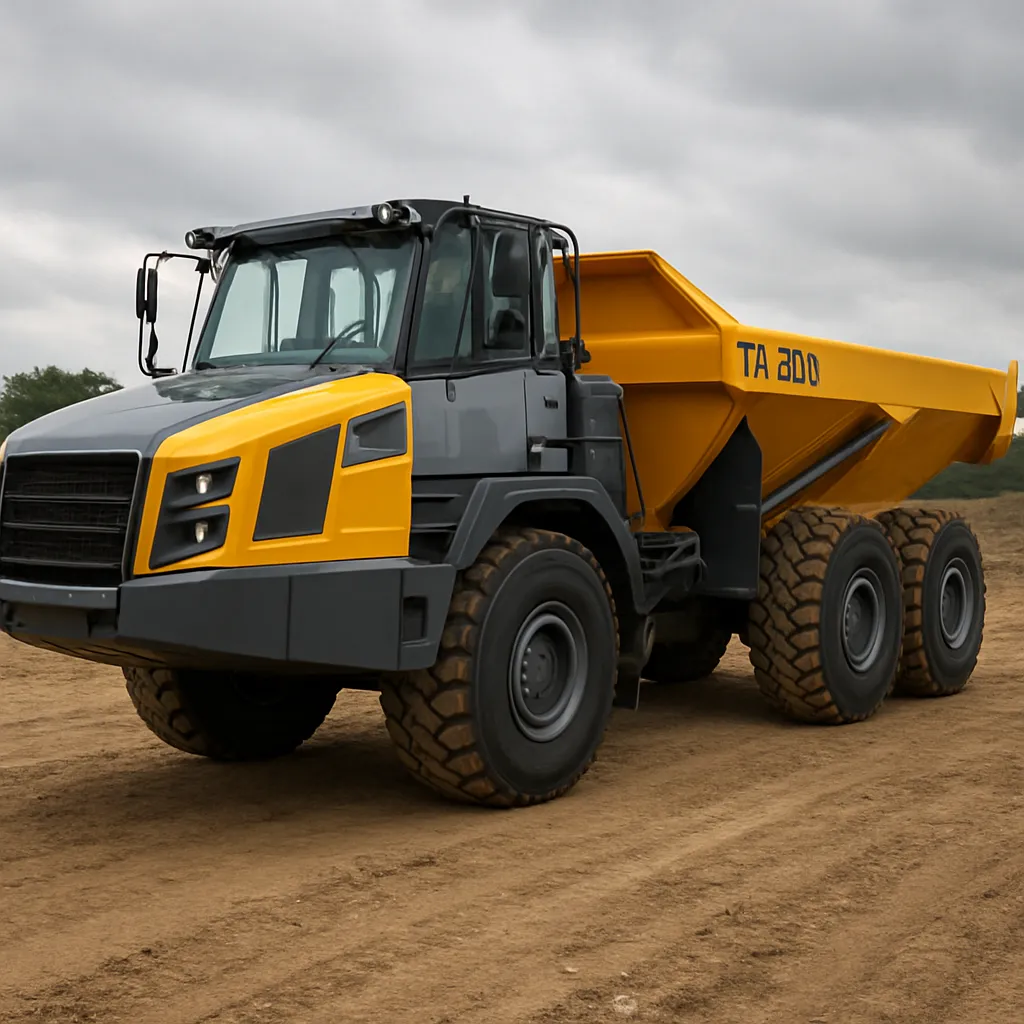
The Liebherr TA 300 is a heavy-duty articulated hauler designed to meet the demanding needs of modern construction, mining and earthmoving operations. Combining proven mechanical concepts with contemporary electronic control systems and ergonomic design, the machine fills a niche where mobility, load capacity and durability must coexist. In the following sections we will explore the TA 300’s design philosophy, typical technical characteristics, primary applications, operational advantages, maintenance and economic considerations, as well as safety and environmental aspects that make it a valuable asset on worksites worldwide.
Design and core technical characteristics
The TA 300 is an example of an articulated dump truck purpose-built for rough terrain, steep grades and frequent changes in direction. The basic architecture separates the unit into a front tractor (engine and cab) and a rear dump body connected by an articulated joint. This configuration provides superior flexibility and manoeuvrability compared to rigid-frame haul trucks, especially on uneven ground.
Typical specifications (indicative ranges)
- Payload: approximately 30 tonnes (commonly quoted around 28–32 t depending on configuration).
- Gross vehicle weight / operating weight: varies with payload and specification, typically in the 30–60 tonne class when loaded.
- Engine power: commonly in the range of 250–350 kW (330–470 hp) depending on emission standard and tuning.
- Torque: high low-end torque typical of heavy-duty diesel engines to provide pulling force on grades (specific values vary by engine choice).
- Top speed: on flat, firm surfaces typical maximum speed of 30–50 km/h; practical working speeds are lower for safety and control.
- Fuel capacity: often between 300–700 litres depending on package and regional requirements.
- Transmission: robust automatic transmission with torque converter and multiple gear ranges, designed to handle frequent load/unload cycling.
- Dump body capacity: tailored to the payload and material density; bodies are available in different volumes and wear-liner options.
Exact numerical data depend on production year, regional homologation and optional equipment. Manufacturers like Liebherr frequently offer a selection of engines and driveline options to meet local emissions standards (Stage V / Tier 4 Final in many markets) and customer performance needs.
Key structural and mechanical elements
- Chassis and articulation: Heavy-duty frame with a central articulation joint providing oscillation and steering; this design ensures traction and contact on uneven surfaces.
- Suspension: Often rigid axles with heavy-duty springs or suspension systems tuned for payload and shock absorption; optional bogie or pendulum axles enhance wheel tracking and traction.
- Hydraulics: Powerful hydraulic system for the dump function and ancillary tools, with controls integrated into the cab.
- Braking: Service brakes typically use multiple systems including engine brake retarder, oil-immersed multi-disc brakes or wet disc brakes for consistent stopping power in heavy applications.
- Electrical & controls: Electronic engine management, monitoring systems, and optionally telematics for remote tracking of machine health and productivity.
Primary applications and use cases
The TA 300 is designed to be versatile across a wide range of sectors. Its combination of weight-handling capacity and off-road capability makes it suitable for tasks where transport of bulk material across rough terrain is required.
Construction and civil engineering
- Bulk earthworks: hauling excavated material between cut and fill zones on highways, dams, site preparation projects and large infrastructure works.
- Quarry face to stockpile: transporting blasted rock and aggregate where roads are temporary and surface conditions variable.
- Land reclamation and grading: moving large quantities of fill across sites with limited road infrastructure.
Mining and quarrying
- Surface mining: in small to medium-scale surface mining operations the articulated hauler is often preferred for internal transport duties, especially where gradients and irregular haul roads make rigid haulers impractical.
- Overburden removal: efficient at moving softer materials and overburden from the face to disposal areas or processing plants.
Forestry, pipeline and energy sectors
- Forestry operations: hauling soil, slash or biomass on tracks where ground pressure and mobility matter; optional narrow-body or flotation tire packages reduce ground disturbance.
- Pipeline and cable-laying projects: moving material along long linear worksites with frequently changing access conditions.
- Renewable energy sites: construction of wind farms, solar installations and access roads where terrain is remote and requires flexible hauling solutions.
Operational advantages and key innovations
The TA 300 embodies features that emphasize operational productivity, machine reliability, and lifecycle cost control. Articulated haulers in this class provide a number of advantages over other transport options in the same environment.
Mobility and traction advantages
- The articulated joint allows better wheel contact on uneven ground, improving traction and reducing slippage compared with rigid-frame trucks.
- All-wheel drive and differential locking systems enable the HAULER to negotiate soft ground, mud and steep gradients while maintaining load continuity.
- Short wheelbase and high ground clearance increase capability on narrow or rough routes.
Powertrain efficiency and drivability
- Modern engines are tuned for both fuel efficiency and torque delivery at low RPM, which is crucial for heavy hauling under load.
- Hydrodynamic transmissions or advanced multi-gear automatic transmissions optimize torque multiplication and reduce operator workload.
- Electronic management systems provide controlled shifting, engine protection modes and diagnostic readouts to preserve drivetrain life.
Operator ergonomics and productivity
- Comfortable cabs with adjustable seating, low noise, and climate control increase operator endurance and reduce fatigue during long shifts.
- Intuitive controls and excellent visibility to the dump bed and surroundings reduce cycle times and improve safety during loading and dumping cycles.
- Integrated monitoring and optional telematics allow fleet managers to track productivity metrics, fuel consumption and maintenance needs remotely.
Maintenance, lifecycle costs and fleet management
One of the crucial considerations for owners and fleet managers is the total cost of ownership (TCO). The TA 300, like other machines in its class, is engineered to strike a balance between upfront cost, operating efficiency and long-term maintenance.
Serviceability features
- Accessible daily service points (filters, fluids, grease points) reduce downtime for routine maintenance.
- Robust components and modular assemblies simplify repairs; many wear parts such as tires, liners and brake components are standardized across models to simplify spares management.
- Advanced diagnostic tools and electronic fault codes shorten troubleshooting and reduce unplanned stops.
Economics and fuel efficiency
- Fuel consumption is a major operating cost; selecting appropriate engine power and gear ratios for the work profile can yield substantial savings.
- Telematics-driven programs enable predictive maintenance and optimized route planning to shorten cycle times and reduce fuel burned per tonne moved.
- Residual values for reputable brands like Liebherr often remain strong, helping offset initial purchase costs when machines are resold.
Safety, operator comfort and regulatory considerations
Safety is a central design priority for modern articulated haulers. The TA 300 incorporates passive and active safety measures intended to protect operators and site personnel.
Safety features
- Rollover protective structure (ROPS) and falling object protective structure (FOPS) integrated into the cab design.
- High-visibility cabs, mirror systems and optional camera arrays to reduce blind spots during manoeuvring.
- Brake systems including retarders and multi-disc hydraulic or oil-immersed brakes provide consistent retarding force on descents.
- Proximity alarms, rear-view cameras and audible warnings for reverse travel are common optional features.
Operator comfort
- Ergonomic seating and control layouts reduce strain and improve concentration during repetitive cycles.
- Noise and vibration dampening technologies limit operator exposure to harmful levels, improving safety and health outcomes.
- Cab air filtration and climate control systems maintain comfort in dusty or extreme-temperature environments.
Regulatory and environmental compliance
- Engines meeting Stage V / Tier 4 Final emissions regulations are common in more recent units, which reduce particulate and NOx emissions compared to older engines.
- Manufacturers provide documentation and support for emissions compliance and noise regulation in various jurisdictions.
- Eco-modes, automatic idle shutdowns and engine management systems help lower fuel consumption and emissions during low-load periods.
Variants, customization and attachments
Liebherr and other manufacturers usually offer multiple variants of articulated haulers to suit different tasks. The TA 300 frequently comes with options that tailor the machine to the application environment.
- Dump body types: standard, high-volume and twin-slope bodies; wear liners and rock buckets for abrasive materials.
- Tire choices: standard heavy-duty, flotation tires for soft ground and low ground pressure, or rock tires for abrasive terrain.
- Climate and protection packages: winter packages, corrosion-resistant materials and additional guards for harsh environments.
- Telematics and fleet management packages: onboard data logging, GPS tracking and remote diagnostics.
Performance metrics and productivity considerations
Productivity is measured by tonnes moved per hour, cost per tonne and machine uptime. Several operational factors influence the TA 300’s real-world performance.
Cycle time variables
- Distance between loading and dumping points: short, tight cycles favor high shovel/truck matching and more frequent loading, whereas long hauls emphasize fuel efficiency and top speed.
- Loading equipment and operator coordination: achieving full payloads requires correct bucket sizing and coordinated load cycles to avoid underloading or overloading.
- Terrain and weather: soft ground, steep gradients and wet conditions reduce average payload per hour and increase wear rates.
Typical productivity examples
While exact productivity depends on many variables, a typical TA 300 in a quarry or large construction site may move several hundred to over a thousand tonnes per shift under ideal conditions when matched correctly with loading equipment. Fleet optimization—including right-sizing machines, tire choice and route management—directly improves these numbers.
Environmental impact and sustainability measures
Environmental awareness is increasingly important in heavy equipment selection. Manufacturers address sustainability through improved engine efficiency, alternative fuels compatibility and lifecycle thinking.
- Cleaner engines and aftertreatment systems reduce particulate matter and NOx emissions compared to older generations.
- Some operators choose biodiesel blends or renewable diesel compatible engines to reduce fossil carbon footprint.
- Material choices and recyclable components can influence end-of-life disposal impacts.
- Idle-reduction features and planned route strategies reduce unnecessary fuel consumption and emissions.
Market context and comparative advantages
Within the articulated hauler market, the TA 300 competes with machines from several major manufacturers. Its strengths typically include a balance of payload capacity, durability and dealer support networks that matter for uptime and resale value.
Why choose an articulated hauler like the TA 300?
- Superior off-road capability compared to rigid trucks when roads are temporary, steep or uneven.
- Lower infrastructure cost because articulated haulers can operate on less developed haul roads.
- Flexible deployment across multiple projects because of their generalist capability—suitable for construction, quarry, mining and forestry contexts.
Practical tips for operators and fleet managers
Maximizing the value of a TA 300 involves both smart operation and proactive maintenance. Below are practical recommendations that commonly improve performance and lower costs.
- Match the truck to the loader: ensure the loader can consistently fill the hauler to rated payload without excessive cycle time.
- Use telematics: monitor fuel consumption, idle time, and fault codes to plan preventive maintenance and coach operators.
- Manage tires and running gear: tire selection and proper inflation reduce rolling resistance and extend life.
- Plan routes and loading zones: reduce empty travel time and unnecessary idling to improve per-tonne costs.
- Train operators on efficient shift patterns, slope management and optimal gear selection to reduce wear and fuel use.
Conclusion
The Liebherr TA 300 is a robust and flexible solution for organizations that need reliable bulk-material transport across challenging terrain. Through a combination of articulated design, powerful drivetrains and modern control systems, it delivers a blend of efficiency, reliability and operational versatility that suits many industries. Proper matching of equipment to application, diligent maintenance and use of data-driven fleet practices will unlock the best performance from machines in this class. Whether deployed in construction, quarrying, mining or infrastructure projects, a well-maintained TA 300 can be a productive, cost-effective part of a mixed fleet.


)
)