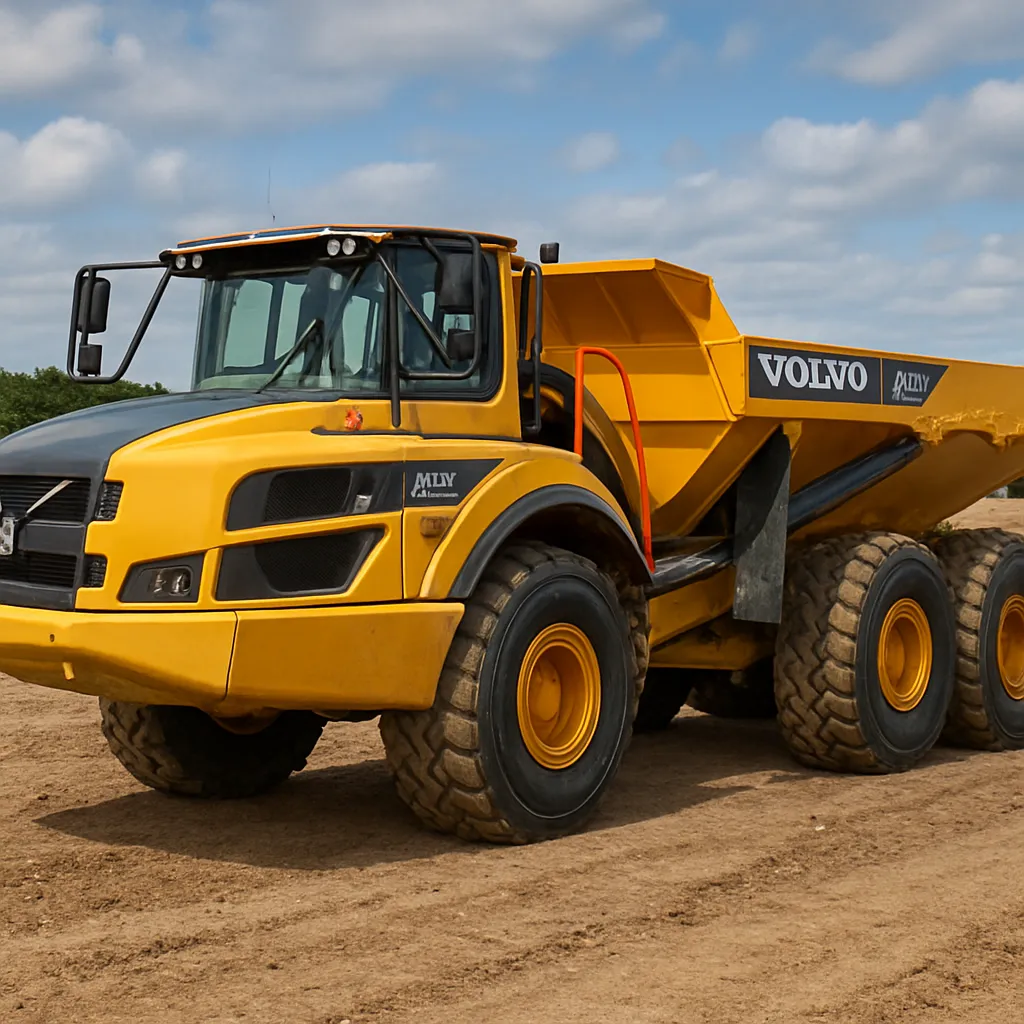
The Volvo A30G articulated hauler is a versatile heavy-duty machine designed to move large volumes of material efficiently across challenging terrain. Combining robust engineering, advanced drivetrain systems and a focus on operator comfort and safety, the A30G serves a wide range of industries from construction and quarrying to mining and infrastructure development. This article explores the machine’s design, practical applications, technical highlights, operational performance and lifecycle considerations, with practical statistical indicators and real-world context.
Design and core technical characteristics
The Volvo A30G belongs to Volvo Construction Equipment’s family of articulated haulers, built to provide high mobility and productivity under harsh conditions. The articulated frame and all-wheel-drive layout enable excellent traction and maneuverability on steep gradients, muddy tracks and uneven surfaces. The A30G is typically positioned in the 25–35 tonne payload category, optimized for a balance of payload, fuel economy and machine agility.
Powertrain and drivetrain
- Engine: The A30G is fitted with a turbocharged diesel engine from Volvo’s range, delivering robust torque characteristics suitable for heavy hauling. Depending on market and spec, engines are tuned to meet local emissions regulations (Tier 4/Stage IV in some regions, Tier 3/Stage IIIA in others).
- Power output: Typical rated power falls in the approximate range of 250–300 kW (around 335–400 hp), with an emphasis on low-end torque to maintain momentum on slopes and in loose materials.
- Transmission: Electronically controlled powershift or automatic transmissions provide smooth shifting and optimal gear selection for varying loads. Integrated driveline protection and torque distribution systems improve component life and traction.
- Articulated steering: Central articulation enables tight turning radii compared to rigid-frame trucks, improving site productivity and reducing repositioning time.
Chassis, suspension and body
- Chassis: The frame is engineered to absorb shock and torsion while supporting heavy loads. The articulated joint is a critical wear item but is designed for heavy duty cycles with large bearings and robust seals.
- Suspension: Tandem rear axles with heavy-duty final drives, combined with bogie or suspended axle arrangements, provide stability and traction over uneven terrain.
- Dump body: Available in different capacities and wear-resistance specifications — standard steel, high-tensile plates, and specialized bodies for rock or coal handling. Bodies may include hydraulic tipping with electronic controls for precise material placement.
Dimensions and capacities (typical figures)
- Approximate payload capacity: 28,000 kg (approx. 30 metric tonnes)
- Engine power: approximately 250–300 kW (335–400 hp)
- Top travel speed: up to roughly 50–55 km/h on road (model- and config-dependent)
- Fuel tank capacity: typically around 300–400 liters
- Empty (operating) weight: varies by configuration, often in the 20–24 tonne range
Note: exact numbers vary with factory options, configuration and region. Always check the vehicle data plate or manufacturer documentation for the specific machine.
Applications and field performance
The A30G excels in environments where a combination of off-road mobility and high payload per trip is required. Its design reduces cycle times and increases productivity in many material-handling scenarios.
Common applications
- Quarries and aggregates: Frequent short-haul tasks moving crushed rock from pit to primary crusher or stockpiles. The A30G’s maneuverability on rough haul roads and its load capacity make it a natural fit.
- Construction and civil works: Earthworks, road building and site clearance operations benefit from articulated hauling when access is constricted or surfaces are temporary and soft.
- Mining (surface): Smaller open-pit and surface mines often deploy A30G machines in fleets for selective haulage, waste stripping and in-pit material movement.
- Landfills and reclamation: The ability to handle mixed and abrasive loads while retaining mobility makes the A30G useful for environmental reclamation, landfill capping and other civil engineering tasks.
- Forestry and industrial sites: Off-road capability permits use on forestry haul roads, biomass sites and large industrial yards with uneven surfaces.
Performance indicators
When assessing the practical performance of an A30G, owners and operators typically monitor metrics such as tonnes per hour, fuel consumption per tonne, cycle time and uptime percentage. Comparative performance depends on haul distance, road conditions, loading method and operator skill.
- Cycle productivity: On short shuttle runs (300–1,000 m), multiple trips per hour can result in high gross tonnes moved; payload utilization and minimized idle time are crucial.
- Fuel consumption: Typical fuel burn is highly variable — 15–25 L/h under average conditions is a useful benchmark. Fuel per tonne decreases as load-factor and cycle efficiency improve.
- Operating uptime: Modern A30G machines equipped with telematics often achieve 85–95% availability with proper maintenance regimes and rapid fault response.
Operator comfort, safety and telematics
Volvo places particular emphasis on ergonomics, visibility and safety systems. This focus improves operator productivity and reduces the risk of incidents on busy sites.
Cab design and controls
- Ergonomic cab: A quiet, comfortable cab with adjustable suspension seat, climate control and low-vibration mounting reduces operator fatigue over long shifts.
- Visibility: Large glazing areas, optimized mirror placement and optional camera systems (rear and side cameras) help operators see blind spots and maneuver precisely.
- Control interface: Electronic dashboards and intuitive joysticks/switchgear simplify machine operation. Infotainment and ergonomically placed switches reduce cognitive load.
Safety systems
- ROPS/FOPS-certified cab: Protects the operator in rollover or falling-object scenarios.
- Braking: Service brakes, retarder systems and emergency braking functions are designed for on- and off-road deceleration. On steep grades, engine braking and controlled retarder performance are essential for safety.
- Collision avoidance technologies: Optional proximity detection, weigh systems and camera packages help avoid accidents in congested yards and quarries.
Telematics and fleet management
Volvo’s fleet solutions (known under names like CareTrack or Volvo Connect in recent product portfolios) provide real-time data on machine position, fuel usage, hours, diagnostic codes and service intervals. Fleet managers use telematics to:
- Optimize dispatch and match machine type to tasks;
- Monitor fuel consumption and CO2-related metrics to improve sustainability;
- Predict maintenance needs through condition-based monitoring, lowering unexpected downtime.
Effective telematics combined with operator coaching often results in measurable improvements in fuel efficiency and productivity.
Maintenance, lifecycle costs and sustainability
Lifecycle costs are critical for fleet operators. The A30G is engineered to offer a balance between purchase price, operating economy and residual value.
Serviceability and maintenance intervals
- Easy service access: Key components (filters, fluids, belts, greasing points) are accessible from ground level or via simple panels, reducing downtime for routine checks.
- Maintenance schedules: Regular oil/filter changes, drivetrain inspections and articulation joint checks are important. Extended service intervals for certain components can be achieved using advanced filtration and quality lubricants.
- Wear components: Tyres, brake discs/pads, dump body liners and articulation bearings are among common wear items in heavy-use environments. Proper tyre management is a major factor in controlling operating cost.
Total cost of ownership (TCO)
Key contributors to TCO include:
- Fuel costs — often the largest single operating expense;
- Tyre wear and replacement — highly dependent on ground conditions and hauling practice;
- Scheduled maintenance and unexpected repairs;
- Residual value — influenced by machine condition, hours, maintenance history and market demand.
Operators using telematics and strict maintenance regimes typically achieve better TCO through reduced fuel burn, fewer major repairs and higher resale values.
Sustainability and emissions
Volvo has invested in reducing emissions and improving fuel efficiency across its range. The A30G supports this in several ways:
- Modern engines: Meet stricter emissions standards in many jurisdictions (e.g., TIER 4/Stage IV), using technologies such as exhaust after-treatment where required.
- Fuel efficiency measures: Optimized drivetrains, idle management and operator training help minimize CO2 per tonne moved.
- Alternative fuels and electrification pathways: While full electrification of articulated haulers is nascent, hybrid drivetrains, biofuels and electric-assist technologies are being explored in the industry to reduce carbon footprint.
Variants, optional equipment and customisation
To suit diverse operational needs, the A30G can be specified with numerous options:
- Body options: Standard, high-capacity, rock/dump liners, low-body for heavier density materials, and coal-body options.
- Tyres and wheel configurations: Multiple tyre sizes and compounds for rock, soft ground or mixed-use conditions.
- Auxiliary systems: Water sprinklers for dust suppression, automatic lubrication systems, heavy-duty guarding kits and specialized hydraulic attachments.
- Technology options: On-board weighing systems, advanced cameras, load-sensing telematics and payload management software.
Market position and comparative outlook
The A30G competes in a crowded market of articulated haulers produced by major manufacturers. Its strengths lie in Volvo’s reputation for operator comfort, integrated fleet solutions and durability. For many operators, the A30G provides a compelling combination of:
- Reliability: Proven architecture and serviceability;
- Support network: Extensive dealer service and parts availability in many regions;
- Resale value: Strong maintenance records and telematics contribute to favourable second-hand pricing;
- Technological integration: Telemetry, safety packages and fuel-optimization features.
Competitors may offer machines with slightly higher rated payloads, lower purchase cost or different service networks. The best choice depends on site-specific needs: haul distance, haul road condition, material type and fleet standardization goals.
Operational tips and best practices
Maximizing the efficiency and lifespan of an A30G requires both planned maintenance and skilled operation:
- Implement operator training focused on smooth loading, minimized idle time and optimal gear selection to cut fuel use and axle stress.
- Standardize tyre pressures and monitor tread wear; inappropriate pressures accelerate wear and increase fuel consumption.
- Use telematics to monitor machine health and intervene proactively on high vibration, excessive temperatures or unusual fuel patterns.
- Plan haul routes and staging areas to minimize empty running and improve payload utilization.
Statistics, real-world metrics and expected outcomes
While specific performance varies widely with application, some representative metrics help set expectations for an A30G fleet unit:
- Average fuel consumption: typically 15–25 L/hour depending on load and terrain; when measured per tonne, fuel ranges from 0.3–1.5 L/tonne on common site profiles.
- Typical availability/uptime with disciplined maintenance: 85–95%.
- Common payload utilization: operators often target above 90% of rated payload per cycle to maximize efficiency.
- Working life: with regular maintenance and component rebuilds, an articulated hauler like the A30G can remain productive for 10–15 years or longer in many fleets.
These values are indicative; real-world numbers should be gathered from fleet monitoring and manufacturer specifications for the exact machine configuration.
Conclusion
The Volvo A30G is a robust, versatile articulated hauler well suited to quarrying, construction, mining and other heavy-haul applications. With a focus on operator ergonomics, integrated telematics and durable powertrain architecture, it provides a balance of productivity and economy for medium-capacity hauling tasks. Proper configuration, disciplined maintenance and operator training are key to unlocking the machine’s potential and achieving favorable total cost of ownership. For operations seeking a dependable, well-supported articulated hauler with modern features, the A30G remains a strong contender.


)
)