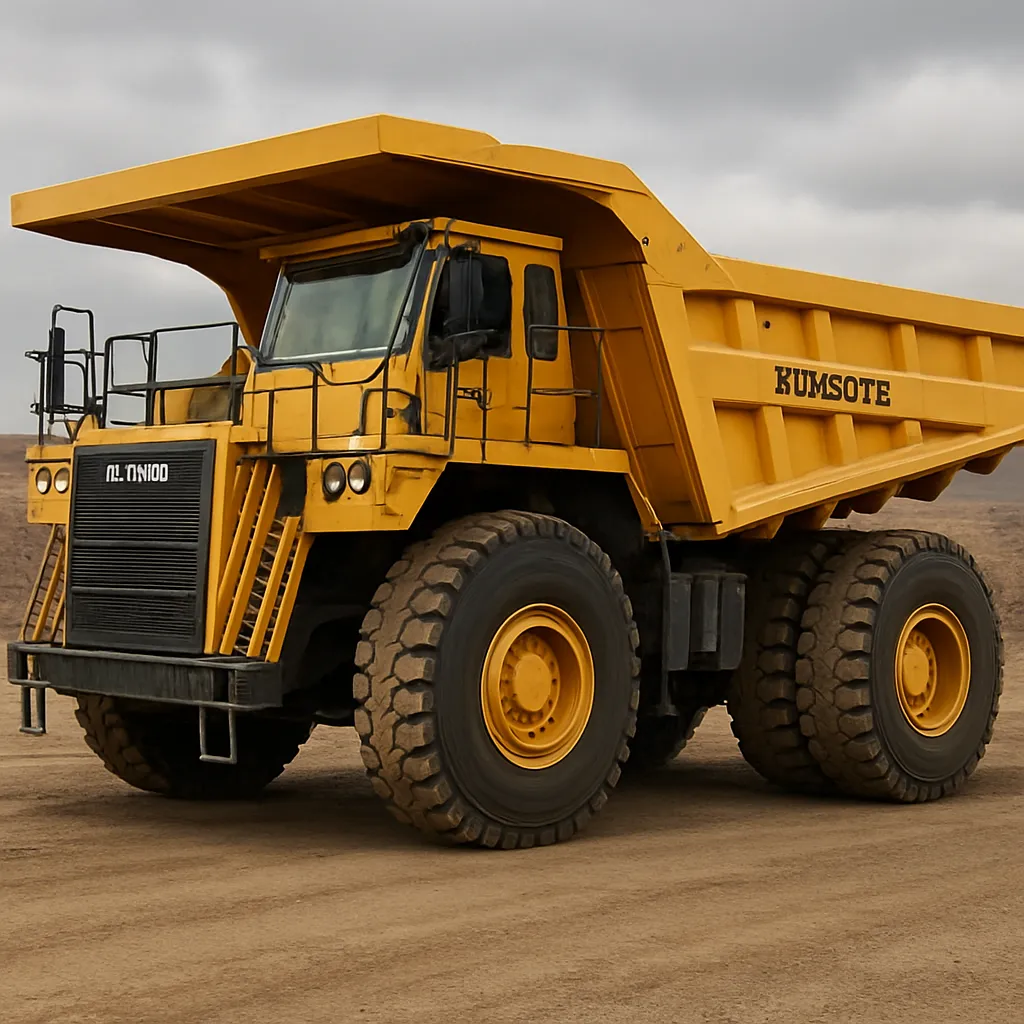
The XCMG XDR50TE is a heavy-duty mining haul truck designed for demanding open-pit operations, quarrying and large-scale earthmoving projects. Combining robust structural components with modern driveline and operator-comfort features, the XDR50TE aims to deliver reliable material movement with attention to safety, serviceability and lifecycle cost. This article examines the machine’s typical applications, technical characteristics, operational performance and practical considerations for fleet managers and site engineers.
Overview and intended applications
The XCMG XDR50TE is positioned in the 50-ton payload class, a category widely used for middle-to-large scale mining, construction and infrastructure projects. Machines in this class are commonly chosen where the balance between capacity and maneuverability is critical — enabling efficient haul cycles on medium-length haul roads while still fitting within many pit designs and maintenance facilities.
Main application areas include:
- Open-pit mining — transporting ore and waste on primary and secondary haul roads.
- Quarrying — hauling blasted rock from bench to primary crushers or stockpiles.
- Large civil works and infrastructure projects — moving material on long-term earthworks sites.
- Mine reclamation and bulk earthmoving — efficient movement of large volumes during site closure or redevelopment.
The XDR50TE is particularly suitable where operators demand a machine that mixes durability and predictable operating costs while enabling modern control and monitoring features that support fleet optimization.
Design highlights and technical specifications
The XDR50TE combines a heavy-duty chassis and dump body with a driveline and braking package tuned for mining conditions. While specifications can vary depending on customer configuration, typical reported values for a 50-ton class XCMG haul truck are:
- Rated payload: approximately 50 tonnes.
- Body capacity: roughly 28–36 m3 (loose heaped volume depending on material density and body design).
- Engine power: diesel prime mover in the 350–470 kW range (≈470–630 hp), depending on emission stage and supplier options.
- Drive system: conventional mechanical drivetrain or AC electric drive (model suffix TE often indicates an electric-drive or optimized driveline variant).
- Empty weight (operating weight): typically 30–40 tonnes depending on options.
- Gross vehicle weight: commonly in the 80–95 tonne range when loaded.
- Top speed: up to 50–60 km/h on flat haul roads (operator- and site-dependent).
- Gradeability: sustained climbing capability around 25–35% on designed haul roads.
- Tire fitment: standard mining sizes such as 26.5R25 or 29.5R25 depending on payload, flotation and site conditions.
- Fuel consumption: highly variable by duty cycle; typical working consumption is reported in ranges of 30–60 L/h under heavy duty, while economy figures on light cycles are lower.
Key structural elements include a robust boxed frame, reinforced dump body with wear liners, heavy-duty axles and a suspension system engineered for cyclic loading. The driveline on the XDR50TE family emphasizes torque delivery suitable for heavy starts and loaded climbs; models with electric drive components (AC traction motors) can offer improved traction control, smoother torque application and reduced transmission maintenance compared to purely mechanical systems.
Cabin, controls and operator ergonomics
Operator comfort and control are central to productivity on long shifts. Typical XDR50TE cabs feature ergonomic seating, climate control, good all-round visibility, and a logically organized instrument cluster. Important technology and safety features often supplied include:
- Adjustable seats with suspension and lumbar support to reduce fatigue.
- Integrated display for machine diagnostics, fuel status and basic telematics.
- Camera systems and proximity sensors to improve rear and blind-spot awareness.
- Air conditioning and heating for operator comfort in extreme climates.
- Optional operator-assist functions such as speed limiting and grade management.
Operational performance and fleet economics
For mining operations, the productivity of a haul truck like the XDR50TE is driven by three main factors: cycle time, payload utilization and availability. Optimizing these components reduces the unit cost per tonne moved and increases overall site throughput.
Cycle time and payload optimization
Typical haul cycles combine load time, travel loaded, dump time and return travel. The XDR50TE’s power and braking systems are designed to keep loaded speeds and stability within safe limits while minimizing the time spent accelerating and decelerating on haul roads. Important considerations for achieving optimal cycle times include:
- Haul road quality and geometry — smoother, properly banked roads allow for higher average speeds and reduced fuel burn.
- Matching payload to OEM recommendations — deliberate underloading to improve average speed or overloading to reduce passes must be balanced against component wear and regulation.
- Encouraging consistent loading techniques from shovel or loader operators to maintain predictable center of gravity and reduce spillage.
Availability, maintenance intervals and lifecycle costs
Maintenance planning is critical for keeping the truck in service. XDR50TE maintenance regimes commonly include daily walk-around checks, scheduled lubricant and filter changes every few hundred operating hours, and major inspections at 1,000–5,000 hour intervals depending on component. Typical maintenance considerations:
- A focus on driveline cooling and air filtration in dusty environments to extend component life.
- Timely replacement of high-wear items such as brake discs, tires and body liners to avoid secondary damage.
- Use of OEM-recommended lubricants and parts for warranty and long-term reliability.
- Telematics-based condition monitoring to predict failures and schedule preventative maintenance, improving availability.
When properly maintained, a 50-ton class truck like the XDR50TE can deliver many thousands of operating hours before major rebuilds. Lifecycle cost models should account for fuel, tires, scheduled maintenance, driveline rebuilds and residual values. Across similar machines, fuel is often the single largest operating expense, followed by tires and major component overhauls.
Safety, environment and modern features
Mining haul trucks must meet rigorous safety expectations. The XDR50TE typically incorporates features to reduce accident risk and improve environmental performance.
- Safety: ROPS/FOPS-certified cabs, robust railing and access ladders, anti-slip surfaces, automatic or manual park-braking systems, and optional proximity detection systems to warn operators of personnel or obstacles in blind zones.
- Braking systems: multi-stage service and emergency brakes, often augmented with retarders (hydraulic or engine braking) to manage long downhill runs without overheating service brakes.
- Emissions: modern diesel engines meet relevant regional emission standards (e.g., Tier/Stage equivalents) via after-treatment systems; some configurations include selective catalytic reduction (SCR) and diesel particulate filters (DPF).
- Fuel and emissions efficiency: design choices and driveline options such as electric-assist or optimized transmissions can reduce fuel consumption and emissions per tonne moved.
- Telematics and fleet integration: built-in or retrofit telematics enables remote monitoring of machine location, fuel use, maintenance status and cycle data, allowing for data-driven decisions and better utilization.
Environmental performance can be further improved by operational measures — optimized haul road gradients, matched fleet sizing, driver training programs and, where available, alternative drive options (hybridization, trolley assist) to reduce diesel usage.
Practical considerations for procurement and operation
When evaluating the XCMG XDR50TE for a fleet, procurement teams should assess the following factors:
- Site compatibility: road widths, turning radii and pit ramp designs must accommodate the truck’s physical dimensions and maneuvering envelope. Consider tire sizes and ground pressure for soft ground conditions.
- Component commonality: sharing engine, drivetrain and tire types across a fleet simplifies parts inventory and training.
- After-sales support: evaluate XCMG’s regional dealer network, parts availability and local service capability. Rapid access to spares and trained technicians reduces downtime risk.
- Financing and total cost of ownership: compare purchase price with expected lifecycle costs — fuel, maintenance, tires and potential resale value. Leasing and warranty packages can mitigate upfront cost and risk.
- Operator training: proper operator training improves fuel economy, extends component life and increases safety. Consider simulator training and structured mentoring for new operators.
Market placement and competitive context
The XDR50TE competes in a global market populated by established manufacturers. While global OEMs historically dominated the mid- to large-haul truck segments, Chinese manufacturers including XCMG have increasingly improved product quality, features and aftermarket support, narrowing the gap. Operators considering the XDR50TE will typically weigh:
- Initial acquisition cost advantage versus legacy OEMs.
- Warranty and service commitments from the manufacturer or distributor.
- Data and field performance from comparable operations — uptime, fuel consumption and component lifespan.
Many operators find that modern XCMG trucks offer a competitive combination of cost, features and support when backed by a solid dealership presence and proven reference sites in similar geographies or commodities.
Interesting technical and operational notes
Several aspects of modern medium-class mining trucks like the XDR50TE reflect broader trends in mining equipment:
- Electrification and hybridization: electric drive architectures improve energy efficiency and reduce mechanical wear on gearboxes. In some operations, trolley-assisted haulage allows diesel trucks to operate on electric power on steep ramps, substantially reducing fuel use and emission at the point of use.
- Digitalization: telematics, predictive maintenance and integrated fleet management systems are becoming standard expectations that reduce downtime and improve utilization.
- Operator-centric design: cabin ergonomics, noise reduction and improved visibility are being prioritized to reduce fatigue-related incidents and improve productivity.
- Customizable configurations: the ability to fit different body liners, tailgates, tire choices and drivetrain options allows operators to tailor trucks to their commodity and haul road conditions.
For example, in dusty or highly abrasive quarries, wear packages including thicker liners, higher-capacity dust suppression, and more frequent sealing are commonly specified. In contrast, for high-speed, long-haul applications, operators might select lower rolling-resistance tires and powertrain calibrations favoring fuel economy.
Summary and final considerations
The XCMG XDR50TE represents a modern 50-ton class mining haul truck intended to provide robust material movement capability with features that address safety, operator comfort and maintainability. Typical specifications include a rated payload of 50 tonnes, engine power in the 350–470 kW band, a body capacity near 28–36 m3 and a gross operating weight commonly between 80–95 tonnes. Operational success depends less on any single spec and more on matching truck selection to site conditions, establishing disciplined maintenance programs, and leveraging telematics and training to optimize fleet performance.
When considering acquisition, decision-makers should evaluate site-specific needs — haul distances, material density, ramp gradients, and service infrastructure — and compare the XDR50TE’s features and dealer support against competing offerings. For many operations, the blend of capacity, durability and modern control options makes the XDR50TE a viable choice for efficient, safe and cost-conscious hauling in medium- to large-scale mining and earthmoving projects.


)
)