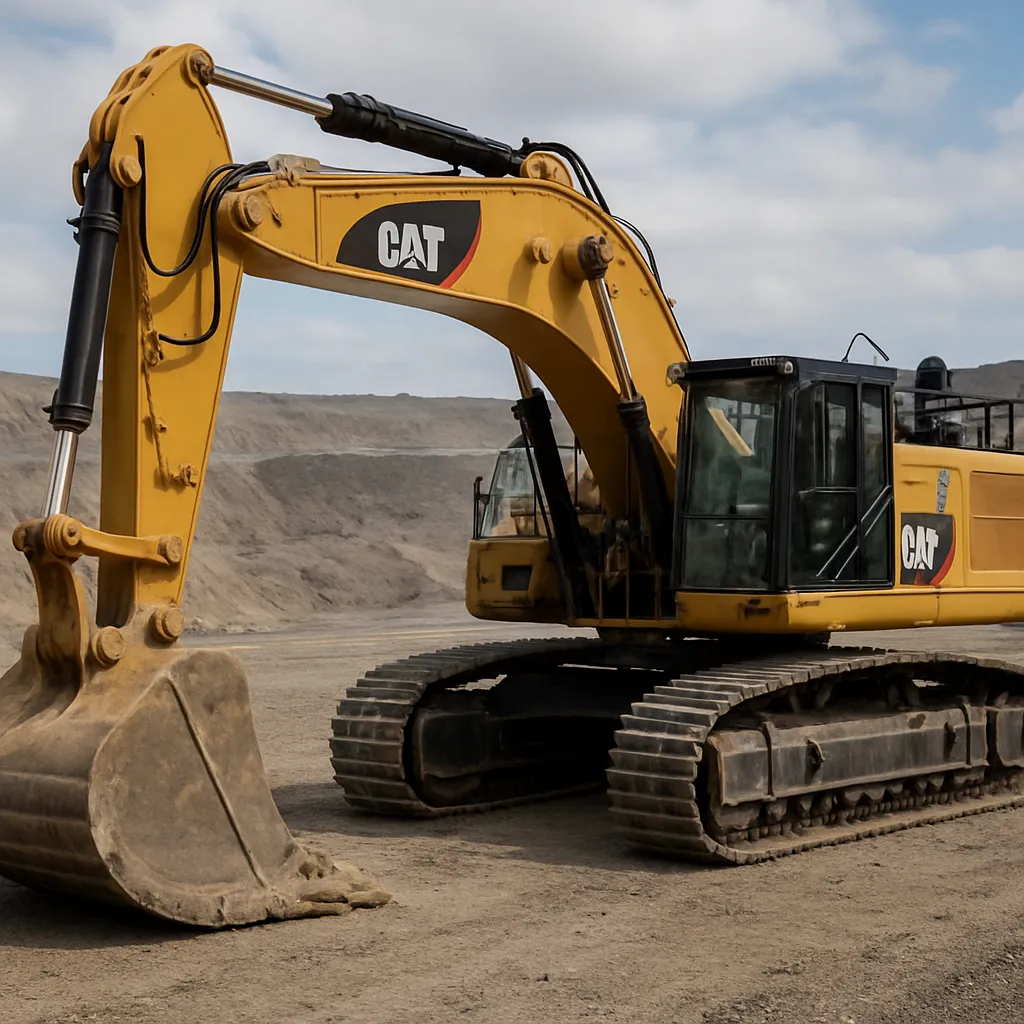
The Caterpillar 6020B is a heavy-duty hydraulic mining excavator designed for large-scale earthmoving and mineral extraction. Built to operate in demanding environments, this machine balances raw power with refined hydraulics and serviceability to deliver sustained productivity on surface mines and large construction projects. The following article explores the 6020B’s design, typical specifications, real-world applications, operational considerations, and economic and environmental aspects. Wherever figures are given, they are presented as approximate ranges because configurations and regional options can change machine weights, power ratings, and capacities.
Overview and design philosophy
The Caterpillar 6020B represents a class of purpose-built machines engineered for high-productivity digging and loading operations. At its core, the 6020B combines a robust undercarriage, a heavy-duty boom and stick, and a high-efficiency hydraulic system to deliver continuous, high-cycle performance. Caterpillar designed the machine for mining and large-scale civil works with an emphasis on serviceability, operator comfort, and modular components to reduce downtime.
Key design elements
- Hydraulic circuit optimized for heavy-load, high-cycle digging
- Reinforced structural components (boom, stick, house) to resist fatigue and impact
- Modular powertrain layout for easier access during maintenance
- Operator cab designed for visibility, control ergonomics, and climate comfort
- Compatibility with a variety of bucket sizes and specialty attachments
The machine’s design emphasizes balance between breakout force and crowd/pull-down capability to enable efficient loading of large haul trucks and in-pit material handling systems. Robust electronic control systems enable smooth power delivery and protect hydraulic components against overload.
Typical specifications and performance figures
Exact specifications for the 6020B vary by year, region, and chosen configuration, but the following approximate figures convey the machine’s general scale and capabilities. These values should be verified with a dealer or the machine’s serial-specific data plate for precise planning and bidding.
- Operating weight: approximately 120,000–200,000 kg (265,000–440,000 lb), depending on configuration, counterweight, and attachments
- Engine power: typically in the range of 700–1,200 kW (940–1,600 hp) depending on final drive and emission-tier options
- Bucket capacity: commonly between 10–30 m³ (13–39 yd³) for mining buckets; smaller or larger buckets are available depending on material density and loading objectives
- Maximum digging reach: often between 10–15 meters (33–49 ft) depending on boom/stick configuration
- Maximum digging depth: typically 7–10 meters (23–33 ft) in standard configurations
- Hydraulic system pressure: high-pressure systems designed for efficient actuation of large cylinders and attachments; pressure and flow rates are tuned to the selected pump package
- Cycle times and productivity: heavily dependent on operator technique, material characteristics, and bucket size — typical measured productivity for a machine in this class loading large haul trucks may be in the thousands of tonnes per hour under optimal conditions
These figures indicate the 6020B is positioned to compete in the mining excavator segment where both continuous availability and high single-shift production are essential. Performance in the field is determined more by system integration (hydraulics, powertrain, matching to truck payload) and operational planning than by any single raw number.
Primary applications and industries
The Caterpillar 6020B is used across multiple heavy industries where bulk material handling and earthmoving at scale are required:
- Open-pit mining: excavation of overburden, ore, and stockpile re-handling; loading of large-class haul trucks
- Large civil infrastructure projects: earthworks for dams, airports, major highways where high-volume digging and loading is necessary
- Quarries and aggregates: loading crushers, moving bench material, and reclaiming stockpiles
- Port and bulk material handling: when configured with specialized buckets or grapples for rapid loading of vessels or barges
- Heavy demolition and reclamation projects: selective dismantling and removal of large volumes of material when fitted with appropriate attachments
Within mining operations, the 6020B is often integrated into a broader fleet strategy. It is commonly matched to haul trucks whose payload capacity optimizes cycle time and fuel economy. Proper pairing (truck payload vs bucket capacity) is essential to minimize truck waiting and maximize digger utilization.
Attachments and configuration options
The versatility of the 6020B derives from a wide range of compatible attachments and tailored configurations:
- Mining buckets: rigid or tilting, with capacities tuned to material density and truck payloads
- Rock ripper and hydraulic breakers for trenching and fragmentation tasks
- Specialized grapples for scrap, demolition, or log handling
- Tilting couplers and quick-change linkages for rapid conversion between tasks
- Auxiliary hydraulics for hammers and hydraulic shears
Configurations may also include reinforced undercarriage elements for high-abrasion environments, cold-weather packages, or dust-mitigation options. Custom counterweight packages enable fine-tuning of stability for heavier attachments or deeper digging profiles.
Operational efficiency and productivity considerations
Achieving high productivity with a 6020B requires attention to several operational factors beyond the machine’s rated capacity.
Match to material and trucks
Bucket fill factor depends on material type (loose sand vs compacted ore vs hard rock). Operators must select a bucket size that allows an efficient fill while matching the haul truck’s payload to avoid underloading (wasting machine cycles) or overloading (increasing truck and road damage). Cycle-time optimization is achieved through synchronized shovel-truck operations and minimizing truck queuing.
Maintenance and uptime
Planned maintenance strategies such as condition-based monitoring, fluid analysis, and scheduled component replacement reduce unplanned downtime. The 6020B’s modular components and service-friendly access points aim to shorten routine service intervals, but mining-grade machines still require a dedicated maintenance program with trained technicians and spare-parts availability to sustain high utilization.
Operator skill and training
Operator proficiency is a critical performance lever. Skilled operators achieve higher fill-per-cycle, reduced wear, and better fuel economy. Training programs and the use of onboard telematics and performance dashboards help standardize best practices and identify opportunities for improvement.
Maintenance, reliability and lifecycle
Reliability is essential for machines in the mining environment. The 6020B is typically maintained on a lifecycle plan that includes scheduled engine, hydraulic, and structural checks. Key maintenance considerations include:
- Regular inspection of boom, stick, and frame welds for fatigue cracks
- Hydraulic hose and cylinder maintenance to prevent leaks and contamination
- Track-chain and undercarriage wear monitoring with timely replacement of links and rollers
- Engine maintenance with attention to cooling systems and air-cleaning in dusty environments
- Use of high-quality lubricants and hydraulic fluids to extend component life
With good maintenance practices, a 6020B can remain productive for many years; major component rebuilds (engine, hydraulic pumps, swing systems) are common mid-life investments that extend machine usability and resale value. Many mining operators track total cost of ownership (TCO) metrics over machine lifecycles to inform replacement and rebuild decisions.
Safety and environmental considerations
Operating heavy hydraulic excavators in mining environments carries inherent risks and environmental impacts. Caterpillar and operators typically address these through engineering controls, training, and mitigation strategies.
- Cab protection and roll-over structures for operator safety
- Enhanced visibility packages and camera systems to reduce blind spots
- Telematics-based geo-fencing and remote monitoring for safety and fleet optimization
- Emission control packages to meet regional regulations (e.g., Tier 3/4 or Stage equivalents)
- Noise and dust control measures such as enclosures, mufflers, and water sprays
Environmental stewardship for machines in this class includes fuel-efficiency initiatives, recycling of lubricants and fluids, and planning for responsible end-of-life disposal or remanufacturing of major components. The industry increasingly adopts electrification or hybridization where feasible to reduce greenhouse gas emissions; for very large hydraulics, full electrification is often integrated at the site level (e.g., electric shovels or trolley-assist haul trucks) rather than single-unit conversions, but retrofit options may exist for auxiliary systems and control optimization.
Economic and logistical factors
Choosing a 6020B for a fleet involves assessing capital cost, operating cost per tonne, fuel consumption, and expected availability. Key economic considerations include:
- Initial acquisition or leasing cost compared against expected production rates and project duration
- Fuel consumption influenced by engine size, operator technique, and hydraulics tuning
- Parts and service availability — proximity to dealer support reduces downtime and logistics costs
- Resale and residual value — machines with documented service histories and rebuild records retain value
- Insurance, transport, and site-preparation costs for moving and placing large equipment
Logistics are non-trivial: transport of a 6020B between sites typically requires heavy-haul trailers, disassembly of booms or counterweights for road movement, and site access roads capable of supporting axle loads. Mobilization planning must include permits, escort vehicles, and specialist rigging teams in many jurisdictions.
Telematics, automation and future trends
The mining industry increasingly leverages digital tools to improve performance. Caterpillar provides factory and dealer telematics packages that capture machine health, fuel burn, idle times, and production data. These systems allow remote diagnostics and predictive maintenance. Automation trends affecting machines like the 6020B include:
- Semi-autonomous or remote operation to keep personnel away from hazardous zones
- Integration with fleet-management software to sequence trucks and diggers for optimal throughput
- Condition-based maintenance enabled by machine-learning analysis of sensor data
- Advanced hydraulics and energy-recovery systems aimed at reducing fuel consumption
While full autonomy for hydraulic excavators has been slower to adopt than for haul trucks, incremental automation and operator-assist features (such as automated digging profiles and swing limits) are increasingly common.
Comparisons and selection guidance
When selecting a large hydraulic excavator for mining, consider these practical points:
- Match bucket capacity to truck payload for balanced cycles — over- or under-sizing reduces overall fleet efficiency
- Assess fuel economy under expected cycle times and load profiles
- Value dealer proximity and parts network — rapid parts delivery is critical in high-utilization operations
- Factor in site-specific constraints: ramp widths, ground-bearing capacity, and environmental permits
- Consider lifecycle maintenance plans and available rebuild programs to manage long-term costs
In many operations, the decision to specify a machine such as the 6020B is driven as much by service and support infrastructure as by raw power or bucket volume. Operators should request machine-specific productivity models from dealers and consider trial periods or site demonstrations when practical.
Summary and practical takeaways
The Caterpillar 6020B is a heavy, high-capacity hydraulic excavator aimed at large-scale mining and earthmoving applications. Its strengths lie in robust construction, adaptable configurations, and integration with digital fleet-management tools. Key considerations for operators include properly matching the machine to truck payloads and material characteristics, investing in proactive maintenance and operator training, and planning logistics for transport and support. When configured and operated correctly, the 6020B can be a cornerstone of a productive surface-mining fleet, delivering the reliability, productivity, and serviceability required by modern mining projects.
For precise machine data (serial-specific weights, engine codes, hydraulic flow rates, and approved bucket dimensions), consult an authorized Caterpillar dealer or the machine’s operation and maintenance manuals.


)
)