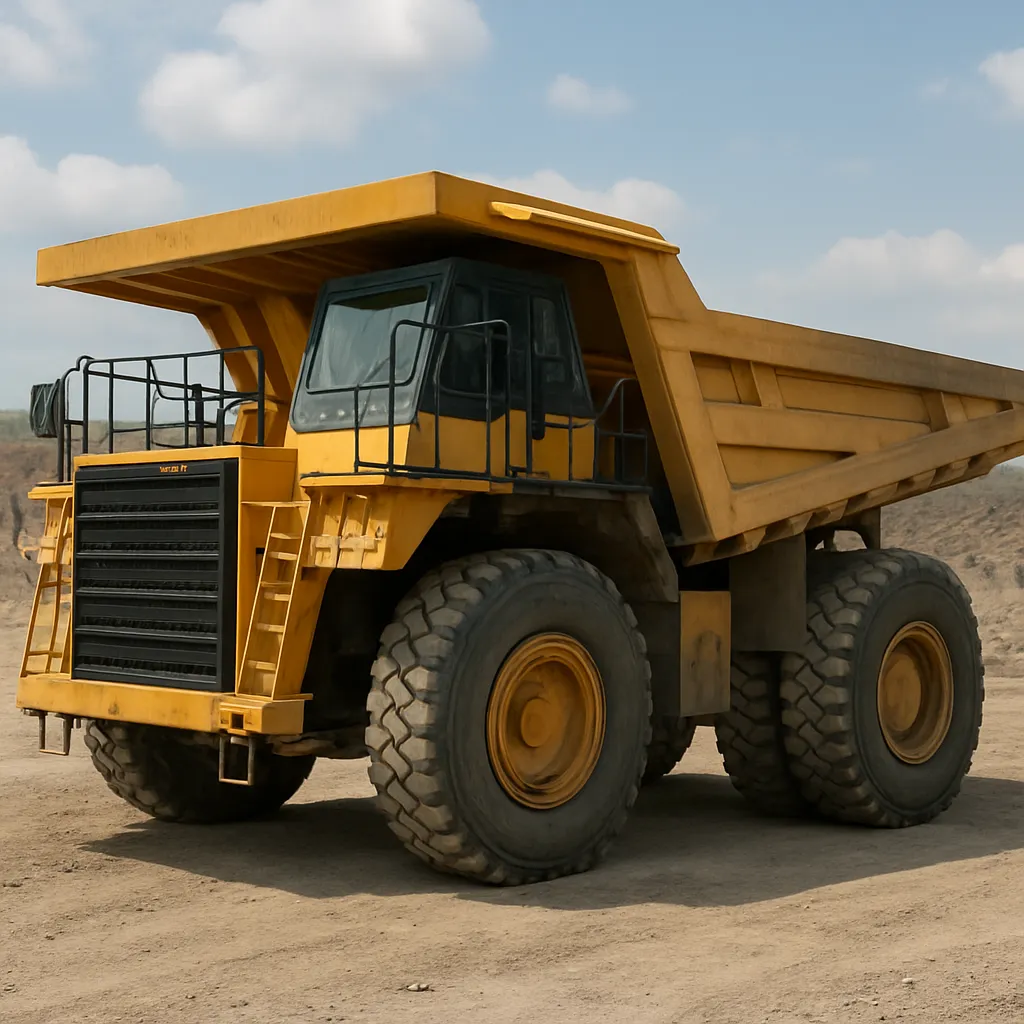
The Komatsu HD785-5 is a heavy-duty off-highway rigid dump truck designed for demanding mining and large-scale earthmoving operations. Combining robust engineering with features aimed at improving productivity, comfort and uptime, this machine occupies a prominent position in fleets that require dependable material hauling over rough terrain. The following article explores the HD785-5’s design, applications, operational characteristics, maintenance needs, safety features and economic considerations, offering practical insight for fleet managers, operators and procurement specialists.
Overview
The Komatsu HD785-5 is part of Komatsu’s family of haul trucks intended for high-capacity, long-distance material transport in mining, quarrying and major construction projects. As a rigid-frame, rear-dump truck, it is engineered to move large volumes of ore, waste rock, aggregate and overburden with consistent cycle times and high availability. Its configuration focuses on robustness, serviceability and integration with site productivity systems.
General characteristics
- Type: Rigid-frame, rear-dump haul truck
- Main uses: Mining, quarrying, heavy civil engineering
- Design priorities: durability, uptime, fuel efficiency and operator comfort
Design and key features
Komatsu designed the HD785-5 to balance structural strength with components that are proven in severe duty. Key areas of emphasis include the powertrain, chassis, dump body and service access. Together, these enable extended operating hours in harsh environments with a focus on reducing downtime.
Powertrain and driveline
The HD785-5 typically uses a robust diesel engine paired either with a torque converter / automatic transmission system or an AC electric drive in some similar-class machines. The emphasis is on delivering steady tractive effort for loaded climbs and reliable performance under cyclical loading. Advanced electronic control systems manage engine and transmission interactions to optimize shift points and protect drivetrain components.
Frame, suspension and dump body
A heavy-duty box-section frame and reinforced front and rear structures resist the bending and impact loads common in mining. The rear dump body is made from abrasion-resistant steel and designed for efficient material ejection, minimizing material retention and promoting fast cycle times. Suspension elements and axle designs are selected to cope with high payloads and to maintain stability on rough haul roads.
Serviceability and diagnostics
Service points are arranged to support rapid daily checks and scheduled maintenance. Centralized filtration systems, ground-level access to key components and on-board diagnostic systems reduce time-to-repair. Integration with fleet telematics and remote monitoring systems allows operators and maintenance teams to track health indicators and plan interventions proactively, improving reliability and uptime.
Typical applications and operational contexts
The HD785-5 is suited to operations where high-volume material movement is required with predictable, repeatable cycles. Typical applications include:
- Open-pit and surface mining for ore and overburden removal
- Large-scale quarries for aggregate and limestone extraction
- Major civil projects such as dam construction, highway earthworks and large reclamation projects
- Heavy-duty stockpile transfer and port-side aggregate handling
In mining, the HD785-5 commonly works in tandem with large excavators, shovels and loaders. Coordinated dispatch and haul road management maximize loaded-haul cycles and reduce unproductive travel time. In quarry and construction roles, shorter travel distances but high cycle frequency require robust braking systems and heat management.
Performance and operational data
Exact performance figures for the HD785-5 can vary by configuration, region, and model year. Rather than presenting a single definitive number, it is helpful to consider typical ranges and the factors that influence them:
Payload and capacity
The nominal payload for machines in the HD785 class is usually sized to match mid-to-large haul operations. Payload capacity, bowl volume and recommended material density determine load management strategies. Payload is managed through onboard weighing systems to ensure legal and safe transport and to optimize cycle economics.
Engine output and fuel consumption
Engine power and fuel consumption depend heavily on application profile (grade, cycle length, average load). Typical fuel burn for haul trucks in this segment can vary widely; realistic operational fuel consumption ranges may be driven more by duty cycle and operator technique than by the nominal engine figure. Many operators track liters per ton-kilometer or liters per loaded hour as key metrics for fuel efficiency.
Speed and cycle performance
Top speed on level road, acceleration under load, and braking performance on declines are all influential to cycle time. Road geometry, haul distance and traffic management on site may have greater impact on hourly tonnage than small differences in machine top speed. Properly matched powertrain and gear ratios optimize loaded travel and fuel usage.
Reliability indicators
- Mean time between failures (MTBF) is improved by routine maintenance and remote condition monitoring.
- Wear parts such as tires, brakes and suspension components are primary drivers of operating cost and downtime.
- Telematics and predictive maintenance systems reduce unscheduled downtime by flagging anomalies early.
Maintenance, durability and lifecycle management
Maintenance strategy is crucial to maximize the return on investment for a heavy haul truck. The HD785-5’s design facilitates both routine servicing and major overhauls.
Planned maintenance
Routine daily checks, regular fluid and filter changes, greasing schedules and periodic inspections of undercarriage and brake components constitute the backbone of planned maintenance. Many operators implement condition-based maintenance using fluid analysis, vibration monitoring and thermal imaging.
Major component life and rebuilds
Key components such as engines, transmissions and axles are often subject to staged rebuild programs. Lifecycle cost planning typically assumes multiple component rebuilds over the machine’s service life. Rebuild intervals vary widely by duty but planning for component refurbishment helps contain long-term costs and supports sustainability by extending machine life.
Tires and consumables
Tires represent a large percentage of operating expenses for haul trucks. Optimizing tire selection, managing tire pressures, and controlling haul road conditions can produce significant cost savings. Consumables like brake discs, pads and hydraulic hoses should be monitored closely, as their failure modes can lead to safety-critical events.
Safety and operator ergonomics
Safety is a primary consideration for any mining truck. The HD785-5 incorporates a range of features aimed at protecting the operator and other site personnel, as well as reducing the likelihood of incidents that result in lost time.
Operator cab and controls
The operator cab is typically designed with visibility, comfort and ergonomic control layout in mind. Climate control, vibration isolation, adjustable seating and a clear instrument cluster reduce fatigue and improve focus. Many cabs include integrated cameras and proximity sensors to eliminate blind spots.
Brake systems and downhill management
Robust service and emergency brake systems, complemented by retarding systems or engine braking strategies, are essential for handling long downhill hauls. Automated speed control and lane enforcement systems further enhance safety in congested operations.
Collision avoidance and telematics
Modern fleets pair haul trucks with vehicle detection, collision avoidance systems and fleet management telematics. Geofencing, real-time alerts and automated reporting help enforce site rules and reduce risk exposure.
Economics and total cost of ownership
When evaluating a haul truck like the HD785-5, total cost of ownership (TCO) is often more important than purchase price alone. TCO includes capital expenditure, fuel, tires, parts, labor, downtime costs and resale value.
Factors influencing operating cost
- Fuel efficiency and uptime—directly tied to hours available for productive hauling
- Maintenance philosophy—preventative vs. reactive approaches
- Tire life and haul road management
- Operator training and behavior
- Integration with mine planning and dispatch systems
Productivity metrics
Common productivity metrics include tonnes per hour, cost per tonne moved, and operating hours between unscheduled repairs. Improvements in dispatching, cycle matching and road maintenance often yield higher returns than marginal improvements in machine specification.
Environmental considerations and future trends
Environmental performance is increasingly central to equipment selection and site operation. While large haul trucks are inherently fuel-intensive, manufacturers and operators pursue multiple avenues to reduce emissions and improve overall sustainability.
Emissions reduction and fuel alternatives
Strategies include engine optimization for lower fuel burn, after-treatment systems to meet emissions regulations, and trial use of alternative fuels or blends. Electrification—either via hybrid drivetrains, trolley-assist systems or full battery-electric designs—is a growing trend in mines where infrastructure and duty cycles make it practical.
Efficiency through data and automation
Advanced fleet management, autonomous haulage systems (AHS) and machine learning analytics are becoming standard tools to reduce wasted cycles, optimize speeds and manage fuel consumption. Data-driven optimization can improve both environmental outcomes and economic performance.
Market positioning and practical considerations
The HD785-5 competes in a segment where robustness, parts availability and global support networks matter as much as headline specifications. Buyers evaluate not only vehicle capability but also service coverage, parts logistics and resale prospects.
Operator training and site fit
Proper operator training, matching truck size to shovel/loader capability and configuring haul roads for drainage and grade are practical steps that enhance the machine’s on-site performance. A thorough pre-deployment assessment reduces the risk of over- or under-sizing the machine for the intended duty.
Resale and lifecycle strategy
Well-maintained haul trucks retain substantial value in secondary markets; operators who document maintenance history and adhere to rebuild schedules typically achieve better resale prices. Lifecycle strategies that plan for component rebuilds, mid-life upgrades and eventual disposal help control long-term cost curves.
Conclusion
The Komatsu HD785-5 is engineered for heavy, continuous haul duties where reliability, serviceability and productivity are critical. While exact specifications and performance depend on configuration and operating context, the machine’s strengths lie in its durable construction, supportive service ecosystem and compatibility with modern fleet management tools. For operators evaluating heavy haul solutions, focusing on lifecycle cost, fit with site operations and the ability to leverage telematics and predictive maintenance will typically yield the best results.
Key terms emphasized for quick reference: Komatsu, HD785-5, haul truck, payload, engine, fuel efficiency, reliability, maintenance, safety, operating cost.


)
)