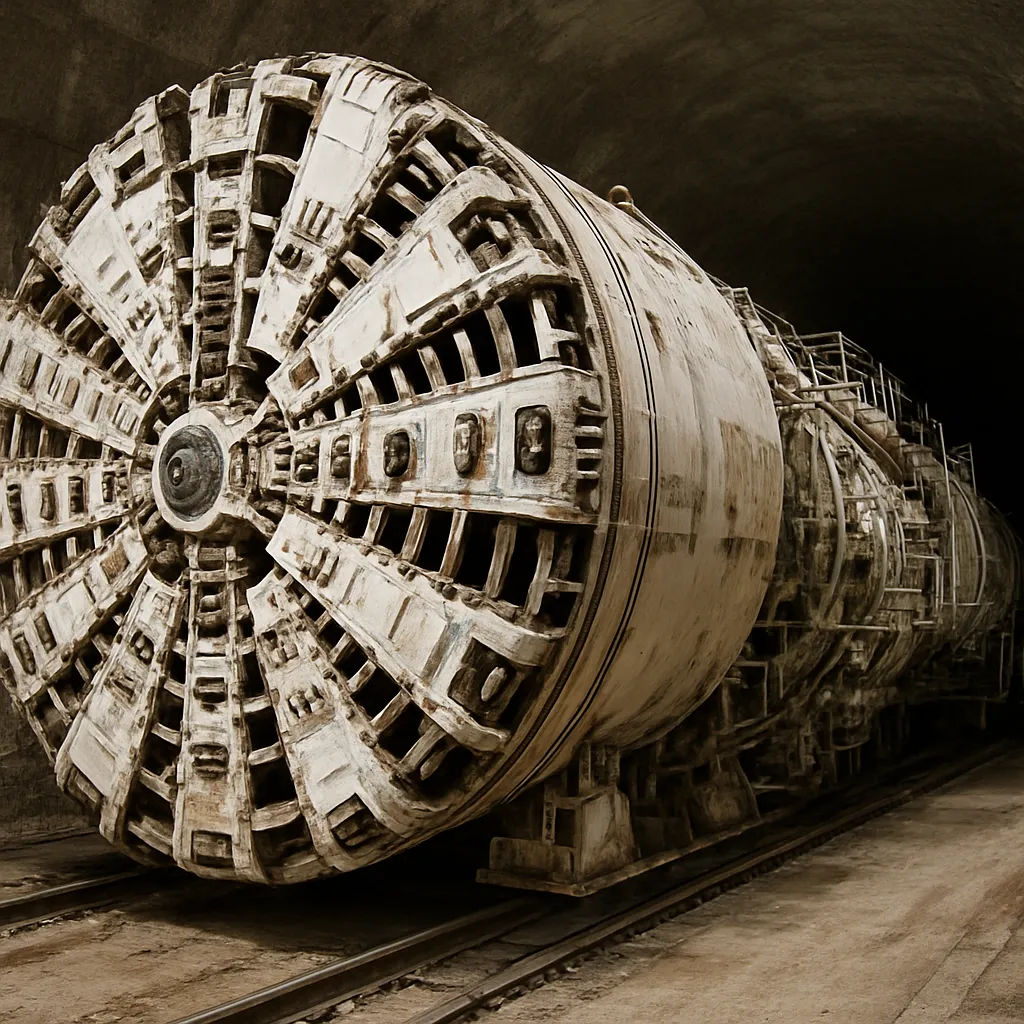
The Fastest Tunnel Boring Machines in the World showcase the pinnacle of engineering prowess as they slice through bedrock and clay to create the arteries of modern infrastructure. From urban subway extensions to hydroelectric water conveyance, these massive machines deliver precision and efficiency in environments once considered impenetrable. This article delves into their evolution, highlights record-setting performances, explores the cutting-edge technologies powering them, addresses operational challenges, and looks ahead to future breakthroughs.
Revolution in Underground Excavation
Beyond the simple pick and shovel, the development of tunnel boring machines (TBMs) marked a dramatic shift in how we approach subterranean construction. Early mechanical drills struggled to maintain a constant profile in heterogeneous soils, leading to frequent collapses and slow progress. The advent of the modern TBM harnessed automation, hydraulic thrust, and rotating cutterheads to deliver a streamlined operation. By enclosing the excavation face within a pressurized chamber, Earth Pressure Balance (EPB) and Slurry TBMs stabilized weak ground, minimizing surface settlement and project delays.
These innovations didn’t happen overnight. Designers iterated cutter disc materials, segment erector arms, and conveyor systems until they achieved an optimal balance between durability and cutting power. As machines grew longer and more powerful, they incorporated on-board workshops to recondition bits and perform routine maintenance without returning to the surface, a feature that would later become essential for the world’s fastest TBMs.
Record-Breaking Tunnel Boring Machines
Operators worldwide have pushed TBM performance to unprecedented levels, setting stunning daily advance records. Consider these milestones:
- Herrenknecht S-922 – Achieved a remarkable 118 meters in a single day during the construction of a water transfer tunnel in China. This feat relied on specialized high-torque drives and an optimized cutterhead design tailored to hard limestone.
- Bertha – Nicknamed after Seattle’s former mayor, this 17.5-meter-diameter EPB TBM carved almost 2,500 meters of highway tunnel beneath downtown Seattle. While its daily records peaked around 30 meters, its true legacy lies in pioneering large-diameter drives in mixed ground.
- Big Becky – Deployed in Toronto’s Crosstown LRT project, “Becky” etched tunnels at rates over 50 meters per day through shale and siltstone.
- World Record Holder – In 2017, a Chinese slurry TBM averaged 111 meters in one day on a hydroelectric scheme, combining intense hydraulic pressure with rapid segment erection to sustain continuous boring through varying strata.
Such achievements rest on meticulous logistical planning. Conveyor belts must match the TBM’s output, while segment factories operate around the clock to supply precast lining rings. Fleet synchronization and digital monitoring platforms ensure no bottlenecks emerge, enabling machines to maintain their blistering pace.
Technological Innovations Driving Unprecedented Speed
Recent TBMs have embraced a suite of cutting-edge features that push their performance envelopes:
- Adaptive Cutterhead Technology – Sensors measure torque and wear in real time, adjusting thrust force to optimize cutting efficiency and prolong bit life. This flexibility reduces downtime caused by unexpected ground hardness.
- Integrated Data Analytics – On-board computers aggregate parameters such as torque, rotation speed, and grouting pressure. AI algorithms then predict ideal speeds, flagging anomalies that could signal premature wear or ground instability.
- Automated Segment Erection – Robotic arms position concrete segments with millimeter accuracy, eliminating manual intervention in the tail shield. This automation slashes ring installation time and enhances worker safety.
- High-Performance Grinding Tools – Diamond-impregnated discs and tungsten-carbide cutters tear through abrasive rock while retaining sharpness far longer than conventional steel bits.
By orchestrating these innovations, mega-projects achieve daily excavation rates once thought impossible. The synergy of precision hydraulics, real-time monitoring, and advanced materials science has ushered in a new era of subterranean productivity.
Operational Challenges and Safety Protocols
Even the most advanced TBMs face formidable obstacles. Variable geology, from soft clay lenses to hard igneous intrusions, demands constant vigilance. Operators rely on predictive geological models and continuous face inspections to adjust equipment settings on the fly. Unexpected water inflows can flood the cutterhead chamber, so high-capacity pumps and emergency bulkheads are standard safety features.
Worker protection remains paramount. Underground environments pose risks of gas buildup, dust exposure, and mechanical hazards. Strict protocols govern ventilation, permit systems, and confined-space entry. Regular drills simulate emergencies, ensuring crews can respond swiftly to sudden breakdowns or geological surprises.
Future Horizons for Tunnel Boring Excellence
Looking ahead, TBM designers aim for even greater efficiency and minimal environmental impact. Novel lubricating polymers could reduce friction on shields and conveyor skids, trimming energy consumption. Next-generation composite materials promise lighter yet stronger cutterhead structures. Meanwhile, remote-control operation may allow entire tunneling trains to be supervised from a central command center, reducing on-site personnel and enhancing precision.
As urban centers expand and climate adaptation demands new water tunnels, the race for faster, safer, and greener TBMs will intensify. With each technological leap, these mechanical giants redefine what’s possible beneath the Earth’s surface.