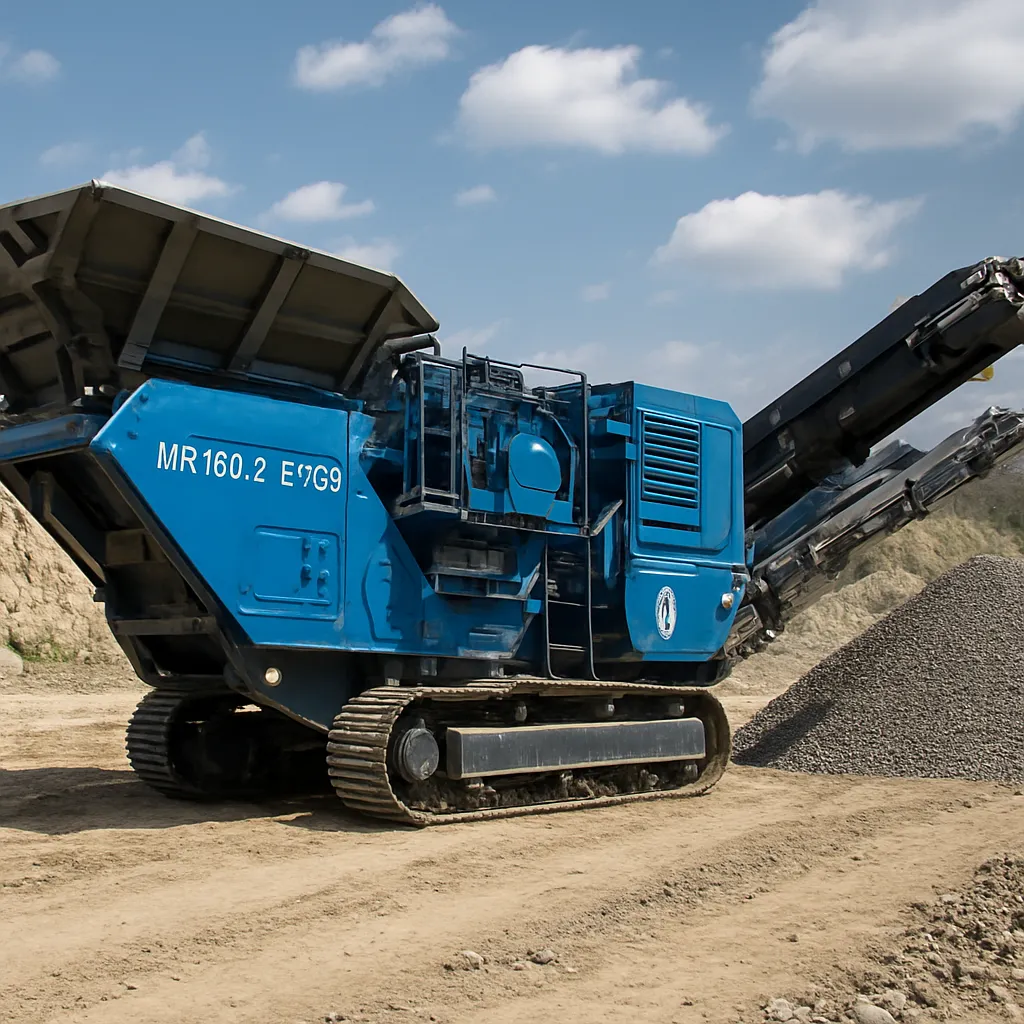
The Kleemann MR 130 Zi EVO2 is a high-performance, track-mounted impact crushing plant designed to meet demanding requirements in quarrying, recycling and construction projects. Combining a powerful crushing unit with an integrated screening system, the MR 130 Zi EVO2 offers a compact footprint, rapid setup times and flexible production of a wide range of aggregate fractions. This article examines the machine’s key characteristics, typical applications, operational advantages, maintenance considerations and important performance indicators, providing a practical guide for fleet managers, contractors and plant operators.
Overview and key features
The Kleemann MR 130 Zi EVO2 belongs to Kleemann’s EVO2 line of mobile crushing and screening plants and is aimed at customers who need a robust, mobile impact crusher solution. Built on a tracked chassis, the MR 130 Zi EVO2 integrates a primary impact crusher with on-board screening to deliver a compact but highly productive plant. It is intended for primary and secondary reduction of medium-hard to hard rock as well as for processing construction and demolition waste, asphalt recycling and riverbed material.
Key design highlights of the MR 130 Zi EVO2 include an optimised rotor and blow bar configuration for stable product quality, a generously dimensioned feed hopper with a vibrating feeder to ensure continuous feed, and an exchangeable screening unit directly beneath the crusher that allows for the production of two or more finished fractions in a single pass. The plant is engineered for simple transport and fast on-site commissioning, reducing downtime between moves.
The machine is equipped with advanced control and monitoring systems to support automation and operator comfort. Typical factory options include material-specific blow bars, dust suppression systems, conveyors of different lengths, and alternative power units for improved fuel economy or site-specific requirements.
Technical characteristics and performance (typical figures)
While exact specifications can vary by market and optional configuration, the MR 130 Zi EVO2 can be described by the following typical characteristics and performance ranges, as reported in manufacturer literature and common industry practice:
- Crusher type: Horizontal shaft impact crusher (HSI) with reversible rotor and adjustable impact aprons.
- Nominal feed opening: Designed to accept medium to large lumps of feed material; typical feed sizes processed effectively are up to several hundred millimetres depending on material and gradation settings.
- Throughput (capacity): Depending on material type, feed size and desired product gradation, typical operating capacities are commonly quoted in the range from a few hundred tonnes per hour up to several hundred tonnes per hour. Actual throughput strongly depends on rock hardness, abrasiveness and operator settings.
- Engine and power unit: The plant is usually driven by a diesel engine in the power class appropriate to the crushing unit; many installations use engines in the 200–400 kW range or equivalent power packs, with options for stage-compliant engines (e.g., EU Stage V, EPA Tier 4F where applicable).
- Operating weight: As a tracked, fully equipped unit the operating weight is typically in the multi-tonne class suitable for transport on standard heavy haulage trailers; many machines in this segment weigh several tens of tonnes in working configuration.
- Rotor diameter and speed: The rotor is configured for high reduction ratios and impact energy; rotor diameter and tip speed are selected to match material characteristics and throughput targets.
- Screening unit: Integrated or interchangeable screening decks beneath the crusher enable production of multiple fractions. Screen types and meshes are selectable to achieve target product curves.
- Conveyors and stockpiling: Foldable conveyors with hydraulically assisted transport arrangements allow for rapid setup and efficient stockpiling of produced materials.
Because exact numbers depend on optional equipment and local regulations, prospective buyers should consult the local Kleemann distributor or official datasheets to obtain project-specific figures for throughput, fuel consumption, transport dimensions and weight.
Where it is used: typical applications
The MR 130 Zi EVO2 is designed for broad use across industries that require on-site crushing and screening. Typical applications include:
- Quarrying and aggregate production — crushing limestone, granite, basalt and other common aggregates to produce road base, concrete aggregate and ballast.
- Construction and demolition recycling — processing concrete, masonry and mixed demolition material to recover reusable aggregates and reduce waste volumes.
- Asphalt recycling — integrated processing of reclaimed asphalt pavement (RAP), especially where a mobile plant is needed to treat material on site.
- River-bed and pit material processing — handling naturally graded materials and producing finished products with a controlled particle size distribution.
- Road and infrastructure projects — creating on-site base materials and fill, reducing haulage costs and supply delays.
In recycling contexts, the impact crusher’s ability to produce cubical, well-shaped aggregates is a distinct advantage. The integrated screening means contractors can reduce the number of separate machines on a site, saving transport and operating costs.
Operational advantages and productivity factors
The MR 130 Zi EVO2 delivers several practical benefits that translate into higher productivity and lower operating costs when compared to non-integrated or stationary plants:
- Mobility: The tracked undercarriage and compact design enable quick relocation between jobsites and within large quarries. This reduces logistics complexity and improves machine utilisation.
- Integrated screening: On-board screening reduces the need for additional equipment and allows simultaneous crushing and classification, producing ready-to-use fractions in one operation.
- Fast setup: Hydraulic folding conveyors and a straightforward hydraulic/electrical start-up procedure minimise time between transport and production.
- Flexible product gradation: Adjustable crusher settings, selectable blow bars and screening meshes enable operators to tailor product size and shape to customer specifications or jobsite requirements.
- Automation and controls: Modern control systems provide monitoring of critical parameters, hydraulic presets for common settings, and fault diagnosis that reduce operator errors and improve uptime.
- Reduced handling costs: Producing final products on site cuts down on transport of raw material to central plants and the return of oversized material for reprocessing.
These advantages combine to increase overall productivity and improve return on investment, particularly for contractors who move frequently between projects or those handling variable input materials.
Maintenance, wear parts and lifecycle costs
Maintenance and management of consumables are central to the lifecycle economics of any mobile impact crusher. Several design decisions in the MR 130 Zi EVO2 are focused on servicing ease and wear-cost reduction:
- Wear parts: Blow bars and impact aprons are the primary wear components in an HSI. The machine accommodates different blow bar alloys and geometries to match abrasiveness of quarried material — a choice that significantly affects component life.
- Access and serviceability: Wide access doors, hydraulic tilt access to the crushing chamber and centrally located lubrication points reduce the time needed for routine maintenance and wear part replacement.
- Monitoring: Electronic monitoring systems track operating hours, hydraulic and engine parameters and can alert operators to abnormal conditions before failures occur.
- Spare parts logistics: Using common parts across Kleemann’s EVO2 range simplifies inventory and reduces downtime when replacements are required.
From a lifecycle cost perspective, initial capital outlay must be balanced against consumable costs, fuel usage, operator training and expected utilisation rates. Regular predictive maintenance and selecting the correct blow bar material for the processed aggregate are among the most effective measures to reduce long-term costs.
Environmental performance and safety
Modern mobile crushing plants like the MR 130 Zi EVO2 are engineered with environmental and safety considerations in mind:
- Dust suppression: Optional integrated water spray systems and effective enclosure designs for the crushing chamber help control dust emissions at source.
- Noise reduction: Acoustic enclosures for the engine and optimized conveyor designs reduce overall machine noise, which is important on urban and sensitive sites.
- Fuel and emissions: The availability of stage-compliant engines and efficient power management reduces fuel consumption and emission levels. Hybrid and electrically powered alternatives (where supported) further lower the carbon footprint.
- Safety features: Emergency stop systems, safe access platforms, clear sightlines from operator stations and operator training are all standard practice to minimise risk during operation and maintenance.
Where regulatory requirements are strict, buyers can select engine and dust suppression packages to meet local limits. In recycling scenarios, on-site processing helps to lower transport-related emissions by reducing haul distances for both incoming and outgoing material.
Control systems, automation and operator ergonomics
The MR 130 Zi EVO2 is typically equipped with a modern control suite that provides centralised control of crusher and screening settings, conveyor speeds and diagnostics. Advanced features commonly found in this class of machine include:
- Centralised touchscreen control with presets for common material types to speed setup and reduce operator error.
- Load monitoring and anti-blocking systems to protect the crusher from overloads.
- Remote diagnostics and telematics for fleet monitoring, enabling predictive maintenance planning and remote troubleshooting.
- Adjustable operator platforms and intuitive controls to improve operator comfort during long shifts.
Automation improves consistency of product quality and allows less experienced operators to achieve near-optimal settings by selecting appropriate presets. Remote monitoring also enables fleet managers to track utilisation, fuel consumption and fault codes, improving overall fleet efficiency.
Practical considerations for purchase and operation
When evaluating the MR 130 Zi EVO2 for a specific project or fleet, consider the following practical points:
- Material characteristics: Hardness, abrasiveness and the presence of contaminants (e.g., rebar in demolition material) determine wear rates and the need for pre-sorting or additional screening.
- Throughput targets: Clarify realistic tonnage goals for the specific material. Manufacturer capacity figures are often presented for ideal conditions and must be adjusted for local material properties.
- Site logistics: Access roads, permitted axle loads for transport, crane availability for off-loading and on-site space for stockpiles should all be assessed before procurement.
- Operator training: Invest in operator training to ensure that the machine’s settings are used effectively and that maintenance routines are followed.
- After-sales support: Local dealer support, availability of spare parts and service contracts are critical to maintaining high uptime.
Case examples and typical productivity scenarios
Examples from industry use-cases for comparable mobile impact crushers provide insight into what to expect in practice. In quarry operations where feed material is uniform and pre-screened, operators commonly report stable production at a significant fraction of the machine’s rated capacity, with the integrated screen producing two to three marketable products. In demolition and recycling projects, throughput can be more variable but the value arises from on-site processing, which reduces haulage, landfill costs and enables immediate reuse of material.
Typical fuel consumption depends on engine size, workload and idling time; modern machines with optimised power management can show reasonable fuel economy when compared to older designs. Exact fuel figures should be obtained from the manufacturer based on the chosen engine configuration and expected operating regime.
Summary and buying checklist
The Kleemann MR 130 Zi EVO2 is a versatile, robust and relatively compact tracked impact crushing and screening plant suited to a wide range of applications, from hard-rock quarrying to construction and demolition recycling. Its main strengths are mobility, integrated screening capability and modern control systems that enhance productivity and reduce setup time. When considering acquisition, operators should evaluate material fit, throughput needs, transport logistics, service support and the choice of wear materials to optimise lifecycle costs.
Key considerations at a glance:
- Match crusher configuration to material hardness and desired product quality.
- Plan for spare parts and recommended wear-part inventories.
- Arrange operator training and preventative maintenance schedules.
- Select emission- and noise-compliant engine and dust-suppression options for sensitive sites.
- Leverage telematics and remote diagnostics to improve uptime and manage fleet performance.
In sum, the MR 130 Zi EVO2 is engineered to deliver high flexibility and efficient on-site production. Its combination of integrated screening, track mobility and operator-focused controls make it a compelling choice for contractors who need to produce consistent, marketable aggregates with minimal auxiliary equipment.


)
)