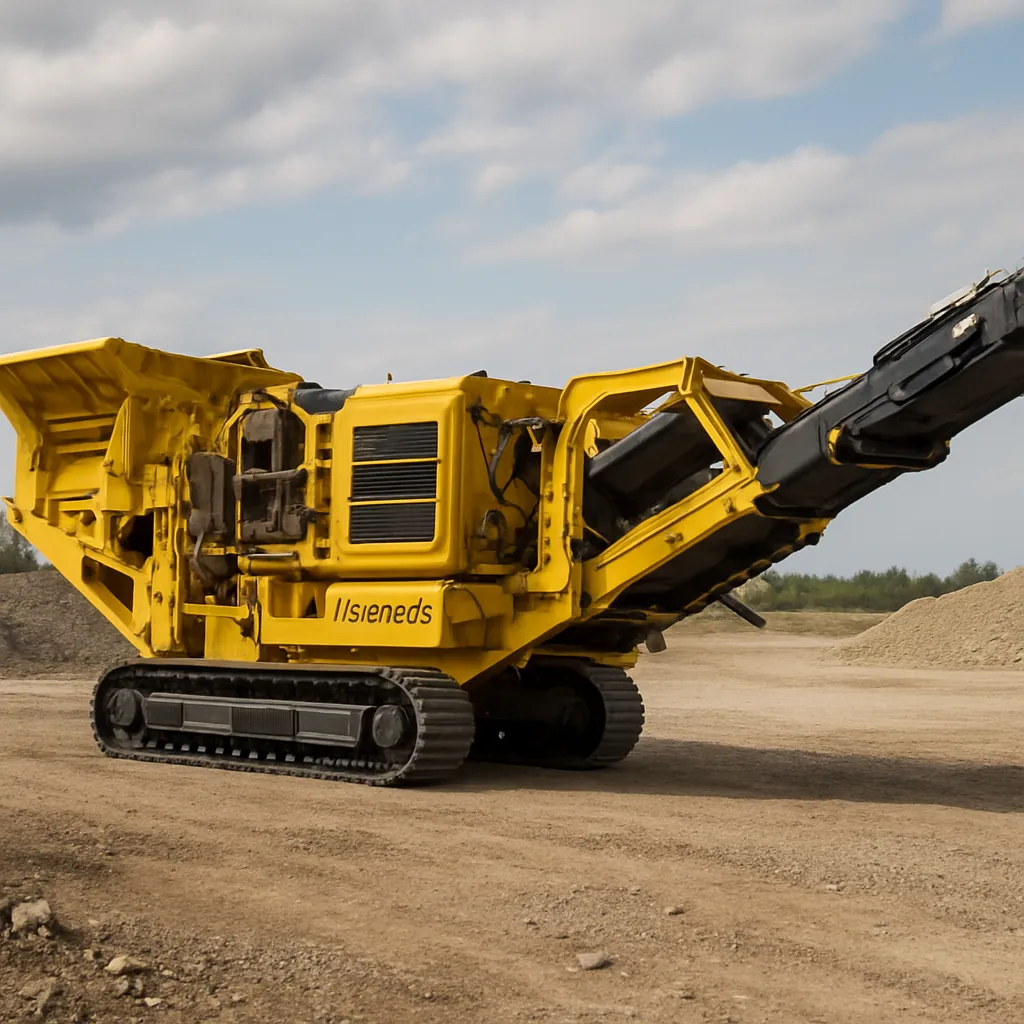
The Keestrack H6 is a modern, track-mounted cone crusher designed for demanding secondary and tertiary crushing applications. Combining robust mechanical design with flexible on-site configuration, the H6 is intended to deliver consistent material shaping, high productivity, and simplified logistics for contractors and aggregates producers. In the following sections we examine the machine’s design, typical applications, operational performance, maintenance needs, and where it stands in the wider market for mobile cone crushers.
Overview and key design features
The Keestrack H6 is built to provide compact, mobile crushing capability while delivering the benefits of a high-quality cone crusher in a single unit. The design emphasizes mobility, durability, and operator-friendly controls. As with many contemporary mobile cone units, the H6 integrates the crushing unit, feed hopper, vibrating feeder, conveyors, and a tracked undercarriage to enable quick redeployment around a site.
Mechanical concept
- Robust cone crusher chassis designed for heavy-duty operation and long service intervals.
- Integrated feed system with adjustable hopper and pre-screen or bypass options to optimise feed grading and reduce fines in the cone.
- Hydraulic adjustment and clearing systems enabling rapid change of settings and protection from tramp material.
- Multiple drive options (diesel-hydraulic or electric-driven configurations depending on site power availability) that focus on efficiency and reduced fuel consumption.
Control and automation
Modern H6 units typically come with an electronic control system that handles start/stop sequences, hydraulic settings, overload protection, and performance monitoring. Intuitive HMI screens and optional remote control allow operators to adjust the crusher settings to match product specifications, document performance, and react quickly to changing feed characteristics. The emphasis on automation improves consistency of output and reduces operator fatigue.
Applications and typical use cases
The H6 is most commonly used in secondary, tertiary, and quaternary crushing stages where a cone crusher’s particle shape and cubical product are required. Its track-mounted mobility means it can be used in diverse settings, from temporary roadworks and urban demolition projects to large-scale quarry operations.
Primary sectors
- Aggregates production: producing crushed stone for concrete, asphalt, and construction fill, with a focus on high-quality cubical products.
- Construction and demolition recycling: crushing concrete, bricks, and asphalt to produce reusable aggregates on-site.
- Mining and quarrying: secondary and tertiary reduction of hard rock such as granite, basalt, and gneiss.
- Infrastructure and road projects: portable crushing for on-site material processing to reduce transport costs and project timelines.
Specialist uses
Because of the cone crusher’s ability to produce a well-shaped product and control gradation, the H6 is also used for material production requiring tight specification compliance — for example, high-quality sub-base aggregates, pre-graded roadstones, or specific fractional outputs for concrete batching plants. Its capability to operate in closed-circuit arrangements with screens makes it suitable for fine-tuning particle size distributions.
Performance, capacity and technical considerations
Performance of the H6 depends strongly on the rock type, feed gradation, crusher configuration, and operational settings. Actual throughput can vary widely from soft to very hard rock and between open- and closed-circuit configurations. Typical mobile cone crushers in the H6 class are engineered to deliver a balance between throughput and product quality.
Throughput and product quality
- Throughput ranges are influenced by the chosen cone liner profile, crushing chamber type, and eccentric throw. Expect flexible performance where an operator can prioritise either higher tonnage or finer product quality.
- When combined with a suitable screening system, the H6 can achieve tight gradation control and high proportions of cubical fractions, which is important for concrete and asphalt aggregate specifications.
Energy consumption and environmental footprint
Recent iterations of mobile cone units including the H6 place emphasis on energy-efficient drives and optimized power transmission. Compared to older, less-efficient designs, modern machines typically achieve lower fuel burn per tonne processed and reduced noise emissions. Where available, electric-drive options further reduce site emissions and can leverage off-grid renewable energy or low-emission site power sources.
Typical technical considerations when specifying an H6
- Feed size: ensure the H6 feed opening and pre-screening arrangements match the primary crusher or feed conveyor output.
- Crusher chamber and liners: selection dictates product shape and wear life. Wear parts are a significant operational cost — selecting the right metallurgy and profile is key.
- Closed vs open circuit: closed-circuit operation with a screen will produce a more consistent final product but affects capacity and power consumption.
- Site logistics: track width, transport dimensions, and setup time influence how quickly the unit can be redeployed between sites.
Operation, safety and operator considerations
Operating a mobile cone crusher like the H6 requires trained personnel and well-defined procedures to ensure safe, consistent output. Modern machines incorporate multiple protective and convenience features that simplify operation while enhancing safety.
Safety systems
- Hydraulic relief and overload systems to reduce the risk of damage during tramp events.
- Emergency stop systems and lockout procedures to protect maintenance crews.
- Access platforms, handrails, and safe service points designed to reduce fall and crush hazards during routine inspections and servicing.
- Dust suppression solutions and fully-enclosed conveyors to limit airborne particulate emissions and improve site safety.
Operator training and best practices
Effective operation depends on careful feed management (avoiding oversized rocks and tramp), regular monitoring of wear parts, and proactive maintenance schedules. Operators should be trained to recognise signs of liner wear, changes in product gradation, and abnormal vibrations or noises. Proper set-up of the feed system and hydraulic settings will maximise life of wear parts and optimise performance.
Maintenance, wear parts and lifecycle costs
Maintenance planning is crucial for controlling lifecycle costs of any cone crusher. Wear parts (mantle and concave) and hydraulic components represent predictable recurring expenses. A well-managed preventative maintenance program minimises downtime and extends component life.
Wear parts and spare management
- Choose wear material and liner profiles that suit the processed rock to balance cost and lifetime.
- Maintain a small on-site stock of commonly replaced items (filters, belts, key wear liners) to reduce stoppage time.
- Regularly inspect and rotate liners where applicable to maximise material utilisation.
Service intervals and condition monitoring
Many operators use condition monitoring systems integrated into the machine control package to track hydraulic pressures, temperatures, and vibration signatures. Predictive maintenance using these data streams can reduce unplanned downtime and lower total cost of ownership. Regular greasing, belt tension checks, and hydraulic fluid monitoring are essential tasks in a typical service regime.
Environmental considerations and regulatory aspects
Mobile crushers operating in urban or sensitive environments are increasingly judged on noise, dust, and emissions. The H6 platform supports several measures to reduce environmental impact and comply with regulatory requirements.
- Dust control: water spray bars, enclosed conveyors, and on-board dust extraction help meet local air quality limits.
- Noise reduction: acoustic enclosures, low-noise fans, and optimised routing of conveyors reduce sound emissions during operation.
- Emissions: modern engines and optional electric-drive systems reduce CO2 and NOx emissions; careful fuel management reduces the overall environmental footprint.
- Permitting: contractors should ensure that portable crushing setups are matched to local permit conditions, including hours of operation, noise limits, and dust suppression practices.
Comparison with comparable mobile crushers and market positioning
In the market of mobile crushers, the H6 sits among mid-size, track-mounted cone crushers designed for operators who need a balance of mobility and production. Compared to larger fixed-site cone plants it offers rapid redeployment and lower initial capital cost, while compared to smaller portable cones it offers greater throughput potential and more sophisticated automation.
Advantages relative to alternatives
- Faster set-up and relocation compared with semi-permanent plants, reducing downtime between projects.
- Integrated design reduces need for separate conveyors and feed infrastructure.
- Flexibility to operate in closed- or open-circuit configurations and to be combined with screens for multi-product output.
When another solution might be preferred
- For very large, continuous high-tonnage operations a stationary cone or tertiary crusher plant may offer lower operating costs per tonne.
- Where feed size is extremely large, a larger primary crusher may be needed upstream to protect the H6 cone.
- For ultra-fine secondary grinding, other technologies like vertical-shaft impactors (VSI) may produce better particle shapes for specific applications.
Practical tips for buyers and operators
- Define end-product specification clearly before selecting chamber profiles and screen media — this is key to avoiding costly rework.
- Inspect undercarriage and transport dimensions to ensure compliance with local road and site access rules.
- Ask about remote diagnostics and telematics packages — these can significantly improve uptime and enable proactive maintenance planning.
- Compare total cost of ownership over machine life, not just purchase price; wear parts, fuel/electricity consumption, and service intervals make a big difference.
- Plan for a reliable supply of replacement liners and hydraulic components, especially in remote operations, to avoid prolonged stoppages.
Concluding remarks
The Keestrack H6 offers a compelling package for businesses that require portable cone-crushing capacity with reliable product quality and straightforward on-site setup. Its strengths lie in versatility, the ability to produce cubical material, and the operational flexibility modern projects demand. Properly specified and maintained, an H6-class machine can be a productive asset for aggregates producers, contractors, and recyclers aiming to deliver high-quality products while limiting logistics and site preparation costs.
)
)