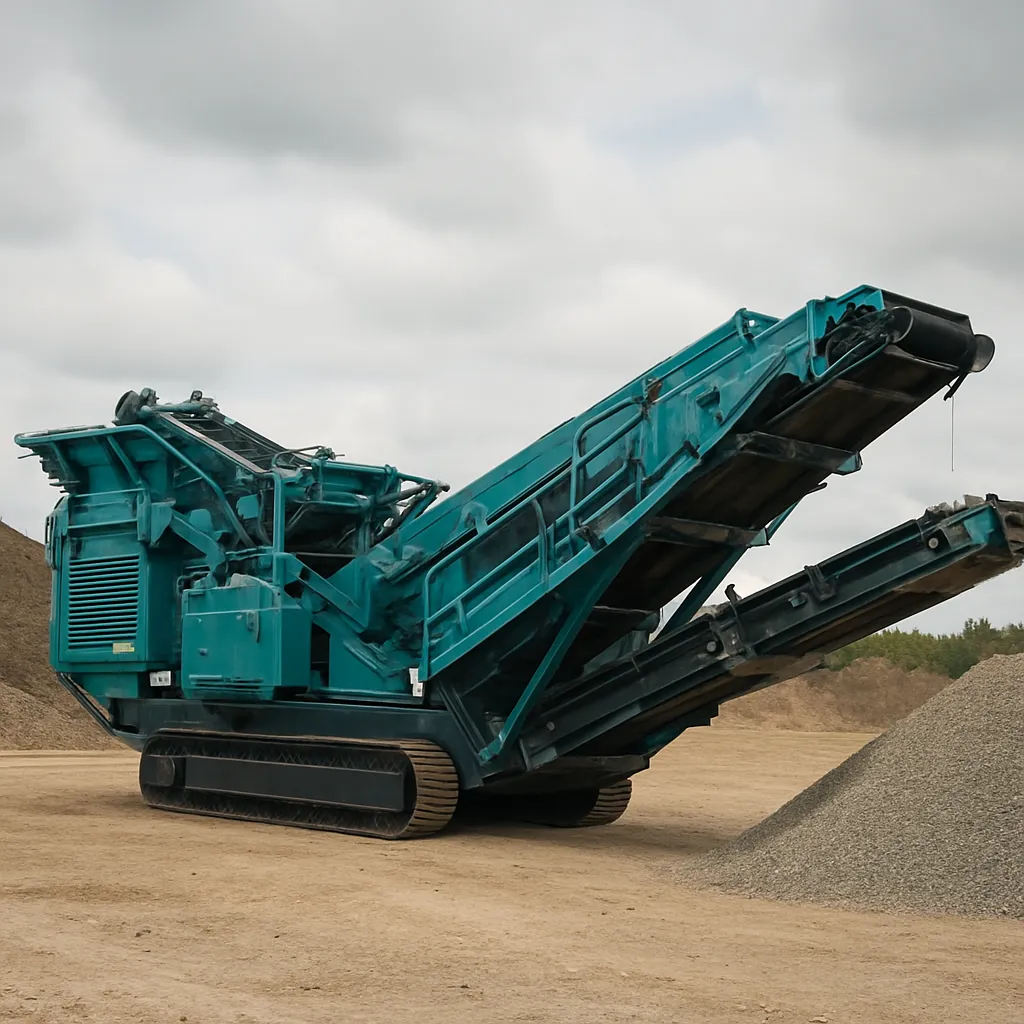
The Powerscreen Warrior 2100 occupies a well-established niche in the world of compact, heavy-duty material handling equipment. Designed as a robust, versatile, and transportable machine, it combines the characteristics of a high-performance mobile screening unit with options that allow integration into broader crushing and recycling flows. In this article we explore its design, typical uses, operational performance, maintenance considerations, and factors that make the Warrior 2100 an attractive choice across construction, quarrying, demolition, and recycling sectors.
Design and core features
The Warrior 2100 is engineered as a compact, track-mounted screening platform that emphasizes quick setup, ease of transport, and durable build quality. Central design goals are to maximize uptime while minimizing the logistical footprint that many stationary screens demand. Typical design elements include a heavy-duty screenbox, variable speed conveyors, a deep feed hopper with hydraulic folding sides, and an under-screen conveyor for oversize material handling.
Key features commonly highlighted by operators and dealers include:
- Track-mounted chassis for easy manoeuvring onsite and the ability to traverse rough ground.
- A choice of screen media and deck configurations to suit aggregate, sand, compost, topsoil, recycled concrete and other materials.
- Fast set-up and teardown with hydraulic folding components and remote controls for convenient operation.
- Integrated prescreen or bypass options to increase screening efficiency when processing high-moisture or gradation-sensitive materials.
- Modular conveyor layout and discharge heights that ensure efficient stockpiling and simple integration into mobile crushing circuits.
Technical specifications and performance ranges
Specifications vary by production year and optional packages, but the Warrior 2100 generally falls into the medium-compact class of screening plant. Below are representative technical ranges and figures widely reported in industry literature and product summaries; exact values should be confirmed with the machine’s datasheet or manufacturer for a specific serial number and year.
Typical technical ranges
- Engine: Diesel power unit in the general range of 85–130 kW (115–175 hp), depending on Tier emission rating and optional power units.
- Operating weight: commonly between 12–20 tonnes, influenced by options such as heavy-duty undercarriage, extra conveyors or added prescreens.
- Screenbox dimensions: typically around 2.0–2.2 m width with one or two deck options for single or multi-fraction screening.
- Hopper capacity: a deep hopper in the order of 2–4 m³, often with hydraulic sides and a grizzly prescreen option.
- Throughput: material-dependent, with typical ranges from 100–350 tonnes per hour for common aggregates under standard conditions; fine, wet or heavy feed materials will reduce effective throughput.
- Discharge heights and conveyor lengths: configured to provide stockpile heights in the 2–4 m range for primary and secondary conveyors.
These figures illustrate the machine’s intended role as a balance of portability and productivity rather than a high-capacity stationary screener. Many end-users appreciate the Warrior 2100’s ability to deliver predictable, reliable results within the footprint of a single tracked unit.
Applications and industry use cases
The Warrior 2100 is used across a broad set of industries where material separation and sizing are needed quickly and flexibly. Its most common applications include:
Quarrying and aggregates
In quarries, the Warrior 2100 is often deployed to separate sand, gravel and crushed stone into marketable sizes. Its compact footprint allows it to be moved between pits to handle different blends or to operate as a scalping unit ahead of primary crushers to remove fines and reduce crusher wear. The ability to fit different screen decks and media makes it suitable for producing sub-base, coarse aggregate and washed sands when coupled with additional washing equipment.
Construction and civil engineering
On construction sites, the machine functions as a mobile plant to process excavation spoil, segregate reusable materials and deliver graded aggregates for backfill, bedding and contractor use. Its quick setup and mobility reduce haulage costs and downtime associated with transporting bulk material offsite for processing.
Demolition and recycling
When dealing with demolition rubble, concrete and asphalt, the Warrior 2100 is effective at separating fines, soil and small-sized material from larger recyclables. Operators can feed processed concrete into a crusher and then screen the crushed product into usable fractions, enabling on-site recycling and reducing disposal costs.
Topsoil and landscaping
With appropriate screen media, the machine cleans and classifies topsoil, compost and organic material. Landscapers, municipal parks departments and nurseries use it to produce consistent substrates for planting and turf establishment. The portability advantage is pronounced for projects spread across multiple sites.
Operational performance and productivity considerations
Performance is shaped by several interacting factors. Machine setup, screen media selection, feed material characteristics, and operator skill all influence effective output and product quality. Consider the following operational points:
- Screen selection: Choosing the correct aperture and screen type (e.g., punch plate, woven mesh, rubber or polyurethane) is critical to achieving the desired gradation and throughput.
- Feed consistency: Even feeding using an appropriately sized jaw crusher or feeder reduces blinding and improves screening efficiency.
- Prescreening: A grizzly or prescreen saves wear on the main screen when oversized or sticky material is present and improves throughput by removing fines early.
- Power management: Correct engine tuning and fuel quality affect both operational hours and emissions; many modern units include options for remote monitoring to optimize fuel usage.
- Operator control: Variable speed drives on conveyors and screenbox vibration control enable tailored performance for different materials and climatic conditions.
Throughput numbers are highly variable. For instance, a relatively free-flowing aggregate may yield the higher end of the throughput range (200–350 t/h) while damp soils or mixed demolition waste may reduce throughput to under 100 t/h due to increased blinding and tramp material handling requirements.
Maintenance, safety and lifecycle costs
Maintaining the Warrior 2100 to manufacturer standards prolongs component life, reduces downtime and preserves resale value. Typical maintenance routines include daily visual checks, lubrication schedules, belt and track inspections, and periodic screen media replacement.
Common maintenance tasks
- Daily checks: hydraulic systems, fluid levels, belt condition, and track tension.
- Wear part monitoring: screen media, feeder grizzlies, conveyor belts and trommel (if fitted) need regular inspection and scheduled replacement intervals.
- Cleaning: preventing build-up of sticky materials on the screenbox and conveyors reduces unplanned stoppages.
- Software and electronics: modern machines often include telematics; updating firmware and monitoring alerts helps preempt mechanical failures.
From a safety perspective, the Warrior 2100 adheres to industry norms with guarding around moving parts, emergency stop systems, and lockout procedures for maintenance. Operators should be trained in safe lifting and isolation procedures, and site supervisors should ensure appropriate protective zones around stockpiles and conveyors.
Lifecycle costs depend on utilization, maintenance discipline, and operating environment. While capital cost is often higher than simple static screens, the savings from reduced haulage, flexibility in redeployment, and faster commissioning can make track-mounted units cost-effective over a medium-term ownership horizon.
Environmental and regulatory considerations
Mobility confers environmental benefits by allowing material processing closer to the source, which reduces truck movements and associated emissions. That said, onsite screening operations must still consider dust suppression, noise mitigation, and fuel consumption:
- Dust control: water sprays, misting systems or dedicated dust extraction units can be fitted or used in combination to meet site limits and protect nearby communities.
- Noise reduction: acoustic enclosures and careful positioning relative to sensitive receptors reduce noise impacts during operations.
- Emissions: Tier-compliant engines and options for electric or hybrid powerpacks are increasingly offered to meet tightening emissions standards and to allow operation in restricted urban environments.
Compliance with local permitting and environmental assessment processes is essential. Operators should plan for waste handling, stormwater runoff control and any permit conditions that restrict operating hours or require emissions monitoring.
Accessories, attachments and integration
The Warrior 2100 supports a variety of attachments and options to extend its usefulness and tailor it to specific workflows. Typical add-ons include:
- Prescreen/grizzly units and fines conveyors for improved efficiency with sticky or mixed feeds.
- Magnetic separators for removal of ferrous contamination in recycling and demolition applications.
- Wash units and sand classifiers to produce washed aggregates and high-quality sand fractions.
- Remote-control systems, telematics packages and live diagnostics to enable fleet management and predictive maintenance.
Integration into a mobile crushing circuit is a common configuration: material is fed from the screen to a jaw or cone crusher, crushed to size and returned to the screen for sizing into marketable fractions. The Warrior 2100’s conveyor geometry and discharge heights are designed to facilitate this kind of multi-machine setup while keeping the overall footprint compact.
Comparisons and market positioning
Compared with larger stationary vibrating screens, the Warrior 2100 trades raw maximum capacity for agility and lower logistical costs. Compared with smaller portable screens, it offers more robust construction, higher power options and greater versatility in screen media and configurations.
Competing equipment in its class typically includes machines from other established manufacturers of mobile screening equipment. Buyers often evaluate options on criteria such as fuel efficiency, dealer support, ease of maintenance, availability of spare parts and resale values. The Warrior 2100 tends to score well with buyers who need a dependable balance of capacity and portability.
Case examples and practical notes from operators
Field reports from contractors highlight several recurring themes:
- On roadworks projects, using the Warrior 2100 to screen sub-base materials reduced the need to import aggregate and significantly cut haulage costs.
- In demolition recycling, combining crushing and screening onsite allowed contractors to produce multiple saleable products and reduced disposal costs.
- Operators working in remote quarry faces valued the machine’s ease of towing between locations and the rapid set-up that allowed processing to begin on the same day as arrival.
Practical tips include careful pre-inspection of feed material to design the screening line correctly, investing in appropriate prescreening for sticky materials, and training operators in the most effective screen media selection to balance productivity and product quality.
Buying considerations and residual values
When evaluating the purchase or hire of a Warrior 2100, consider the following:
- Application fit: ensure the machine’s capacity and deck configuration align with the expected feed and desired outputs.
- After-sales support: proximity of dealer support and availability of genuine wear parts affects uptime and lifecycle costs.
- Transport and logistics: confirm transport dimensions and any special towing requirements for local regulations and road permits.
- Used market: well-maintained units from reputable owners retain reasonable resale value due to the model’s popularity and parts availability.
Conclusion
The Warrior 2100 is a flexible and practical solution for companies needing mobile screening capability without the commitment of larger stationary plants. Its combination of versatility, durability and relative ease of operation makes it appropriate for quarries, construction sites, demolition recycling and landscaping projects. While exact technical data vary by model year and optional equipment, the Warrior 2100 consistently offers a balance of efficiency and mobility that helps operators reduce logistics costs and increase on-site processing capability. Proper screen media selection, routine maintenance and matching the machine to the application are the main levers for maximizing throughput and achieving long operational life.


)
)