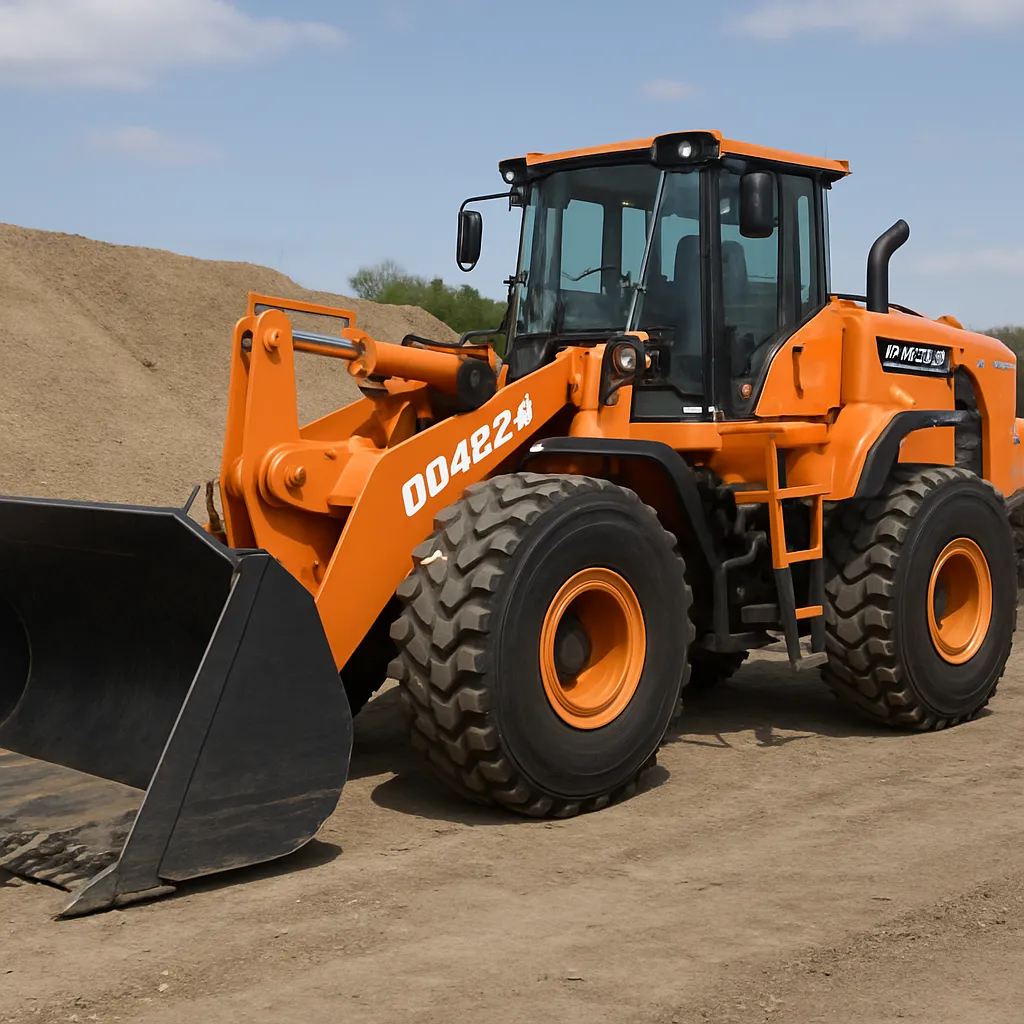
The Doosan DL350-7 wheel loader is a heavy-duty machine designed for demanding earthmoving, material handling and industrial tasks. Combining proven mechanical systems with modern electronics and operator-focused ergonomics, the DL350-7 is positioned as a versatile choice for construction, quarrying, mining support, recycling and large-scale agricultural operations. This article explores the machine’s characteristics, typical specifications, applications, design highlights, maintenance considerations and market context, offering a comprehensive look at why this loader is a popular option among fleet managers and equipment operators.
Overview and positioning
The Doosan DL350-7 belongs to Doosan’s 7-series wheel loader range, which emphasizes a balance between durability, fuel efficiency and operator comfort. It is intended for customers who need a robust loader capable of high cycle rates and heavy lifting without sacrificing serviceability. The model number DL350-7 signals its place in Doosan’s lineup as a mid-to-large class wheel loader, suitable for tasks where bucket sizes, lift capacity and traction play crucial roles.
Key conceptual strengths
- Power delivery optimized for both travel and breakout performance.
- Hydraulic systems engineered for fast cycle times and smooth control.
- Robust frame and axles for long-term durability in harsh environments.
- Operator-centric cab design to boost productivity and reduce fatigue.
- Onboard electronics and telematics to support fleet management and uptime.
Typical technical specifications
Exact specifications can vary with region and factory configurations. The figures below summarize a representative configuration for the Doosan DL350-7 to give a realistic expectation of performance and capabilities.
- Engine: diesel, turbocharged, aftercooled; emissions stage compliant (commonly Tier 4 Final / Stage V depending on market).
- Rated engine power: typically in the range of 180–250 kW (approximately 240–335 hp) depending on tuning and regional variants.
- Operating weight: generally around 18,000–22,000 kg, depending on bucket choice and counterweight options.
- Bucket capacity: multiple options commonly available, from approximately 3.0 to 5.0 m³ for general-purpose buckets; specialty buckets (light material, rock, high-capacity) expand the range.
- Torque and breakout force: designed to provide strong breakout performance, often in the order of hundreds of kN for heavy-duty digging and loading applications.
- Transmission: powershift or electronically controlled planetary drive with several forward and reverse gears to balance tractive effort and travel speed.
- Top travel speed: typically up to around 35–40 km/h, depending on configuration.
- Fuel tank capacity: commonly in the 300–450 L range to support long operating shifts.
- Hydraulic system: high-flow circuit for fast cycle times, with optional hydraulic flow rates for attachments.
- Axles: heavy-duty planetary axles with differential locks for traction in rough terrain.
Note: Buyers should consult the local Doosan dealer or official product documentation to obtain the exact specification sheet for the region and configuration they intend to purchase.
Applications and sectors of use
The Doosan DL350-7 is built to serve a broad spectrum of industries. Its combination of lift capacity, bucket options and rugged undercarriage make it particularly valuable where high throughput and reliability are required.
Primary sectors
- Construction — handling aggregates, loading dump trucks, site preparation and backfilling.
- Quarrying and mining support — loading primary crushers, stockpiling, and handling blasted rock.
- Recycling and waste management — moving bulky recyclable materials and processing mixed loads with specialized attachments.
- Agriculture and bulk materials — loading silage, feed, fertilizer and bulk commodities at farms and storage terminals.
- Ports and terminals — container yard assistance, bulk material transfer and general cargo handling.
In each use case, the DL350-7’s adaptability through bucket choices and hydraulic attachments increases its utility. For example, switching between a heavy-duty rock bucket and a high-capacity light-material bucket can shift the machine’s role from quarry loader to bulk-material handler in a matter of hours.
Design and features that matter
Doosan has incorporated a mixture of proven mechanical systems and modern conveniences to make the DL350-7 both serviceable and productive in the field. Below are the features that operators and fleet managers typically highlight.
Powertrain and driveline
- Reliable turbocharged diesel engine with electronic control for optimized fuel delivery and emissions control.
- Electronically controlled transmission that delivers smooth shifting and improved fuel economy under variable loads.
- Locking differentials and heavy-duty axles that maintain traction under challenging ground conditions.
Hydraulics and attachment systems
- High-flow hydraulic pumps for rapid lift and dump cycles, important for loading cycle efficiency.
- Proportional joystick controls that give precise attachment handling for tasks like pallet forks, grapples or sweepers.
- Quick-coupler compatibility to minimize downtime when changing attachments on-site.
Cab ergonomics and visibility
- Roomy operator station with adjustable seat and controls to reduce fatigue during extended shifts.
- Large glass area and camera options for enhanced forward and rear visibility, improving safety in tight sites.
- Climate control and noise reduction measures improve operator comfort and concentration.
Serviceability and uptime
- Grouped service points and easily accessible daily check points accelerate routine maintenance.
- Robust cooling package and filter arrangements to withstand dusty and hot operating environments.
- Telematics integration (e.g., Doosan’s connected solutions where available) for remote monitoring of health, fuel consumption and service alerts.
Performance and efficiency in practice
Performance of the DL350-7 is often judged by cycle times, fuel consumption per ton moved, and uptime. In real-world operations, these metrics depend on operator skill, attachment choice and site conditions. Nonetheless, several design choices support efficiency:
- Engine maps and transmission logic that favor fuel economy during partial-load operations while still delivering adequate power for heavy digs.
- Hydraulic priority settings that reduce wasted flow and ensure the boom and bucket receive the needed power during critical moments of the cycle.
- Balanced load-sensing hydraulics that can reduce heat build-up and wear, supporting longer component life.
When properly matched to the material and task, operators can expect competitive fuel consumption figures compared to other wheel loaders in the same class. Telematics data from fleets operating Doosan machines frequently shows reductions in idle time and improvements in planned maintenance adherence, which together increase overall productivity and lower operating cost per ton.
Attachments and versatility
One of the strengths of the DL350-7 is its ability to accept a wide variety of attachments, widening the range of potential tasks and improving return on investment.
- Standard and high-capacity buckets for general loading and light-material handling.
- Heavy-duty rock buckets designed for tough quarry environments.
- Pallet forks, bale spears and grapples for agricultural and recycling operations.
- Sweepers, snow blades and snow blowers for municipal and seasonal work.
- Forklift-style fork frames and specialized lifting equipment for port terminals and bulk handling facilities.
Quick-coupler systems and optional hydraulic circuits allow fast interchangeability, enabling a single DL350-7 to perform multiple roles across shifts.
Maintenance, lifecycle and operating costs
Long-term ownership costs are critical when selecting a wheel loader. The DL350-7 was engineered with attention to serviceability and durable components to reduce life-cycle costs.
Planned maintenance
- Accessible grease points and grouped filters reduce labor time for routine servicing.
- Service intervals follow industry standards; many owners extend intervals with high-quality consumables and monitoring.
- Telematics and onboard diagnostics allow predictive maintenance, reducing the risk of unexpected failures.
Replacement parts and dealer support
- Doosan parts network is well-established in many regions, facilitating parts availability.
- Availability of rebuild and remanufactured components provides cost-saving options for major repairs.
Residual value and total cost of ownership
Residual values depend on region and market demand. Generally, machines with documented maintenance history, telematics records and appropriate attachments command higher resale prices. Efficient fuel use and high uptime contribute significantly to favorable total cost of ownership.
Safety and operator support
Modern wheel loaders must balance power with operator protection. The DL350-7 includes features that promote safe operation in dynamic sites.
- ROPS/FOPS-certified cab structures to protect operators during rollovers and falling-object incidents.
- Camera systems and optional proximity detection to warn of obstacles and pedestrians.
- Ergonomic control layout to reduce the likelihood of operator error during intensive tasks.
- Emergency shutdown procedures and easy access to fire extinguisher mounts improve on-site safety preparedness.
Market context and statistical notes
Doosan’s 7-series loaders, including the DL350-7, compete in a mature global market featuring other major OEMs. Their market performance is influenced by factors such as commodity prices (which affect quarry and mining investment), construction activity and government infrastructure spending.
Production and adoption trends
- In periods of high construction and mining activity, demand for mid-to-large wheel loaders rises, boosting sales for models like the DL350-7.
- Increasing focus on emissions compliance and fuel efficiency has pushed manufacturers to adopt advanced engine controls and selective catalytic reduction (SCR) systems in this class.
- Telematics and remote diagnostics have become expected features; machines equipped with such systems often show better uptime statistics in fleet comparisons.
While specific global sales numbers for the DL350-7 are not publicly disclosed on a machine-by-machine basis, industry reports indicate that Doosan remains a significant player in the loader segment, particularly in markets where competitive pricing and dealer presence are decisive factors.
Buying tips and configuration guidance
Selecting the optimal DL350-7 setup requires matching machine configuration to the primary tasks it will perform.
- Choose the appropriate bucket size and type for material density — high-capacity buckets for low-density materials, heavy-duty buckets for abrasive rock.
- Consider axle and tire options based on site conditions (mud, rock, hardpack) to maximize traction and minimize tire wear.
- Opt for telemetry and full-service packages if uptime and planned maintenance are priorities for your operation.
- Evaluate hydraulic flow and auxiliary circuits when planning to use high-demand attachments like cold planers or specialized material handling tools.
Conclusion
The Doosan DL350-7 wheel loader is a capable, adaptable machine for customers requiring a strong combination of power, durability and operational flexibility. Its robust underpinnings and modern features make it suitable for demanding environments such as construction sites, quarries, recycling centers and ports. While specific numbers vary by market and configuration, the DL350-7 is built to deliver reliable performance, manageable lifecycle costs and the versatility needed to serve multiple applications within a fleet. Proper configuration, operator training and proactive maintenance are the keys to unlocking the machine’s full potential and ensuring strong productivity across seasons and job types.


)
)