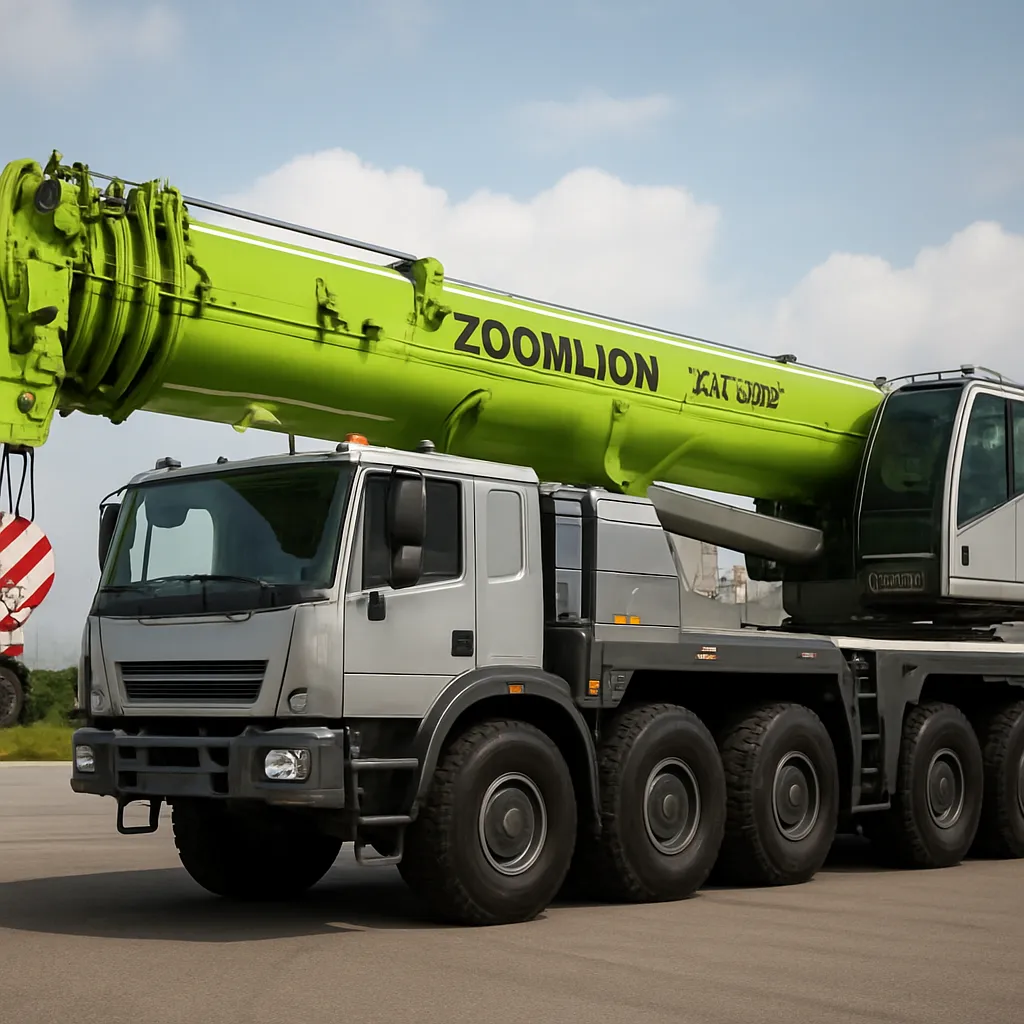
The Zoomlion ZAT1300 is an all-terrain crane designed to combine road mobility with robust off-road capability, enabling heavy lifting across construction, energy, infrastructure and industrial sites. This article explores the machine’s design philosophy, typical applications, technical characteristics, operational considerations, safety and maintenance practices, and market context. Where specific numerical figures are discussed they are presented as typical values for a 130‑ton class all‑terrain crane; for exact manufacturer data consult Zoomlion technical documentation.
Overview and positioning
The ZAT1300 is positioned in the medium‑large segment of all‑terrain cranes, offering a balance between transportability and lifting capacity. As an all‑terrain machine, it is built to move quickly on public roads and drive on rough site tracks, enabling the crane to reach lifts without the need for heavy specialised transport. Key design objectives for this class include high on‑road speed, robust off‑road suspension, compact transport dimensions, and a telescopic boom that delivers a wide range of reach and height options.
The typical buyers and operators are contractors in the construction, power generation, telecommunications, and industrial installation sectors who need a flexible machine that can perform a variety of lifts while minimizing setup time. The ZAT1300 aims to deliver a combination of lifting performance, operator comfort, and efficient maintenance to maximize uptime on projects.
Technical characteristics and typical specifications
Below are the typical technical characteristics you can expect for a 130‑ton class all‑terrain crane such as the Zoomlion ZAT1300. Exact figures vary by configuration (boom, counterweight, jib options, tyre sizes, and regional emissions packages).
Powertrain, chassis and mobility
All‑terrain cranes are engineered as integrated vehicles with a self‑propelled undercarriage. The ZAT1300 typically features a powerful diesel engine paired with a heavy‑duty transmission to provide both on‑road speed and low‑speed torque for site maneuvers. Typical specifications include:
- Engine power: approximately 300–400 kW (≈400–540 hp) depending on emission level and tuning.
- Drive axles: 6×6 or 8×8 configurations are common in this class to balance payload, axle loads and mobility.
- Top road speed: capable of legal on‑road speeds (often up to 80 km/h depending on gearing and local regulations).
- Suspension: heavy‑duty leaf or hydropneumatic systems for ride comfort and off‑road capability.
Superstructure, boom and lifting system
The core lifting elements focus on the telescopic boom, hoist systems and the counterweight arrangement:
- Main boom: telescopic boom typically in the range of 35–50 meters depending on configuration; extensions or lattice fly jibs can increase tip height.
- Max rated capacity: commonly marketed as a 130‑ton capacity at short radii (exact capacity varies by radius and boom length).
- Jib options: fixed or folding lattice jibs (typically 10–30 meters) to extend reach or achieve greater tip heights with lighter loads.
- Hoist system: multiple drums with variable speed, capacity matched to boom length and maximum lift requirements.
- Counterweights: modular counterweight packages that allow operators to trade transport weight for lifting performance on site.
Operational interfaces and controls
Modern all‑terrain cranes are equipped with electronic control systems for precise handling:
- Load moment limiter (LMI) and stability control systems provide real‑time feedback to the operator.
- Electronic displays for crane charts, diagnostics and cameras for enhanced visibility.
- Optional remote control or radio remote systems to improve situational awareness and safety on congested sites.
Applications and industries
The versatility of the ZAT1300 allows its use across many sectors. Its combination of mobility, lifting power and reach makes it suitable for routine lifts and specialized tasks alike.
Construction and civil engineering
In building and infrastructure projects the ZAT1300 is frequently used for:
- Erecting steel structures and prefabricated modules.
- Placing concrete structural elements and bridge components.
- Handling heavy plant and materials within urban and confined sites where road access and mobility are essential.
Energy sector: wind, solar and power plants
The energy sector represents a major market for medium‑capacity all‑terrain cranes:
- Onshore wind turbine erection: installation of nacelles, towers and blades for medium‑sized turbines where a 130‑ton crane can perform substantial portions of the lift program.
- Power plant maintenance and new builds: lifting generators, transformers and heat‑exchanger modules.
- Solar farm assembly: moving heavy mounting structures and large inverters or substation modules.
Industrial installations and heavy lifting
Industrial sites rely on all‑terrain cranes for scheduled maintenance, heavy component changes and plant modifications:
- Unit lifts in refineries, chemical plants and manufacturing facilities.
- Pipe‑rack and modular skid placement.
- Rapid response for downtime recovery where minimizing schedule impact is essential.
Design features that matter
Several design aspects distinguish an effective all‑terrain crane and influence selection for a project. The ZAT1300 focuses on practical features that enhance productivity on diverse sites.
- Telescopic boom: delivers fast boom extension and retraction for efficient setup and versatile reach profiles.
- Compact transport dimensions: chassis and counterweight engineering aim to meet road width and axle load laws, reducing the need for escort or special permits in many regions.
- Modular counterweights: allow operators to scale lifting capacity for specific lifts while limiting transport weight when moving between sites.
- All‑wheel steering and drive: improves maneuverability in tight jobsite conditions and on narrow access roads.
- Operator ergonomics: cabin comfort, air conditioning, good visibility and modern controls reduce fatigue and improve precision during long shifts.
Performance and statistical insights
While precise performance statistics for a specific configuration of the ZAT1300 depend on the chosen options, some general performance indicators for 130‑ton class all‑terrain cranes are useful when assessing operational efficiency:
- Typical set‑up time for a routine lift (level ground with outriggers deployed): between 15 and 45 minutes, depending on site conditions and operator experience.
- Average fuel consumption during lifting operations: widely variable; a working range of 20–50 L/h is common for cranes in this class, with idling and transit figures lower.
- Transportability: many 130‑ton AT cranes are designed to be transported without dismantling the boom or with minimal counterweight removal, significantly reducing downtime between sites.
- Typical lifecycle utilization for rental fleets: cranes in this category often see between 1,500–2,500 operating hours per year when heavily used by rental companies.
These numbers are indicative. Operators and fleet managers should track machine‑specific telemetry and fuel logs to establish accurate performance baselines for their operating conditions.
Operational considerations and best practices
Employers and operators should consider several factors to maximize the value of a ZAT1300‑class crane on projects.
Site planning and ground conditions
Crane stability is governed by outriggers, ground bearing capacity and load geometry. For safe operation:
- Conduct a thorough ground assessment and provide adequate bearing pads or outrigger mats to distribute loads.
- Assess approach routes for vehicle clearances, gradients and turning space. The crane’s mobility features ease many access challenges but do not eliminate the need for planning.
Lift planning and rigging
A formal lift plan incorporating load charts, rigging methods and exclusion zones is essential:
- Use manufacturer load charts and LMI data for the exact crane configuration.
- Employ certified rigging hardware sized for the load with safety factors consistent with regional standards.
- Plan for wind, weather and proximity to power lines or other obstacles.
Crew and operator training
Highly trained operators and riggers are crucial. Key measures include:
- Regular refresher courses covering the crane’s electronic systems and safety protocols.
- Simulation or supervised practical training for complex lifts, especially lifts requiring tandem operations or multiple cranes.
Safety systems and compliance
Safety is integral to modern crane design. The ZAT1300 typically incorporates multiple redundant systems to protect personnel and equipment.
- Load Moment Indicator (LMI) to prevent overloads and provide safe working envelopes in real time.
- Automatic cutoffs or warnings for out‑of‑limit conditions (overload, boom angle, outrigger status).
- Emergency stop systems and operator visibility aids such as cameras and proximity sensors.
- Compliant lighting and signaling for transport and night work.
Compliance with local standards (e.g., ISO, EN and national regulations) and routine inspections by certified engineers are recommended to maintain safe operation and legal conformity.
Maintenance, lifecycle and total cost of ownership
Long service life and predictable maintenance reduce the total cost of ownership. Key considerations include:
- Preventive maintenance schedules for hydraulics, transmission, engine and structural inspections to detect fatigue or wear early.
- Availability of spare parts, dealer support and qualified service engineers, which are decisive factors for minimizing downtime.
- Condition monitoring options — telematics that report engine hours, fuel consumption and fault codes — help fleet managers optimize servicing intervals.
- Resale value and fleet utilization metrics: cranes with well‑documented maintenance histories often achieve higher resale values and attract favourable rental rates.
Market context and rental versus ownership
Choosing to buy or rent a ZAT1300 depends on utilization rates, capital availability and project timelines.
- High‑utilization fleets benefit from ownership where predictable workloads maximize ROI.
- Project‑based, seasonal or irregular demand may favour renting to avoid carrying costs, storage and long‑term maintenance liabilities.
- Rental companies often invest in a range of configurations and counterweight packages to offer client‑specific performance without the client needing multiple machines.
Market trends show growing demand for cranes that blend mobility with digital fleet management capabilities. Emission regulations and fuel efficiency are increasingly important selection criteria in many regions.
Case studies and typical job profiles
Illustrative examples highlight how an all‑terrain crane like the ZAT1300 gets used in practice:
Urban building lift programme
A mid‑rise office building required installation of heavy HVAC modules and steel roof trusses in a tight urban footprint. The crane’s compact transport dimensions and agile steering permitted direct on‑site access, reducing the need to offload to smaller cranes. A modular counterweight setup allowed the crane to fit within city width limits while still delivering the required lifts at moderate radii.
Wind farm construction
For medium‑sized turbines, a 130‑ton class crane can lift nacelles and sections of tower without relying entirely on larger crawler cranes. The ZAT1300’s combination of on‑road travel speed and reasonable boom reach enabled multiple turbine sites to be served in a single day, lowering logistics costs and improving schedule flexibility.
Industrial turnaround and maintenance
During a refinery turnaround, the crane performed heavy exchanger lifts and module repositioning inside a congested plant. Electronic aids and precise control reduced lift cycle times and helped maintain strict safety protocols under a tight maintenance schedule.
Comparisons and complementary machines
When selecting equipment, consider how the ZAT1300 compares to alternatives:
- Compared with larger all‑terrains (200‑300 t): ZAT1300 offers lower transport and operating costs but reduced maximum lift and tip height.
- Compared with mobile lattice boom cranes or crawlers: the ZAT1300 trades ultimate heavy‑lift capacity for rapid setup and road mobility.
- For projects requiring both reach and high capacity, tandem lifts or supplemental lifting solutions may be used in combination with a 130‑ton crane.
Procurement checklist and questions to ask suppliers
Before acquiring or renting a ZAT1300, consider the following checklist:
- What is the manufacturer’s certified load chart for the exact boom and counterweight configuration you require?
- Which emission tier is the engine compliant with in your operating region?
- What are the transport dimensions and axle loads for the proposed configuration?
- What dealer and service support is available locally, and what are typical lead times for key spare parts?
- Are telematics and remote diagnostics included or available as an option?
- What training packages and operator familiarization are provided with purchase or rental?
Conclusion
The Zoomlion ZAT1300 class all‑terrain crane is a versatile solution for contractors who need a balance of lifting capacity, reach and mobility. Its design philosophy reflects the needs of modern projects: rapid transit between sites, flexible lifting configurations through telescopic boom and jib options, and integrated safety and control systems to protect personnel and equipment. While exact specifications depend on selected options, a 130‑ton class crane typically offers robust performance for construction, energy, and industrial markets. Careful planning, competent crews and strong after‑sales support are essential to maximize the return on investment and ensure safe, efficient operations.


)
)