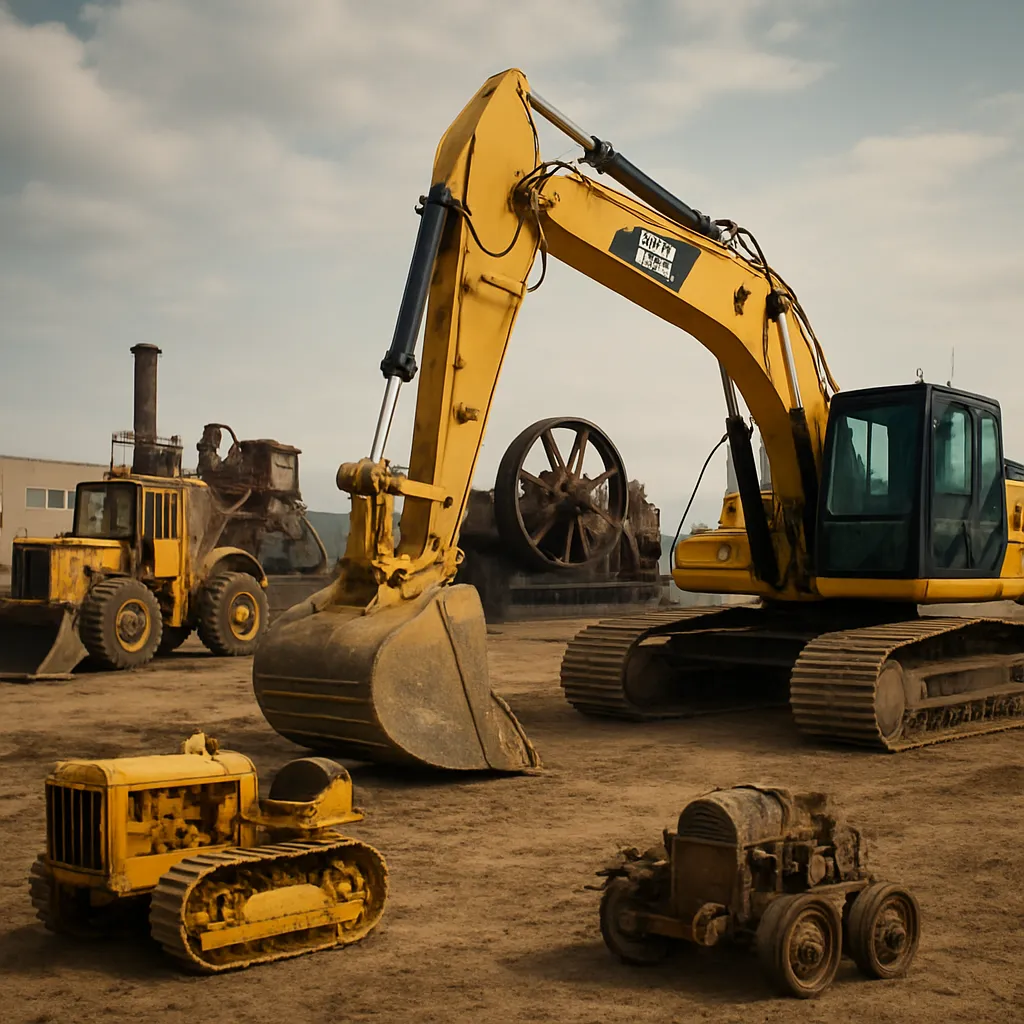
The world of heavy machinery is a tapestry woven from groundbreaking innovation, relentless engineering, and the ambition to reshape landscapes. From early steam-powered contraptions to today’s sophisticated automated giants, machines at work have revolutionized how we build cities, extract resources, and connect communities. This exploration dives into the early milestones, the ascent of Caterpillar and other industry titans, modern construction breakthroughs, and the promising horizon where robotics and green initiatives converge.
Origins of Heavy Machinery
In the mid-1800s, the Industrial Revolution laid the foundation for mechanized construction. Steam engines once powered rudimentary dredgers and cranes, setting the stage for modern earthmoving equipment. Pioneers experimented with early traction engines, demonstrating that horsepower could replace human and animal labor. This era of trial and error fostered innovations in materials and designs that emphasized durability and basic mechanical reliability.
Steam to Internal Combustion
By the early 20th century, engineers transitioned from steam to internal combustion engines, significantly boosting power-to-weight ratios. Gasoline and diesel units delivered greater torque at lower RPMs, enabling machines to tackle tougher terrain and handle heavier loads. This leap inaugurated the age of mobile bulldozers and early excavators, tools that became indispensable on construction sites around the globe.
The Rise of Caterpillar and Other Giants
Founded in 1925 through a merger of the Holt Manufacturing Company and the C. L. Best Tractor Company, Caterpillar quickly established its reputation for rugged machines. The Cat logo became synonymous with reliability, as these tractors and dozers powered road building, mining, and agricultural expansion.
- Standardization of parts improved field repairs and cut downtime.
- Innovative tracked systems distributed weight evenly, enhancing traction.
- Modular engine designs facilitated easy overhauls and upgrades.
Other manufacturers, such as Komatsu, Volvo, and Liebherr, followed suit by introducing unique design philosophies. Komatsu focused on operator comfort and electronic controls, while Volvo invested in telematics to monitor machine health remotely. Liebherr explored hydraulic breakthroughs that increased speed and precision in lifting operations.
Modern Construction and Automation
Today’s construction sites are vibrant ecosystems of interconnected machines. Fleet managers rely on GPS, onboard computers, and wireless connectivity to optimize workflows. The era of manual levers and gauges is giving way to intuitive touchscreens and predictive maintenance algorithms. This evolution underscores a pursuit of unmatched efficiency in materials handling and site logistics.
Smart Sensors and Telematics
- Real-time tracking of fuel consumption and engine hours.
- Automated alerts for filter changes and fluid top-ups.
- Geofencing to prevent unauthorized equipment movement.
Advanced automation has introduced semi-autonomous bulldozers and remote-controlled excavators. Operators can now oversee multiple machines from a central control hub, reducing exposure to hazardous environments. Laser-guided grading systems achieve millimeter-level accuracy, eliminating costly rework and speeding up paving and leveling tasks.
Infrastructure Projects and Environmental Goals
Massive infrastructure undertakings—high-speed rail lines, offshore wind farms, and urban redevelopment schemes—rely on heavy machinery to meet tight schedules and budgets. Companies are under increasing pressure to demonstrate environmental stewardship. Electrification of smaller machines and hybrid powertrains in large equipment are becoming mainstream. This shift addresses regulatory demands and corporate sustainability targets, encouraging a new wave of sustainability-focused engineering.
Green Power and Emissions Control
- Battery-electric compact loaders operating zero-emission zones.
- CNG and LPG conversions reducing particulate output in urban builds.
- Onboard catalytic converters and particulate filters for heavy haulers.
Recyclable materials in manufacturing, such as high-strength steel and composite components, reduce environmental footprints. Machine-sharing platforms also maximize utilization rates, minimizing idle time and cutting overall carbon emissions per project.
The Future of Giants and Emerging Technologies
As we look ahead, the boundary between construction machinery and robots continues to blur. Fully autonomous fleets may soon perform excavation, hauling, and assembly tasks without human intervention. Artificial intelligence will orchestrate complex sequences, from digging trenches at precise depths to positioning beams within architectural tolerances.
- Swarm robotics enabling miniature support bots to assist full-size machines.
- Augmented reality headsets providing real-time overlay of underground utilities.
- Machine learning algorithms predicting component failures before they occur.
Connected infrastructure networks will allow machines to communicate seamlessly with smart roads and sensors embedded in bridges and tunnels. Energy harvested from vibrations and solar arrays mounted on equipment could power auxiliary systems, further reducing reliance on fossil fuels. The integration of robotics with advanced materials science promises lighter yet stronger frames, enabling unprecedented load capacities.
Conclusion of Technological Evolution
The story of machines at work is one of continuous transformation. From steam-driven behemoths to AI-guided, emission-free giants, each chapter has built upon the last to reshape how we interact with our planet. As heavy equipment becomes ever more connected and intelligent, the synergy between human expertise and machine precision will chart the next frontier in construction, mining, and beyond.